
A region of kingdoms, not colonies
The Eastern Region's story begins with indigenous states, not with European arrival. In the mid-seventeenth century the Akwamu subjugated the Guan communities living on the Akuapem hills; the Guan appealed to the paramount chief of Akyem Abuakwa, Nana Ofori Panin, whose warrior nephew Ofori Dua — known as Safori — led a campaign that broke Akwamu power. A new state, Akuapem, was born, its name broadly meaning "one thousand groups", and in 1731 its communities came together at a place called Abotakyi to swear allegiance to their war hero. Akropong became the capital.
Further east, the Akyem Abuakwa state centred on Kyebi (Kibi), where the Okyenhene's palace, Ofori Panin Fie, still houses a hall of justice, artefacts and archives and serves as a research centre. At Akwamufie on the Volta, the Akwamuhene's Bogyawe Palace keeps a museum of Akwamu artefacts. In the highlands, the Kwahu — an Akan people who share language and matrilineal inheritance with the Ashanti and Akyem — built towns on a scarp so steep that, as one account of their history puts it, their rugged terrain shielded them from major conflicts. Their name is variously explained by defensive rock-rolling or by an independent spirit.
These are working seats of traditional authority, not museums alone. Visitors are welcome at many of them, but the protocol is real: ask before photographing, dress modestly, and let a guide or host lead the introductions.

The mission on the hill and the cocoa that changed everything
In January 1835 a Danish Basel missionary, Andreas Riis, arrived at Akropong on a fact-finding visit, accompanied by his interpreter George Lutterodt. He had spent seven fruitless years at Christiansborg on the coast, where his colleagues had died of tropical disease, and he chose the hills for their climate, for the chance to work among people whose way of life had not been shaped by European settlement, and for the freedom of working far from any suspicion of being a colonial agent. The paramount chief, Nana Addo Dankwa I, received him warmly, and on 26 March 1835 Riis moved to Akropong permanently, building his own house and earning the nickname Osiadan — "builder".
For years he was almost the only Christian in the town. The turning point came in 1843 with the arrival of Moravian missionaries from the West Indies — from Jamaica and Antigua — who revived the congregation. Christ Presbyterian Church, Akropong, founded in 1835, is the first Presbyterian church in Ghana, and the West Indian missionaries are remembered as the foundation of the Presbyterian Church of Ghana's work.
A second transformation came through plants. Aburi Botanical Gardens, opened in March 1890, supplied cheap cocoa seedlings and scientific farming advice that encouraged cocoa growing across southern Ghana, and after Hevea brasiliensis arrived from Kew in 1893 it did the same for rubber. The region's later cocoa research at New Tafo continues that lineage.

Water, power and a drowned landscape
The Volta is Ghana's largest river, and the Eastern Region holds the point where it was remade. The Adomi Bridge at Atimpoku, a latticed steel arch with a crescent profile, was the first permanent bridge to span the Volta and remains Ghana's longest suspension bridge; it was opened on 25 January 1957 by Kwame Nkrumah, and it replaced a ferry crossing at Senchi where delays could run to days. The bridge appears on Ghanaian stamps and currency.
Just upstream, the Akosombo Dam was built between 1961 and 1965 as the centrepiece of the Volta River Project. Nkrumah's aim was industrial: to smelt aluminium from Ghana's bauxite, which required enormous power. The dam rises 111 metres from its bedrock, impounds Lake Volta, and after a 2006 upgrade has a capacity of 1,020 megawatts.
The cost was borne locally. Flooding along some 400 kilometres of river created the lake and submerged about 740 villages, displacing more than 80,000 people into 52 resettlement townships; later studies found the planning insufficient, with families judging their allotted land too small and disputing the valuations behind their compensation. The dam also ended the seasonal floods that had spread nutrient-rich silt over farmland, pushing farmers towards fertilisers whose runoff fed algal growth and disease-carrying insects. In 2023, heavy rain forced controlled spillage from Akosombo and Kpong that displaced more than 31,000 people downstream. Lake Volta is beautiful from a boat; it is also a landscape of loss, and the two facts belong together.

Hills, forest and the shape of the land
Geologically and visually, the Eastern Region is a staircase. The Akuapem Ridge runs north from the coastal plain, its towns — Aburi, Akropong, Larteh, Mampong — strung along the crest at altitudes that make evenings genuinely cool. Behind them the Kwahu Scarp rises sharply above Nkawkaw, and beyond that the land flattens into the Afram Plains, wooded savannah where the Volta is at its broadest.
The forest is the region's other great asset. The Atewa range north of Kibi is noted for its birds and butterflies; the Esen-Epam reserve near Akim Oda holds the giant Bako tree; the Huhunya forest shelters Boti Falls; and the community-managed Akwamu Gorge forest above the Volta has recorded around 150 bird species alongside primates. Bunso, on the Accra–Kumasi highway, packs semi-deciduous native forest, introduced species and a canopy walkway into a single stop.
This is also farming country. Yam, maize, cassava and vegetables move through markets at Akosombo, Senchi and Atimpoku on Mondays and Thursdays, and the region's cocoa heritage is still a working industry rather than a story.

What to do
Things to do in Eastern
-
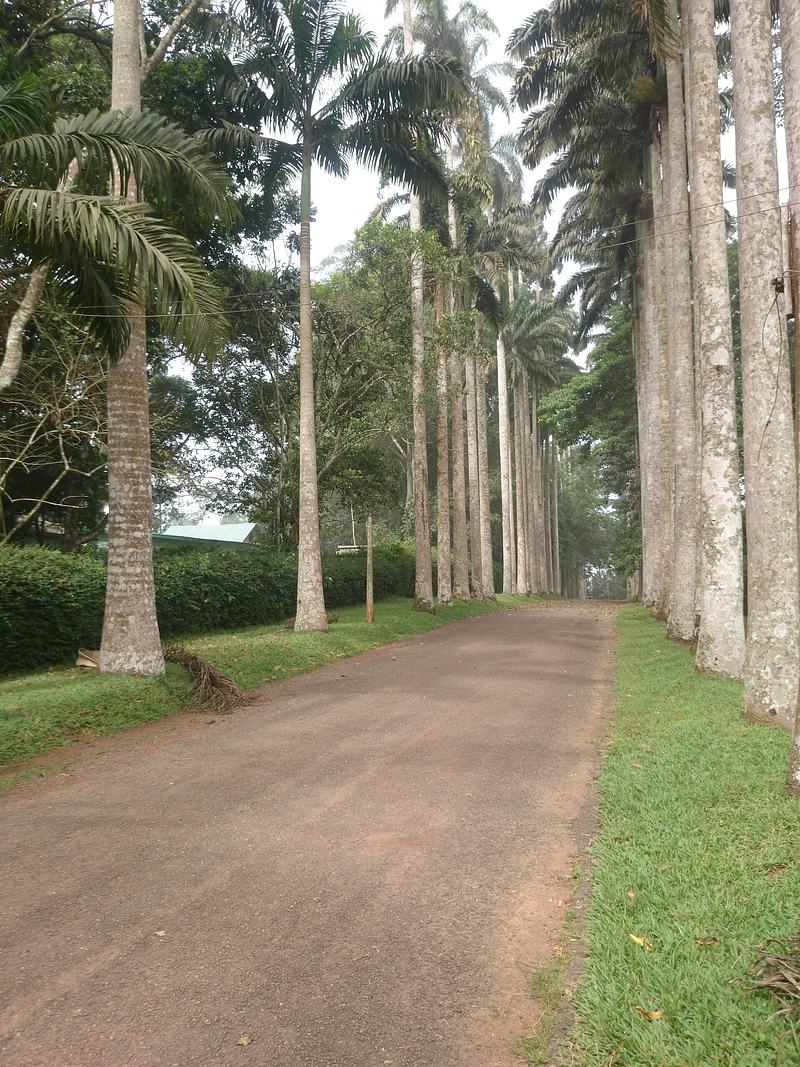
1.Walk the Aburi Botanical Gardens
Opened in March 1890 and covering 64.8 hectares on the Akuapem Ridge, these are the gardens that helped seed Ghana's cocoa and rubber industries by supplying cheap seedlings and scientific advice. The entrance is lined with royal palms; inside are medicinal plants, mahogany, cedar and a silk cotton tree described as the sole survivor of the forest that once covered the Aburi hills. Cool air, long paths and a view back towards Accra on clear days.
Tip: Come early for birds and butterflies, and pair the visit with the craft village just outside the gate.
-
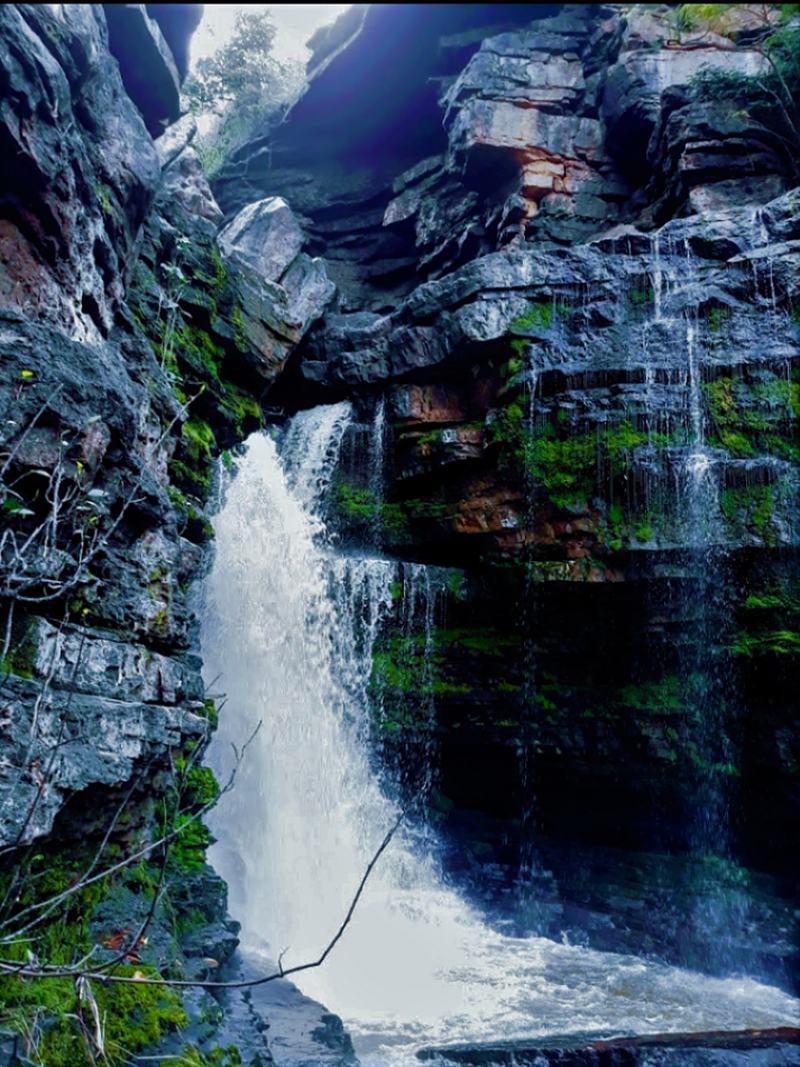
2.Descend to Boti Falls and hunt the Umbrella Rock
Boti is a twin waterfall in the Huhunya forest, 17 km northeast of Koforidua, reached by around 250 concrete steps. The two falls are said to be male and female; when they merge in full flow, locals describe the resulting rainbow as a mating ceremony. The same trip takes in the Umbrella Rock, a balancing formation whose overhang is said to shelter a dozen people, and a three-headed palm. Treat it as a three-in-one outing.
Tip: Go in or just after the rains, roughly June to August, when the falls actually run; in the dry season the flow can be thin.
-
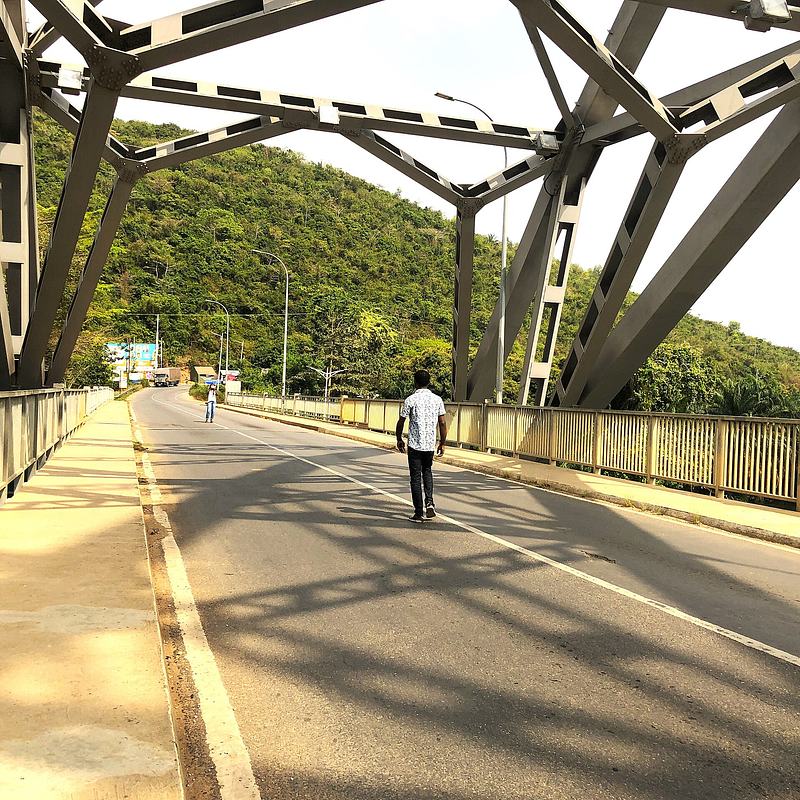
3.Cross the Adomi Bridge at Atimpoku
Ghana's first permanent bridge over the Volta and still its longest suspension bridge, the Adomi is a latticed steel arch with a crescent profile, opened by Kwame Nkrumah on 25 January 1957. It replaced a ferry at Senchi where waits could stretch to days, and it carries the N2 between the Eastern and Volta Regions just downstream of the dam. It is a working bridge, not a monument, which is part of its appeal.
Tip: Stop at the Atimpoku end for the classic view of the arch against the river, and combine it with the Monday and Thursday market.
-
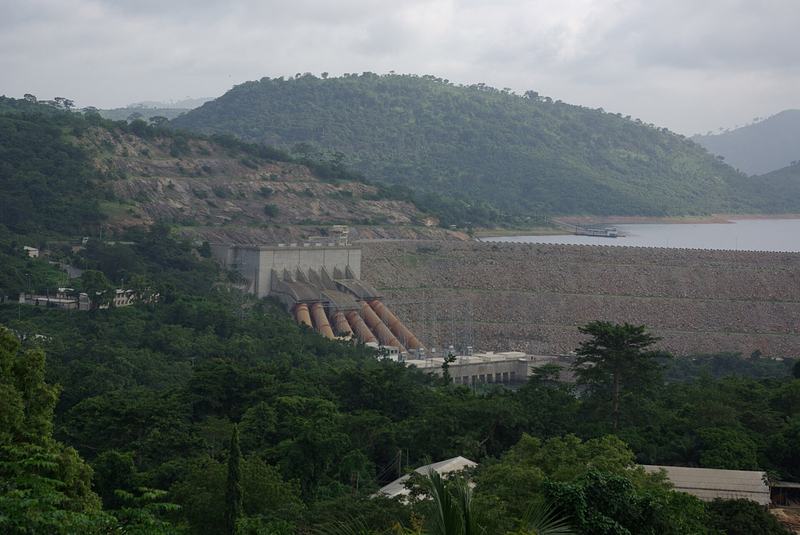
4.See the Akosombo Dam and the lake it made
Completed in 1965 as the heart of the Volta River Project, the Akosombo Dam rises 111 metres from bedrock and impounds Lake Volta, one of the world's largest reservoirs by surface area. It was built to power aluminium smelting from Ghanaian bauxite and now generates the bulk of the country's electricity. The scale is the point: a rock-fill embankment holding back an inland sea, with the gorge and the spillways below it.
Tip: Arrange access in advance through the Volta River Authority or a tour operator; the dam is critical infrastructure and is not simply walk-up.
-
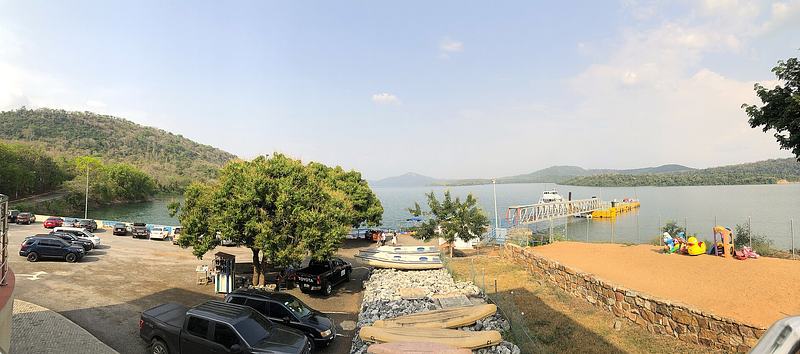
5.Cruise to Dodi Island on Lake Volta
The three-deck MV Dodi Princess II sails from the Akosombo waterfront out onto Lake Volta towards Dodi Island, an inhabited island reached on a cruise of roughly two hours each way, with live band music on board and water sports on offer. It is the easiest way to grasp the sheer size of the reservoir, and to see the drowned valley's new shoreline of wooded hills and fishing villages.
Tip: Book ahead for weekend sailings and take sun protection; there is little shade on the upper deck at midday.
-
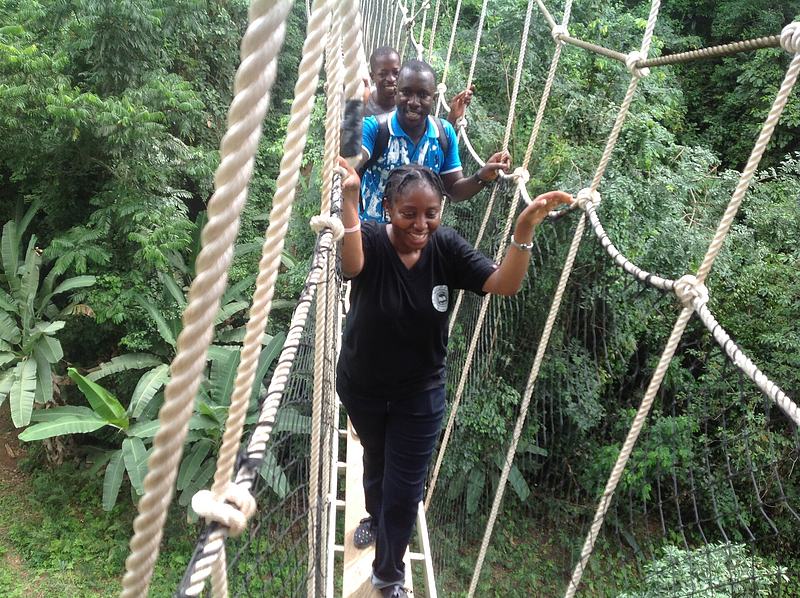
6.Ride the canopy walkway at Bunso Eco Park
Formerly the Bunso Arboretum, this forested park sits 4 km off the Accra–Kumasi highway at Bunso junction. It holds over 600 tree species, a herb garden, a butterfly sanctuary and a canopy walkway described as the second built in Ghana after Kakum, plus a 50-metre zipline reached by a suspended rope walkway. Guides explain the medicinal uses of native and introduced plants, and there is a cocoa and village tour nearby.
Tip: Butterflies are most active before 8 am; the park is a natural half-way break on the drive between Accra and Kumasi.
-
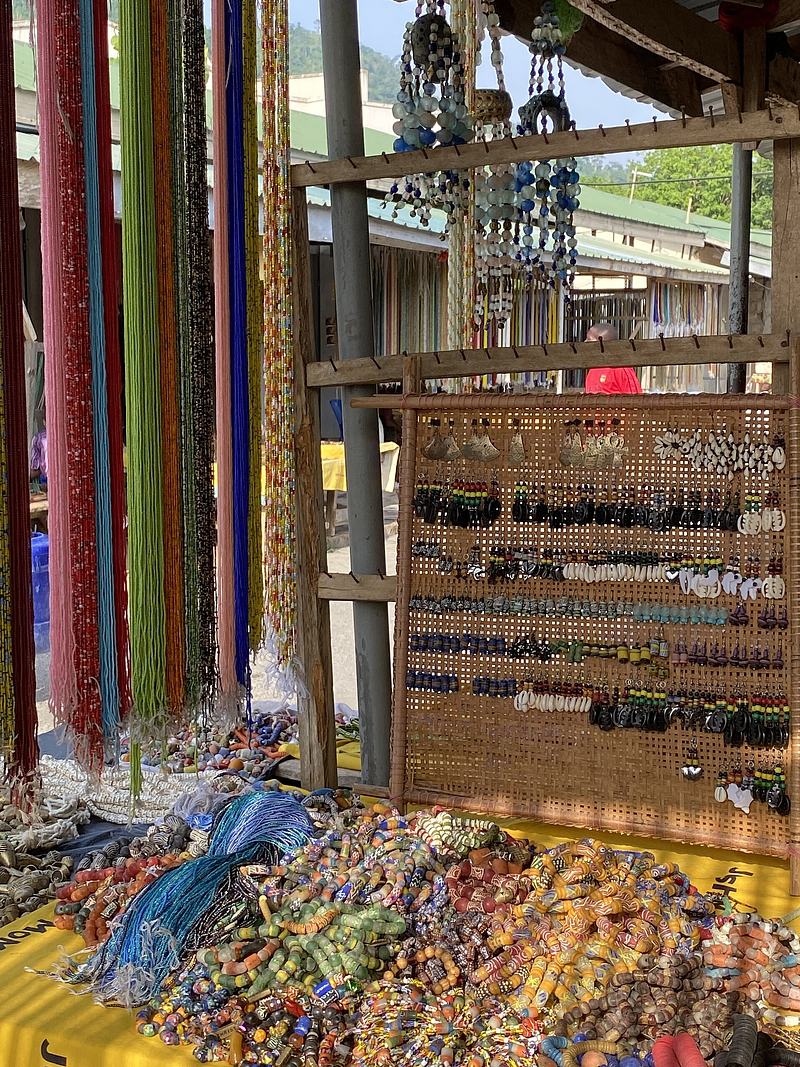
7.Shop the Koforidua Beads Market on a Thursday
Held every Thursday in the Gallaway neighbourhood beside Jubilee Park, this market has drawn bead traders and buyers to Koforidua since at least 1928, with roots going back over two centuries. Stalls and mats carry beads of recycled glass, brass, clay, bone, shells, bauxite and aluminium, from waist beads to rare antique chevron strands. Krobo bead-making, passed down through generations, is the heart of it, and beads carry meaning at naming ceremonies, weddings, funerals and royal events.
Tip: Trading starts between 6 and 7 am and the market has no gates, so arrive early for the best selection and the best light.
-
Attraction
8.Stand on the Kwahu ridge at Odweanoma
Odweanoma Mountain at Atibie is Ghana's main paragliding take-off point, looking out over Nkawkaw and the Kwahu plateau. Tandem flights with certified pilots run during the annual Easter festival, launched from the ridge after a safety briefing, with no prior experience required. Outside festival dates the ridge is still worth the climb for the view and the hiking trails, and the Kwahu Easter homecoming itself — street carnivals, live music, food and durbar — fills the towns below.
Tip: If you want to fly, book early and wear closed shoes; the festival draws large crowds and accommodation fills months ahead.
-
Attraction
9.Hike the Akwamu Gorge community forest
A community-owned forest and hill in the Asuogyaman District, guided by local people, with trails that open onto Volta Gorge views. Around 150 bird species have been recorded here, along with primates, making it one of the region's better low-key wildlife walks. Because access is by guided hike only, you get the forest at walking pace and with local knowledge attached.
Tip: Arrange your guide through the community before travelling; this is a working conservation project rather than a staffed visitor centre.
-
Attraction
10.Visit the Akwamufie Palace museum
Bogyawe Palace at Akwamufie is the seat and official residence of the Akwamuhene, set on the Volta River, and it houses a museum of Akwamu artefacts. The Akwamu were the power that once held the Akuapem hills before Ofori Dua's campaign broke their suzerainty, so a visit here fills in the other side of the region's founding story. It remains a working palace.
Tip: Ask permission before photographing, dress respectfully, and expect to be received rather than simply admitted.
-
Attraction
11.See the Okyenhene's palace at Kyebi
Ofori Panin Fie in Kyebi (Kibi) is the royal palace of the Okyenhene of Akyem Abuakwa, housing a Hall of Justice, artefacts and archives, and functioning as a research centre for the state's history. Akyem Abuakwa is the state whose paramount chief, Nana Ofori Panin, intervened on behalf of the Guan communities of the hills, so this is where much of the region's political history is documented.
Tip: Kyebi is also the gateway to the Atewa forest, noted for birds and butterflies, about 10 km north.
-
Attraction
12.Tour the Cocoa Research Institute at New Tafo
CRIG at New Tafo, 24 km from Koforidua, is Ghana's principal cocoa research institute, established in 1944 as the West African Cocoa Research Institute. Guided tours of model and experimental cocoa farms and arboretums explain how cocoa is grown and processed, and there is a nine-hole golf course on the grounds, laid out in 1947. It is the natural follow-on from the Tetteh Quarshie story at Mampong.
Tip: Tours are by prior appointment, so write ahead rather than turning up at the gate.


Plan your time
Suggested itinerary
Half a day: the Akuapem Ridge from Accra
Leave Accra early and drive up to Aburi while the air is still cool. Spend the morning in the Aburi Botanical Gardens, walking the royal palm avenue and the medicinal plant collections, then cross to the Aburi Craft Village beside the gate for carvings, beads and textiles. If time allows, continue along the ridge to Akropong for the historic Christ Presbyterian Church and the Okuapeman Palace, then drop down to Obosomase for the steep stone-step trail to Adom Waterfalls before heading back to the city.
Aburi Botanical Gardens→Aburi Craft Village→Adom Waterfalls (Obosomase Waterfalls)
One day: waterfalls, beads and the Volta
Start at Boti Falls, 17 km northeast of Koforidua, and take the 250 steps down to the twin falls, then hike on to the Umbrella Rock and the three-headed palm. Drive south to Koforidua for the Thursday beads market at Gallaway beside Jubilee Park — if your day is not a Thursday, substitute the Central Market and the Centre for National Culture instead. Finish at Atimpoku to walk or photograph the Adomi Bridge over the Volta, and if you have daylight left, continue to Akosombo for the dam and the lake waterfront.
Akaa Falls→Umbrella Rock→Koforidua Beads Market→Koforidua Central Market→Adomi Bridge (Volta Bridge)→Akosombo Dam (Akosombo Hydro Plant)
Two days: ridge, forest and lake
Day one: Aburi Botanical Gardens and the craft village in the morning, then drive the Accra–Kumasi highway to Bunso Eco Park for the canopy walkway, zipline and butterfly sanctuary, stopping at the Linda Dor rest stop at Bunso junction. Continue to Koforidua for the night. Day two: Boti Falls and the Umbrella Rock early, then the beads market or Central Market, and on to Atimpoku for the Adomi Bridge. Spend the afternoon at Akosombo — the dam, the market, and a Lake Volta cruise towards Dodi Island if sailings are running. Add a third day for the Kwahu ridge at Atibie, or for the Akwamu Gorge forest and Akwamufie Palace further north.
Aburi Botanical Gardens→Aburi Craft Village→Bunso Eco Park (Bunso Arboretum)→Linda Dor Rest Stop (Bunso Junction)→Akaa Falls→Koforidua Beads Market→Adomi Bridge (Volta Bridge)→Akosombo Dam (Akosombo Hydro Plant)→Dodi World Cruise (Dodi Princess)→Dodi Island→Akwamu Gorge (Akwamu Gorge Community Forest Project)→Akwamufie Palace (Bogyawe Palace)

Seasons and festivals
When to go
The Eastern Region is a year-round destination, but two things shape timing: rain and Easter. Boti Falls is seasonal, and the best time to see it is during the rainy season from June to August, when the two falls merge in the middle and throw up the rainbow that local people call a mating ceremony. The VisitGhana regional page likewise recommends June to August for Boti, in the Huhunya forest reserve. The Akuapem Ridge stays cooler and breezier than the coast throughout the year thanks to its altitude, which makes Aburi and Akropong pleasant even in the hotter months.
Easter is the region's great set-piece. The Kwahu Easter homecoming began as a family and community reunion, when Kwahus working elsewhere in Ghana returned to their ancestral hill towns; it grew into a national event, and in 2005 the Ministry of Tourism launched the Ghana Paragliding Festival on the Odweanoma Ridge as part of it. The festival now includes tandem flights, carnival processions, live music, hiking and a durbar of chiefs. Expect crowds and book accommodation well ahead.
Note that the Koforidua Beads Market is a weekly event rather than a seasonal one: it runs every Thursday, with trading from the early morning. Several markets in the region, including Akosombo, Senchi and Atimpoku, hold their main market days on Mondays and Thursdays.
- Kwahu Easter and Paragliding Festival · Annually during the Easter period, on the Odweanoma Ridge at Atibie-Kwahu
- Ghana's paragliding festival was launched in 2005 as part of the long-standing Kwahu Easter homecoming. Tandem flights with certified international and local pilots launch from Odweanoma Mountain, with views over the Kwahu plateau and valleys, alongside street carnivals, live music, local food, hiking and cultural performances. No prior flying experience is needed, but demand is high, so arrive early and book both flights and rooms in advance.
- Thursday at the Koforidua Beads Market · Every Thursday, trading from around 6–7 am
- Not a festival in the calendar sense, but the region's most reliable weekly event. Bead makers, traders and collectors have gathered in Koforidua on Thursdays since at least 1928, and the market now occupies a dedicated site in the Gallaway neighbourhood beside Jubilee Park. Entry is free and visitors are encouraged to buy or engage with vendors.
Access
Getting there and around
The Eastern Region wraps around Accra's northern and eastern flanks, so almost every journey here begins in the capital. Aburi is about an hour's drive from Accra, and the VisitGhana regional page puts the gardens at roughly 28 km from the city; Koforidua, the regional capital, is around a one-and-a-half to two hour drive. Boti Falls is 17 km northeast of Koforidua — just over 30 minutes by road — and more than 90 minutes from Accra depending on your means of transport. Bunso Eco Park sits 4 km off the Accra–Kumasi highway at Bunso junction, about two hours from Accra, and the Linda Dor rest stop at that junction is a long-established 24-hour highway stop with food and lodging.
The Adomi Bridge at Atimpoku carries the N2 across the Volta just south of the Akosombo Dam, and is the main road link between the Eastern and Volta Regions. Akosombo and the lake waterfront lie a short drive beyond it. For the far north of the region, the Kwahu ridge towns above Nkawkaw and the Afram Plains are reached by continuing along the Accra–Kumasi corridor and turning off at Nkawkaw.
Getting around is easiest with your own vehicle or a hired car and driver, since the region's attractions are spread across ridges and forest reserves with limited public transport between them. Shared taxis and tro-tros serve the main towns and market routes. On Lake Volta, cruises to Dodi Island depart from the Akosombo waterfront. Some sites — the dam, CRIG, the Akwamu Gorge forest — require prior arrangement with the operator or community, so plan those before you travel.
Good to know
Before you go
The Eastern Region is a place of working palaces, shrines and traditional councils, so treat visits to them as visits rather than attractions. Ask before taking photographs, particularly at Akwamufie, Kyebi, Akropong and Larteh; dress modestly; and let a guide or host make introductions. At the Akonedi Shrine in Larteh, dedicated chiefly to the female spirit Akonedi, follow your host's lead on what is appropriate.
Practicalities matter here. Many sites are reached by steep steps or forest trails — Boti's 250 concrete steps, the stone-step path to Adom Waterfalls, the hike to the Umbrella Rock — so bring shoes with grip and carry water. The ridge towns are cooler than Accra, especially in the evening. Some attractions, including the Akosombo Dam, CRIG at New Tafo and the Akwamu Gorge forest, need to be arranged in advance rather than visited on impulse. Finally, remember that Lake Volta's shoreline is a resettled landscape: more than 80,000 people were moved when the dam was built, and communities downstream were displaced again by the 2023 spillage.

FAQ
Questions travellers ask about Eastern
How far is the Eastern Region from Accra?
Aburi is about an hour's drive from Accra, and Koforidua, the regional capital, is roughly a one-and-a-half to two hour drive. Boti Falls is 17 km northeast of Koforidua, just over 30 minutes away by road.
When is the best time to see Boti Falls?
Go during or just after the rainy season, roughly June to August, when the twin falls are in full flow and merge in the middle. Boti is a seasonal waterfall, so the flow is much thinner in the dry months.
What is the Kwahu Easter Paragliding Festival?
It is an annual paragliding event held on the Odweanoma Ridge at Atibie-Kwahu during the Easter period, launched in 2005 as part of the long-standing Kwahu Easter homecoming. Tandem flights with certified pilots run alongside carnivals, live music, hiking and a durbar of chiefs.
Which day is the Koforidua Beads Market held?
Every Thursday, in the Gallaway neighbourhood beside Jubilee Park. Trading begins in the early hours, between about 6 and 7 am, and the market has no gates, so opening hours are flexible.
Can you visit the Akosombo Dam?
The dam is critical national infrastructure operated by the Volta River Authority, so access is arranged in advance rather than on a walk-up basis. The Akosombo waterfront nearby is the departure point for Lake Volta cruises to Dodi Island.
What is there to do at Bunso Eco Park?
The park, formerly the Bunso Arboretum, has a canopy walkway described as the second built in Ghana after Kakum, a 50-metre zipline reached by a suspended rope walkway, a butterfly sanctuary, a herb garden and over 600 tree species. Guides explain the medicinal uses of the plants.
Do you need a guide for the Eastern Region's forest and palace sites?
For several sites, yes. The Akwamu Gorge community forest is accessible by guided hike only, CRIG tours are by prior appointment, and palace and shrine visits at Akwamufie, Kyebi, Akropong and Larteh work best when a guide or host makes the introductions.
In pictures
Eastern in pictures
Sources for this guide (12)
- Eastern Region – Visit Ghana
- Aburi Botanical Gardens – Wikipedia
- Boti Falls – Wikipedia
- Umbrella Rock – Wikipedia
- Akosombo Dam – Encyclopaedia Britannica
- Christ Presbyterian Church, Akropong – Wikipedia
- Adomi Bridge – Wikipedia
- Paragliding – Visit Ghana
- Koforidua Beads Market – New Juaben South Municipal Assembly
- Bunso Eco Park – Wikipedia
- Bunso Eco Park – Visit Ghana
- Boti Falls – Visit Ghana
Written September 29, 2026 from these sources and reviewed by the VisitGhana.app team. Confirm practical details locally before travelling.


