

A region made by its forests
The Western North Region is one of six new regions created in Ghana in 2019, and the reason was practical: communities around Sefwi found it hard to reach government services from the old regional capital at Sekondi-Takoradi. The region's six paramount chiefs pressed the case together, and Sefwi Wiawso was named capital. It is a young administrative unit sitting on very old ground.
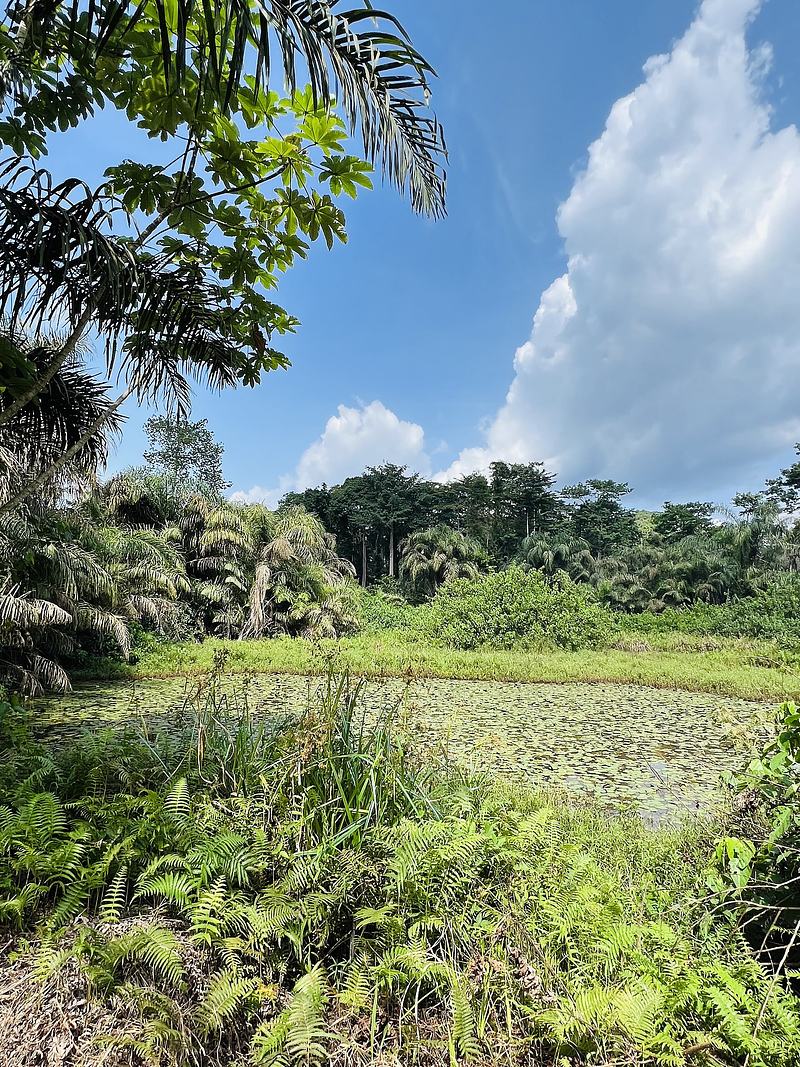
The forests here have shaped everything. The region falls within the moist semi-deciduous forest zone, with the highest rainfall in Ghana and fertile soils that made it one of the country's leading cocoa producers. Timber has been felled and exported from these woods for generations, and the same Birimian rock that underlies the forest carries gold — mined at Bibiani and Chirano, with bauxite at Awaso. The result is a landscape of extraordinary richness and real pressure: forest reserves that have been logged and farmed into secondary growth, and, at Bia, a protected core that still holds its tall trees.


The Sefwi and their chiefs
The Sefwi are an Akan people, and their name is said to come from a worn-down Twi phrase, "Asa awie" — the war is over — spoken by migrants from Bono-Techiman, Wenchi, Adanse, Denkyira and Asante who settled here after the upheavals of the seventeenth century. They speak Sefwi, an Akan dialect, and today they are the dominant group in the region, alongside Brusa and Anyin communities and many others who have moved in for land and work.
Sefwi country is organised into traditional states, each with its own paramount chief, or Omanhene. The region counts six paramountcies, among them Sefwi Wiawso, Sefwi Anhwiaso, Sefwi Bekwai, Sefwi Chirano, Aowin and Suaman. In Sefwi Wiawso the Omanhene, Katakyie Kwasi Bumangama II, keeps his seat at the traditional palace, where the council grounds host durbars, dispute-settling and the great gatherings of the yam festival. Chieftaincy here is not ceremonial decoration; it is the framework through which land, custom and community business are still conducted.


Bia: an island of old forest
Bia is the region's conservation centrepiece. The Bia Conservation Area covers roughly 306 square kilometres in two halves: the 77.7 square kilometre national park in the north and the larger Bia Resource Reserve to the south, sitting where moist evergreen forest gives way to moist semi-deciduous forest and draining much of the Bia River. It became a protected area in 1935 and a national park in 1974, and it holds the distinction of being Ghana's first UNESCO-recognised biosphere reserve.
The wildlife list is remarkable for a forest this size. Sixty-two mammal species have been recorded, including ten primates — chimpanzee, black-and-white colobus, olive colobus and red colobus among them — plus forest elephant and the highly threatened bongo. Over 160 bird species have been logged, including the endangered white-breasted guinea fowl, and the park is known for its butterflies. It is also a forest under siege: cocoa farms press against its edges, and illegal logging, hunting and small-scale gold mining all take their toll. Visiting responsibly, with a guide, is part of keeping it standing.


What to do
Things to do in Western North
-
1.Walk the trails of Bia National Park
The region's headline experience. Walking trails and old forest roads lead into the reserve, where a guide can point out chimpanzee nests, colobus monkeys moving through the canopy, hornbills and the buttressed giants of the high forest. Forest elephants pass through rather than pose for visitors, so treat any sighting as a gift. The forest is at its most walkable in the dry months, and the birdlife rewards anyone who slows down.
Tip: Hire a guide at the park and wear long sleeves, trousers and proper boots — the undergrowth bites and the forest is humid year-round.
-
Attraction
2.See the Omanhene's palace and council grounds
The traditional palace in Sefwi Wiawso is the administrative and ceremonial seat of the Omanhene of the Sefwi-Wiawso Traditional Area, and its forecourt is where the region's public culture happens: durbars, cultural displays, the settling of disputes and the great gatherings of the yam festival. Even outside festival time it is worth understanding as the counterweight to the regional government offices nearby — one modern, one customary, both in the same small town.
Tip: Dress modestly and ask before photographing anyone; if you want to greet the palace formally, arrange it in advance through your guide or host.
-
Attraction
3.Shop the Dwenase Market
Dwenase Market is the main trading ground of the Sefwi Wiawso conurbation, and it is where the region's economy shows its face: plantain, cassava, cocoyam, peppers and groundnuts, cloth and household goods, and cocoa money moving through the town. Wiawso and Sefwi-Dwenase have grown into one another over the years, so the market sits at the heart of a busy, unpretentious regional capital rather than off to one side.
Tip: Go in the morning when the produce is freshest and the market is at full volume; carry small notes and expect good-natured haggling.
-
4.Visit the Ancestral Hole of Bosomoiso
A short drive from Wiawso, the Ancestral Hole is a sacred site from which the royal family of Bosomoiso is said to have originated. Local accounts describe it as bottomless, ringed by trees yet never gathering a fallen leaf, and credited with healing powers. Whatever you make of the stories, it is a place of genuine reverence, and a good introduction to how Sefwi communities read their landscape.
Tip: Treat it as a shrine rather than a spectacle: go with a local guide, follow any instructions about approach, and leave offerings and litter alone.
-
5.Find the Tree of God at Nyamebekyere
About five kilometres from Wiawso stands a tree known as Nyame Dua, the Tree of God. The story goes that some 150 years ago a farmer drove his machete into a stump, and the tree grew again around the blade — which, they say, is still swallowed inside the trunk today. It is a small, strange, quietly affecting stop, and an easy one to fold into a morning around the town.
Tip: Combine it with the Okomfo Anokye grove at Amafie, a few kilometres away, to make a half-day of local sacred sites.
-
6.Walk to the Okomfo Anokye Akoma grove
At Amafie, roughly three kilometres or a twenty-five minute walk from Wiawso, a sacred grove marks where the legendary priest Okomfo Anokye — the figure tied to the Golden Stool of the Asante Kingdom — is said to have practised and performed, dancing and tumbling on a rope strung between two distant trees. It is a forest shrine with a strong story attached, and the walk out through farmland is part of the pleasure.
Tip: Ask locally before entering; sacred groves often have protocols about what visitors may do and where they may step.
-
7.Look for the Sacred Tortoise Forest at Sefwi Boako
At Sefwi Boako, about 21 kilometres from Wiawso, a preserved patch of forest is home to a giant tortoise with a formidable reputation: local tradition holds that if a visitor picks the tortoise up, darkness falls on the forest until it is set down again. It is a fine example of the taboos that have kept small fragments of forest intact, and a reminder that conservation here has deep cultural roots.
Tip: This is a community site rather than a managed attraction — arrange your visit through the municipal assembly or a local guide so someone can accompany you.
-
8.Time your trip to the Alluolue yam festival
Alluolue, also called Eluo or Ellulue, is the annual yam festival of the chiefs and people of Sefwi Wiawso and Sefwi Bekwai, and it is the best window onto Sefwi public culture. Expect a durbar of chiefs in traditional dress, drumming and dancing, food and drink shared with visitors, and rituals such as Dwirasa, in which clay and crab are placed on the paramount chief's neck. The festival also serves a serious purpose: bringing people together to plan development and settle disputes.
Tip: Dates vary and accounts differ between July and November/December, so confirm the year's programme locally before booking travel.
-
9.Follow the cocoa and gold trail through the districts
The region's working life is worth seeing on its own terms. Sefwi country produces a large share of Ghana's cocoa, and the road between Wiawso, Bibiani and Sefwi Bekwai runs through farm after farm, with pods drying on mats beside the tarmac. Gold mining is the other pillar, with operations at Bibiani and Chirano and bauxite at Awaso. A drive through the districts gives you the region as it actually lives and works.
Tip: Do not enter mine sites or farmland without permission; ask your driver to stop at roadside viewpoints and buying points instead.
-
10.Cross the Bia River country
Three of Ghana's major rivers rise or run through the Western North — the Ankobra, the Bia and the Tano — and the Bia forms part of the boundary with Côte d'Ivoire. Around the park, the river and its tributaries offer quiet picnic and rest stops, with riparian vegetation quite different from the upland forest. It is a gentle counterpoint to a day of walking, and a good place to sit and listen.
Tip: River levels rise fast in the wet season; keep your distance from slippery banks and never swim without local advice.
Plan your time
Suggested itinerary
Half a day: Sefwi Wiawso on foot
Start early at Dwenase Market while the produce is fresh and the town is at its busiest, then walk or drive the short distance to the traditional palace and council grounds to see where the Omanhene holds court. If time allows, add the Okomfo Anokye Akoma grove at Amafie, a twenty-five minute walk out of town, or the Tree of God at Nyamebekyere. Finish with a cold drink in the conurbation of Wiawso and Sefwi-Dwenase, watching the regional capital go about its business.
Dwenase Market (Sefwi-Wiawso Market)→Sefwi-Wiawso Traditional Palace and Council Grounds
One day: Bia National Park
Give Bia a full day and start early, because the drive from Sefwi Wiawso to the park headquarters is long and the roads are not first class. Walk the forest trails with a guide, looking for primates, hornbills and the tall emergent trees of the high forest, and take a rest stop by the Bia River. Note that tourist facilities in the park are minimal, so carry water, food and everything you need, and plan to return to Wiawso or Essem Debiso for the night.
Bia National Park
Two days: forest, town and sacred sites
Day one: travel to Sefwi Wiawso, settle in, and spend the afternoon on the town's cultural circuit — the palace and council grounds, Dwenase Market, and one or two of the nearby sacred sites such as the Ancestral Hole of Bosomoiso or the Okomfo Anokye grove. Day two: make the long run out to Bia National Park for a guided forest walk, returning via the cocoa country around Juaboso and Essem Debiso. If your dates coincide with Alluolue, build the whole trip around the durbar instead.
Sefwi-Wiawso Traditional Palace and Council Grounds→Dwenase Market (Sefwi-Wiawso Market)→Bia National Park
Seasons and festivals
When to go
The Western North Region falls within Ghana's tropical rainforest climatic zone, with high temperatures through the year — roughly 25°C to 30°C — and moderate to heavy rainfall of about 1,200mm to 1,780mm a year. It has a double rainfall peak, in June–July and September–October, separated by a relatively short dry season marked by hazy harmattan conditions from November to January. The region has the highest rainfall in Ghana, and downpours of up to 178mm in a day can cause localised flooding.
For Bia National Park, the long dry season from November to April is the best time for game viewing, while the wet months of May–June and September–October bring slippery roads and colder weather. The park can be visited year-round, and the dry season from December to February offers easier walking, though primate activity is visible throughout the year. Pack for rain whenever you come.
- Alluolue (Eluo / Ellulue) Yam Festival · Usually July; some accounts say November/December — confirm locally
- The annual yam festival of the chiefs and people of Sefwi Wiawso and Sefwi Bekwai, celebrated with a durbar of chiefs, drumming, dancing, traditional dress and shared food and drink. It commemorates a historic event and brings people together to plan development and strengthen ties, with rituals including Dwirasa, in which clay and crab are placed on the paramount chief's neck.
- Bontro Festival · Dates vary — confirm locally
- A second festival of the Sefwi Wiawso area, listed by the municipal assembly alongside the yam festival as part of the municipality's rich cultural heritage.
Access
Getting there and around
The Western North Region is inland, in Ghana's south-western corner, bounded by Côte d'Ivoire to the west and by the Central, Ashanti, Ahafo, Bono East and Bono regions. Sefwi Wiawso, the regional capital, is the natural base, and Wiawso and Sefwi-Dwenase have grown together into a single conurbation with the region's financial institutions, government offices and lorry stations.
Access to Bia National Park is by road. From Kumasi the route runs through Bibiani and Sefwi Wiawso to Sefwi Asempanaye, or via Goaso and Sankore to Sefwi Asempanaye; from Sunyani it goes through Berekum, Wanfi, Adabokrom and Debiso; and from Côte d'Ivoire it can be reached through Osei Kojokrom and Debiso. The Forestry Commission notes plainly that these are not first-class roads. The park headquarters is about 100km from Sefwi Wiawso, and the nearest overnight accommodation is in the town. Most visitors travel by private car or hired vehicle with a driver, which is also the practical way to reach the region's smaller sacred sites and forest reserves.
Good to know
Before you go
This is a working, largely rural region, so plan for long drives on roads that are not always surfaced and for facilities that thin out fast once you leave Sefwi Wiawso. Tourist infrastructure at Bia is minimal — the Forestry Commission states that facilities there are non-existent — so carry water, food, rain gear and any medication you need, and arrange a guide for forest walks. Wear long sleeves, trousers and sturdy boots, and take a hat.
Dress and behave modestly at shrines, groves and the palace, and always ask before entering a sacred site or photographing people. Many of the sites described here are community or customary property rather than ticketed attractions, so go with a local guide and follow their lead. English is the official language, but Sefwi and other Akan dialects are what you will hear; a greeting in Twi goes a long way. Finally, respect the region's conservation pressures: never buy bushmeat, and keep to trails inside the park.
FAQ
Questions travellers ask about Western North
Where is the Western North Region and what is its capital?
It is one of Ghana's six new regions, created in 2019 and carved out of the old Western Region. It lies in the country's south-western corner, bordered by Côte d'Ivoire to the west, and its capital is Sefwi Wiawso.
What can I see in Bia National Park?
Bia protects a fragment of Upper Guinea forest with 62 recorded mammal species, including ten primates such as chimpanzee and several colobus monkeys, plus forest elephant and the threatened bongo. Over 160 bird species have been recorded, and guided forest walks are the main way to explore.
When is the best time to visit Bia National Park?
The long dry season from November to April is best for game viewing, and December to February offers the easiest walking. The park can be visited year-round, but the wet months of May–June and September–October bring slippery roads and colder weather.
Can I stay inside Bia National Park?
Facilities in the park are minimal — the Forestry Commission describes tourist infrastructure there as non-existent. Camping is allowed at designated sites, and there is a guest house at Bia plus accommodation at Essem Debiso, but most visitors base themselves in Sefwi Wiawso, about 100km from the park headquarters.
What is the Alluolue festival?
Alluolue, also called Eluo or Ellulue, is the annual yam festival of the chiefs and people of Sefwi Wiawso and Sefwi Bekwai. It features a durbar of chiefs, drumming, dancing and shared food, and is usually celebrated in July, though some accounts place it in November or December.
Who are the Sefwi people?
The Sefwi are an Akan people who live predominantly in the Western North Region and speak Sefwi, an Akan dialect. Their name is said to derive from a worn-down Twi phrase meaning "the war is over", spoken by migrants who settled here after seventeenth-century conflicts.
How do I get around the region?
By road, and realistically by private car or hired vehicle with a driver. Sefwi Wiawso is the transport hub, with lorry stations serving the districts, but roads to Bia and to the smaller sacred sites are not first class, so allow generous travel time.
Sources for this guide (9)
- Bia National Park — Forestry Commission, Ghana
- Bia National Park — Visit Ghana (Ghana Tourism Authority)
- Bia, Western North Region — International Parks
- Western North Region — Visit Ghana (Ghana Tourism Authority)
- Western North — National Commission on Culture, Ghana
- Western North Region — Wikipedia
- Sefwi people — Wikipedia
- Alluolue Festival — Wikipedia
- Tourism and Hospitality Sector — Sefwi Wiawso Municipal Assembly
Written September 29, 2026 from these sources and reviewed by the VisitGhana.app team. Confirm practical details locally before travelling.