
A town named after a tree
Koforidua was founded in 1875, when Akan migrants from Juaben in Asanteman settled here after conflict in Asante in 1871. The name comes from oral tradition: a hunter and trader called Kofi Ofori kept a hut under a large mahogany tree where farmers and travellers rested and bought game, and people began to speak of going to "Kofori's tree" — Kofori dua. The tree is remembered as having stood near the present site of the Wesley Methodist Church, close to Appenteng Hall.
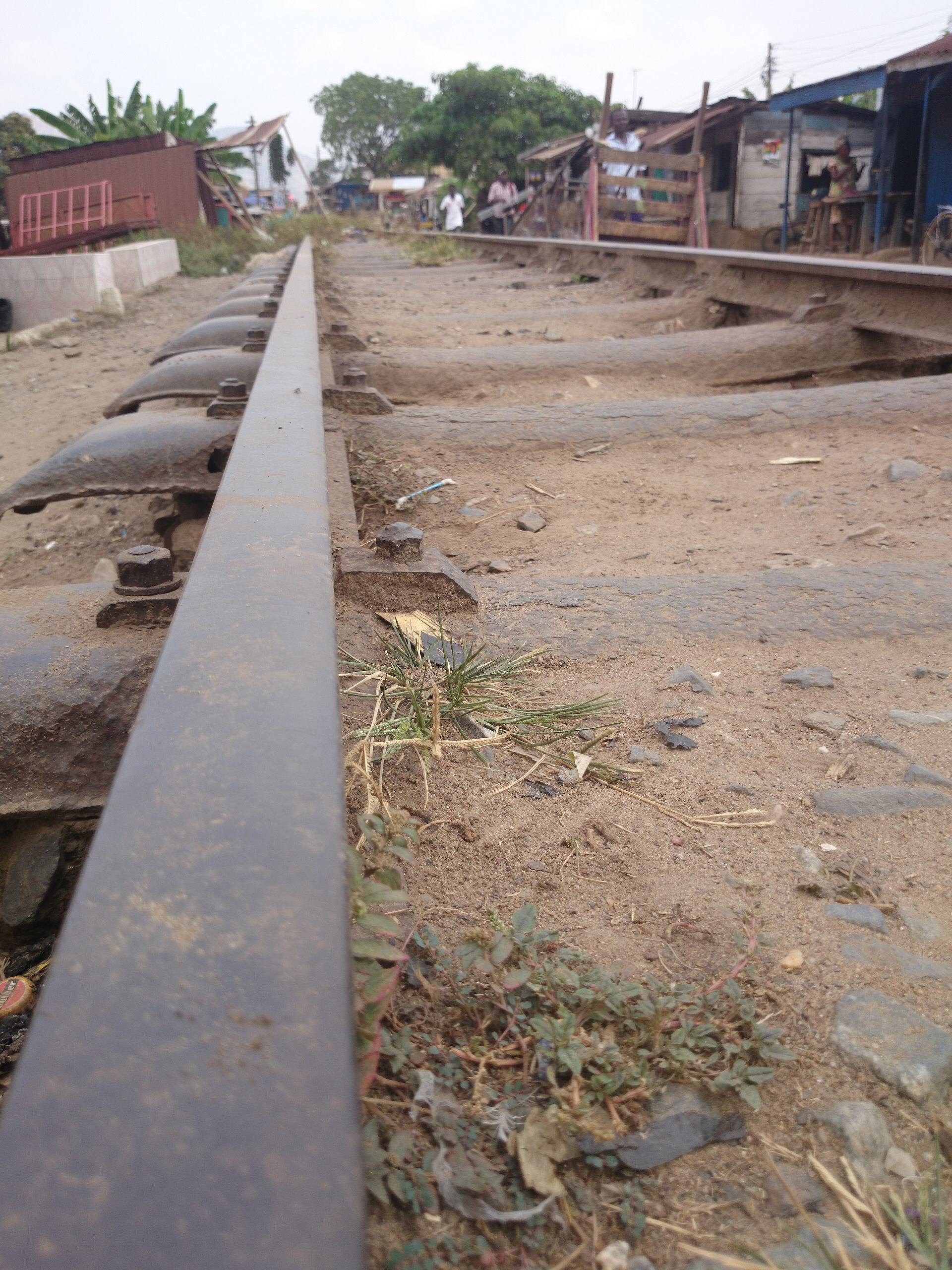
The new settlement grew fast. The completion of the Kumasi railway in 1923 turned Koforidua into an important road and rail junction, and it became one of Ghana's oldest cocoa-producing and cocoa-trading centres, storing and moving beans, foodstuffs and cola nuts from the surrounding farming villages. Elders recall that the town lost some of that advantage when the Accra–Kumasi highway was diverted, and that the collapse of rail transport in the 1980s further reduced its role as a transit hub. The old station and warehouses still stand in the town, a quiet reminder of a busier era. Today Koforidua is the capital of the Eastern Region and a multi-ethnic city, home to people from across Ghana.

New Juaben: a people who carried their home with them
Koforidua is the traditional capital of the New Juaben area, whose people trace their journey from Juaben in the Ashanti Region to this forest land in the Eastern Region. The Akwantukese Festival, celebrated by the chiefs and people of the New Juaben traditional area, commemorates that migration — the name itself speaks of a journey — and is described as a sign of hope and unity for the people of New Juaben. The settlers did not simply move; they rebuilt. Towns and quarters here carry names that echo the old home, so that Oyoko, Asokore, Effiduase and Koforidua itself appear on both sides of the journey.
The traditional area is led by the Omanhene and the New Juaben Traditional Council, whose working seat is the Yiadom-Hwedie Palace in Koforidua. This is a functioning palace and the home of the Yiadom-Hwedie Stool, not a ticketed museum: visitors who wish to see it should approach with the courtesy owed to a chief's court, and expect protocol rather than a ticket desk. The town's other nickname, "Koforidua Flowers", dates from the 1950s, when buoyant trade drew young women from Kwahu, Krobo, Akuapem and Akyem to settle here as traders; elders say a popular musician's song fixed the name in the local imagination.

Hills, forest and falling water
Koforidua lies at about 238 metres above sea level in the heart of the Dahomey Gap, which gives it a tropical savanna climate: hot and humid all year, with the heaviest rain usually between April and June and, in wetter years, substantial falls again in September and October. The New Juaben South Municipality covers roughly 110 square kilometres and borders New Juaben North, Akuapim North and Yilo Krobo. Above the town rises Obuotabiri, the mountain that local tradition holds was home to the gods who protected the people and was considered the soul of the area.
The landscape that draws visitors lies just beyond the municipal boundary, in the Krobo hills. Boti Falls is a twin waterfall in the Huhunya forest, about 30 metres high, reached by descending some 250 concrete steps; the two falls come from two rivers and are spoken of locally as female and male, the larger being the male. In the rainy season, roughly June to August, the two streams merge in the middle, splashing each other and throwing up a rainbow that local people describe as a mating ceremony. The same forest walk leads to Umbrella Rock, a balancing formation whose overhang is said to shelter twelve to fifteen people at once, and to Akaa Falls, a 60-metre cascade fed by the same Boti river, about seven kilometres from Boti and 21 km north-east of Koforidua.

What to do
Things to do in Koforidua
-
1.Boti Falls and the Huhunya forest walk
The region's signature outing: a twin waterfall in the Huhunya forest, about 30 metres high, reached by a long flight of concrete steps. The two falls are said to be female and male, and in the rainy season they merge mid-air in what local people call a mating ceremony, throwing up a rainbow. The same forest trails lead on to Umbrella Rock, so plan the falls and the rock as one trip rather than two.
Tip: Wear shoes with grip for the steps and the forest path, and go in the wet season if you want to see the falls at full voice — in the dry months the flow can be thin.
-
2.Umbrella Rock
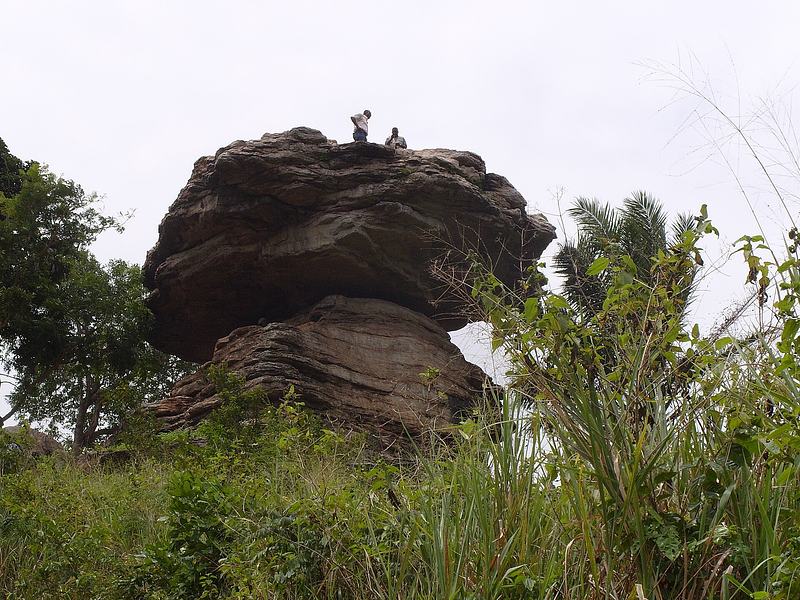
A balancing rock formation in the forest near Boti Falls, with a broad overhang on a narrow pivot that is said to shelter twelve to fifteen people at once. It is one of the Eastern Region's best-known natural landmarks, and it appears through much of the trek towards the falls. The pleasure is partly the formation itself and partly the guided walk through the reserve that gets you there.
Tip: Go with a local guide — the paths are unmarked in places — and take the valley views slowly rather than rushing back to the car.
-
3.Koforidua Beads Market
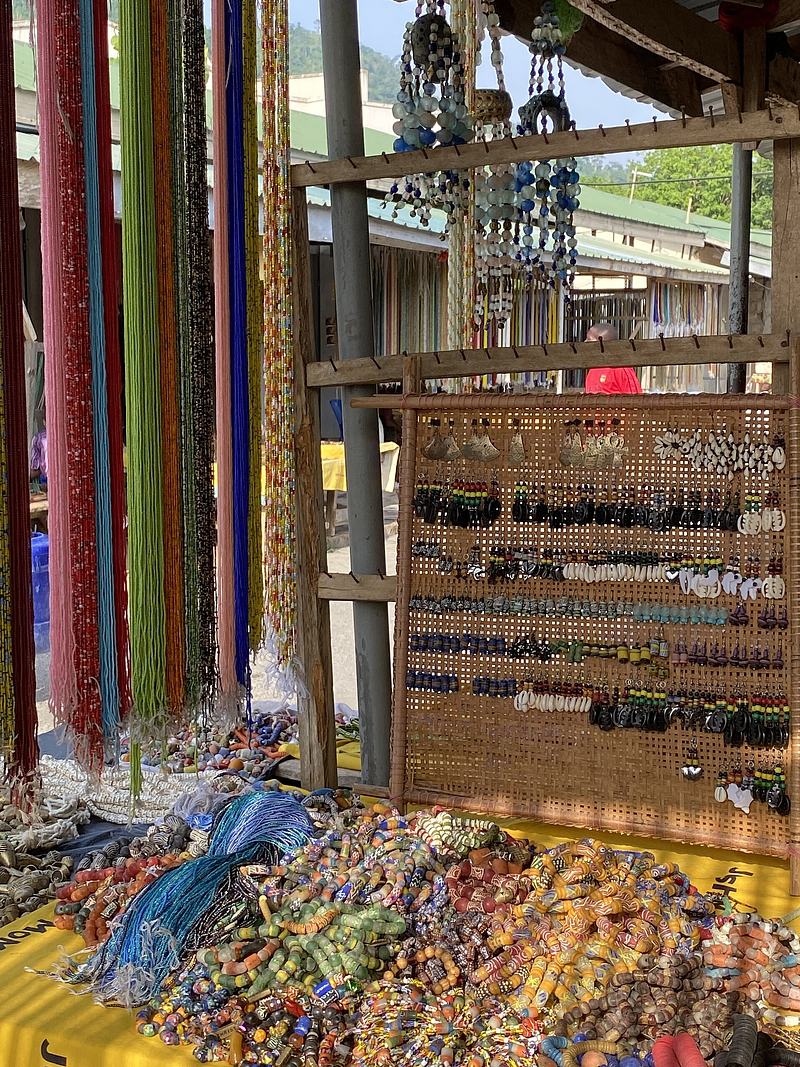
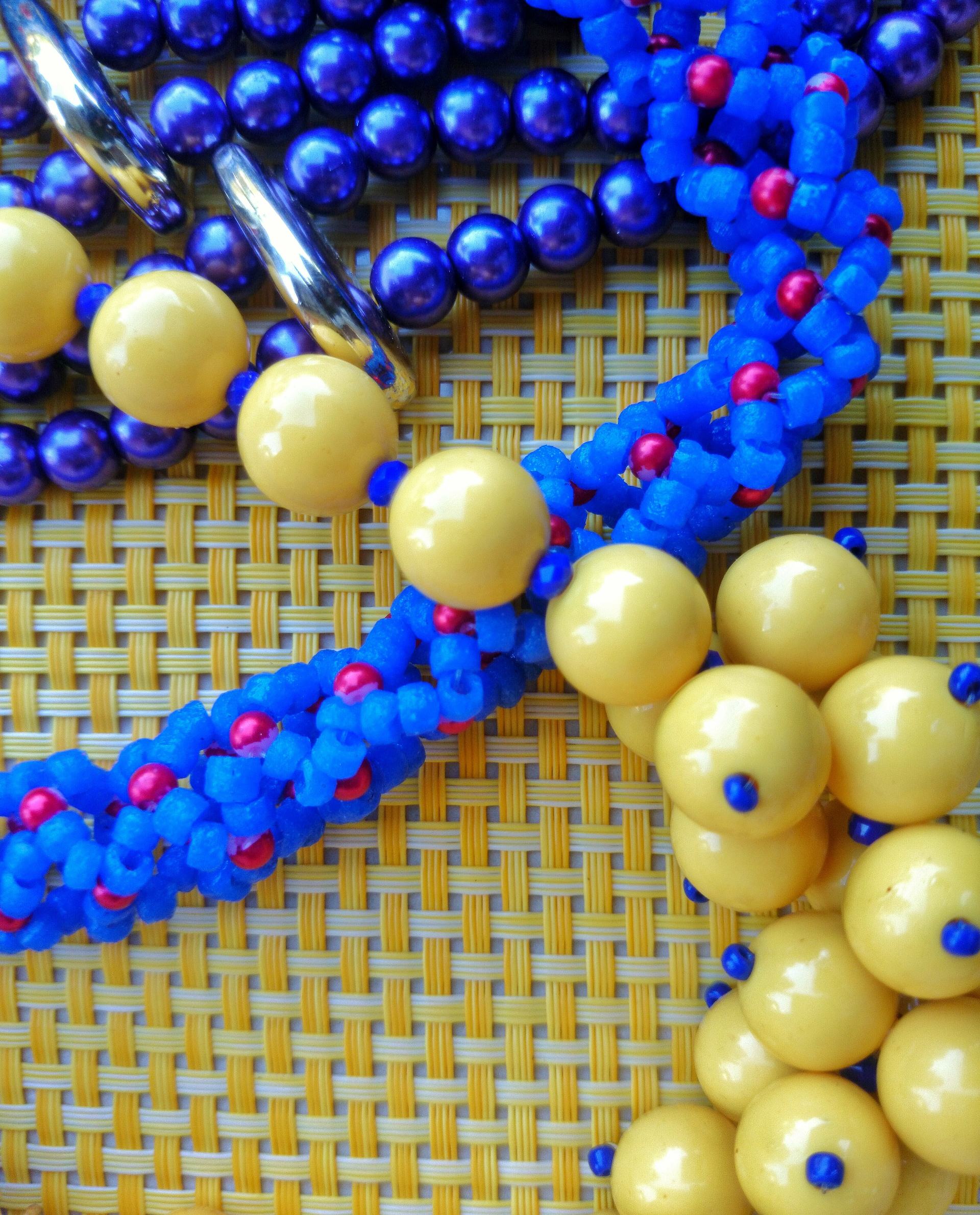
Every Thursday, traders spread beads across the ground and tables around Gallaway, beside Jubilee Park, and the town's best-known weekly ritual begins. You will find powdered-glass beads made in the Krobo hills, older trade beads, waist beads, necklaces and finished jewellery, sold by the makers and by long-established traders. It is a working market, not a staged attraction, which is exactly why it is worth rearranging your week for.
Tip: Come in the morning while the full range is laid out, bring small notes, and ask before photographing traders and their stalls.
-
Attraction
4.Koforidua Central Market
The leading trading centre of the New Juaben South Municipality, in the middle of town near Jackson Park, with Monday and Thursday as its main market days. Foodstuffs, cloth, cosmetics and household goods arrive from across the region, and the sheds and surrounding streets are where the city's commercial life is most legible. Come to shop, but also simply to watch how a regional capital feeds itself.
Tip: Market days are busy and the aisles are narrow — carry a light bag, keep valuables close, and go early before the afternoon heat builds.
-
5.Jackson Park
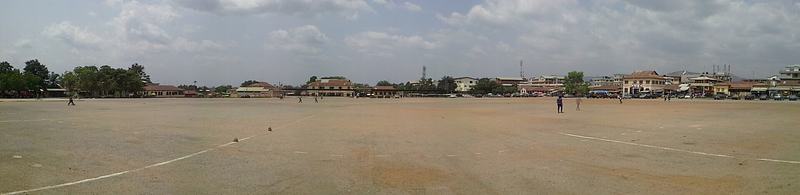
Koforidua's civic heart, and one of the oldest public spaces in the Eastern Region. It began in the colonial era as Oforidua, named for a man who planted neem trees to shade Ga and Akyem traders dealing in fish, salt and plantain, and was later renamed after a cocoa trader called Jackson who encouraged sport there. It has hosted independence and veterans' parades, funerals, weddings, church conventions and concerts, and was redeveloped from 2021 with World Bank support.
Tip: The redeveloped park has courts, a gym and a clinic, and is lit in the evenings — a good place for a walk or a game when the day cools.
-

6.Centre for National Culture, Eastern Region
The regional office of the National Commission on Culture, on the Koforidua–Adweso–Mamfe road at Galloway Junction, sharing a boundary with Jubilee Park and the beads market. Its one-stop craftshop stocks beads, kente stoles, smocks, batik, tie and dye, carvings, cane baskets and paintings from across the region, and its traditional school teaches cloth-wearing, drumming, dance and the meanings of Adinkra symbols to Ghanaians and visitors alike. The performance theatre seats 1,500.
Tip: Pair it with the Thursday beads market next door, and ask at the office about the traditional school if you want a lesson rather than a look.
-
7.Akaa Falls
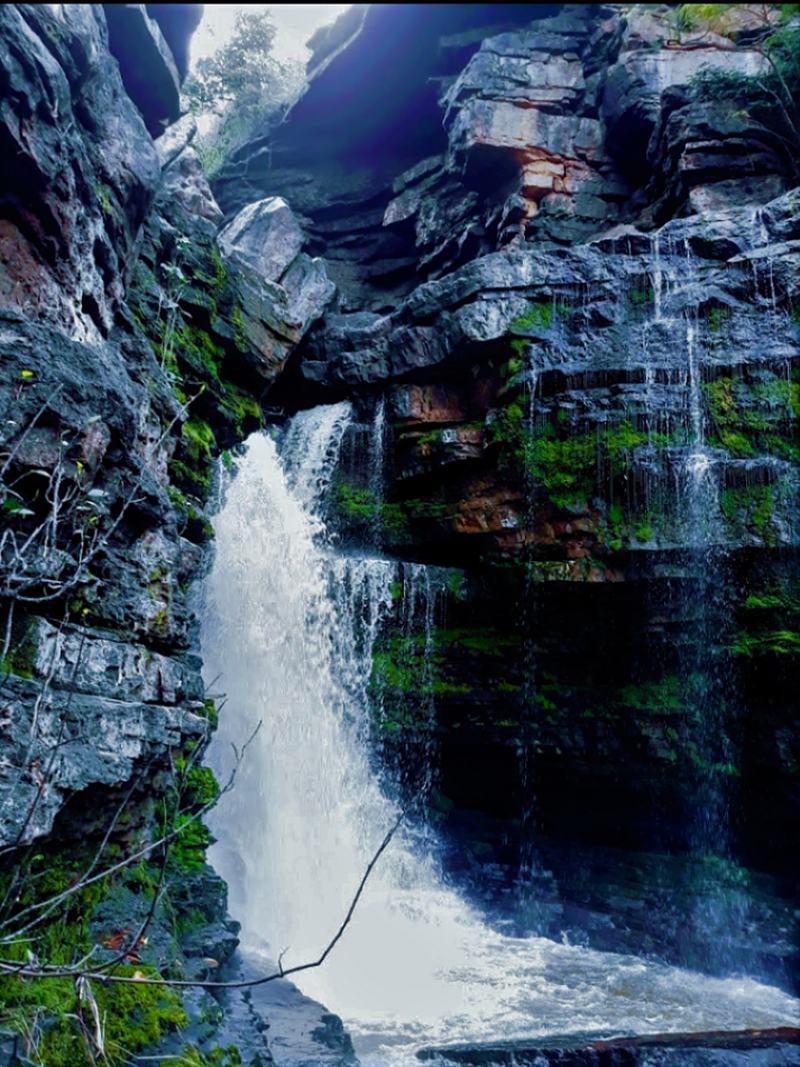
A 60-metre cascade near Akyeremanteng in the Akuapim North Municipal District, about 21 km north-east of Koforidua and barely seven kilometres from Boti Falls. It takes its water from the same Boti river that feeds Boti Falls, and it sits in dense vegetation, so it makes a natural second stop on a waterfall day. Because it is a seasonal fall, its character changes markedly with the rains.
Tip: Ask locally about flow before making the detour — and combine it with Boti rather than treating it as a separate journey.
-
Attraction
8.Yiadom-Hwedie Palace
The working seat of the New Juaben Traditional Council and the Yiadom-Hwedie Stool, in Koforidua. This is a palace, not a museum with an entrance fee: it is where the traditional authority of New Juaben conducts its business, and where the Omanhene's court receives visitors. Approached respectfully, it is the clearest way to understand that Koforidua is a traditional capital as well as an administrative one.
Tip: Do not turn up expecting a tour. Ask your hotel or the municipal information office to help you request a visit, dress modestly, and follow your host's lead on greetings and protocol.


Plan your time
Suggested itinerary
Half a day: the town on foot
Start at Koforidua Central Market while it is still cool, then walk to Jackson Park to see the redeveloped civic ground and its courts and gardens. From there, head to Galloway Junction for the Centre for National Culture, where the craftshop and the traditional school give you the region's arts in one stop. If your visit falls on a Thursday, finish at the Beads Market beside Jubilee Park, which is at its fullest in the morning. Keep the afternoon free for the palace if you have arranged a visit in advance.
Koforidua Central Market→Jackson Park (Koforidua)→Centre for National Culture, Eastern Region (Koforidua)→Koforidua Beads Market→Yiadom-Hwedie Palace
One day: waterfalls and forest
Leave Koforidua early for Boti Falls, about 17 km north-east, and descend the steps to the twin falls while the light is still soft. Continue on the forest trails to Umbrella Rock with a guide, taking the valley views in. If the water is flowing well and you have time, add Akaa Falls, seven kilometres away and fed by the same river. Return to town in the late afternoon, in time for a walk through Jackson Park or a look at the craftshop before it closes.
Umbrella Rock→Akaa Falls→Jackson Park (Koforidua)
Two days: town, market and hills
Day one, do the town: Central Market, Jackson Park, the Centre for National Culture and, if it is Thursday, the Beads Market — then spend the evening around the park. Day two, head out early to Boti Falls and the Huhunya forest, walking to Umbrella Rock and adding Akaa Falls if the flow allows. If your dates coincide with Akwantukese in November, build the durbar into the plan and keep the rest of the day light.
Koforidua Central Market→Jackson Park (Koforidua)→Centre for National Culture, Eastern Region (Koforidua)→Koforidua Beads Market→Umbrella Rock→Akaa Falls


Seasons and festivals
When to go
Koforidua is hot and humid year-round, sitting in the Dahomey Gap with a tropical savanna climate. Significant rainfall usually comes between April and June, and in wetter years September and October also bring substantial falls; the rest of the year is drier and the waterfalls thinner. For Boti Falls specifically, the rainy season — roughly June to August — is when the two streams merge and throw up the rainbow that local people call a mating ceremony, so if the falls are your priority, plan around the rains and expect mud on the forest paths. The Centre for National Culture notes June and August as months of particular calm and serenity in the region. If you want the town at its most sociable, aim for a Thursday, when the beads market and the central market are both in full swing.
- Akwantukese Festival · November
- Celebrated by the chiefs and people of the New Juaben traditional area, Akwantukese marks the epic journey of the Juabens from Juaben in the Ashanti Region to their new home in the Eastern Region, and is described as a sign of hope and unity for the people of New Juaben. It is the traditional area's great annual occasion, with a durbar of chiefs, and it is the best reason to time a visit to Koforidua in November.
Access
Getting there and around
Koforidua is about two hours by road from Accra, and the city sits between Accra and Kumasi. Boti Falls is roughly 17 km north-east of Koforidua, a drive of just over half an hour depending on your means of transport, and more than ninety minutes from Accra; Akaa Falls is about 21 km north-east of Koforidua and seven kilometres from Boti. Within town, the suburbs are close enough to walk between, and the Graphic reports that taxis and trotros are easy to pick up, with three main lorry parks and three taxi stations in the centre — one can walk to the Central Market and Juaben Serwaa Market from there. The Centre for National Culture sits at Galloway Junction on the Koforidua–Adweso–Mamfe road, beside Jubilee Park and the beads market. For the falls and forest, arrange a vehicle and a local guide rather than relying on public transport.
Good to know
Before you go
Koforidua is a working regional capital, so dress and behave as you would in any Ghanaian city: modestly, and with a greeting before a question. The beads market and the central market are places of business — ask before photographing people or their stalls, and expect to bargain politely rather than to name a price and walk away. The Yiadom-Hwedie Palace is a functioning traditional court, not a visitor attraction with a gate; arrange any visit in advance through your host or the municipal office, and follow protocol. For Boti Falls and the forest trails, take a guide, wear shoes with grip for the 250-odd steps and the mud, carry water, and treat the pool and the rocks with the caution they deserve. Carry cash for markets and small purchases, keep an eye on your belongings in crowds, and remember that the heaviest rains fall between April and June, with a second wet spell possible in September and October.


FAQ
Questions travellers ask about Koforidua
What is Koforidua known for?
It is the capital of Ghana's Eastern Region and the traditional capital of the New Juaben area, known for its weekly Thursday bead market, its central market and cocoa-trading history, and for its position as a base for Boti Falls and the Huhunya forest.
How far is Boti Falls from Koforidua?
Boti Falls is about 17 km north-east of Koforidua, a drive of just over thirty minutes depending on your means of transport. Akaa Falls lies about 21 km north-east of Koforidua and roughly seven kilometres from Boti.
When is the best time to see Boti Falls?
The rainy season, roughly June to August, is when the two streams merge in the middle and throw up the rainbow that local people describe as a mating ceremony. Outside those months the falls are seasonal and the flow can be much thinner.
When is the Koforidua beads market held?
The beads market is a weekly Thursday market, held in the Gallaway area beside Jubilee Park. The central market's main days are Monday and Thursday, so a Thursday visit lets you see both.
Can I visit the Yiadom-Hwedie Palace?
It is the working seat of the New Juaben Traditional Council and the Yiadom-Hwedie Stool rather than a ticketed museum, so there is no general admission. Arrange any visit in advance through your hotel or the municipal office, dress modestly and follow the court's protocol.
What is there to do in Koforidua itself, without a car?
The central market, Jackson Park and the Centre for National Culture at Galloway Junction are all in the centre of town and within walking distance of one another, and the beads market sits beside Jubilee Park. Taxis and trotros are easy to find for anything further.
What is the Akwantukese Festival?
It is the festival of the chiefs and people of the New Juaben traditional area, celebrated in November, marking the migration of the Juabens from Juaben in the Ashanti Region to their new settlement in the Eastern Region. It is described as a sign of hope and unity for the people of New Juaben.
In pictures
Koforidua in pictures

Keep exploring
More destination guides
Sources for this guide (11)
- Koforidua — Wikipedia
- Boti Falls — Wikipedia
- Umbrella Rock — Wikipedia
- Akaa Falls — Wikipedia
- Koforidua Jackson Park — Wikipedia
- New Juaben South Municipal Assembly — Wikipedia
- Akwantukese Festival — Wikipedia
- Koforidua Jackson Park — New Juaben South Municipal Assembly
- Koforidua: Historically clean and serene commercial capital — Graphic Online
- Centre for National Culture – Eastern Region
- Theatre at Centre for National Culture in K'dua commissioned — Citi Newsroom
Written September 29, 2026 from these sources and reviewed by the VisitGhana.app team. Confirm practical details locally before travelling.