
A forest with a working past
Bunso's forest was never left alone to be wilderness. The 40-acre reserve belongs to the Akyem Abuakwa Traditional Council, which leased it in the early twentieth century to a mining firm for surface mining. It was later handed to the African Products Department for rubber and cocoa plantations in 1917. After that company moved on, two British men bought the land and built a guest house on it in 1935, and the site was officially opened that year by Frank Thompson and David Gillet. In 1946 the facility was acquired by the Plant Genetic Resource and Research Institute of the Council for Scientific and Industrial Research (CSIR), which managed it for decades as a research collection rather than a visitor attraction. The old guest house still stands and now serves as the official residence of the vice chancellor of the University College of Agriculture and Environmental Studies, an institution established by the Okyenhene, Amoatia Ofori Panin II. Only in 2019 did government, private partners and the Akyem Abuakwa Traditional Council come together to open the arboretum up as a tourist facility. That layered history explains what you see: an ordered botanical collection that also behaves like real forest.

Trees that carry names and uses
Walk the grounds with a guide and the forest turns into a pharmacy, a workshop and a larder. The reserve holds over 600 species of trees, many valued for medicine, alongside a herb garden of more than 40 species. Among the rarities is Garcinia kola, known locally as twepea, reputed for its health benefits and used in many tropical countries against infectious disease; it is credited with anti-inflammatory, antimicrobial and antiviral properties. Other trees have practical trades attached to them: okure, favoured for dugout canoes, and the Alpha and Omega trees used to make the local sponge known as sapowie. Guides also run indigenous foods tours, showing how local people harvest food from plants around them, and visitors can learn about village life and cocoa farming on a tour of the nearby community. The arboretum is inter-linked with the Atewa forest a few kilometres away, and the two share species found in few other places, including a butterfly, the Antacoss Atlas, recorded only in these two forest areas.

A municipality on the trunk road
Bunso sits within Abuakwa South, a municipality in the central part of the Eastern Region whose capital is Kibi. The assembly was first established as a district in 1988, elevated to municipal status in 2008 and renamed Abuakwa South in 2018 after Abuakwa North was carved out of it. Two major trunk roads pass through the area, the Accra–Kumasi highway and the Bunso–Koforidua road, which is why a small town has become a natural pause on a long journey. Farming is the main occupation, with cocoa and coffee the leading cash crops alongside cassava, maize, plantain, oil palm and banana. The municipality's own development plans list its tourism assets as the Okyeman Old Palace, kept as a museum, the Agyemprem watershed, the Sagyimase rain and evergreen forest, the Linda Dor Rest Stop, Bunso Cocoa College, the University College of Agriculture and Environmental Studies, the Plant Genetic Resource Centre and the arboretum itself. Bunso is the gateway to that wider set of places, not just a single gate.

What to do
Things to do in Bunso
-
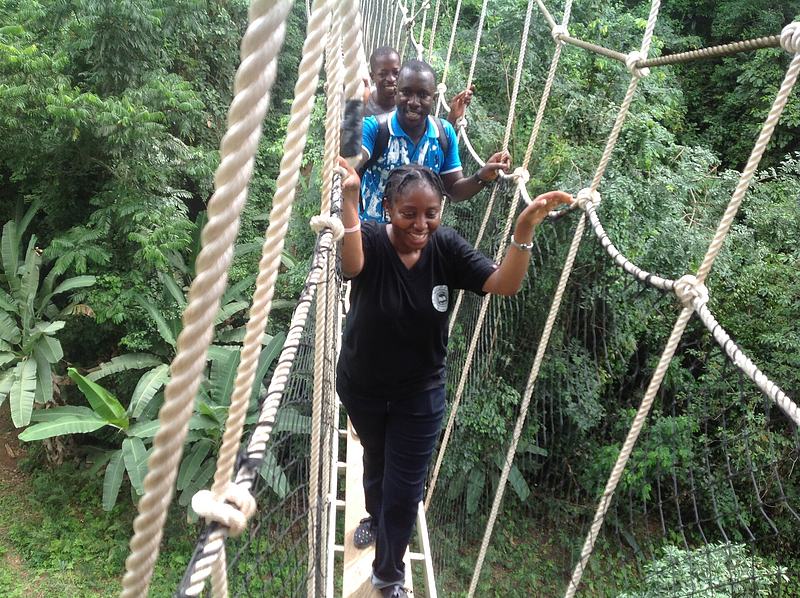
1.Walk the Bunso canopy walkway
The canopy walkway is the reason most people turn off the highway. Suspended high in the forest, it takes you out over the treetops on a series of bridges and platforms, giving a view of the canopy that you simply cannot get from the forest floor. It is Ghana's second such walkway, built after Kakum, and the park's own figures put it at 410 metres long and 41 metres above the ground. Go early, when the air is cool and the birds are active.
Tip: Wear shoes with grip and keep phones and loose items secured; the bridges move underfoot and the platforms are high.
-
Attraction
2.Take a guided nature and tree tour
A guide turns a pleasant walk into a lesson. The reserve holds over 600 species of trees, many used medicinally, plus a herb garden of more than 40 species. You will meet Garcinia kola, or twepea, and learn how trees such as okure and the Alpha and Omega trees are used for canoes and local sponges. Guides also explain how local people harvest food from the forest on an indigenous foods tour.
Tip: Ask for the guide by name at the entrance and agree the route first; a guided walk is far richer than wandering alone.
-
3.Ride the zipline
For a short, sharp burst of adrenaline, the park's zipline sends you through the trees, and the approach is part of the fun: you reach it by a suspended rope walkway rather than a path. It suits older children and adults who want a thrill between the gentler forest activities. The park lists it among its core adventure offerings alongside the canopy walk and the adult swing.
Tip: Check the weight and age limits on arrival, and pair it with the canopy walk so you only queue once.
-
Attraction
4.Hike the forest trails
Beyond the canopy, the park has walking trails through semi-deciduous native forest mixed with species introduced to Ghana by the Plant Genetic Resources Centre of Bunso. The trails are the quietest way to see the place, and the park also points visitors towards a bamboo cathedral and picnic spots among the trees. It is easy walking rather than hard trekking, which makes it work for mixed-age groups.
Tip: Start before the heat builds and take water; the shade is generous but the humidity is real.
-
Attraction
5.Watch butterflies and birds
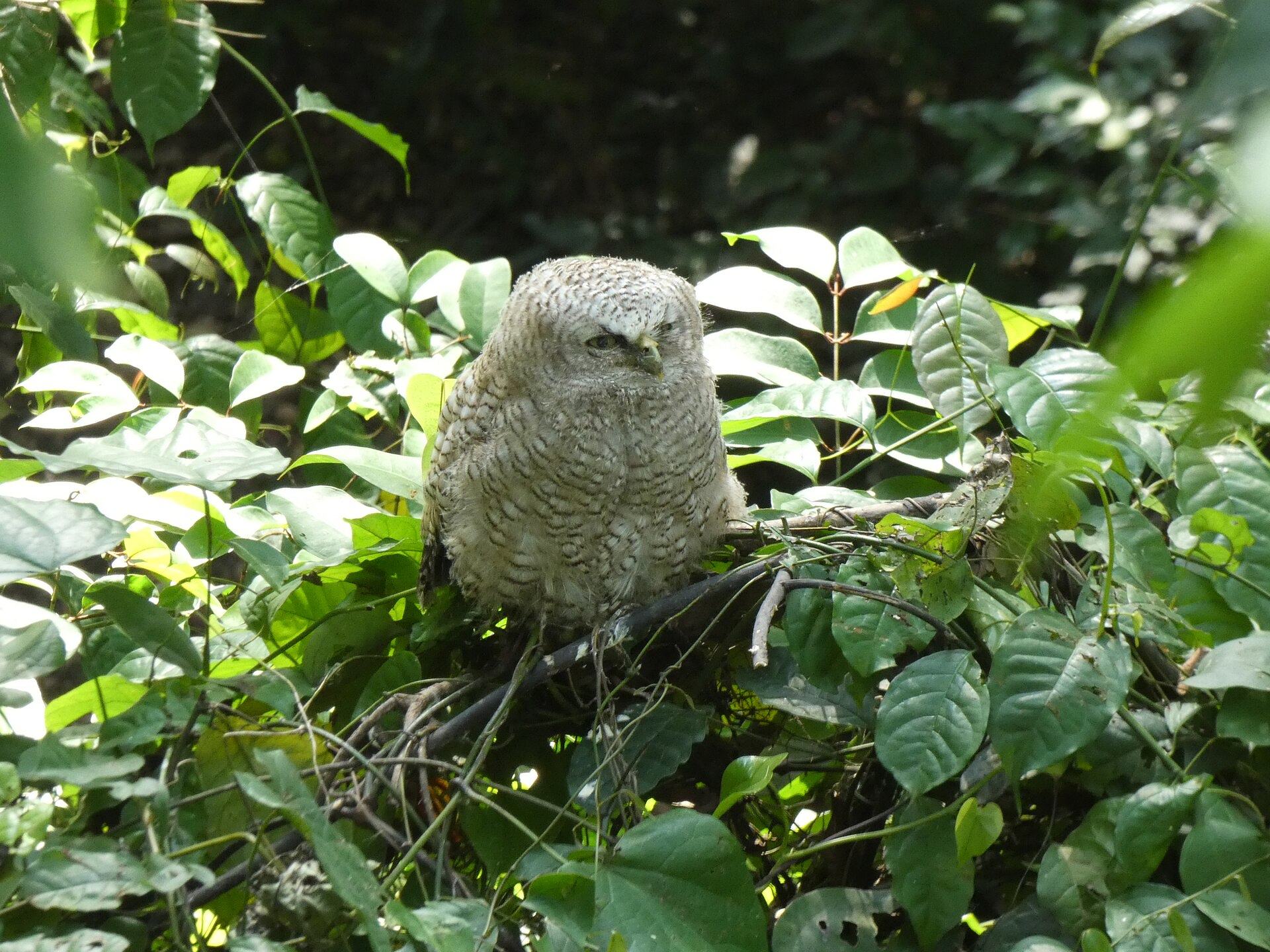
The park is known for its bird and butterfly life, with the operator counting over 110 species of birds and around 30 species of butterflies, and a butterfly and bird sanctuary within the grounds. A walk through the forest gives you a good chance of spotting several butterfly species, and birds are most visible in the cooler hours. This is a slow, patient pleasure rather than a spectacle, and it rewards those who linger.
Tip: The park advises that the best time to see butterflies is before 8am, so plan an early arrival if this is your priority.
-
Attraction
6.Tour a cocoa farm and nearby village
Cocoa is the region's defining crop, and the park runs cocoa farm tours and village visits that show how it is grown and processed. It is a grounded counterpoint to the adventure activities: you see the trees, the pods and the people whose livelihoods depend on them. The municipality's economy is built on farming, with cocoa and coffee the leading cash crops, so this is not a staged sideline but the working life of the area.
Tip: Ask ahead whether the cocoa tour is running that day, as it may depend on guide availability and the season.
-
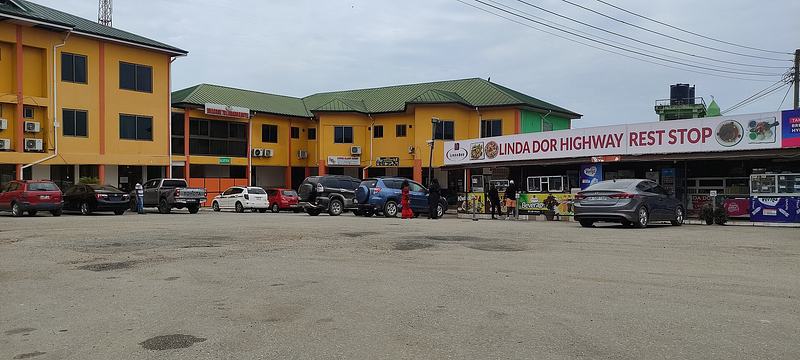
7.Pause at Linda Dor Rest Stop, Bunso junction
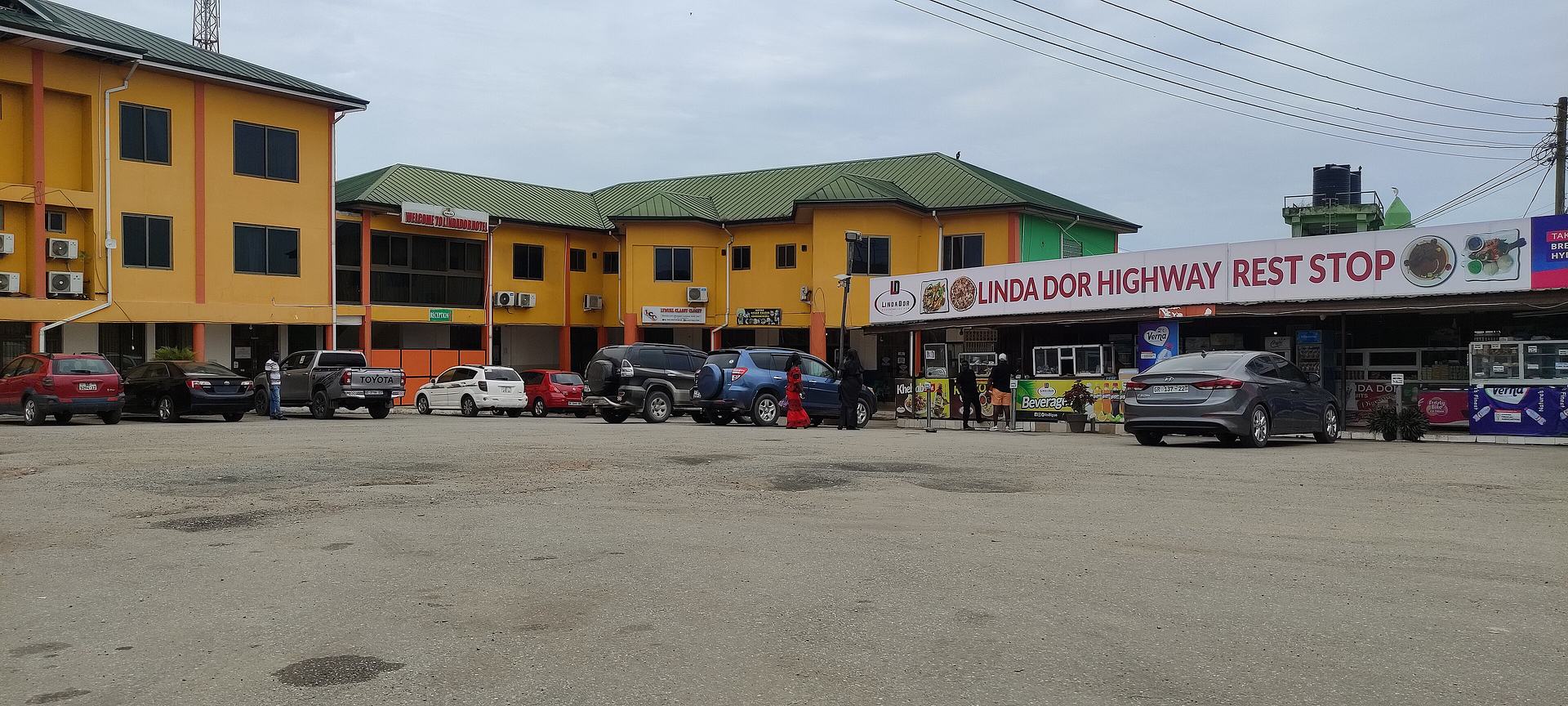
At Bunso junction, where the highway meets the Koforidua road, the Linda Dor Rest Stop is a long-established restaurant, hotel and highway stop that has served travellers for decades. The municipal assembly lists it among the area's tourism facilities, describing it as a private facility providing food and beverages after a long journey. It is the practical anchor of a Bunso visit: a place to eat, rest and regroup before or after the forest.
Tip: It is about 4.1 km from the eco park, so it works well as a meal stop on either side of your visit.
-
8.Seek out the Agyemprem Watershed
The Agyemprem watershed is one of the natural sites the Abuakwa South municipal assembly names among the area's attractions, noted for its ecological importance within the municipality. It is a quieter, less developed kind of place than the eco park, and it suits travellers who want to understand the landscape that feeds the region's streams and forests rather than simply tick off an activity. Treat it as a gentle add-on to a Bunso day.
Tip: This is not a managed visitor site with facilities, so ask locally in Bunso for directions and go with someone who knows the area.

Plan your time
Suggested itinerary
Half a day: the canopy and the forest
Arrive at Bunso Eco Park early, before the heat and while the butterflies are still active. Start with the canopy walkway while the light is good and the queues are short, then take a guided nature and tree tour through the reserve, meeting the medicinal species and the herb garden. If you have energy left, add the zipline, which you reach by a suspended rope walkway. Finish with a slow loop of the forest trails and a picnic, then drive the short distance to Bunso junction for a meal at the Linda Dor Rest Stop before rejoining the highway.
Bunso Eco Park (Bunso Arboretum)→Bunso Arboretum→Linda Dor Rest Stop (Bunso Junction)
One day: adventure, cocoa and the watershed
Give the morning to Bunso Eco Park: canopy walkway first, then the zipline and the adult swing for those who want them, followed by a guided tree and herb tour. After lunch at the Linda Dor Rest Stop at Bunso junction, spend the afternoon on a cocoa farm and village tour to see how the region's defining crop is grown and processed. If time and daylight allow, ask locally about the Agyemprem watershed and the Sagyimase forest, both named by the municipal assembly among the area's natural sites, and close the day with a quiet walk rather than another activity.
Bunso Eco Park (Bunso Arboretum)→Bunso Arboretum→Linda Dor Rest Stop (Bunso Junction)
Two days: Bunso and the wider Abuakwa South
Day one follows the one-day plan, ending with an overnight stay near Bunso junction so you can be in the forest at first light. Day two begins with an early bird and butterfly walk in the eco park, when the park says butterflies are most visible, then heads into the wider municipality. The assembly lists the Okyeman Old Palace, kept as a museum, and the Sagyimase rain and evergreen forest among its attractions, with Kibi, the municipal capital, as the natural base. Use the second day to see the landscape around Bunso rather than the park alone, and to understand how a forest reserve, a research station and a farming economy sit side by side.
Bunso Eco Park (Bunso Arboretum)→Bunso Arboretum→Linda Dor Rest Stop (Bunso Junction)

Seasons and festivals
When to go
Bunso is a year-round forest destination, and the park's own guidance is about the time of day as much as the time of year: the best time to see butterflies is before 8am, and early mornings are also when birds are most active and the air is coolest. The forest is dense and shaded, so the middle of the day is hot and humid rather than unbearable, and the canopy walkway is comfortable whenever it is dry underfoot. The wider municipality is farming country, with cocoa and coffee the leading cash crops alongside cassava, maize, plantain, oil palm and banana, so the landscape shifts with the agricultural calendar. Because Bunso sits on the Accra–Kumasi highway, weekends and public holidays bring more day-trippers from Accra and Kumasi; a weekday morning gives you the quietest forest.
Access
Getting there and around
Bunso lies in the Abuakwa South municipality of the Eastern Region, on the Accra–Kumasi highway. The eco park is about 4.1 km from Bunso junction, where the highway meets the road towards Koforidua, and the park describes itself as roughly two hours from Accra. Two major trunk roads pass through the municipality, the Accra–Kumasi highway and the Bunso–Koforidua road, which makes Bunso easy to reach by road from either Accra or Kumasi. The municipal capital, Kibi, is the administrative centre of the area. Most visitors arrive by private car, taxi or organised tour, and the Linda Dor Rest Stop at Bunso junction is the obvious landmark to navigate by. Once in Bunso, the eco park, the junction and the surrounding sites are close enough to combine in a single day by road.
Good to know
Before you go
Bunso is a working forest and a working farming district, so dress for humidity and uneven ground: closed shoes with grip for the canopy walkway and trails, light long sleeves for the insects, and a hat. Bring water, sun protection and cash, since smaller sites and add-on activities may not take cards. The park charges separately for different activities, so decide what you want to do before you arrive and confirm current arrangements on the day. If you plan to visit the Agyemprem watershed or the Sagyimase forest, remember these are natural sites rather than managed attractions with facilities, so ask locally for directions and go with someone who knows the area. Treat the forest with care: stay on the trails, take your litter out with you, and follow your guide's advice around wildlife. Photography is welcome, but ask before photographing people in the villages you visit.


FAQ
Questions travellers ask about Bunso
Where is Bunso Eco Park and how far is it from Accra?
Bunso Eco Park is at Bunso in the Abuakwa South municipality of Ghana's Eastern Region, on the Accra–Kumasi highway. The park describes itself as about two hours from Accra, and it sits roughly 4.1 km from Bunso junction, where the highway meets the Koforidua road.
Is the Bunso canopy walkway the same as Kakum?
No. Bunso's canopy walkway is Ghana's second such walkway, built after the better-known one at Kakum National Park in the Central Region. The park's own figures describe it as 410 metres long and 41 metres above the ground.
What can you do at Bunso Eco Park?
The park offers a canopy walkway, a zipline, horse and donkey riding, an adult swing, children's playgrounds, forest hikes, camping, picnic areas, a swimming pool, cocoa farm and village tours, and guided nature and tree tours. It also has a butterfly and bird sanctuary and a herb garden.
How many tree and bird species are at Bunso?
The park and VisitGhana both state that the site holds over 600 species of trees, many used medicinally, and over 110 species of birds, along with around 30 species of butterflies and a herb garden of more than 40 species.
When is the best time to see butterflies at Bunso?
The park advises that the best time to see butterflies is before 8am. Early mornings are also cooler and better for birdwatching, so an early arrival gives you the most active forest.
Who owns and manages Bunso Eco Park?
The 40-acre forest reserve belongs to the Akyem Abuakwa Traditional Council. It was managed for decades by the Plant Genetic Resource and Research Institute of CSIR, and in 2019 government, private partners and the Traditional Council partnered to open it as a tourist facility.
Is there anywhere to eat or stay at Bunso?
Yes. The Linda Dor Rest Stop at Bunso junction is a long-established restaurant, hotel and highway stop, listed by the municipal assembly among the area's tourism facilities as a private facility providing food and beverages for travellers on the Accra–Kumasi highway.
In pictures
Bunso in pictures
Keep exploring
More destination guides
Sources for this guide (8)
- Bunso Eco Park (Arboretum) — Visit Ghana
- Bunso Eco Park — Visit Ghana
- About Us — Bunso Eco Park
- Canopy Walk — Bunso Eco Park
- Bunso Arboretum, an exceptional tourist site in the Eastern Region — GhanaWeb
- Bunso Eco Park and Canopy Walkway — Ghana-Net
- Abuakwa South Municipal Assembly Composite Budget 2021 — Ministry of Finance
- Abuakwa South Municipal District — Wikipedia
Written September 29, 2026 from these sources and reviewed by the VisitGhana.app team. Confirm practical details locally before travelling.