
A mountain with two names and a disputed height
The peak above the village is Afadja. The suffix '-to' in Ewe already means mountain, so 'Afadjato' — the name most Ghanaians use — is, strictly, 'Mount Mountain'. The village's own explanation of the name is more evocative: when the Ewe first migrated here they were troubled by wild animals, and in the fighting that followed they were held back by an itching plant. In Ewe, 'afar' is war, 'dja' is plant and 'to' is mountain. Others say the summit resembled the mound in which water yam is planted — 'avadze' — and that creeping plants on its slopes looked like the yam vine, giving 'Avadze-to', later softened into Afadjato.
Its height is genuinely contested. Signage, the district assembly and most tourism material give 885 metres, and that is the figure you will see quoted everywhere. Modern topographic surveys place the summit closer to 587 metres, with the neighbouring peak Aduadu measurably higher and Leklata, some 4.6 km east, identified by several sources as Ghana's true high point. For a walker, the distinction is academic: the trail is steep, humid and short on shade, and the view is the reward either way.

How a village took charge of its own visitors
Liati Wote is a rural community of small-scale farmers growing oil palm, cocoa, coffee, maize, rice, plantain and cassava, organised along traditional lines under a chief and his elders. There is no market in the village; produce is carried to Hohoe to be sold. What there is, unusually, is a tourism operation the community owns.
The Afadjato-Tagbo Eco-Tourism Reception Centre sits on the left at the signpost as you enter, and it is the hinge of every visit. Guides are assigned there rather than chosen individually, fees for both the mountain and the falls are paid there, and the office runs on cash. The guides are volunteers from the village. Reporting in 2024 put the previous year's arrivals at 8,234 visitors and the community's tourism income at GHS 181,603, up sharply on 2022 — figures the reception centre manager gave to the Daily Graphic, and a reminder that this is a working local enterprise, not a staged experience. The district has since signed a memorandum with the Ghana Tourism Authority to develop the sites further, and the paramount chief of the Liati Traditional Area has been blunt that the area remains poor despite its attractions.

Forest, farms and a river that is not just water
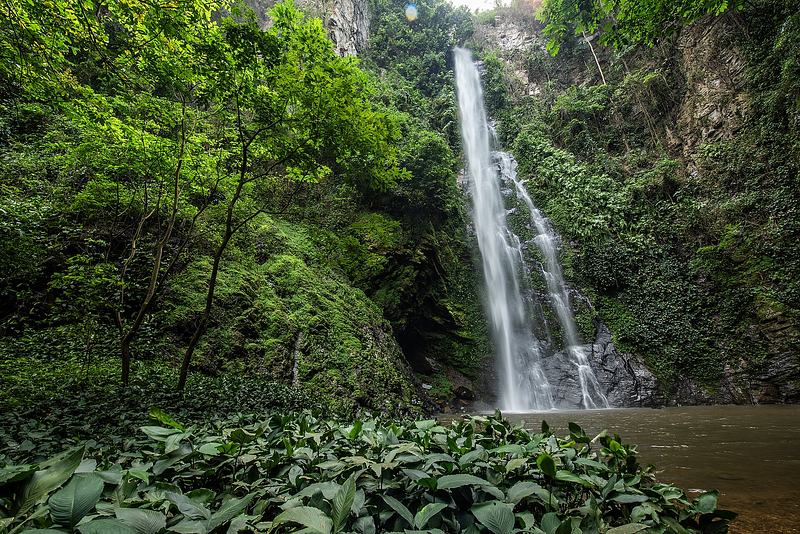
The walk to Tagbo Falls leaves the same trailhead as the mountain and enters a different world. The path runs through farmland and semi-deciduous forest, past coffee and cocoa, and crosses the Tagbo River three times on bridges. The river is sacred to the community: it is taboo to eat fish taken from it. The falls drop in several stages, the last around 60 metres, into a pool at the base.
Wildlife here is small and close rather than dramatic. More than 300 butterfly species have been recorded in the area, and Mona and spot-nosed monkeys are regularly seen in the mountains. The forest is also home to a plant that causes severe skin irritation, which is one reason a guide is worth having. The village's own rules shape the landscape too: farming on the slopes of Afadja is forbidden, which keeps the mountain green even through the Harmattan, and littering is treated as a serious offence — bins stand at points along the trails, and the community has run a plastic-waste project with local artists painting murals to keep the message visible.

What to do
Things to do in Liati Wote
-
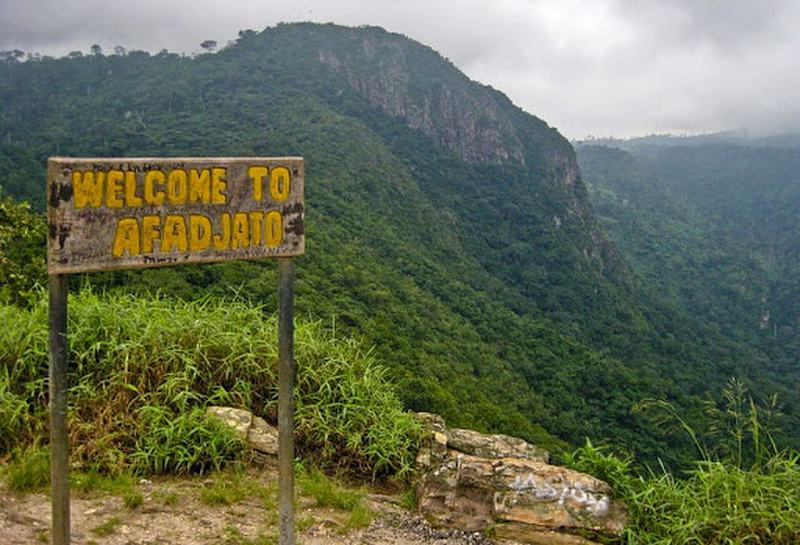
1.Climb Mount Afadja (Afadjato)
The village's defining walk. A guide leads you up a steep, roughly 3 km trail that most people take about 1.5 to 2 hours to climb, with the round trip running 2 to 4 hours depending on pace and rests. There is little shade, so the heat does most of the work. On a clear day the summit opens out over the surrounding valleys towards Lake Volta and the Togo hills.
Tip: Start as early as you can — the trail has minimal shade and the heat builds fast. Views are often poor during the Harmattan, roughly November to March, so manage expectations if you visit then.
-
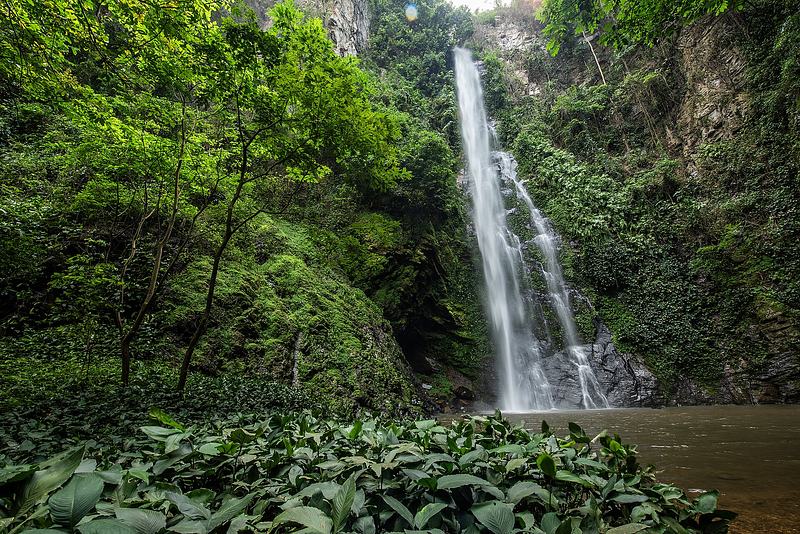
2.Walk to Tagbo Falls
A gentler counterpoint to the mountain. From the village it is a 45-minute to one-hour walk through farmland and forest, crossing the Tagbo River three times on bridges, to a waterfall that drops in several stages, the last about 60 metres. The path is mostly shaded and passes coffee and cocoa farms, with butterflies everywhere in the right season. Many visitors do the mountain in the morning and the falls afterwards.
Tip: The volume of water and the temperature of the pool change with the season, so ask at the reception centre what to expect. Note that traditional authorities have at times forbidden swimming in the pool beneath the falls — check locally before you plan on a dip.
-
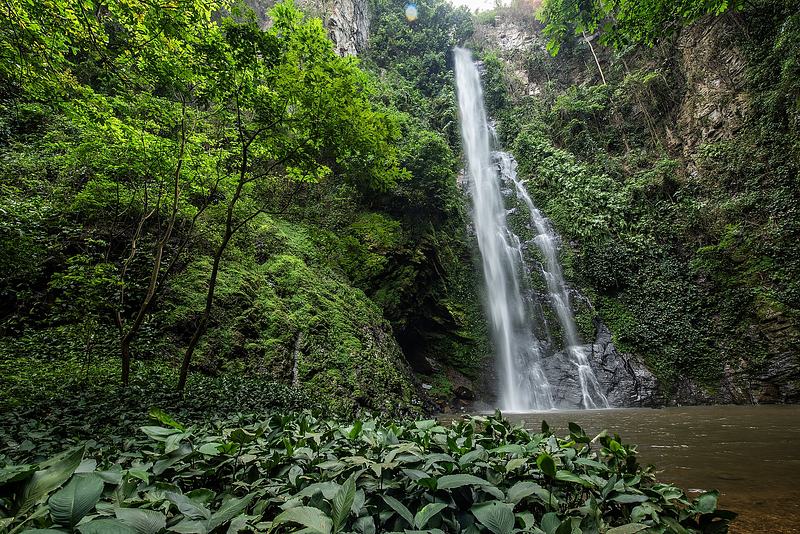
3.Arrange your hikes at the Afadjato-Tagbo Eco-Tourism Reception Centre
This community-run centre on the left at the village signpost is where every visit begins. Guides are assigned here, fees for both the mountain and the falls are paid here, and there is a registration process before you set out. It also has flush toilets, a small rustic guesthouse and camping space, and a community cook provides meals. Treat it as the first stop, not an afterthought.
Tip: The office is cash only and there are no ATMs within a significant distance, so withdraw cedis in Hohoe or Accra before you travel. Guides are volunteers who rely heavily on tips.
-
Attraction
4.Village and farm walk with a local guide
A guided walk through Liati Wote shows you how the community actually lives: palm tapping for palm wine, mushroom farming, food being prepared, and the fields of plantain, banana, oranges, maize, cassava and cocoa that surround the village. Because most residents are out farming during the day, the village is quiet and you will meet people at work rather than at leisure. Evening drumming and dancing by a local cultural group can be arranged.
Tip: Ask at the reception centre to arrange this rather than wandering unannounced — the village has strong conventions about noise and privacy, and a guide makes the introductions properly.
-
Attraction
5.Camp or relax at Apollo Park
A community recreation and camping space at the foot of Mount Afadja, Apollo Park is one of the village's quieter assets — a place to pitch a tent, sit out the hottest part of the day and watch the mountain change colour towards evening. It pairs naturally with the reception centre's camping option and gives you a reason to stay overnight rather than rushing back to Hohoe.
Tip: Bring what you need with you: there is no market in Liati Wote, and supplies come from Hohoe. Confirm camping arrangements at the reception centre on arrival.
-
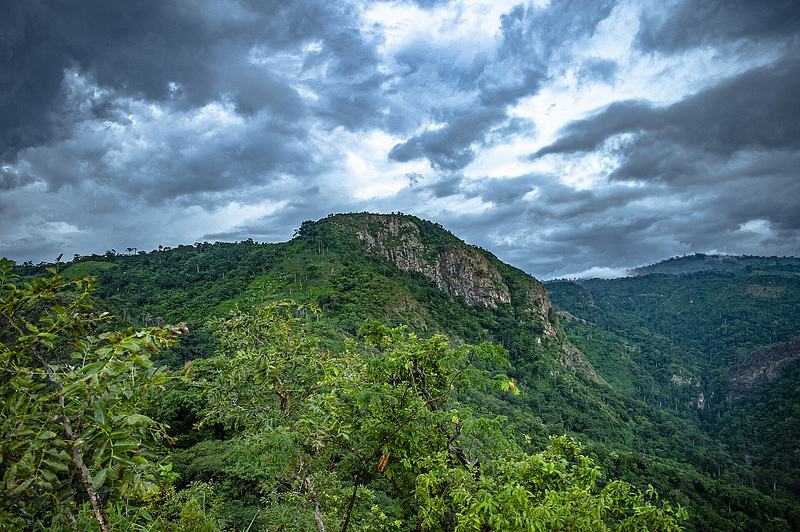
6.Extend to Aduadu Mountain
Aduadu is a peak of about 746 metres in the Agumatsa Range, usually reached as an extension beyond the Afadja summit trail. It is a longer, more committing day than the standard climb, and the VisitGhana entry notes that an overnight hike can be arranged to continue from the top of Afadja and camp on Aduadu before returning the next day. Worth it if you want the ridge to yourself.
Tip: This is a serious extension, not a stroll — arrange it in advance with the reception centre, carry more water than you think you need, and be honest with your guide about your fitness.
-
Attraction
7.Hike the Twin Mountain
The Twin Mountain is a pair of steep peaks near Liati Wote in the Agumatsa Range, offering a quieter and more demanding guided hike than the Afadja trail. It is one of the village's less-talked-about features, which means fewer footprints and more forest. Best suited to walkers who have already done Afadja and want something harder and emptier.
Tip: Because it is less visited, ask specifically at the reception centre whether a guide is available for it on your dates, and set aside a full morning.
-
Attraction
8.Learn at the Kweku Andoh Sustainability Institute
KASI is an off-grid campus in Liati Wote that describes itself as a marriage of eco-resort and research and training institute, teaching sustainable and renewable practices from an indigenous African perspective. Its course modules cover medicinal herbs, bamboo, water, eco-building, solar technology, plant-based cuisine and organic agriculture, and it runs customised programmes. It is named for the Ghanaian ethnobotanist Dr A. Kweku Andoh.
Tip: This is a course-based campus rather than a drop-in attraction, so enquire ahead about visiting or joining a module instead of turning up expecting a tour.
-
9.Follow the Tagbo River on the forest trail
The sacred stream that feeds Tagbo Falls is crossed three times by bridges on the way to the falls, and it is a feature of the walk in its own right — clear water running fast over rocks beneath concrete and timber spans, with birds calling from the surrounding vegetation. The community holds the river in spiritual regard, and it is taboo to eat fish from it.
Tip: Walk quietly and take your time on the crossings; the stones and timber can be slippery after rain. Do not swim or fish without asking first.
-
Attraction
10.Visit the Clean & Green Hub and Nuku Arts Center
A community-owned craft and upcycling centre where recovered plastic waste is turned into goods sold at the on-site Nuku Arts shop. It is the shopfront of the village's wider plastic-waste effort, which has placed bins along the hiking trails and involved local artists in painting murals about littering. A good place to buy something that carries a story rather than a souvenir that does not.
Tip: Ask about the recycling process while you are there — the centre is as much an awareness project as a shop, and the people running it are happy to explain.
-
Waterfall
11.Seek out Tsizor Waterfall
A forest-fed waterfall near Liati Soba in the Afadzato South District, reached on foot from the village. It sits in the same belt of hills and forest as Tagbo and shares its character — a shaded approach, a plunge of water, and few other visitors. Operational details are not well documented, so treat it as an exploratory add-on rather than a fixed stop.
Tip: Because information is thin, ask at the reception centre whether the trail is currently walkable and whether a guide is available before setting out.
-
Attraction
12.Add Ayafie Waterfall near Amedzofe
A forest waterfall reported at Avatime Gbadzeme in the Ho West District, near Amedzofe, reached on foot. It is a natural pairing with the Amedzofe area, which sits at high elevation and offers some of the region's best views. Like Tsizor, its operational details are unverified, so it rewards travellers who are comfortable asking locally and adapting.
Tip: Combine it with a wider Amedzofe day rather than making a special trip, and confirm access with local guides on the ground.


Plan your time
Suggested itinerary
Half a day: the falls and the village
Arrive in Liati Wote and go straight to the Afadjato-Tagbo Eco-Tourism Reception Centre to register and be assigned a guide. Walk to Tagbo Falls — 45 minutes to an hour each way through farmland and forest, crossing the Tagbo River three times — and take your time at the pool. On the way back, ask your guide to show you the village: palm tapping, mushroom farming, the fields, and the Clean & Green Hub where plastic waste is turned into goods. Finish with a meal from the community cook. This is the gentlest introduction to the place and works well if you are passing through towards Hohoe or Wli.
Afadjato-Tagbo Eco-Tourism Reception Centre→Tagbo Falls→Tagbo River (sacred stream and trail crossings)→Liati Wote Community Cultural Experiences (village & farm walks, drumming)→Liati Wote Clean & Green Hub (Nuku Arts Center)
One day: summit in the morning, forest in the afternoon
Start early — the Afadja trail has little shade and the heat builds quickly. Register at the reception centre, then climb with a guide: roughly 1.5 to 2 hours up, 2 to 4 hours round trip, with the summit opening over the valleys towards Lake Volta and Togo on a clear day. Descend, eat, and rest through the hottest hours. In the afternoon, walk to Tagbo Falls, which is shaded and forgiving, and cool off at the base. If you have energy left, spend the evening at Apollo Park at the foot of the mountain, or arrange drumming and dancing with a local cultural group.
Afadjato-Tagbo Eco-Tourism Reception Centre→Mount Afadja (Afadjato)→Tagbo Falls→Apollo Park→Liati Wote Community Cultural Experiences (village & farm walks, drumming)
Two days: the ridge and the wider district
Day one as above — reception centre, Afadja, Tagbo Falls, and an overnight stay in the village or at Apollo Park rather than a rushed drive back to Hohoe. Day two, choose your challenge: arrange the overnight extension from the Afadja summit to camp on Aduadu Mountain, or take the steeper, quieter Twin Mountain hike if a guide is available. If you would rather see more of the district than more of the ridge, use the morning for the Kweku Andoh Sustainability Institute and an afternoon exploring towards Amedzofe and the forest waterfalls at Ayafie and Tsizor. Either way, confirm arrangements at the reception centre the day before.
Afadjato-Tagbo Eco-Tourism Reception Centre→Mount Afadja (Afadjato)→Tagbo Falls→Aduadu Mountain→Twin Mountain (Liati Wote)→Kweku Andoh Sustainability Institute (KASI)→Ayafie Waterfall→Tsizor Waterfall


Seasons and festivals
When to go
Liati Wote is visitable year-round, but the seasons change what you get. Water flow at Tagbo Falls is reduced in the dry season, though the falls remain beautiful throughout, and the walk to them is mostly shaded whatever the month. Butterflies are most abundant in the dry season, roughly October to March. The mountain is the opposite problem: it has little shade, so it is best climbed in the early morning or late afternoon, and views from the summit are generally poor during the Harmattan, roughly November to March, when haze settles over the landscape. If panoramic views are the point of your trip, plan around the Harmattan or accept that the summit may be clouded in. The forest around the falls is cool, and the temperature at the base of the falls drops noticeably, especially in the rainy season.
- Afadjato Festival · August
- Held every August in Liati Wote to celebrate the mountain, with a variety of events. It is the village's main moment for noise and festivity — worth timing a visit around, since everyday life here is deliberately quiet.
- Afadzato-Tagbo Falls festival durbar · Annual, date varies
- A durbar at which the Afadjato-Tagbo Falls Ecotourism Committee and district and traditional leaders meet. At one such gathering the Ghana Tourism Authority presented a memorandum of understanding for developing the district's sites, and the paramount chief of the Liati Traditional Area spoke about tourism's potential for the area.
Access
Getting there and around
Liati Wote sits in the Afadzato South District of the Volta Region, close to the Togo border. Mount Afadja's summit is about 178 km north-east of Accra and a similar distance north-west of Lomé, and the village itself is roughly 24 km from Hohoe. By road from Accra, the route runs via the Tema–Hohoe road; turn right at the police barrier at the Golokwati junction and drive about 6 km, then turn left onto an untarred road at Liati Agbonyra. Continue about 4 km, turn right at Liati Soba, and drive a further 4 km to the visitor centre on the left. The drive from Accra is roughly 200 km and typically takes four to six hours depending on traffic and road conditions, and the final stretch is untarred. Public transport means trotros towards Hohoe, then a local taxi or motorbike for the last leg; private hire cars and organised tours are the more comfortable options. Once in the village, everything is on foot — the reception centre, the trailheads, the falls and the village itself are all walkable. Mobile signal drops in forested areas, so download an offline map of the Volta Region before leaving Hohoe.
Good to know
Before you go
Liati Wote is a living village with firm rules, and the visit goes better when you know them. Noise is forbidden in the community except on festive occasions, and keeping dogs is not allowed — the quiet is deliberate, so keep voices low and phones on silent. Littering is treated as a serious offence; use the bins along the trails. The Tagbo River is sacred, and it is taboo to eat fish from it. Traditional authorities have at times forbidden swimming in the pool beneath the falls, so ask before you plan on a dip.
Practically: the reception centre is cash only and there are no ATMs nearby, so withdraw cedis in Hohoe or Accra. There is no market in the village and no food or water resupply on either trail — carry everything you need. Guides are volunteers who depend on tips. Wear shoes with grip, bring more water than feels necessary, and use insect repellent. A guide is worth having not only for navigation but because the forest contains a plant that causes severe skin irritation.


FAQ
Questions travellers ask about Liati Wote
Is Mount Afadja really the highest mountain in Ghana?
It is widely promoted as such and the 885-metre figure appears on signage and in most tourism material, but modern topographic surveys place the summit closer to 587 metres, with the nearby Aduadu higher and Leklata, about 4.6 km east, identified by several sources as Ghana's true high point. VisitGhana now describes Afadja as 'one of the highest mountains' rather than the highest.
How long does it take to climb Mount Afadja?
The guided summit trail is about 3 km and most people take roughly 1.5 to 2 hours to climb, with the round trip running 2 to 4 hours depending on pace and how many rests you take. The trail has little shade, so start early in the morning or late in the afternoon.
How do I arrange a guide in Liati Wote?
Go to the Afadjato-Tagbo Eco-Tourism Reception Centre on the left at the signpost as you enter the village. Guides are assigned there rather than chosen individually, fees for both the mountain and the falls are paid there, and there is a registration process before you set out. The office is cash only.
Can you swim at Tagbo Falls?
VisitGhana describes taking a plunge in the pool at the base of the falls, but the Daily Graphic reports that the traditional authorities of Liati Wote have forbidden swimming in the water beneath the falls. Ask at the reception centre on arrival rather than assuming either way.
When is the best time to visit Liati Wote?
Butterflies are most abundant in the dry season, roughly October to March, and the falls walk is shaded year-round. However, summit views are generally poor during the Harmattan, roughly November to March, because of haze. If clear views matter most, plan outside the Harmattan and climb early in the day.
Is there anywhere to stay in Liati Wote?
Yes. The reception centre has a small rustic guesthouse with showers and mosquito nets, camping is available there, and homestays can be arranged. Apollo Park at the foot of the mountain is a community recreation and camping space, and there is also a lodge on the edge of the village. There is no market in the village, so bring supplies from Hohoe.
What is there to do in Liati Wote besides the mountain?
The walk to Tagbo Falls is the main alternative, along with guided village and farm walks, evening drumming and dancing, the Clean & Green Hub and Nuku Arts shop, and the Kweku Andoh Sustainability Institute. More demanding hikers can arrange the Aduadu extension or the Twin Mountain, and the district also holds the Tafi Atome Monkey Sanctuary and caves at Logba Tota.
Keep exploring
More destination guides
Sources for this guide (13)
- Mountain Afadja (Afadjato) — Visit Ghana
- Liati Wote — Visit Ghana
- Mount Afadja — Wikipedia
- Tagbo Falls — Wikipedia
- Afadzato South District — Wikipedia
- Liati-Wote — Epicentre of tourist attractions waiting to be explored — Graphic Online
- Afadzato South partners GTA to boost tourism — Ghanaian Times
- Hiking in Ghana (Best Spots, Safety, Difficulty Guide 2026) — Ghana Citizenship
- Lakes, Beaches and Falls — Access Volta Region
- Liati Wote community — Fresh from the Field
- The Tagbo Falls Lodge — Jolinaiko Eco Tours
- Kweku Andoh Sustainability Institute (KASI)
- Tourism Attractions — Afadzato South District Assembly
Written September 29, 2026 from these sources and reviewed by the VisitGhana.app team. Confirm practical details locally before travelling.