A town at the crossroads of the ranges
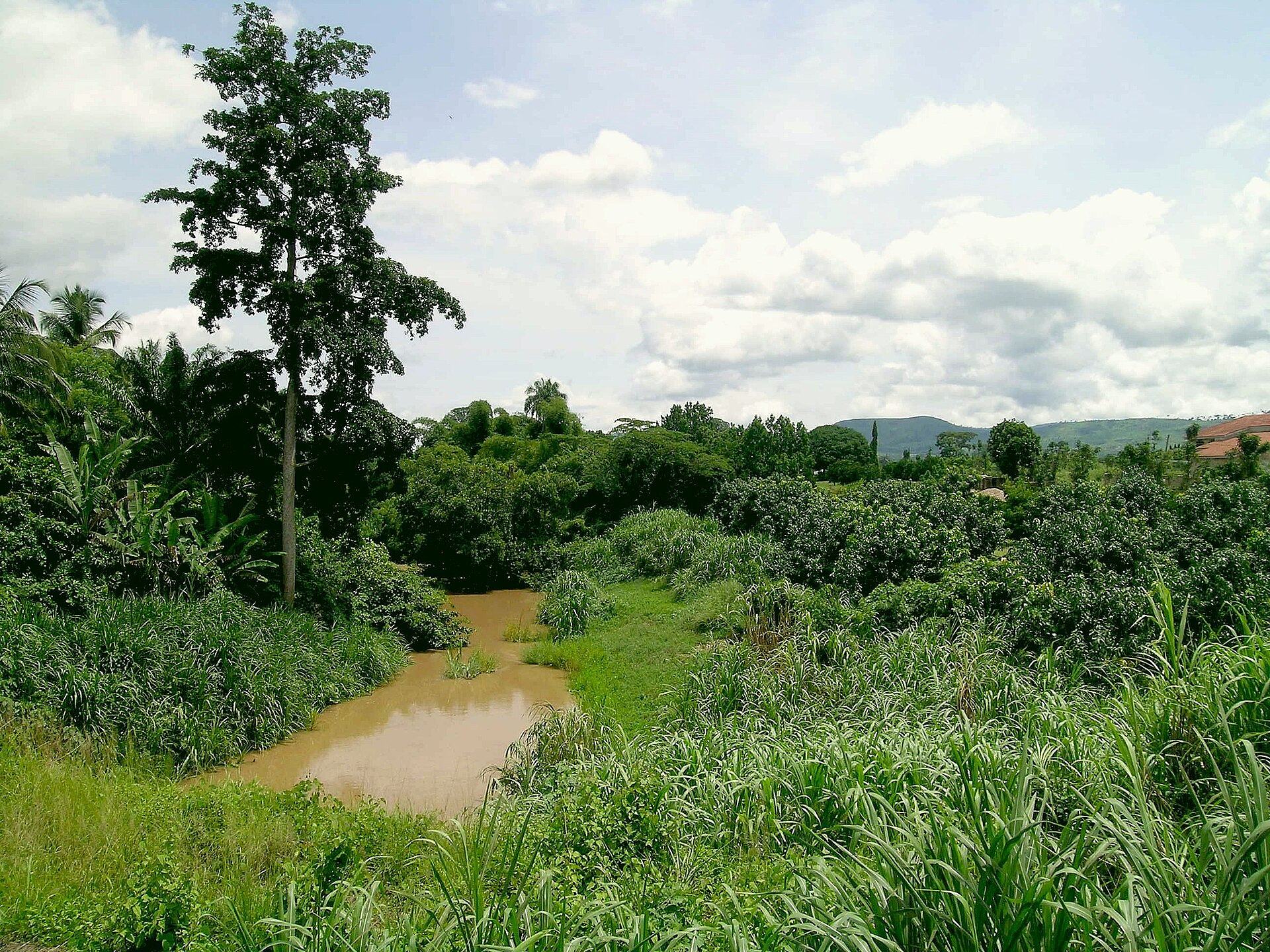
Hohoe began as a district in 1979 and was elevated to municipal status in 2008, and it has grown into what the Daily Graphic calls the commercial capital of the Volta Region. Its position explains the role: the municipality covers about 1,172 square kilometres, roughly 5.6 per cent of the region, and shares a border with the Republic of Togo to the east. The Akwapim-Togo ranges run through it, carrying on beyond Ghana's eastern boundary, and within those hills stands Mount Afadja, at 880.3 metres the highest point in the country. Rivers drain the land too — the Dayi and its tributaries, including the Agumatsa and the Tsatsadu, water the low ground and make dry-season vegetable farming possible. Rice, maize and cassava are the first-choice crops, and the town's market has long pulled traders across the frontier. Hohoe is not a museum piece; it is a place where people farm, trade, study and argue about street lights, and visitors slot into that rhythm rather than interrupting it.

Gbi, Guan and the people of the hills
Hohoe sits in Gbi country, the land of the Ewe-speaking Gbi people, and the town is known as Gbidzigbe, or Gbi North, while Peki to the south is Gbinyigbe. The two Gbi states share the Gbi Dukor Festival, a celebration of regalia, drumming and dance that draws crowds to the durbar. In the centre of town stands a statue of Monica Amekoafia, a native of Alavanyo-Dzogbedze who represented Trans-Volta Togoland in the first Miss Ghana pageant in 1957 — a local reminder of how this region's story folds into the national one. Further out, the picture changes. The Likpe of Likpe Todome are Guans who, by local account, migrated from Atebubu and took refuge in the hills after a dispute with earlier settlers; their name is said to come from the Ewe words for sharpening stones for battle. And at Tafi Atome, residents trace their ancestors to Assini in central Ghana, arriving with an idol they placed in a forest that became sacred — and sacred, too, were the Mona monkeys that followed them. These are living traditions, not exhibits, and the communities themselves run much of what visitors come to see.

Water, forest and stone
The landscape around Hohoe is built on water and rock. The Agumatsa river gathers in the hills and drops over sandstone and shale in two main stages: an upper fall of roughly 80 metres and a lower fall of about 65 metres, together the highest waterfall in Ghana and, by common reckoning, in West Africa. The Forestry Commission describes the wider feature as a series of four falls and two cascades descending some 600 metres, perennial and open to visitors all year. The forest around it is the Agumatsa Wildlife Sanctuary, where butterflies, birds, monkeys and baboons share the shade with the bats that cling to the gorge walls. The falls matter culturally as well as scenically: communities regard them as a protective fetish, and an annual festival is held on the last Saturday of October. North of Wli, the Likpe hills hide a different kind of wonder — six interconnected ancestral caves cut into the mountain, once used as council chamber, hideout, sleeping quarters, palace, prison and spy post, with the Wadjakli waterfall on a side path. It is rough, steep country, and all the better for it.

What to do
Things to do in Hohoe
-
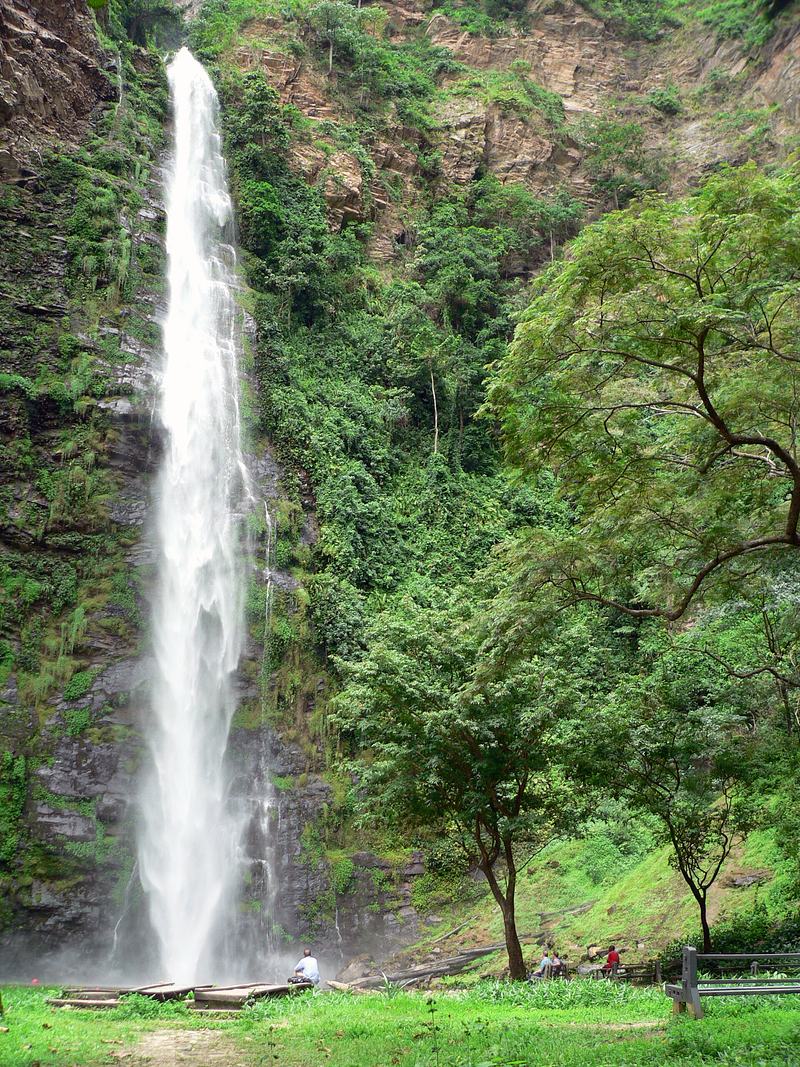
1.Walk to the Wli Waterfalls
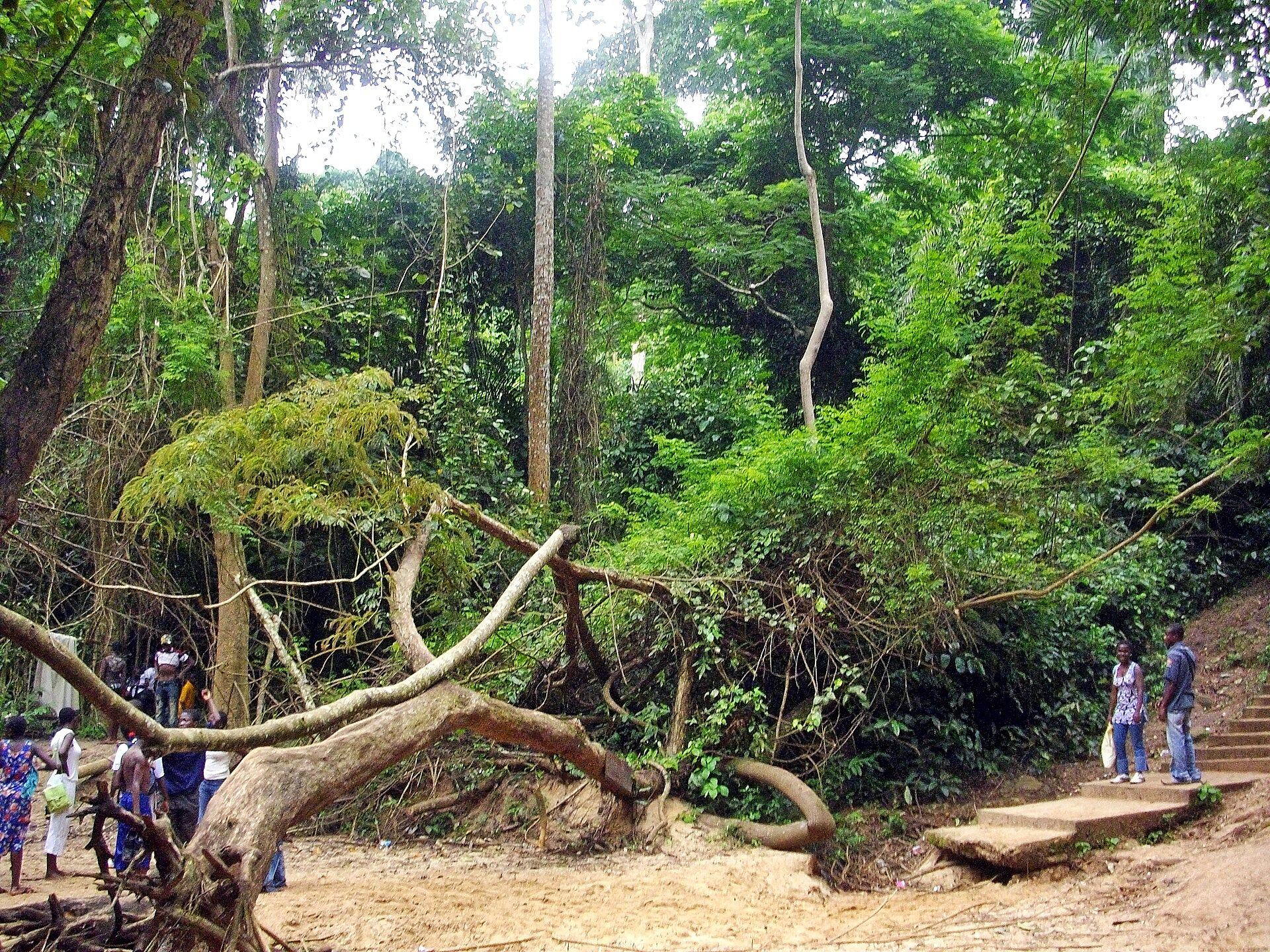
The signature Hohoe experience. From Wli-Agorviefe you follow a shaded, largely level path through the Agumatsa Wildlife Sanctuary, crossing the meandering Agumatsa river eleven times on locally made log bridges, to reach the base of the lower fall. The Forestry Commission calls this Ghana's highest waterfall, and the cliff above is hung with thousands of fruit bats. The microclimate at the foot of the falls is cool and damp, a welcome change from the open road.
Tip: Wear shoes you don't mind getting wet — the bridges and spray keep the path slick — and carry water; the walk takes about an hour each way at an easy pace.
-
Attraction
2.Climb to the upper falls
Beyond the popular lower fall, a steeper path continues upstream to the upper fall, roughly an hour's climb from the main falls. This is the demanding version of Wli: the gradient is real, the rock can be slippery, and it rewards stamina with a quieter, higher view of the Agumatsa's drop. The sanctuary itself is the protected area on the Togo-Buen ranges that contains the falls, so the whole climb stays within conserved forest.
Tip: Only attempt this with proper hiking footwear and a guide, and turn back if the rock is wet — the descent is harder than the climb.
-
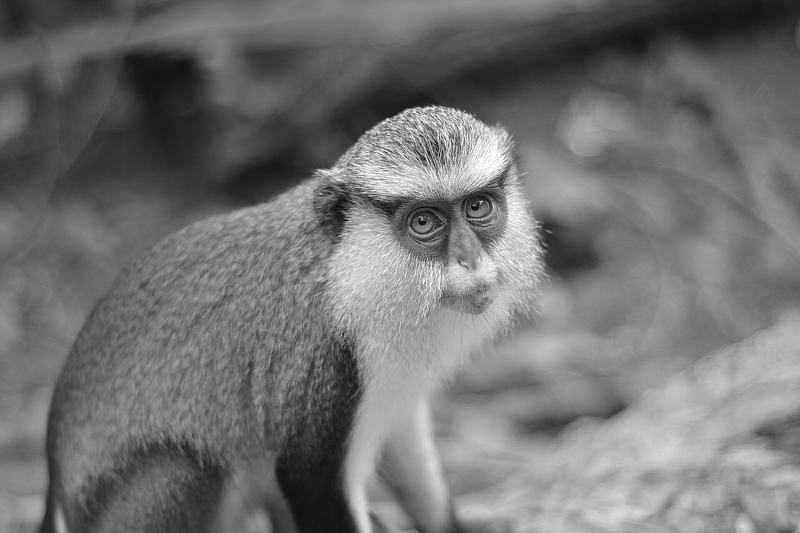
3.Meet the Mona monkeys at Tafi Atome
Tafi Atome's sacred grove is about 28 hectares of semi-deciduous forest, protected by community custom and a 2006 district bylaw, and home to a population of Mona monkeys that residents regard as representatives of the gods. A guided walk through the grove is calm and close-up — the monkeys are habituated and curious — and the community-run project, begun in the mid-1990s, channels tourism income back into the village. It is one of Ghana's clearest examples of conservation led by the people who live with the wildlife.
Tip: Let your guide handle any feeding, and keep food tucked away between stops; the monkeys are bold and quick.
-
Attraction
4.Explore the Likpe Ancestral Caves
From the village of Likpe Todome, beneath the Likpe Mountain, a climb of between 45 minutes and an hour brings you to six interconnected caves that once sheltered the Likpe people. Each chamber had a purpose: a conference chamber for the chief and elders, a hideout for guards, a sleeping cave, an underground palace with stone seats, a holding cell, and a spy cave with wide views over the landscape. The route involves steep climbing, narrow entrances and exposed ledges, so it is genuinely adventurous rather than a gentle stroll.
Tip: Start from the tourist reception centre in Likpe Todome, take a local guide, and allow about four hours if you also want the side trip to Wadjakli Falls.
-
Attraction
5.Shop the Hohoe Central Market
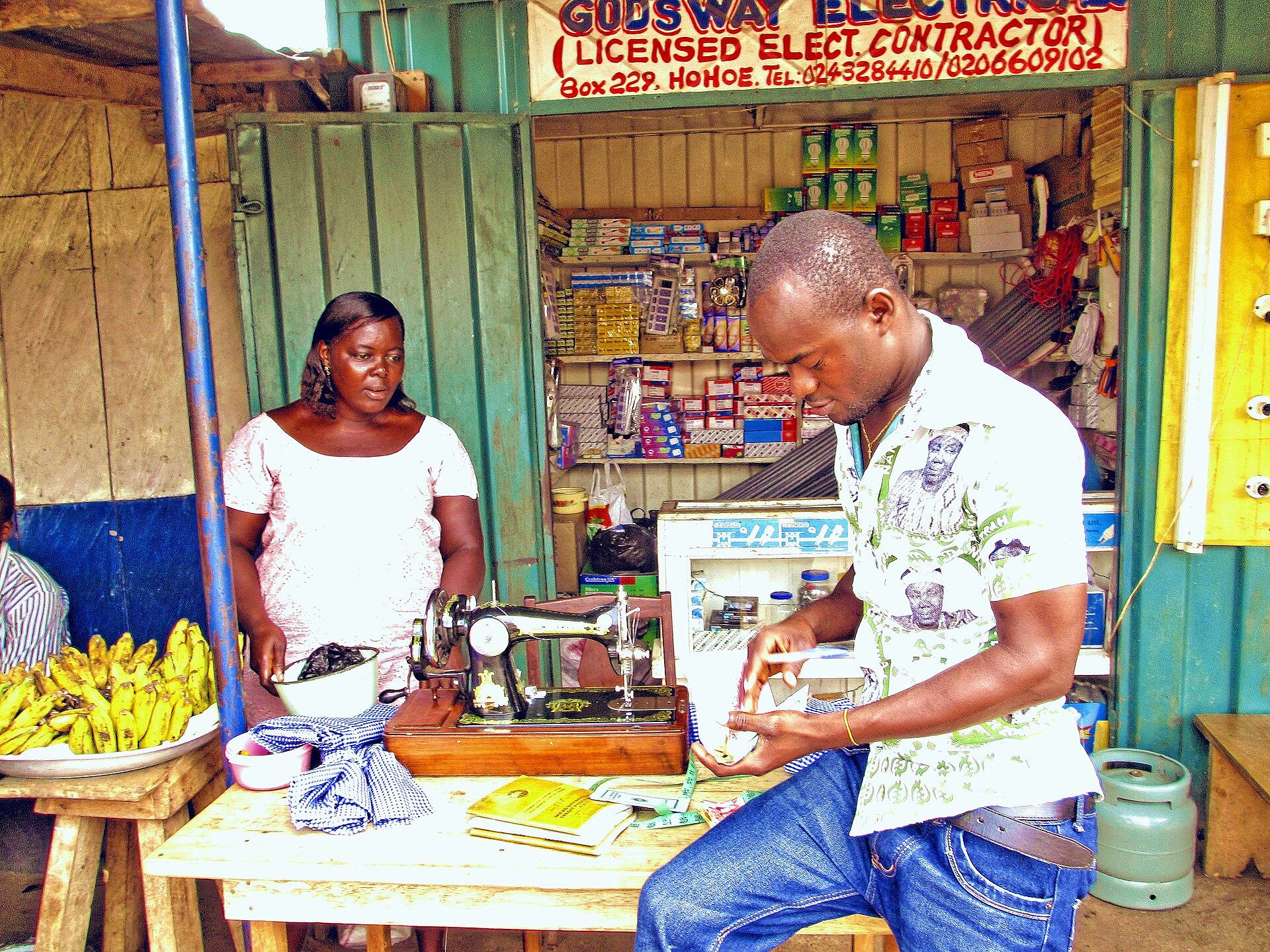
Hohoe's central market is the trading heart of the municipality and the reason the town feels like a capital. Stalls deal in rice, yam, maize, fish and fruit, and the market pulls patrons from across Ghana and neighbouring Togo. The rebuilt market has 106 lockable stores and 44 sheds, and local leaders have spoken of extending trade into the evening. Come for the produce, the cloth and the noise, and to understand what the surrounding farmland actually produces.
Tip: Go in the morning when the market is at full pitch, and bring small notes — change can be scarce later in the day.
-
Attraction
6.Catch a match at Hohoe Sports Stadium
Opened on 30 November 2024 before a crowd of more than 7,000, the municipal stadium is a 10,000-seater with a FIFA-standard AstroTurf pitch plus basketball, lawn tennis and volleyball courts. It is home to Hohoe United, and match days bring the town out in force. Even if football is not your thing, the stadium is a good measure of how Hohoe sees itself: a regional centre with ambitions to match.
Tip: Ask locally for the fixture list — a home game is the liveliest way to spend an afternoon in town.


Plan your time
Suggested itinerary
Half a day: the falls and the market
Start early and drive out to Wli-Agorviefe for the walk to the lower Wli Waterfalls, giving yourself about an hour each way through the Agumatsa Wildlife Sanctuary. Take your time at the base — the bats on the cliff are the spectacle as much as the water. On the way back into town, stop at Hohoe Central Market for rice, yam and fruit, and to see the trading life that makes Hohoe the region's commercial centre. If you have energy left, walk the town centre to find the statue of Monica Amekoafia.
Wli Waterfalls→Hohoe Market
One day: monkeys, falls and a match
Begin at Tafi Atome Monkey Sanctuary for a guided walk among the Mona monkeys in the sacred grove, then continue to Wli for the lower falls walk. Eat lunch in or near Wli-Agorviefe before heading back towards Hohoe. In the late afternoon, depending on fixtures, take in a game at Hohoe Sports Stadium, or simply wander the market and town centre. This is a full but manageable day, with short drives between each stop.
Tafi Atome Monkey Sanctuary and Cultural Village→Wli Waterfalls→Hohoe Sports Stadium→Hohoe Market
Two days: add the caves and the upper fall
Day one: Tafi Atome in the morning, Wli lower falls in the afternoon, and the market and town centre in the evening. Day two: make the climb to the Likpe Ancestral Caves from Likpe Todome, allowing about four hours if you include the side path to Wadjakli Falls — this is steep, exposed terrain and needs proper footwear and a guide. If you would rather stay closer to Wli, swap the caves for the steeper climb to the upper falls instead, and finish with a slow afternoon around the sanctuary.
Tafi Atome Monkey Sanctuary and Cultural Village→Wli Waterfalls→Likpe Todome Mountain and Tourist Reception Centre→Hohoe Market


Seasons and festivals
When to go
Hohoe sits in a bimodal rainfall belt, and the falls respond to it. The Agumatsa's flow is seasonal, with peak water volume during the rainy season from May to October, while the drier months from November to March bring clearer water and easier access on the trails. The Forestry Commission notes the falls are perennial and open to visitors throughout the year, so there is no closed season — but if you want the thunderous version of Wli, aim for the wetter months, and if you want firmer footing on the upper path and the Likpe caves, aim for the dry ones. The heat is moderated by altitude in the hills, and mornings are the coolest and quietest time to walk.
- Wli Waterfall Festival · Last Saturday of October
- An annual festival held to honour the falls, which communities regard as a protective fetish. The Forestry Commission describes it as a festival of rich culture and one not to miss, with the falls playing a central part in the cultural life of the surrounding communities.
- Gbi Dukor Festival · Annual, shared between the Gbi states
- A celebration of Gbi culture in the Hohoe area, with chiefs and queenmothers in regalia and cultural troupes performing at the durbar. It draws visitors from far and near and is one of the biggest events on the local calendar.
Access
Getting there and around
Hohoe is about 78 km from Ho, the Volta Regional capital, and about 220 km from Accra, and the municipal capital is linked to both by first-class roads. The municipality has a good internal road network of roughly 390 km, mostly feeder roads, which makes the surrounding villages reachable, though surfaces vary. Wli Waterfalls lie about 20 km from Hohoe, and the Likpe caves are a further 8 km north of the Wli falls. Within Hohoe itself, shuttle taxis and okada motorbikes are the common way to get around, and the town's market draws traders and travellers from across Ghana and from neighbouring Togo. The Eastern Corridor Road runs through the municipality, and its completion is expected to speed the link between Accra and the north. Arrange transport for the outlying sites in advance, as you will want a vehicle waiting while you walk.
Good to know
Before you go
Bring footwear that can handle wet rock and mud — the Wli trail crosses the river repeatedly on log bridges, and the Likpe caves involve steep, exposed scrambling. Carry cash, water and a rain layer, and expect limited facilities at the more remote sites. Hire local guides at the sanctuaries and caves; they know the routes, and the fees support community projects such as Tafi Atome's grove and its welcome centre. Treat sacred places with care: the Agumatsa falls are regarded as a protective fetish, and the Tafi Atome monkeys are considered representatives of the gods, so follow your guide's lead on feeding, photography and where you may walk. Ask before photographing people, especially at markets and during festivals. Finally, keep your plans flexible — paths and river levels change with the rains, and a guide's judgement on the day matters more than any itinerary.


FAQ
Questions travellers ask about Hohoe
How tall is Wli Waterfalls?
The upper fall drops approximately 80 metres and the lower fall about 65 metres, making Wli the highest waterfall in Ghana and the tallest in West Africa. The Forestry Commission describes the wider feature as a series of four falls and two cascades descending some 600 metres.
How long is the walk to Wli Waterfalls?
The lower fall is reached by a largely level, shaded walk of about an hour from Wli-Agorviefe, crossing the Agumatsa river eleven times on log bridges. The upper fall is a further climb of roughly an hour from the main falls and is considerably steeper.
When is the best time to visit Hohoe and Wli?
The falls flow most strongly during the rainy season from May to October, while the drier months from November to March offer clearer water and easier access. The falls are perennial and open to visitors throughout the year.
Can you see the bats at Wli Waterfalls?
Yes. A large colony of fruit bats clings to the cliff face above the lower fall and can be seen flying overhead. The Forestry Commission highlights the thousands of bats as one of the falls' most impressive features.
How far is Hohoe from Accra and Ho?
Hohoe is about 220 km from Accra, the national capital, and about 78 km from Ho, the Volta Regional capital. Both are linked to the town by first-class roads.
What else is there to do near Hohoe besides the waterfall?
You can walk among Mona monkeys at the Tafi Atome Monkey Sanctuary, climb to the six ancestral caves at Likpe Todome, shop at Hohoe Central Market, and watch football at the Hohoe Sports Stadium. Mount Afadja, Ghana's highest point, and the Tsatsadu and Tagbo waterfalls are also in the wider area.
Is the climb to the Likpe Ancestral Caves difficult?
Yes. The climb from Likpe Todome takes between 45 minutes and an hour and involves steep ascents, narrow entrances and ledges on precipices. It is not suitable for anyone uncomfortable with heights, and proper walking boots and a local guide are strongly advised.
In pictures
Hohoe in pictures
Keep exploring
More destination guides
Sources for this guide (9)
- Agumatsa Wildlife Sanctuary — Forestry Commission
- Hohoe — Wikipedia
- Wli waterfalls — Wikipedia
- Community-based Ecotourism at Tafi Atome Monkey Sanctuary — Sacred Natural Sites
- People & Places: Likpe ancestral caves — Graphic Online
- Hohoe: Home of vast tourism potentials — Graphic Online
- Hohoe Sports Stadium Officially Opens with Grand Ceremony — Volta Online
- Hohoe Municipal — Ministry of Food and Agriculture
- Volta Tourist Highlights — Support Ghana / Emo Foundation
Written September 29, 2026 from these sources and reviewed by the VisitGhana.app team. Confirm practical details locally before travelling.