The town that walked backwards out of Notsie
Anloga's story begins elsewhere. The Anlo Ewe trace their origins to Notsie, a walled town in present-day Togo, where oral tradition holds that they lived under the oppressive rule of King Agorkoli. The escape is the founding event of Anlo identity: the women are said to have softened a section of the great earthen wall with water until it could be broken through, and the people then walked away backwards, faces turned towards the town, so that their footprints seemed to lead inwards and confuse any pursuers. The Anlo settled on the coast around the Keta Lagoon in the later seventeenth century, and Anloga became their traditional and ritual capital. The name itself is a small poem of reluctance: Torgbui Wenya, the founder, is said to have uttered the words me nlo — 'I have shrunk' — when pressed to move on, and the suffix gã, meaning big, gives Aŋlɔgã, Big Anlo. Later history was harder. After the Anlo-Danish War the Danes built Fort Prinzenstein at Keta in 1784, and a disastrous turn of events — a mock battle with Keta that became real — left a lasting enmity and weakened the Anlo people. It took the British another twenty-five years after buying the fort in 1850 to bring towns like Anloga into the Gold Coast colony.

A kingdom governed by custom
The Anlo are a patrilineal society with a centralised authority shaped by the conflicts of the seventeenth and eighteenth centuries. Their ruler, the Awoamefia, is not chosen by primogeniture: the title rotates between two royal clans, the Adzovia and the Bate, and the elected king lives in seclusion, dealing chiefly with three senior chiefs who head the geographical wings of the state — Lashibi to the west, Adotri at the centre and Woe to the east. Below them, sub-chiefs and headmen investigate crimes and settle disputes, with the right of appeal upwards. In Anloga the Awormefia is both paramount chief of the Anlo State and president of the Anlo Traditional Council, and the town is described by its own district assembly as virtually Anlo in character. Most residents are indigenous Anlo Ewe whose livelihoods rest on subsistence farming and commercial fishing, alongside teachers, health workers, public servants and a small number of settler traders. The Anlo language, Anlogbe, is a dialect of Ewe within the Gbe cluster, and traditional Vodun practice sits alongside widespread Christianity.

Justice, salt and shallots
Anloga's most sobering landmark is Torkor Atorlia, the 'fifth landing stage', which served as the highest seat of traditional justice for the Anlo people. Here, after trial in the highest customary court, those convicted of the gravest offences — murder, rape, robbery, burglary, theft, disobedience to authority, and men who slept with other men's wives — were taken and buried to the neck, left for birds of prey. Beside the site is a small pond where those who carried out the burials underwent purification rites; it is said never to have dried, even in long droughts, and remains covered with floating plants. The practice belongs to the past, and the site today is a quiet, breezy place under a canopy of old trees, close to the Anloga police station and Hogbe Park. A project is under way to turn it into a museum and tourist centre with a library, conference hall and a corridor of sculpted busts of past Awoamefias, ending at the sacred pond used in post-judgment cleansing. The surrounding district lives by water and soil: the floodplains along the Angaw and Keta lagoons are Ghana's foremost shallot-growing area, with tomatoes, okra, chilli pepper and garden eggs alongside, while salt mining has been carried out on the lagoon's banks for centuries.

A land between three waters
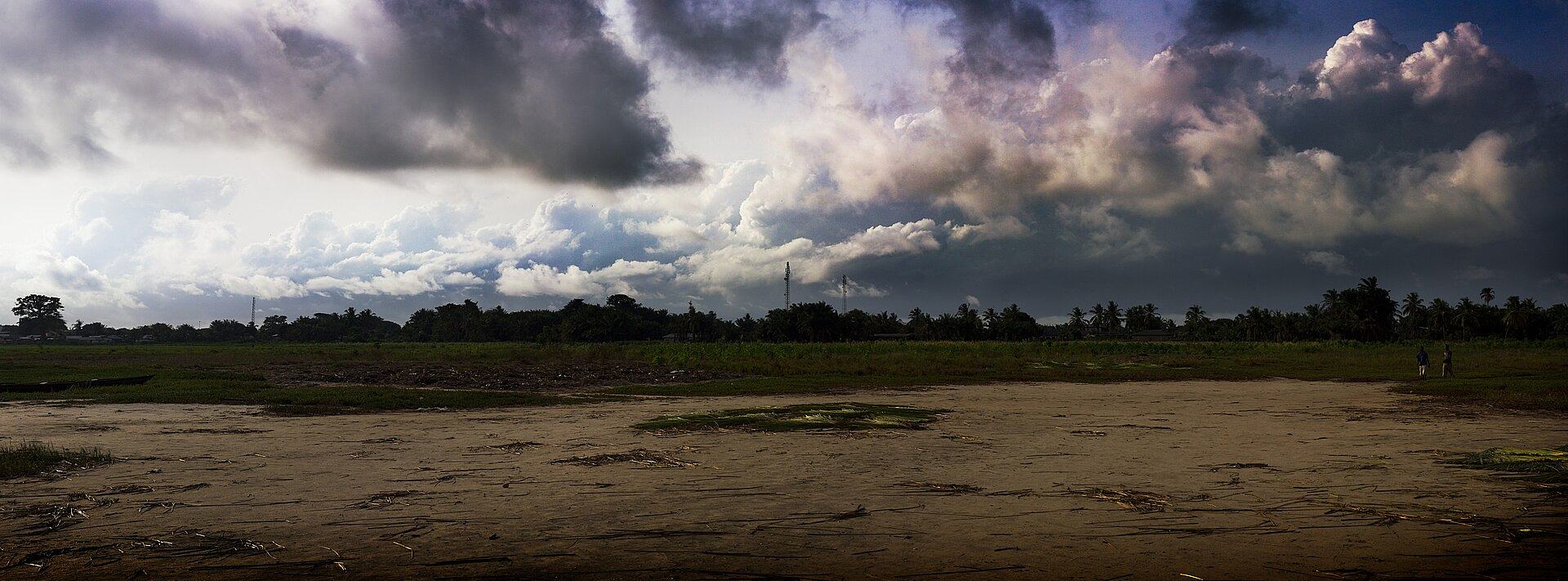
Anloga sits in a landscape defined by water. To the south is the Gulf of Guinea and a long stretch of golden, coconut-fringed sand; to the north, the Keta Lagoon, the largest lagoon in Ghana, holding roughly 300 square kilometres of brackish water that rises and falls with the seasons and the tide. The lagoon, together with the Avu and Angaw lagoons, forms the Keta-Avu-Angaw Lagoon Complex within the Keta Lagoon Complex Ramsar Site — Ghana's largest Ramsar site, designated in 1992 and covering some 136,000 hectares. It is a wetland of international importance: more than 31,000 waterbirds have been counted here, including whiskered and Caspian terns, curlew sandpipers and ringed plovers, many of them migrants from Europe. The mangroves shelter fish nurseries, three globally threatened turtle species and the sitatunga, the world's only amphibious antelope, found in the Avu Lagoon. The Fuveme-to-Anloga beach stretch is one of Ghana's major sea-turtle breeding grounds, with leatherback, green and olive ridley turtles coming ashore to lay eggs between November and March. The district is also one of the driest stretches of Ghana's coast, with annual rainfall under 1,000 mm and average daily temperatures around 30°C.

What to do
Things to do in Anloga
-
Beach
1.Walk the shore at Lalana Beach
The beachfront at Anloga, known locally around Kportorgbe, is the town's easiest pleasure: fine golden sand, coconut palms leaning over the tideline, and the Atlantic rolling in beyond. The Anloga-to-Keta coast is among the cleanest and most pristine stretches in Ghana, and it is calm enough that visitors camp on the sand overnight. Come early for sunrise over the sea, or late for the light on the water.
Tip: The sea here is open Atlantic with no lifeguards — swim near others and ask locally about currents before going in.
-
2.Canoe or cruise the Angaw and Keta lagoons
The Angaw Lagoon is part of the Keta-Avu-Angaw Lagoon Complex, and the water around Anloga is best seen from a canoe. Local fishermen will paddle you out among the mangroves and islands, past birdlife and, in season, the artificial islands built for migratory birds. The lagoon is the largest in Ghana and the heart of the Ramsar site, so a slow hour on it explains the whole district — fishing, salt, reeds and birds all at once.
Tip: Arrange a canoe through a local guide or your accommodation rather than hailing one on the water, and go early when the lagoon is still and birds are active.
-
Attraction
3.Stand at Torkor Atorlia, the Fifth Landing Stage
Torkor Atorlia was the highest seat of traditional justice in Anloland, where the gravest offences were judged and the condemned buried to the neck beside a pond used for purification rites. It is a place to visit quietly and with respect: the old trees still shade the site, and the pond is said never to have dried. A museum and tourist centre is planned here, with a library and a corridor of busts of past Awoamefias.
Tip: This is a site of customary and spiritual significance, not a spectacle — go with a guide who can explain the legal history, and ask before photographing.
-
4.See the Hogbetsotso durbar at Hogbe Park
If your visit can be timed to the first Saturday of November, the Hogbetsotso festival fills Anloga with colour. Chiefs in kente sit in state to receive homage, the Agbadza — once a war dance — is performed vigorously, and the week includes peacemaking, the purification of the ceremonial stools and a general cleaning that traditionally runs from the Volta to the Mono River. It is the clearest window onto Anlo identity you will find.
Tip: The durbar is a major public event with crowds and heat; arrive early, dress modestly, and follow the stewards' directions around the chiefs.
-
5.Watch birds on the lagoon wetlands
The Keta Lagoon Complex is historically Ghana's most important seashore bird site, and more than 31,000 waterbirds have been recorded here. Whiskered and Caspian terns, curlew sandpipers, ringed plovers, egrets and pied kingfishers are among the species that feed, roost and nest in the mangroves and shallows. The communities around Afiadenyigba, Fiahor, Woe, Tegbi and Adina are noted parts of the lagoon for waterbirds.
Tip: Bring binoculars and go at low tide or early morning; a local guide will know which channels are holding birds on the day.
-
6.Look for nesting sea turtles on the beach
The Fuveme-to-Anloga beach stretch is one of Ghana's major sea-turtle breeding grounds, used by leatherback, green and olive ridley turtles. The breeding season runs from November to March, when females come ashore to lay in the medium-grained sand. Sightings are never guaranteed, but the stretch is genuinely important habitat rather than a staged attraction.
Tip: Never approach a nesting turtle with lights or cameras flashing, keep your distance and stay downwind — and never touch eggs or hatchlings.
-
7.Explore the shallot and salt country around the lagoon
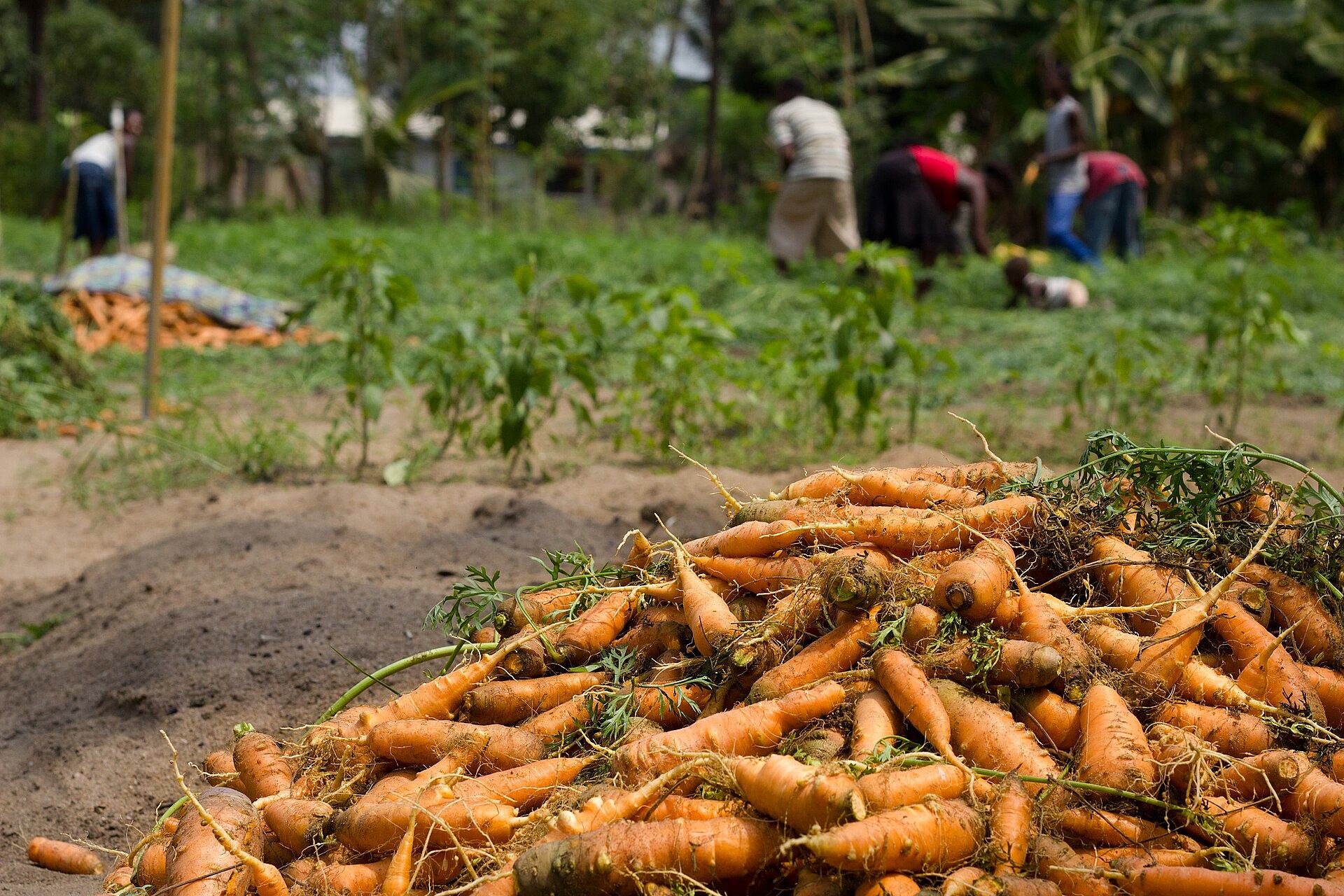
The floodplains along the Angaw and Keta lagoons are Ghana's foremost shallot-growing area, with around a thousand acres under cultivation each year alongside tomatoes, okra, chilli and garden eggs. Salt mining has been carried out on the lagoon's banks for centuries and is still worked by men and women around Kedzi and Adina. Walking the beds and pans with a farmer or salt worker is one of the most grounded ways to understand how Anloga lives.
Tip: Ask permission before entering working beds or pans, and go in the cooler hours — the flats offer almost no shade.
-
8.Take a boat through the mangroves towards the Volta estuary
From the Anloga area you can take a motorised boat along the Anyanui Channel, one of the Volta's distributaries, through mangrove forest towards the river mouth at Ada Foah. The mangroves are among the most productive ecosystems in the region, sheltering fish nurseries, crustaceans and birds, and the estuary itself is a broad, photogenic meeting of river and sea.
Tip: Boat trips are best arranged in advance through a licensed guide; carry water, sun protection and a dry bag for cameras.
-
9.Visit the Atorkor slave market and the wider Anlo heritage trail
Anloga sits within a coast whose history includes the transatlantic slave trade. Atorkor, nearby, was a slave market of considerable importance, and the wider Keta-Anloga area holds Fort Prinzenstein, the Cape St Paul lighthouse at Woe, missionary graves and old trading buildings. These sites are best approached as a single heritage day, with a guide who can hold the difficult history with the care it deserves.
Tip: Allow a full day and go with a knowledgeable local guide; the sites are spread out and their stories are not always signposted.
Plan your time
Suggested itinerary
Half a day: water and light
Start at first light on the beach for sunrise over the Atlantic, then walk or drive the short distance inland to the Angaw Lagoon for a slow canoe paddle among the mangroves and birdlife. Finish with a quiet hour at Torkor Atorlia, the Fifth Landing Stage, under its old trees. This is a gentle introduction to the two waters that frame the town and to the customary history that shaped it.
Lalana Beach→Torkor Atorlia (Fifth Landing Stage)
One day: Anloga in full
Begin with sunrise on the beach, then take a morning canoe on the Angaw and Keta lagoons while the water is still and birds are feeding. After lunch, visit Torkor Atorlia with a guide who can explain the Anlo justice system, then spend the late afternoon among the shallot beds and salt pans along the lagoon fringes. End the day back on the sand as the sun drops, watching the light change over the water.
Lalana Beach→Torkor Atorlia (Fifth Landing Stage)
Two days: Anloga and the Anlo coast
Day one follows the one-day plan, with an early night near the beach. On day two, head out by boat through the mangroves of the Anyanui Channel towards the Volta estuary, then drive the coast to take in the wider Anlo heritage trail — the Atorkor slave market, Fort Prinzenstein at Keta and the Cape St Paul lighthouse at Woe. If you are travelling between November and March, keep the evening free for a guided, low-impact turtle watch on the beach.
Lalana Beach→Torkor Atorlia (Fifth Landing Stage)

Seasons and festivals
When to go
Anloga sits in one of the driest parts of Ghana's coast, with annual rainfall under 1,000 mm and average daily temperatures around 30°C. The main rainy season runs from roughly March to July, while September to November usually records the lowest rainfall — which makes the last months of the year comfortable for beach and lagoon days. Expect heat and humidity year-round, and plan outdoor activity for the early morning and late afternoon. Two natural calendars are worth knowing: sea turtles come ashore to nest along the Fuveme-to-Anloga stretch between November and March, and migratory waterbirds are present on the lagoon in the European winter. The single biggest date in the Anloga year is Hogbetsotso, held on the first Saturday of November, when the town fills for the durbar.
- Hogbetsotso Za · First Saturday of November, with a week of ceremonies around it
- The festival of exodus, celebrated by the chiefs and people of Anlo at Anloga, the customary and ritual capital of the Anlo State. It commemorates the escape of the Ewe from the tyranny of King Agorkoli at Notsie by walking backwards to confuse their pursuers. The week includes a peacemaking period in which disputes are resolved, the purification of the ceremonial stools through libation, and a general cleaning that traditionally begins at the Volta and ends at the Mono River. The climax is a durbar of chiefs in colourful regalia receiving homage, with drumming, singing and the vigorous Agbadza dance.
Access
Getting there and around
Anloga lies in the Anloga District of the Volta Region, east of the Volta River and just south of the Keta Lagoon, roughly 160 km east of Accra and off the main Accra–Aflao road. Most travellers reach the area by road from Accra or from Ho, the Volta regional capital, and the town is close to Keta, with which it shares the coastal strip. The district borders Keta Municipal to the east, South Tongu to the west, Akatsi South to the north and the Gulf of Guinea to the south. Once you are in Anloga, the beach, the lagoon and Torkor Atorlia are all within a short drive of one another, but they are spread out enough that a vehicle or a local guide with transport makes the day far easier. Boat trips on the lagoon and through the mangroves are arranged locally rather than from a central booking point, so it is worth sorting these out in advance through your accommodation or a licensed guide.
Good to know
Before you go
Anloga is a living traditional capital, not a resort town, and a little care goes a long way. Dress modestly away from the beach, and ask before photographing people, shrines, ceremonies or the Torkor Atorlia site — some places carry spiritual significance and a request is both polite and expected. If you plan to visit during Hogbetsotso, book accommodation well ahead and expect crowds and heat at the durbar. The coast here is open Atlantic with strong currents and no lifeguards, so swim cautiously and never alone. Bring cash, sun protection, insect repellent and drinking water; the district is one of the driest on Ghana's coast and shade is scarce on the flats. Turtles, birds and mangroves are the reason the lagoon is protected, so keep your distance, avoid lights on nesting beaches, and take your rubbish away with you. Finally, a local guide is not a luxury here: the history, the customary law and the ecology of the lagoon are all best understood with someone who knows them.


FAQ
Questions travellers ask about Anloga
Where is Anloga in Ghana?
Anloga is a town in the Anloga District of the Volta Region in south-east Ghana. It lies east of the Volta River and just south of the Keta Lagoon, roughly 160 km east of Accra off the Accra–Aflao road, and close to Keta.
Why is Anloga important to the Anlo Ewe?
Anloga is the traditional, ancestral and spiritual capital of the Anlo State and the seat of the Awormefia, the paramount chief. It became the Anlo capital in the seventeenth century after the people migrated from Notsie in present-day Togo.
When is the Hogbetsotso festival held?
Hogbetsotso is celebrated annually on the first Saturday of November at Anloga, with a week of ceremonies around the main durbar. It commemorates the Anlo exodus from Notsie and includes peacemaking, purification of the ceremonial stools and a grand durbar of chiefs.
What is Torkor Atorlia?
Torkor Atorlia, meaning 'the fifth landing stage', was the highest seat of traditional justice for the Anlo people, where those convicted of the gravest offences were buried to the neck after trial in the highest customary court. The site, with its purification pond, is now a quiet historic landmark and is slated to become a museum and tourist centre.
Can you see turtles and birds around Anloga?
Yes. The Fuveme-to-Anloga beach stretch is a major sea-turtle breeding ground, with leatherback, green and olive ridley turtles nesting between November and March, and the Keta Lagoon Complex is an internationally important site for waterbirds, with more than 31,000 counted.
What is the best time of year to visit Anloga?
September to November usually brings the lowest rainfall on this stretch of coast, making it a comfortable window for beach and lagoon days. November also brings the Hogbetsotso festival, while November to March is the sea-turtle nesting season.
What is Anloga known for producing?
The floodplains along the Angaw and Keta lagoons make the area Ghana's foremost shallot-growing region, with tomatoes, okra, chilli and garden eggs also cultivated. Salt mining has been carried out on the lagoon's banks for centuries.
In pictures
Anloga in pictures


Keep exploring
More destination guides
Sources for this guide (13)
- Anloga — Wikipedia
- Anlo Ewe — Wikipedia
- Anloga District — Wikipedia
- Hogbetsotso festival — Wikipedia
- Hogbetsotso Za festival — Visit Ghana
- Torkor Atorlia – Anlo's crime last stop — Graphic Online
- Torkor Atorlia: Anlo's historic justice site to become world-class museum, tourist centre — Ghana News Agency
- RIS for Site no. 567, Keta Lagoon Complex Ramsar Site, Ghana — Ramsar Sites Information Service
- Safeguarding the Keta Lagoon Complex Ramsar Site (KLCRS) — Satoyama Initiative
- Ten Reasons Why You Must Visit Keta-Anloga Tourism Hub This Easter — ModernGhana
- Keta-Anloga: Our crown jewel in tourism — ModernGhana
- 4 Things To Do In Anloland — Ghana Uncovered Journals
- Anloga uses Tourism for Rapid Socio-Economic Transformation — Ghanaian Times
Written September 29, 2026 from these sources and reviewed by the VisitGhana.app team. Confirm practical details locally before travelling.