
A mountain that took its name from a cross
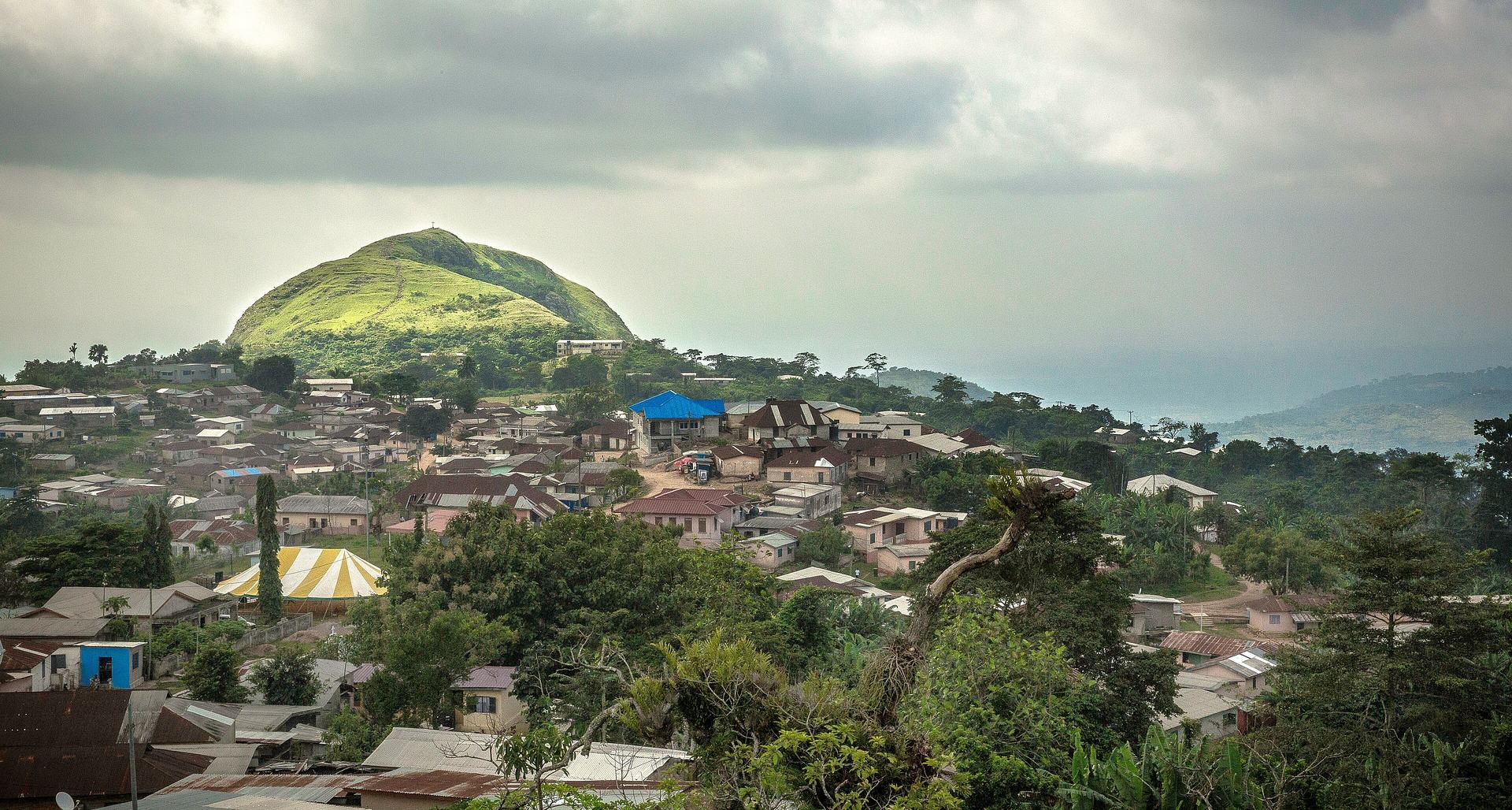
The peak above the town was once called Gayito. In 1939, German missionaries raised a cross on its summit — around four metres of iron — inscribed with the name of their sending body, the German Evangelical Missions Institute. The initials read GEMI, and over the decades the abbreviation simply became the mountain's name. Most people who say "Mount Gemi" have no idea it began as an acronym.
The German presence here ran deeper than one monument. This region was part of German Togoland until 1914, and Amedzofe was among its more significant mission stations, chosen for its elevation — high ground where a tropical climate was survivable for Europeans without antimalarials. The Amedzofe Training School was built in 1880, and the Evangelical Presbyterian church in 1889 is the oldest in the Avatime Traditional Area, with a separate bell tower set on one of the highest points in the village. A cemetery for the Europeans who lived here more than a century ago still stands open to visitors. The town also played its part in the nineteenth-century Anglo-Asante wars; the hills gave the Avatime a defensible position, and that geography is why the settlement sits where it does rather than somewhere more convenient.

The Avatime, who are not Ewe
Almost everything written about Amedzofe calls it an Ewe town. It is not, quite. Amedzofe is Avatime, one of the peoples of the Ghana-Togo mountain belt, with a language of its own — Siya or Siyase — that is not mutually intelligible with Ewe. Ewe is spoken here widely, as the language of trade, administration and church, and Avatime people are thoroughly part of the wider Ewe cultural world. But the mother tongue of the town is its own, and its speakers call themselves Kedanima.
Avatime oral history describes a migration from the west, from among the Ahanta, moving east along the coast and then north beyond the Volta — a tradition markedly different from that of their Ewe neighbours. The Avatime live across seven towns and villages, and their traditional capital is Vane. Farming is the backbone of the economy, and rice above all: the Avatime are known in Ghana for rice cultivation, and the annual Amu, or Rice Festival, marks the brown-rice harvest with drumming, dancing and a durbar of chiefs. Ask a guide to teach you a greeting in Avatime rather than Ewe. It will be received very differently.

Forest, falls and a sacred grove
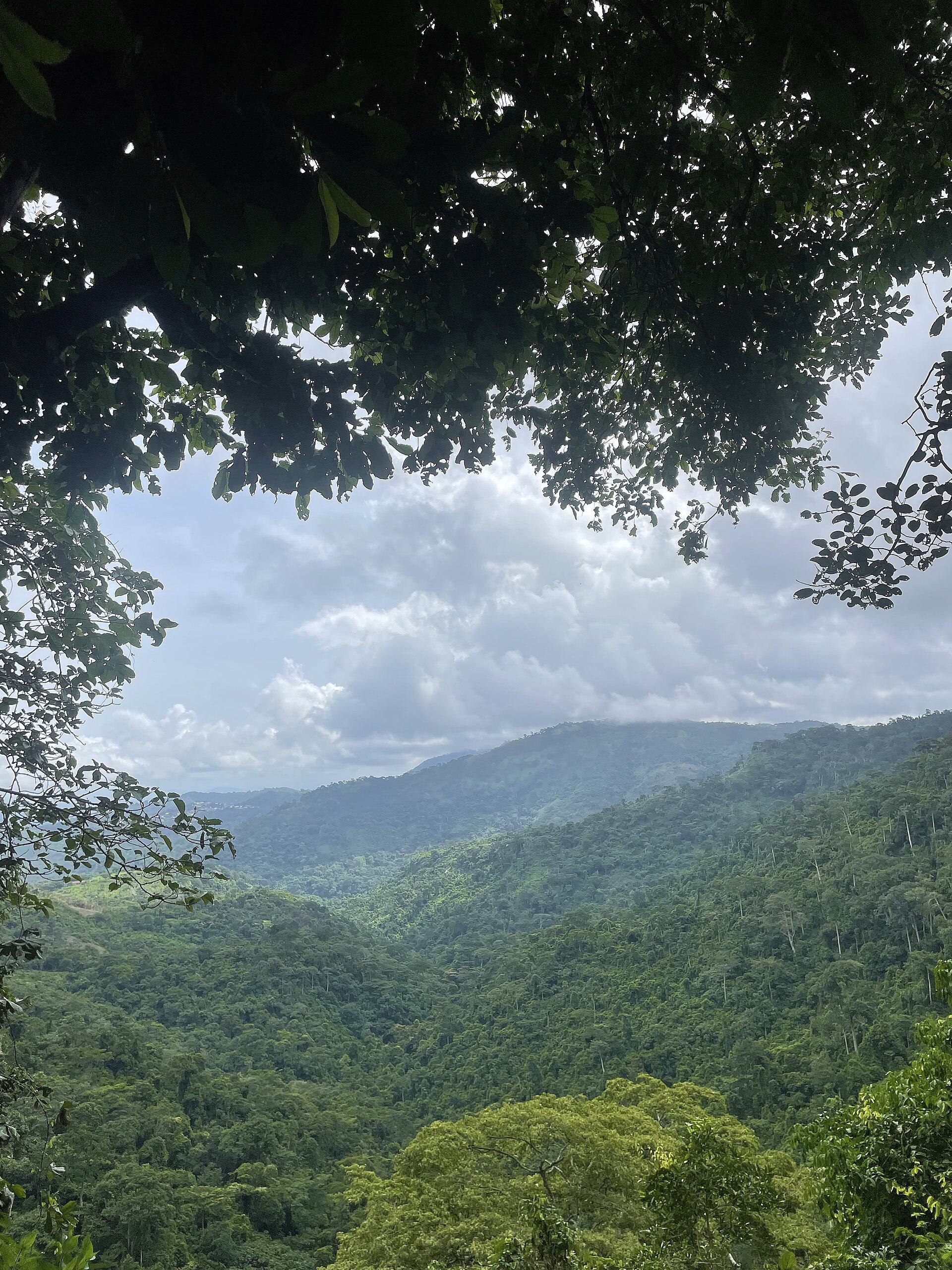
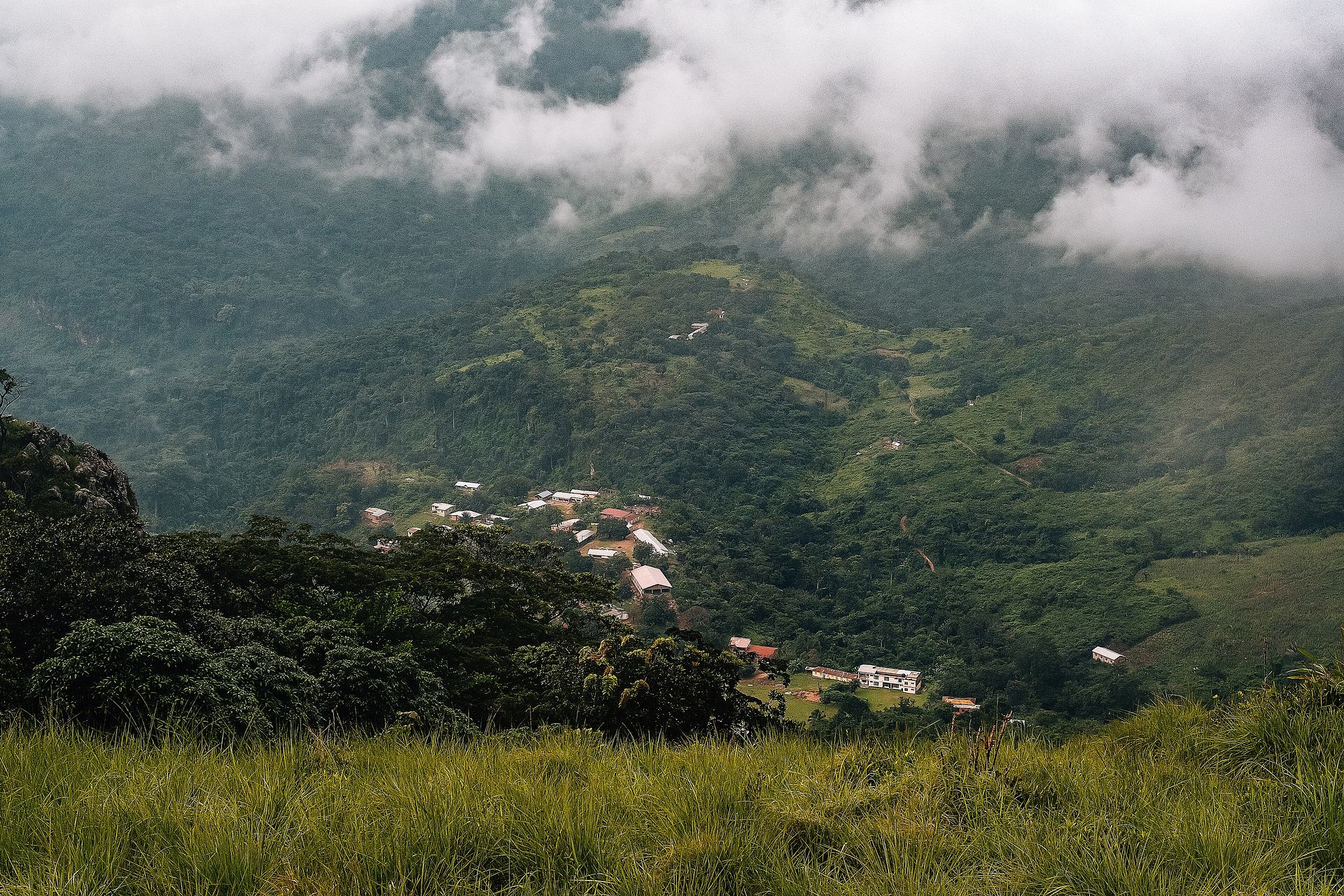
The landscape around Amedzofe is what draws most visitors, and it is genuinely varied. Mount Gemi rises directly above the town; the walk up is short and steep, twenty minutes to half an hour on a well-used trail, and the reward is a full circle of view running east into Togo and west towards Lake Volta on a clear day. There is no shade on the mountain at all, which makes early morning the sensible hour rather than a preference.
Below the village, the land drops through farms and then forest to Ote Falls, a multi-tiered cascade roughly 80 metres high, reached by a trail that includes a steep descent of 259 steps and a canopy walkway through the treetops. The final section is very steep and fitted with rope handrails. The falls are sacred to the community, and local tradition holds that rituals and ceremonies are still held there.
Near the foot of Gemi lies the Dark Forest, a grove the community opened to visitors in 2025. A round trip takes about an hour and a quarter, beginning with a simple purification ritual using water infused with herbs, salt and leaves. Inside are massive rocks that oral tradition says the people of Amedzofe rolled down against Asante incursions. For the community these are not scenery but symbols of survival — and the assembly member who helped open the forest put it plainly: where the Asantes were conquered cannot remain secret forever.

What to do
Things to do in Amedzofe
-
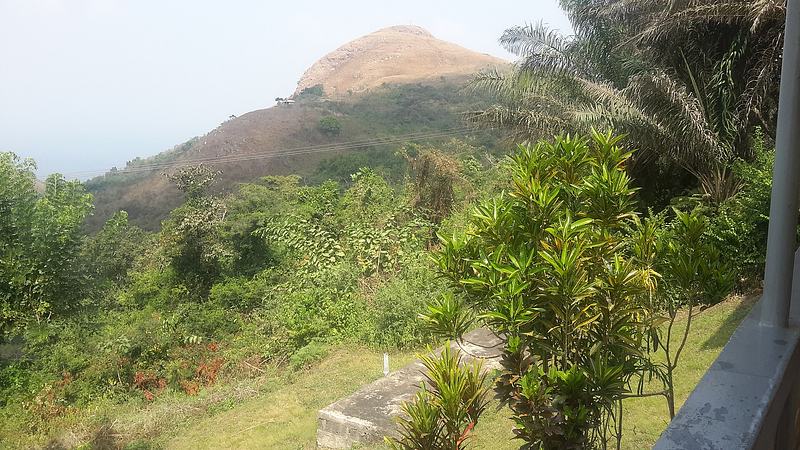
1.Climb Mount Gemi to the summit cross
The signature walk in Amedzofe, and a short one: twenty minutes to half an hour from the village on a well-used trail, steep but not technical, manageable for most ages and fitness levels. At the top stands the iron cross raised by German missionaries in 1939, and a genuine 360-degree panorama — east into Togo, west as far as Lake Volta when the air is clear. It is a sacred place to the community, and you may meet people making the climb to pray.
Tip: There is no shade anywhere on the mountain. Go at first light; by mid-morning the sun is punishing and by midday it is a poor idea. Visibility is often poor during the Harmattan, roughly November to March.
-
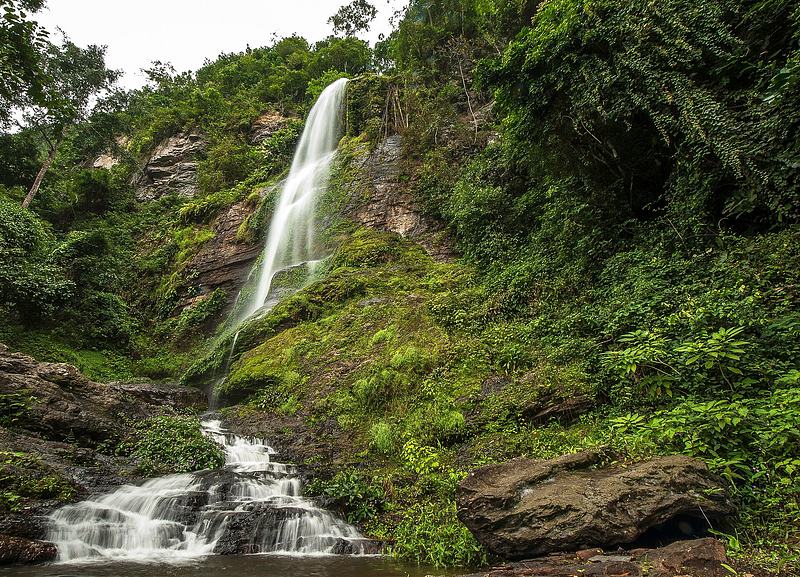
2.Walk down to Ote Falls
Ote Falls — pronounced oh-tay — is a multi-tiered waterfall around 80 metres high in the forest below the village, and the more demanding of Amedzofe's two main outings: roughly two hours in total. The trail descends through farms, passes a summer house with views across the valley and neighbouring settlements, then drops into forest. The last section is very steep and fitted with rope handrails. The falls are sacred to the Avatime, and visitors swim in the pool at the base.
Tip: Peak water runs May to November; from January to March the flow may be greatly reduced or absent entirely, so ask at the visitor centre before setting off. Wear shoes with real grip — the steep final section on wet earth is where people fall.
-
Attraction
3.Enter the sacred Dark Forest
Opened to visitors in 2025, the Dark Forest lies near the foot of Mount Gemi and is one of the most culturally significant sites in the area. The round trip takes about an hour and a quarter, beginning with a purification ritual at the foot of the mountain using water infused with herbs, salt and leaves. Inside are massive rocks that oral tradition holds were used to resist Asante incursions, and the grove was once reserved for rituals and the gathering of sacred plants and herbs.
Tip: Start at the local tourism office, where guides lead groups in. The community is firm that this is a virgin forest — treat it as a place of ceremony, not a picnic spot, and follow your guide's lead on what is permitted.
-
Attraction
4.See the 1889 mission church and bell tower
A thirty-minute walk through the village, counting the steps up to the old German church and its detached bell tower, on one of the highest points in the settlement. The Evangelical Presbyterian church of 1889 is the oldest in the Avatime Traditional Area, and the views from the churchyard match anything on the mountain. The missionary cemetery nearby, where Europeans who lived here over a century ago are buried, is open to visitors and gives the town's German chapter a human scale.
Tip: Easily missed and worth doing even if you skip everything else. Combine it with a wander through the main square, where you can see the ancient stone-slab chairs and watch men playing local board games.
-
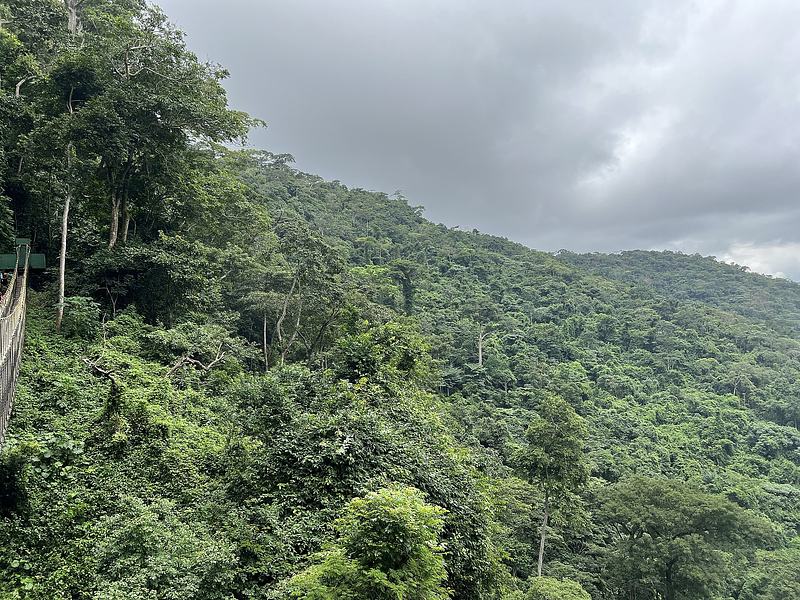
5.Cross the canopy walkway above the falls
The suspended walkway at Ote Falls gives a treetop perspective on the forest and the cascade, reached by the same steep guided trail of roughly 259 concrete steps. When open, it is one of the newest canopy walkways in Ghana and far less trafficked than Kakum, which preserves the serenity of the surrounding forest. The walk towards it passes through lush, pristine woodland, with birds, reptiles and butterflies along the route.
Tip: The walkway was closed in December 2025 after an incident involving an exit pillar, pending a full structural assessment. Confirm its current status at the visitor centre before building a day around it.
-
Attraction
6.Find the ancestral caves
Amedzofe's caves and rock features — described locally as ancestral caves — are among the town's visitor sites, set in the cliffs and hillsides around the settlement. They belong to the same landscape of shelter and defence that shaped where the Avatime built: high ground, hard to approach, easy to hold. The sacred cave formed from a cliff of Mount Gemi is one of two sacred sites in the Ho West District opened to tourism.
Tip: These are cultural sites rather than show caves, so go with a local guide who can explain their place in Avatime history and tell you what is appropriate to enter. Ask at the visitor centre on the main square.
-
Attraction
7.Descend to Ote Lower Falls via Gbadzeme
The lower tier of the Ote cascade is reached by a different approach, through Gbadzeme village in the Ho West District, and is the pathless, wilder counterpart to the main falls trail. It suits walkers who have already done the upper route and want more forest, more quiet and a sense of the Avatime hills beyond the immediate town. The Avatime area is known for caves, canyons and refreshing waterfalls across its communities, and this is one of the less-visited corners.
Tip: There is no formal path, so this is a guided walk only — arrange it locally rather than setting out alone. Conditions underfoot change fast in the rains; go in the dry months if you can.
-
Attraction
8.Watch for birds and butterflies on the forest trails
The forest around Amedzofe is rich in wildlife, and the walk to Abadzeme Falls — a steep trail of roughly two hours — is as much about the journey as the destination. The area is a haven for birdwatchers, with a variety of species including the African grey parrot, and the canopy route to Ote Falls puts birds, reptiles and butterflies on display. Guided nature walks can be arranged through the local tourism office for those who want to learn the flora and fauna properly.
Tip: Early morning is best for birds and for cooler walking. Take binoculars if you have them, and long trousers for the overgrown stretches of trail.


Plan your time
Suggested itinerary
Half a day: the summit and the village
Start at first light and climb Mount Gemi while the air is still clear — twenty to thirty minutes up, with the 1939 cross and the full panorama at the top. Come down for breakfast, then spend the rest of the morning on foot in the village: the 1889 mission church and its separate bell tower, the missionary cemetery, and the main square with its stone-slab chairs and board games. Finish at the visitor centre, where the shaded porch and a cold drink make a natural end to the morning. This is the sensible plan if you are coming up from Ho for the day.
Mount Gemi→Amedzofe Township and Avatime Hills Viewpoint
One day: add the falls and the sacred forest
Climb Gemi early, then give the middle of the day to the forest. Walk down to Ote Falls — about two hours in total, with the steep, rope-railed final descent — and, if it is open, cross the canopy walkway on the way. Swim in the pool at the base if conditions allow. In the afternoon, take the hour-and-a-quarter round trip into the Dark Forest near the foot of the mountain, beginning with the purification ritual and ending among the great rocks that tradition says were rolled down against Asante incursions. Ask at the visitor centre to sequence the two walks around the day's heat and the water levels.
Mount Gemi→Ote Falls (Amedzofe Falls)→Amedzofe Canopy Walkway→Amedzofe Sacred Cave
Two days: hills, caves and the wider Avatime country
Day one as above — Gemi, the village, Ote Falls and the Dark Forest. Stay overnight in Amedzofe so you get the mornings, when mist sits in the valleys and the light is at its best. On day two, go looking for the ancestral caves and the sacred cave formed from a cliff of Mount Gemi with a local guide, then take the wilder route down to Ote Lower Falls through Gbadzeme village. If you have energy left, walk the forest trails for birds and butterflies, or simply sit with the view. Amedzofe, Liati Wote and Wli make a natural three-day sequence through the hill country if you are continuing north.
Mount Gemi→Amedzofe Township and Avatime Hills Viewpoint→Ote Falls (Amedzofe Falls)→Amedzofe Sacred Cave→Amedzofe Caves→Ote Lower Falls→Abadzeme Falls

Seasons and festivals
When to go
Amedzofe has two seasons that matter, and they pull in opposite directions. The rains, roughly May to November, bring clear air, full waterfalls, green hills and the valley mist that makes the village photograph the way it does — but also mud on the steep descent to Ote Falls. The Harmattan, roughly November to March, does the reverse: visibility is often poor, so the 360-degree panorama from Mount Gemi becomes a grey wash, and from January to March the falls may be greatly reduced or absent entirely. That is the worst window for both of Amedzofe's main attractions at once, and it coincides with the season most visitors choose for Ghana.
The best compromise is late October into November, when water is still running, the haze has not yet arrived and the ground is firming up. Early morning is the best time to climb Mount Gemi in any season, since the mountain has no shade; the falls trail is partly shaded, which makes it the better option later in the day. If you are also climbing Mount Afadja and visiting Wli, this window suits the whole circuit.
- Amu (Rice) Festival · Usually the last week of November into December, with some accounts placing it in September or October
- The annual brown-rice harvest festival of the Avatime people, celebrated by the chiefs and people of Vane, the traditional capital of the Avatime, in the Ho West District. It is marked with drumming, dancing and singing, and draws visitors from across the region. The Avatime are well known in Ghana for rice cultivation, and the festival is tied directly to the harvest of that staple. If you can time a visit for it, book accommodation a long way ahead — lodging in Amedzofe is limited and fills up around festivals and holidays.
Access
Getting there and around
Amedzofe sits roughly 35 to 40 kilometres north of Ho, and the last part of the journey is a climb. From Ho, drive north to Matse and continue to the Dzolokpuita junction, then turn right and climb through Vane to Amedzofe. Shared taxis and trotros run the route, though services from the Ho lorry station are infrequent, and the last vehicles back leave earlier than you might expect — ask at the station in the morning and believe the answer. An alternative is to take a trotro from Ho towards Hohoe, ask to be dropped at Dzolokpuita, and hike the remaining 8 kilometres up to the village.
From Accra, allow three to four hours to Ho and then about an hour up the hill; it is not a comfortable day trip from the capital unless you leave very early and accept spending most of the day in a vehicle. If you are driving yourself, note that the road deteriorates on entering Amedzofe itself, and the Vane–Amedzofe stretch has been described as narrow and potholed. Some visitors park in the village and take a motorbike to the trailheads, particularly in the rainy season, when a low-clearance car may struggle on the final stretch. Once you are in the village, everything is on foot — the mountain, the church, the square and the visitor centre are all within a short walk, and the falls and forest are reached by guided trails.
Good to know
Before you go
Amedzofe is cool by Ghanaian standards — mist in the valleys in the morning, evenings that need sleeves — so pack a layer even if you have spent the previous week on the coast. Bring shoes with real grip for the falls trail; the steep final section on wet earth is where people fall, and the rope handrails are there for a reason. Long trousers help in the overgrown stretches.
Start at the visitor centre on the main square, opposite the market, where guides and fees are arranged and where you can get an honest answer on water levels, trail conditions and whether the canopy walkway is open. Accommodation in the village is limited and fills up around festivals and holidays, so book ahead if you plan to stay the night. This is a living community with sacred sites: the Dark Forest, the caves and Ote Falls all carry spiritual significance, so go with a guide, ask before entering, and follow local guidance on what is appropriate.

FAQ
Questions travellers ask about Amedzofe
Where is Amedzofe in Ghana?
Amedzofe is a hill settlement in the Avatime Hills of the Volta Region, in the Ho West District, roughly 35 to 40 kilometres north of Ho and at the foot of Mount Gemi. It is generally described as the highest permanently inhabited settlement in Ghana, at an elevation usually given as around 677 metres.
How hard is the hike up Mount Gemi?
Not hard. Most accounts give twenty minutes to half an hour from the village on a well-used trail — steep but not technical, and manageable for most ages and fitness levels. The catch is the sun: there is no shade at all, so go early in the day.
Is the Amedzofe Canopy Walkway open?
It was temporarily closed in December 2025 after an incident involving one of the small exit pillars, pending a full structural assessment by local and international engineers. The closure was to remain in effect until all safety requirements were met, so confirm its current status at the visitor centre before you travel.
When is the best time to see Ote Falls with water?
Peak water runs May through November, when the level is high and the splash is at its best. From January through March the flow may be greatly reduced or absent entirely — you can walk two hours down and find very little water, so ask at the visitor centre before setting off.
Are the Avatime people Ewe?
No. Amedzofe is an Avatime town, and the Avatime are one of the peoples of the Ghana-Togo mountain belt with their own language, Siya or Siyase, which is not mutually intelligible with Ewe. Ewe is widely spoken as the regional language of trade, administration and church, and Avatime people are part of the wider Ewe cultural world, but their mother tongue is their own.
What is the Amu Festival?
Amu, or the Rice Festival, is the annual brown-rice harvest festival of the Avatime people, celebrated by the chiefs and people of Vane, the traditional capital of the Avatime. It is marked with drumming, dancing and singing, and is usually held in the last week of November into December, though some accounts place it in September or October.
Can I visit Amedzofe as a day trip from Ho?
Yes — most people come from Ho for the day, which is a reasonable approach, though it misses the mornings when the mist sits in the valleys. Half a day covers Mount Gemi, the church and the village; a full day if you add Ote Falls, which takes about two hours on its own.
In pictures
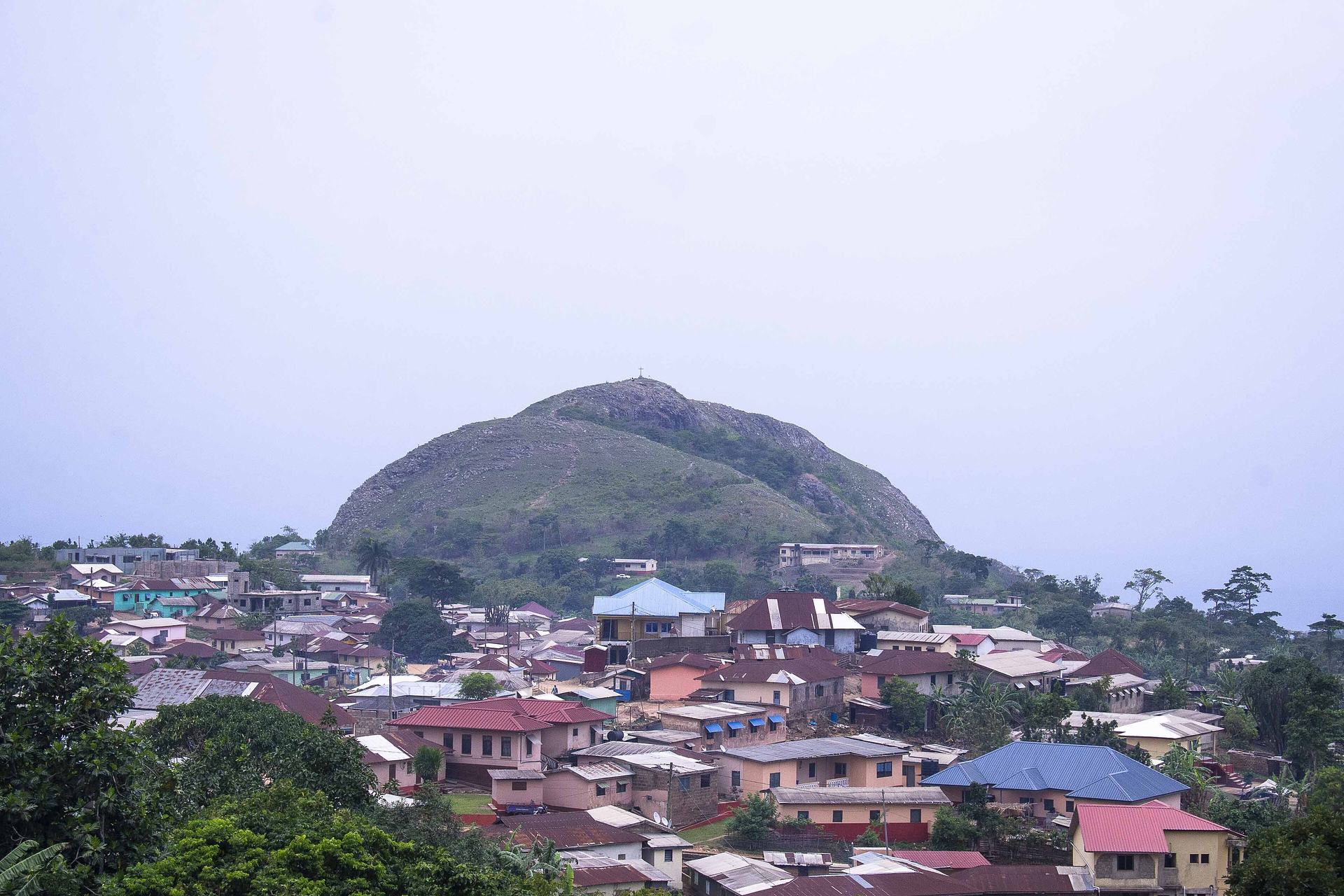
Amedzofe in pictures

Keep exploring
More destination guides
Sources for this guide (12)
- Amedzofe Village – Visit Ghana
- People & Places: Amedzofe – Highest human settlement in Ghana (Graphic Online)
- Amedzofe & Mount Gemi: The Village Above the Clouds (Ghana-Net)
- Ote Falls: A Boost for the Amedzofe Experience (Graphic Online)
- Amedzofe, Ghana – Wikipedia
- Amu Festival – Wikipedia
- Avatime people – 101 Last Tribes
- Amedzofe Opens Sacred Dark Forest to Tourists (Volta Star FM)
- Amedzofe canopy walkway temporarily closed for safety assessment (ModernGhana)
- Amedzofe, the highest human settlement in Ghana has more to offer (ModernGhana)
- Avatime Traditional Area celebrates Amu Festival (Ghanaian Times)
- Discover Ghana's Hidden Gem: Amedzofe (Toone's Travels)
Written September 29, 2026 from these sources and reviewed by the VisitGhana.app team. Confirm practical details locally before travelling.


