
A coast written in forts
The shoreline of Greater Accra is studded with the remains of European trading forts, and they are not decorative. Ghana's Forts and Castles were inscribed on the UNESCO World Heritage List in 1979 as a serial property of three castles, fifteen forts in relatively good condition, ten forts in ruins and seven sites with traces of former fortifications, all in the custody of the Ghana Museums and Monuments Board. Along this region alone you can trace the sequence: Osu Castle, begun by the Danes at Christiansborg; James Fort in Jamestown, built in 1673 and later used as a prison; Ussher Fort, Dutch-built and now home to a museum on the slave trade; and further east the ruined Fort Augustaborg at Teshie, Fort Fredensborg at Old Ningo and Fort Kongenstein at Ada Foah.
These were commercial enterprises before they were anything else, and the trade they served included human beings. Ada, at the mouth of the Volta, became a major market in the export of enslaved people, shipped to the Americas through Fort Kongenstein; the fort has since been half-eroded into the sea, and only traces remain. UNESCO has urged Ghana to ensure that forts listed as World Heritage are not used for unrelated purposes, and in 2021 UNESCO and the Ghana Museums and Monuments Board began work on a Conservation and Management Plan for the serial property. Visit these sites slowly, and with the gravity they ask for.

The Ga and their city
Accra belongs first to the Ga. Their communities — Ga Mashie, La, Teshie, Nungua, Osu, Tema — ring the capital and the coast, and their traditions are woven through the city's calendar. The most important is Homowo, whose name is usually translated as "hooting at hunger." Ga oral tradition holds that the festival grew out of a period of drought and famine during the people's migration and early settlement; when the rains returned and the harvest came in, they mocked the hunger that had threatened them. The season, usually running from August into September, begins with the planting of millet and a ban on drumming and noise-making, a quiet interval for reflection. When the ban lifts, the streets fill with processions, drumming and dancing, and families share kpokpoi, a maize dish served with palm-nut soup and fish, sprinkled in homes and on sacred ground as an offering to the ancestors.
That living culture is visible all year. In Teshie, Ga carpenters build design coffins — abebuu adekai, "boxes with proverbs" — a tradition credited to Seth Kane Kwei, who worked from the 1950s and whose workshop is still running. In Prampram, the Lalue Kpledo Shrine is the seat of the Lalue deity and the focus of the three-part Lalue Kpledomi festival; in Teshie, the Osabu-Ayiku Shrine is the seat of the Teshie Wulomo and a customary venue for rites of the Homowo season. These are sacred places, not attractions in the ordinary sense, and they should be approached as such.

Savannah, lagoon and estuary
Leave the city behind and the region changes character quickly. About 50 kilometres out along the Tema–Akosombo highway, Shai Hills Resource Reserve covers roughly 51 square kilometres of coastal savannah and granite hills, with nearly 400 plant species across five hills. It is the wildlife park closest to Accra, known for the large bands of olive baboons that gather near the highway in the mornings and evenings, along with green monkeys, kobs, bushbucks, monitor lizards and pythons. Birdlife is rich enough that the reserve has been designated an Important Bird Area, with violet turaco, hornbill and guineafowl among the species recorded. The reserve was home to the Shai people before they were ejected by the British in 1892, and their caves — Adwuku, Sayu and Hieweyu — remain, with Adwuku offering a climb and wide views over the Accra Plains.
Further east, the landscape opens into water. Songor Lagoon, just outside Ada Foah, is a Ramsar wetland and, since 2011, a UNESCO Biosphere Reserve covering some 51,000 hectares of marine, wetland and freshwater habitat. In the European winter it supports bird populations estimated at around 109,000 migratory birds — herons, egrets, cormorants, stilts, waders and terns — and its sandy beaches are nesting grounds for green, leatherback and olive ridley sea turtles. Local communities fish, farm and harvest salt here, and the lagoon is sacred ground to some: a section called the Yomo lagoon has been left uncultivated in deference to those who consider it consecrated. At Ada Foah itself, the Volta River meets the Atlantic in a broad estuary of palm-lined beaches and islands, the region's great natural full stop.

What to do
Things to do in Greater Accra
-
1.Jamestown: lighthouse, James Fort and the old town
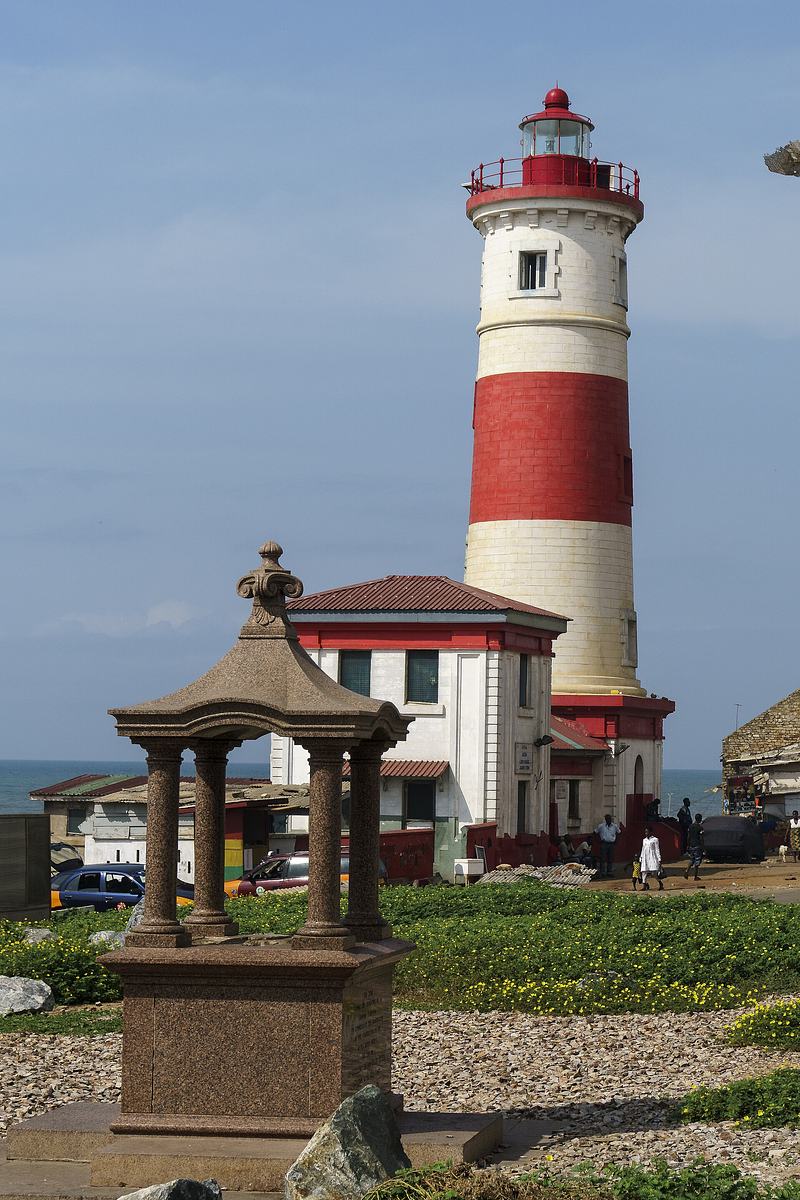
Jamestown is the historic heart of Ga Mashie, and its lighthouse — a 28-metre tower in red and white bands, built in 1932 to replace an 1871 original — is the landmark you climb for views over the harbour, the fort and the fishing beach. Below it, James Fort was built in 1673 and later served as a prison; it is a GMMB-managed heritage site currently listed as temporarily closed, so check locally. Even from outside, the district repays a slow walk: murals, canoes, and the everyday life of a working coastal community.
Tip: Come early morning when the canoes land, and ask before photographing the fishermen at work.
-
2.Ussher Fort Museum
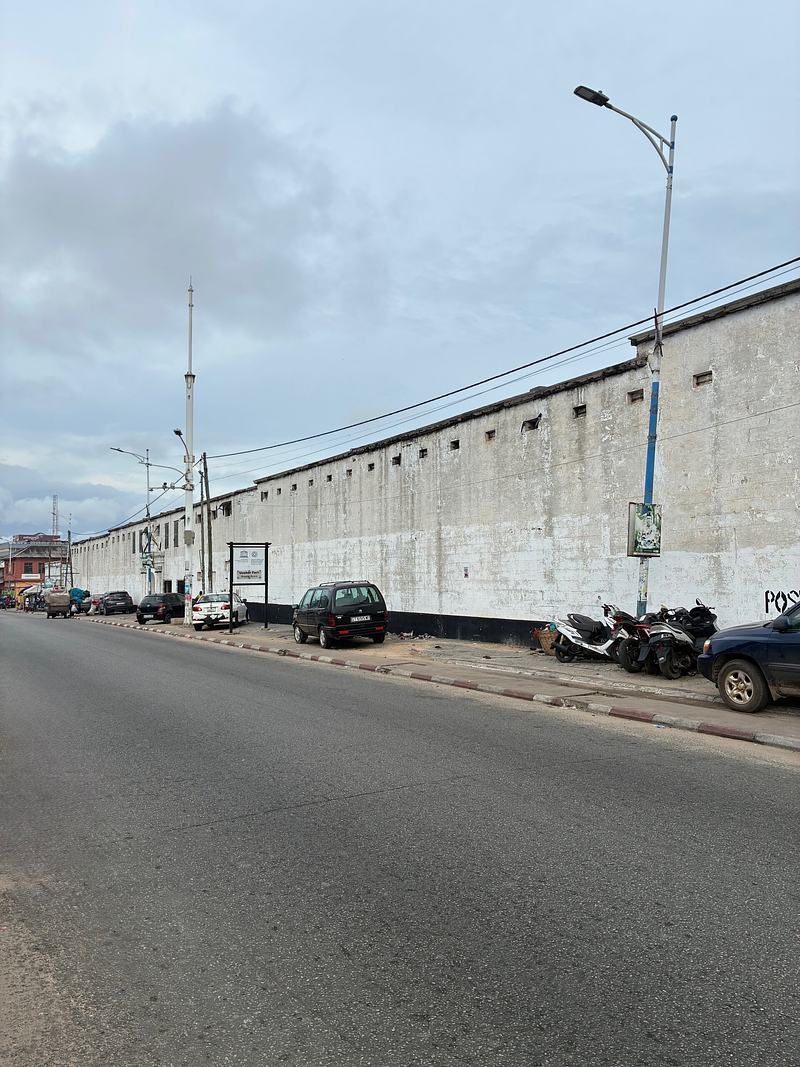
Ussher Fort is a seventeenth-century Dutch-built fort in James Town, and it now houses a museum devoted to the history of the slave trade in Ghana. Where James Fort tells its story through stone and silence, Ussher gives it interpretation — the trade's mechanics, its human cost, and Ghana's place in it. Pair the two in a single morning; together they are the most honest introduction to this coast's hardest history.
Tip: Allow time to sit with what you have seen afterwards rather than rushing straight to the next stop.
-
3.National Museum of Ghana
On Barnes Road in Adabraka, the national museum opened in 1957 — the year of independence — and is run by the Ghana Museums and Monuments Board. Its collections cover archaeology, ethnography and art, and it is the natural place to put the region's forts, shrines and festivals into a national frame. If you are visiting several heritage sites, come here first.
Tip: Combine it with a walk through Adabraka, one of central Accra's older quarters.
-
4.W.E.B. Du Bois Memorial Centre for Pan-African Culture
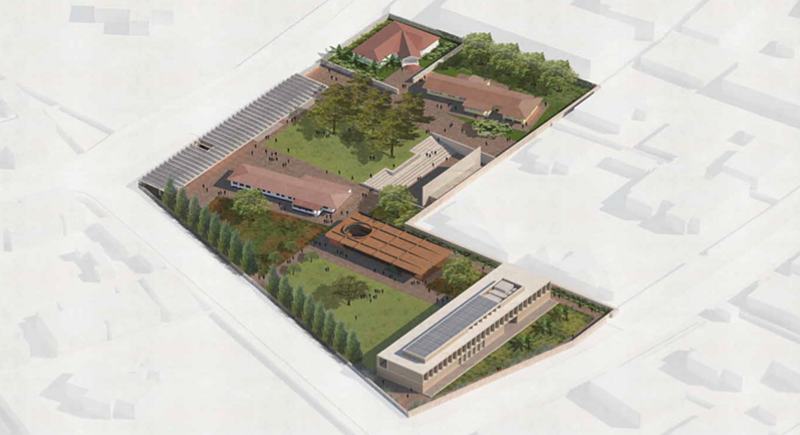
In Cantonments, the former home of W.E.B. Du Bois — the African-American historian and pan-Africanist who took Ghanaian citizenship in the early 1960s and died here on 27 August 1963 — opened to the public in 1985. He had come at Nkrumah's invitation to compile the Encyclopedia Africana. The centre holds a small museum with part of his library and works, and an adjoining shrine shelters his grave and the ashes of his wife, Shirley Graham Du Bois. A government agreement with the Du Bois Museum Foundation is now redeveloping the site into a larger complex.
Tip: This is a place of pilgrimage for many diaspora visitors; allow quiet time at the mausoleum.
-
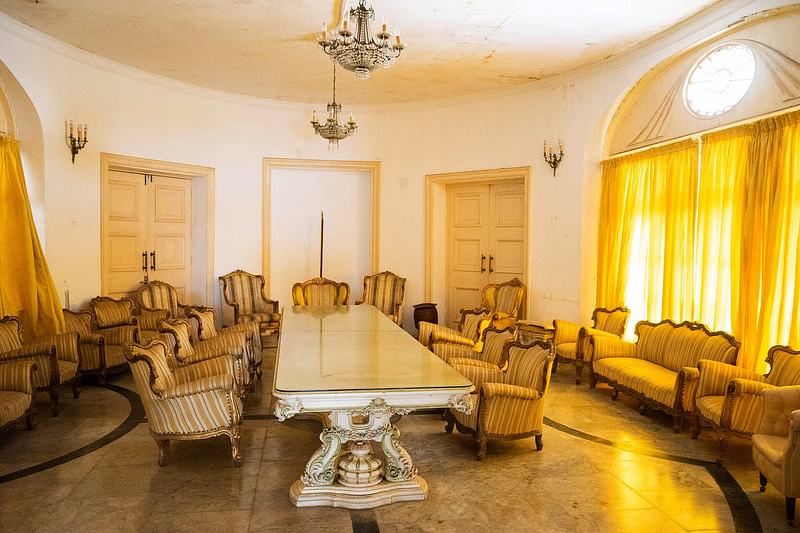
5.Osu Castle (Christiansborg)
Osu Castle, or Christiansborg, is a seventeenth-century fort at Osu run by the Ghana Museums and Monuments Board and part of the UNESCO World Heritage listing of Ghana's forts and castles. It has served as a Danish trading post, a British colonial seat and, for decades after independence, the office of Ghana's presidency. Its layered history makes it one of the most consequential buildings on the coast.
Tip: Access arrangements change; confirm opening before travelling, and bring photo ID.
-
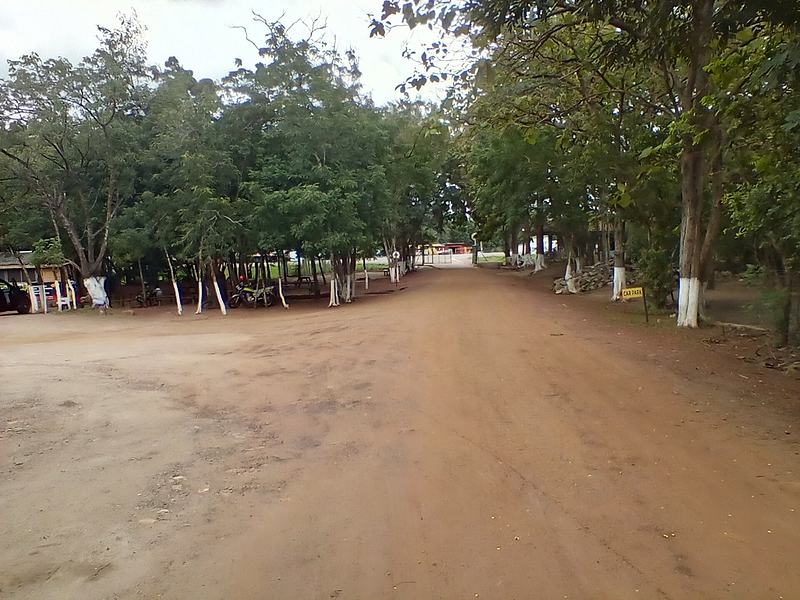
6.Shai Hills Resource Reserve
About 50 kilometres from Accra on the road to the Volta, Shai Hills is the closest wildlife reserve to the capital: roughly 51 square kilometres of coastal savannah and granite hills, with nearly 400 plant species and an Important Bird Area designation. Olive baboons are the headline act, often visible near the highway at dawn and dusk, alongside green monkeys, kobs, bushbucks and monitor lizards. The reserve was home to the Shai people before their expulsion in 1892, and the caves of Adwuku, Sayu and Hieweyu remain, with Adwuku offering a climb and sweeping views of the Accra Plains.
Tip: Go early, wear closed shoes with grip, carry water, and never feed the baboons.
-
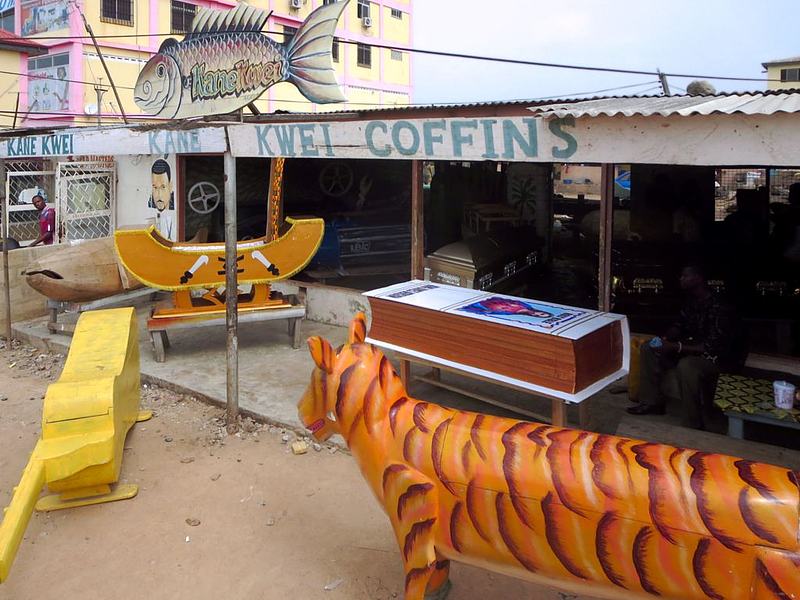
7.Kane Kwei Carpentry Workshop and Teshie's design coffins
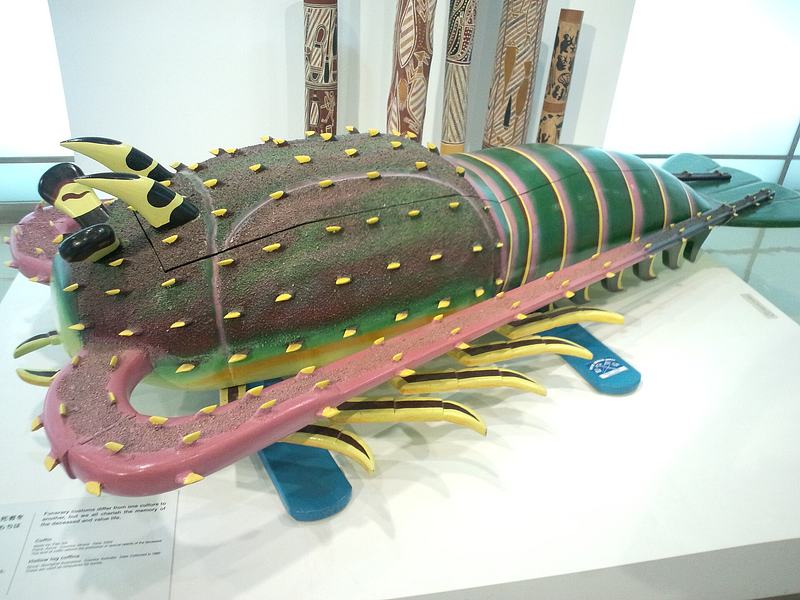
In Teshie, Ga carpenters make design coffins — abebuu adekai, "boxes with proverbs" — carved as cocoa pods, fish, lions, bottles, even aeroplanes. The tradition is credited to Seth Kane Kwei, a Ga carpenter who worked from the 1950s; his workshop is still running, and around ten similar studios operate in Teshie and the wider Accra area. The coffins grew out of the figurative palanquins once used by chiefs, and became widespread in Ga burial rites from around 1960. Watching a coffin take shape is to watch a craft, a philosophy and a funeral tradition at once.
Tip: These are working workshops, not showrooms — ask permission, and consider buying a small piece to support the trade.
-
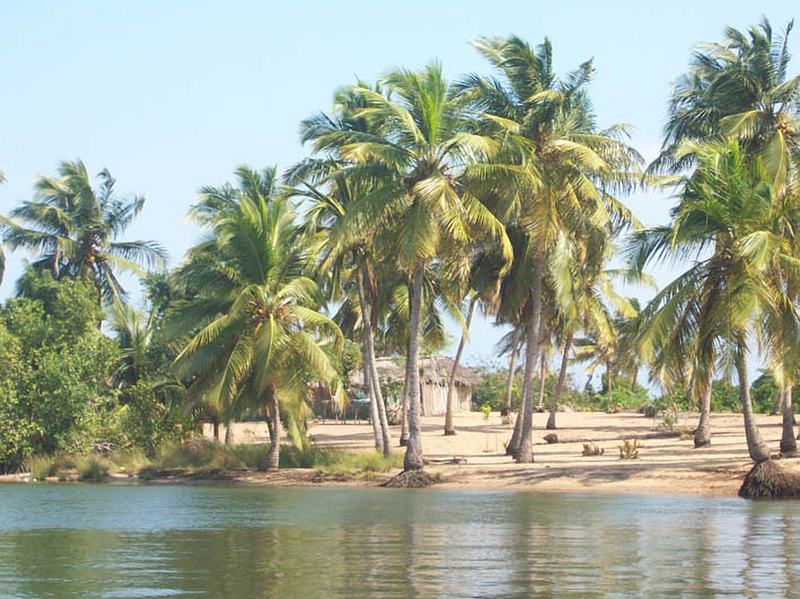
8.Ada Foah and the Volta River estuary
About 120 kilometres east of Accra, Ada Foah sits where the Volta River meets the Atlantic, a town of palm-lined beaches and estuary islands. Boat trips run from the riverside harbour out among the islands, and the water is the setting for swimming, sailing, fishing and cruises. The town was once a major trading centre, and its name comes from "Fort" — a reminder of the Danish trading post established here and the fort, Kongenstein, that followed in 1783.
Tip: Arrange boat trips locally at the riverside; the estuary is best explored by water, not from the road.
-
Attraction
9.Songor Lagoon
Songor is a Ramsar-listed lagoon and UNESCO Biosphere Reserve beside Ada Foah, covering some 51,000 hectares of marine, wetland and freshwater habitat. In the European winter it holds bird populations estimated at around 109,000 migratory birds — herons, egrets, cormorants, greenshanks, stilts and terns — and its beaches are nesting grounds for green, leatherback and olive ridley turtles. Communities here fish, farm and harvest salt in the dry season, and part of the lagoon is considered sacred. Birdwatching platforms at Pute and Lolanya are the main viewing points.
Tip: Turtle walks run at night and sightings are never guaranteed; go with Wildlife Division guides and keep lights and noise low.
-
10.Fort Fredensborg, Old Ningo
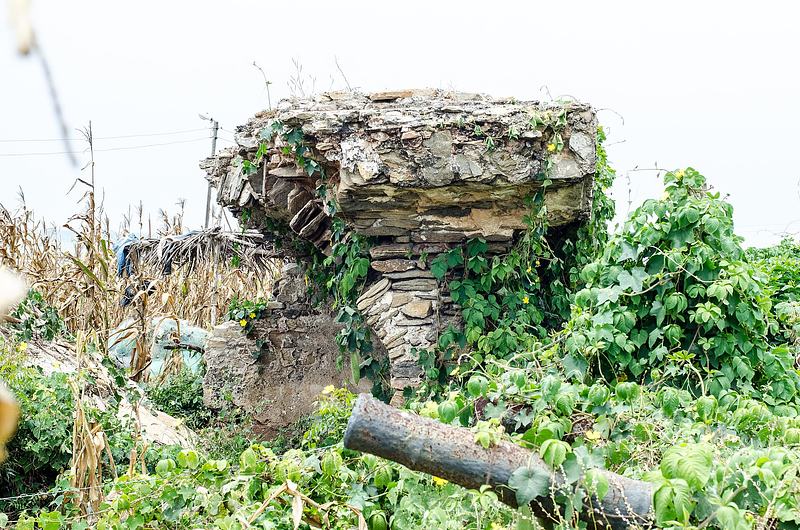
At Old Ningo, Fort Fredensborg is a ruined Danish-Norwegian fort of 1734, part of the UNESCO World Heritage serial property of Ghana's forts and castles. It is one of the ten forts listed as in ruins — which is exactly why it is worth the detour. There is no polished visitor experience here, just walls, sea air and the long shadow of the trade it served, in a Ga-Dangme fishing town that carries on around it.
Tip: Combine with the Old Ningo landing beach and the town's fishing life; bring water and expect no facilities.


Plan your time
Suggested itinerary
Half a day: central Accra
Start at the National Museum of Ghana on Barnes Road, then walk or drive the short distance to Independence Square and the Black Star Gate. Spend the middle of the day at the Accra Arts Centre for crafts and a look at the city's commercial energy, and finish at the W.E.B. Du Bois Centre in Cantonments if you have time. This is a compact loop that gives you the political and cultural spine of the capital in a single morning and afternoon.
National Museum of Ghana→Independence Square (Black Star Square & Black Star Gate)→Accra Arts Centre→W.E.B. Du Bois Memorial Centre for Pan-African Culture
One day: Jamestown and the coast
Begin in Jamestown at the lighthouse, climbing for the harbour view, then walk the old town and the fishing beach. Visit Ussher Fort Museum for the history of the slave trade, and James Fort from the outside if it remains closed. After lunch, drive east to Teshie for the Kane Kwei Carpentry Workshop and the design-coffin studios, then end at Labadi Beach as the light goes. It is a day that moves from the heaviest history to the most sociable, and the contrast is the point.
Jamestown Lighthouse→Ussher Fort→James Fort→Kane Kwei Carpentry Workshop→Teshie fantasy coffin workshops→Labadi Beach
Two days: city, hills and estuary
Day one: the central Accra loop — the National Museum, Independence Square, the Accra Arts Centre and the W.E.B. Du Bois Centre — with Osu Castle if access allows. Day two: leave early for Shai Hills Resource Reserve, walking with a guide to the caves and watching for baboons, then continue east to Ada Foah for the Volta estuary and a boat trip among the islands. If you have a third morning, add Songor Lagoon for birds and, in season, a night turtle walk, or detour to the ruined Fort Fredensborg at Old Ningo on the way home.
National Museum of Ghana→Independence Square (Black Star Square & Black Star Gate)→Accra Arts Centre→W.E.B. Du Bois Memorial Centre for Pan-African Culture→Osu Castle (Christiansborg)→Shai Hills Resource Reserve→Ada Foah Beach→Songor Lagoon→Fort Fredensborg
Seasons and festivals
When to go
Greater Accra sits in Ghana's dry southeastern coastal zone, with relatively low annual rainfall and warm temperatures year-round. The dry season from November to March is the most comfortable window for the coast and for Shai Hills, where the Wildlife Division names October to May as the best time to visit; the dry months also concentrate salts in Songor Lagoon and make the traditional salt harvest visible. The major rains fall from April to June, with a shorter wet spell around September and October. Turtles nest on the Songor beaches between August and March, with night walks run by the Wildlife Division — though sightings are never guaranteed. Note that touring Shai Hills in the early rainy season, roughly May to July, can be difficult because of rough road conditions. The region's great festival season is Homowo, usually running from August into September, when Ga communities across Greater Accra celebrate the harvest.
- Homowo · Usually August to September; dates vary by Ga community
- The Ga harvest festival, whose name means "hooting at hunger." It commemorates a famine survived during the people's migration and early settlement, and the harvest that followed. The season opens with the planting of millet and a ban on drumming and noise-making, a period of reflection; when the ban is lifted, communities hold processions, drumming, dancing and family gatherings, and share kpokpoi, a maize dish served with palm-nut soup and fish, sprinkled in homes and sacred spaces as an offering to the ancestors. Celebrated across Ga Mashie, La, Teshie, Nungua, Osu, Tema and other traditional areas.
- Lalue Kpledomi · Prampram, at the Lalue Kpledo Shrine
- A three-part festival centred on the Lalue Kpledo Shrine in Prampram, the sacred seat of the Lalue deity. It is a traditional religious observance rather than a visitor spectacle, and should be approached with respect and, ideally, a local host.
- Manyam · September to October, Shai Hills
- A local festival in which the community comes to the caves of Shai Hills Resource Reserve for the performance of ethnic rituals.
Access
Getting there and around
Greater Accra is the primary gateway for international arrivals to Ghana, and Accra's Kotoka International Airport is where most visitors begin. The region is compact and largely served by road: Shai Hills Resource Reserve lies along the Tema–Akosombo highway, about 50 to 57 kilometres from Accra and roughly an hour's drive; Ada Foah is about 120 kilometres east of Accra, off the Accra–Aflao motorway, and reachable by paved road in around two hours. Within Accra, expect heavy traffic, especially on the Tema corridor, so build slack into any day that combines the city with the coast or the hills. Local transport, taxis and private drivers are the usual ways to move between sites; for the reserve and the estuary, a driver who waits is far more practical than trying to piece together shared transport. At Ada Foah, boats can be hired at the riverside harbour for cruises among the estuary islands, and boat trips to Songor Lagoon's islands can be arranged locally. Confirm current access to individual forts and sites before you set out, as opening arrangements change.
Good to know
Before you go
Dress and behave with care at shrines, churches and cemeteries. The Lalue Kpledo Shrine at Prampram, the Osabu-Ayiku Shrine at Teshie and the missionary church and cemetery at Ada Foah are sacred or commemorative places, not photo opportunities; ask before entering, photographing or recording, and follow the guidance of the people who keep them. At the forts, remember that you are standing in buildings whose purpose was the sale of human beings — keep voices low, and give yourself time rather than treating them as a checklist.
Accra's traffic is heavy, so start early for anything outside the city. Carry water, sun protection and closed shoes for Shai Hills and the waterfalls, and never feed the baboons or monkeys. Bring small cash for markets and tips, and expect to bargain at the Arts Centre. Confirm opening arrangements for individual forts and sites before travelling, since some are closed or under redevelopment. If you visit during Homowo, respect the ban on drumming and noise-making — it is a period of spiritual preparation, not a lull in the entertainment.
FAQ
Questions travellers ask about Greater Accra
What is the Greater Accra Region known for?
It is Ghana's smallest and most densely settled region, centred on the capital, Accra. It is known for its coastal forts and castles — part of a UNESCO World Heritage serial property — for Ga culture and the Homowo festival, for markets such as Makola, and for natural sites including Shai Hills Resource Reserve and the Songor Lagoon and Volta estuary around Ada Foah.
How far is Shai Hills Resource Reserve from Accra?
It lies along the Tema–Akosombo highway in Shai-Osudoku District, roughly 50 to 57 kilometres from Accra and about an hour's drive. It is the wildlife reserve closest to the capital.
When is the best time to visit Greater Accra?
The dry season from November to March is generally the most comfortable, and the Wildlife Division names October to May as the best time for Shai Hills. Turtle nesting on the Songor beaches runs from August to March. The main rains fall from April to June, with a shorter wet spell around September and October.
What is Homowo and when is it celebrated?
Homowo is the Ga harvest festival, whose name means "hooting at hunger." It commemorates a famine survived during the Ga people's migration and early settlement, and the harvest that followed. It is usually celebrated between August and September, with dates varying by community, and includes a period of quiet and a ban on drumming before the public celebrations.
Can you see sea turtles near Ada Foah?
Yes, in season. The beaches around Songor Lagoon are nesting grounds for green, leatherback and olive ridley turtles, and the Wildlife Division runs guided night walks, with the best months being August to March. Sightings are never guaranteed, and the turtles are threatened species, so follow your guide's instructions closely.
What are Ghana's design coffins, and where can you see them made?
They are figurative coffins known in Ga as abebuu adekai, or "boxes with proverbs," carved in shapes such as cocoa pods, fish or animals. The tradition is credited to Ga carpenter Seth Kane Kwei, who worked in Teshie from the 1950s, and his workshop there still operates, along with around ten similar studios in Teshie and the wider Accra area.
Are the forts in Greater Accra part of a UNESCO World Heritage Site?
Yes. Ghana's Forts and Castles were inscribed on the World Heritage List in 1979 as a serial property, and it includes forts in the Greater Accra Region such as Fort Augustaborg at Teshie, Fort Fredensborg at Old Ningo and Fort Kongenstein at Ada Foah, alongside Osu Castle and James Fort in Accra. Several are in ruins, and James Fort has been used as a prison.
Sources for this guide (14)
- UNESCO Listed World Heritage Properties – Ghana Museums and Monuments Board
- Decision 22 COM VII.35 SOC: Forts and Castles of Ghana (Ghana) – UNESCO World Heritage Centre
- UNESCO supports Ghana for Forts and Castles management plan – UNESCO World Heritage Centre
- Shai Hills Resource Reserve – Ghana Wildlife Division
- Shai Hills Resource Reserve – Wikipedia
- Shai Hills Resource Reserve Guide: Wildlife, Caves & Day Trip Tips – SankofaGo
- Songhor Lagoon – Wikipedia
- Preserving Flora and Fauna at Biosphere Reserves – Ghana Commission for UNESCO
- Songor Lagoon – International Parks
- Ada Foah – Wikipedia
- Kane Kwei Carpentry Workshop – Wikipedia
- W. E. B. Du Bois Memorial Centre for Pan African Culture – Wikipedia
- James Fort – GhanaTRVL
- Homowo – Beyond The Return Travel & Tours
Written September 29, 2026 from these sources and reviewed by the VisitGhana.app team. Confirm practical details locally before travelling.