
A Danish fort at the edge of the sea
Fort Augustaborg — Fort Teshie to locals — was the last of the Gold Coast forts to be built, constructed in 1787 and named for Princess Louise Augusta of Denmark. It stood about 15 kilometres east of Fort Christiansborg, part of the chain of European trading posts that studded this coast. Like its neighbours, it was a post for the Atlantic slave trade, and it is right to say so plainly: these were places where human beings were bought, held and shipped. Five years after the fort went up, Denmark became the first European nation to abolish the slave trade.
On 17 August 1850 the fort was one of five Danish forts purchased by Queen Victoria, and it passed to the new Ghanaian administration after independence in 1957. Today it is a ruin. The Ghana Museums and Monuments Board notes that the British never occupied it and that it is now untraceable; a single cannon is all a visitor can see at the site. Along with 32 other forts and castles on Ghana's coast, Fort Augustaborg is part of the UNESCO World Heritage listing 'Forts and Castles, Volta, Greater Accra, Central and Western Regions', inscribed in 1979. Come with modest expectations and a long view: what remains is a marker, not a monument.

Boxes with proverbs: the coffin workshops
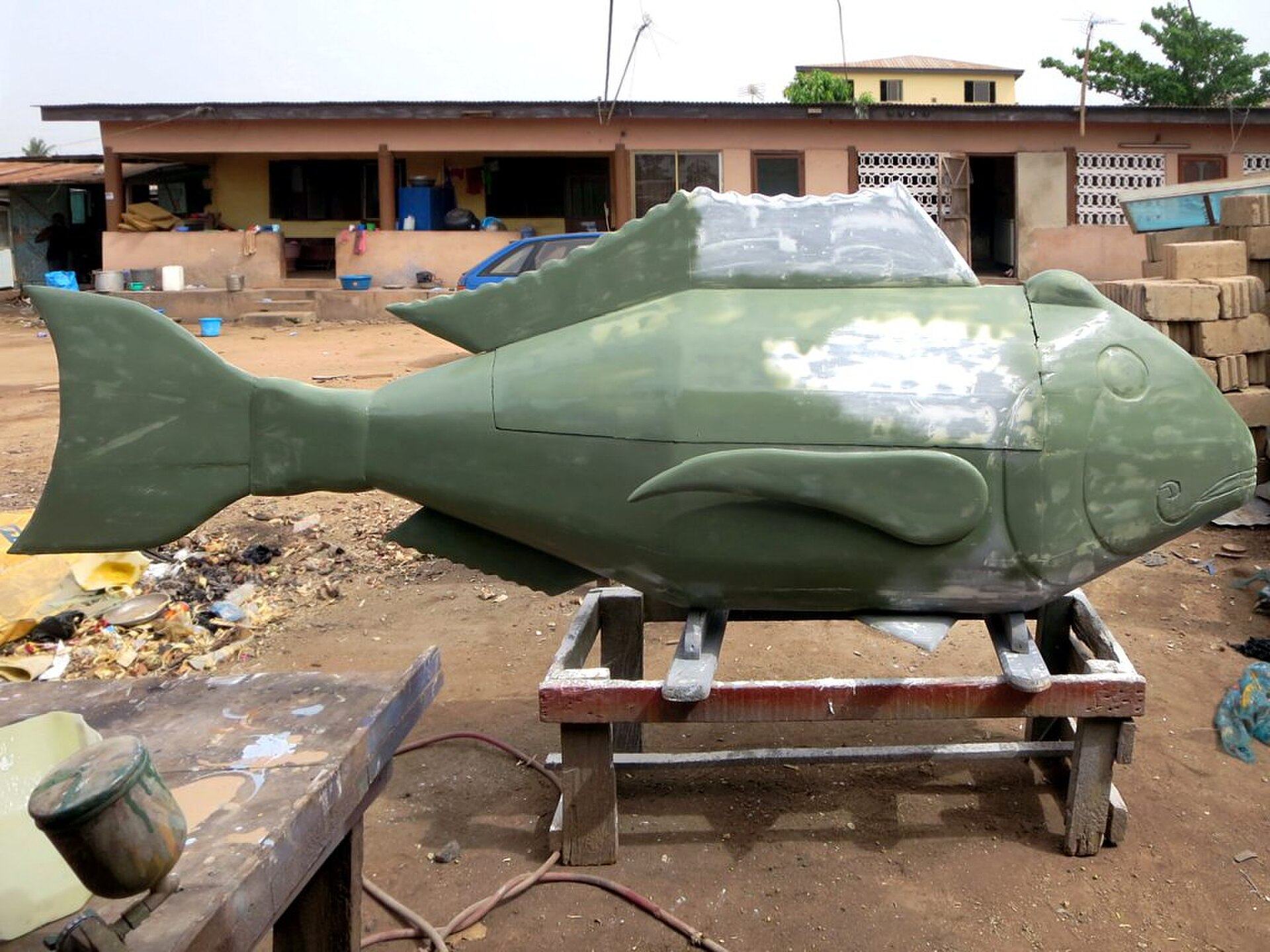
Teshie is best known for design coffins — abebuu adekai, 'boxes with proverbs' in Ga. The Ga believe life continues in the next world much as it did here, and that ancestors retain power over the living; a coffin shaped like a fisherman's canoe, a farmer's cocoa pod or a driver's car speaks for the person inside it. Some shapes carry clan meaning: animals such as lions, cockerels and crabs stand for totems, and only those of appropriate status may be buried in certain forms.
The craft grew out of figurative palanquins, the carved litters in which Ga chiefs were carried and sometimes buried. Custom coffins were used at first only by chiefs and priests, and became widespread in local funeral culture from around 1960. Seth Kane Kwei (1922–1992), a Ga carpenter in Teshie, is long credited with inventing them in the early 1950s, though anthropologists including Regula Tschumi have questioned that account and traced the practice to palanquin-making, with Ataa Oko of La possibly working in the same vein from around 1945. What is not in doubt is Teshie's centrality. The Kane Kwei Carpentry Workshop has run here since the 1950s and trained or inspired makers including Paa Joe, Daniel 'Hello' Mensah and Kane Kwei's grandson Eric Adjetey Anang, who took over the studio in 2005. Around ten workshops in Teshie and the wider Accra region still make similar coffins.
The wider world arrived in 1989, when seven coffins by Kane Kwei and Paa Joe were shown in Les Magiciens de la terre at the Musée National d'Art Moderne in Paris. Since then these objects have moved between ritual and gallery: shown at the Honolulu Museum of Art, LACMA and beyond, and made in harder woods such as limba and African mahogany for export as artworks, while lighter wawa and emien serve local funerals. In the workshops, the process is unhurried and unsketched — the maker studies a photograph or a living animal, builds in three dimensions, lines the inside, polishes and sprays the outside, and hands it to a painter.

Homowo, and the shrine that keeps the calendar
Teshie is one of the independent towns of the Ga state, and every August it celebrates Homowo — 'hooting at hunger' — the harvest festival that remembers a famine in Ga history. The town's ritual life centres on the Osabu-Ayiku Shrine and the Teshie Wulomo, its chief priest. The Homowo season opens with the Bloahejuu rites, performed at dawn by the Osabu-Ayiku Wulomo to cleanse the township ahead of the festivities. A couple of weeks later comes Abele kuu, the sacred corn rites: libation is poured to seek the blessing and guidance of the ancestral spirits, corn is hung at the entrance to the shrine room as a plea for abundant rains and a good harvest, and the heap of corn is sorted and shared among the heads of Teshie's five divisions — Lenshie We, Agbawe We, Krobo, Kle Musuŋ and Gbuglah — and the divisional chiefs.
These are working rites, not performances. The Bloahejuu ceremony is held indoors at dawn and participation is restricted to traditional leaders and initiates. In 2022 both sets of rites had to be moved from the shrine to the Nii Adjei Sankuma We, because the final customary rites for the late Wulomo, Nuumo Adjei Kwaako II, were incomplete and it was taboo to enter the shrine. That year's Bloahejuu was performed through heavy rain, which the elders read as a sign that the deities and ancestral spirits had endorsed the ceremony. Visitors who happen to be in Teshie during the season should watch from a respectful distance, dress modestly, and follow the lead of local hosts.

Between the lagoon and the sea
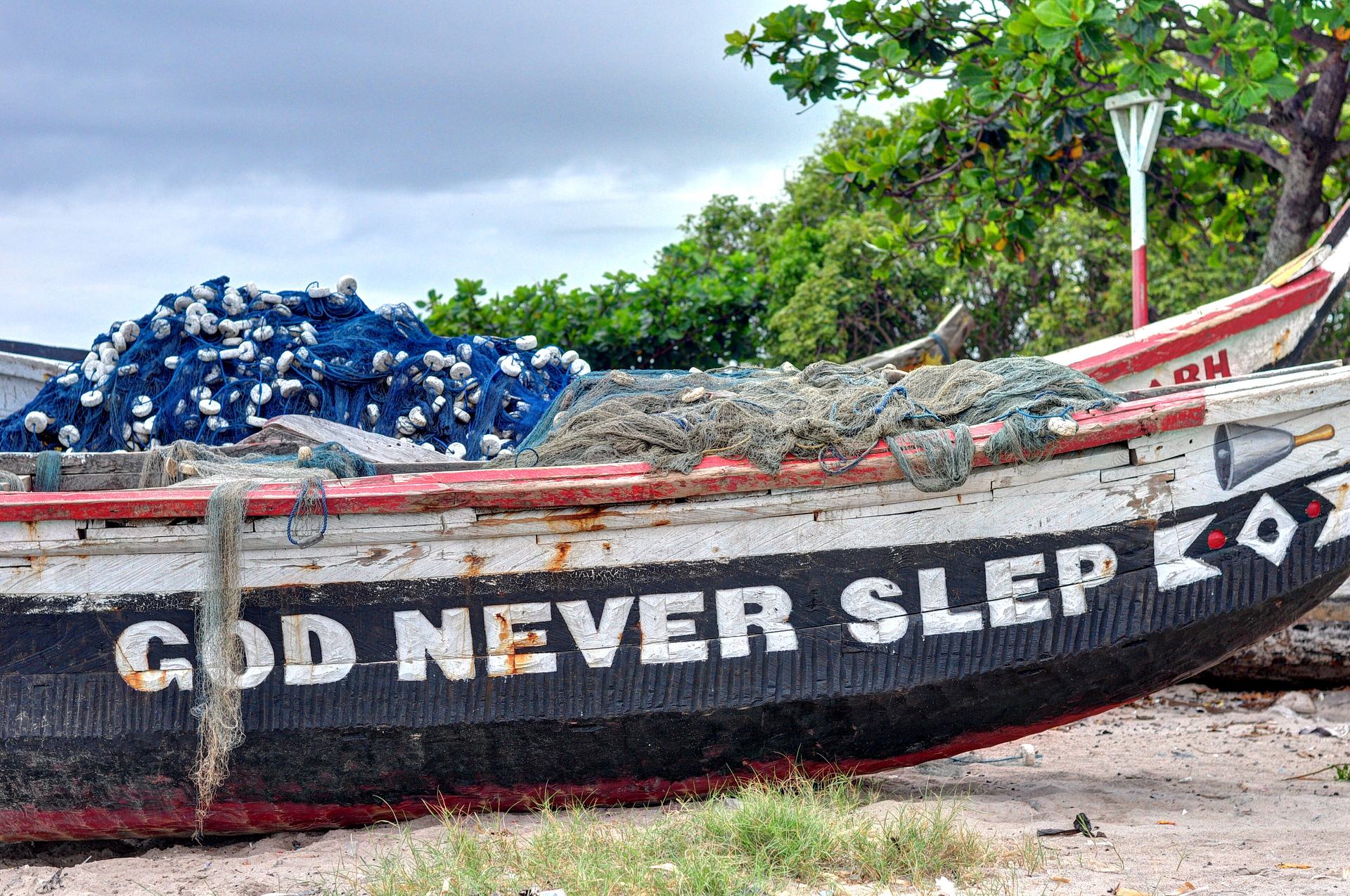
Teshie stretches from the Kpeshie Lagoon east to the Teshie-Nungua Estates, along the Teshie Road. It is a fishing town as much as a suburb: the Ga were originally farmers, but fishing and trading are now the principal occupations, and trading is largely in the hands of women. The beach is a working shoreline, not a resort — canoes, nets, smoke, and the early-morning business of putting to sea.
That shoreline is also under pressure. Ghana's coast is eroding at an average of about two metres a year, and the 150-kilometre eastern coastline from Aflao to Prampram has been identified as the most vulnerable stretch. Research on the Teshie coastline has recorded shoreline change ranging from about -2.5 to +2.85 metres a year, and found that erosion has affected residents' socio-economic lives through low fish catches and the loss of landing sites. Fishermen interviewed at Teshie, Nungua, Labadi and James Town describe going further out for smaller catches and losing canoes to storms. Sea defence works at La and Teshie have been part of the government's coastal protection programme. This is not a reason to stay away — it is a reason to look at the beach as the living, contested place it is.

What to do
Things to do in Teshie
-
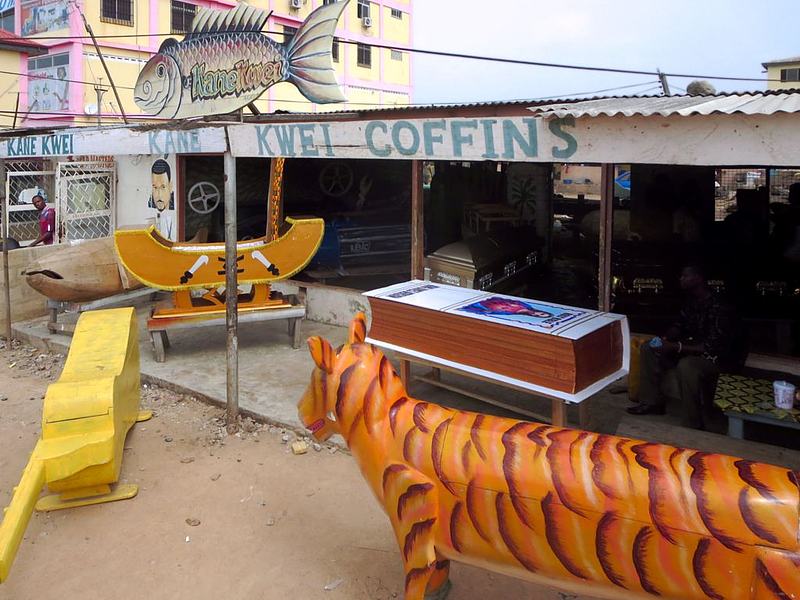
1.Watch coffins being carved at the Kane Kwei Carpentry Workshop
This is the reason many travellers come to Teshie. The studio has operated here since the 1950s and is where Seth Kane Kwei worked and where his grandson Eric Adjetey Anang now leads. You will see carpenters shaping figurative coffins by eye — no plans, no sketches — from photographs or from life, then lining, polishing and painting them. Ask before photographing, and expect a working yard rather than a showroom.
Tip: Go on a weekday morning when the benches are busy; weekends and afternoons are quieter and there is less to see.
-

2.Tour the other design-coffin workshops
Kane Kwei is the best known, but around ten workshops in Teshie and the surrounding Accra region make similar coffins, several of them run by makers trained in that same line. Visiting more than one gives you a sense of the craft as a living trade rather than a single studio, and lets you see how individual carpenters interpret the same tradition differently — a crab, a bottle of beer, a two-storey house, a Bible.
Tip: Ask your first host to point you to neighbouring workshops; introductions open doors that turning up unannounced may not.
-
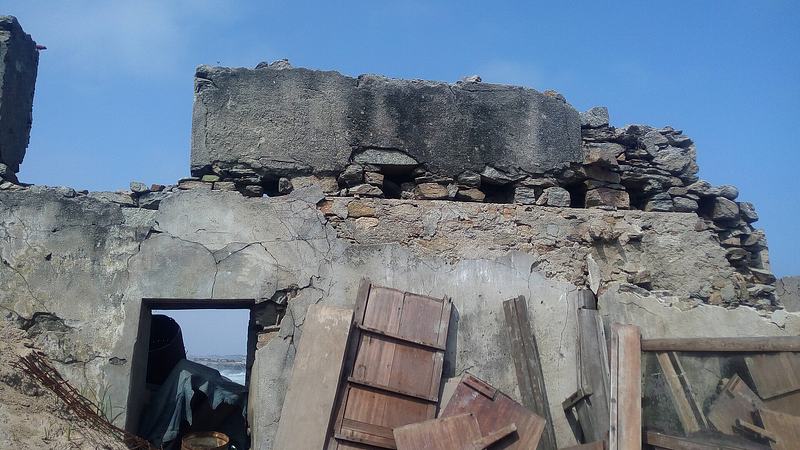
3.Find the cannon at Fort Augustaborg
The ruined Danish fort of 1787 is the last of the Gold Coast forts to have been built, and it is part of the UNESCO World Heritage listing of Ghana's coastal forts and castles. Be clear-eyed about what is there: the Ghana Museums and Monuments Board records that the fort is now untraceable and that a cannon is all a visitor can see. Go for the history and the setting, and pair it with a museum or castle visit elsewhere on the coast for the fuller story.
Tip: Ask locally for the exact spot before setting out — the remains are slight and easy to walk past.
-
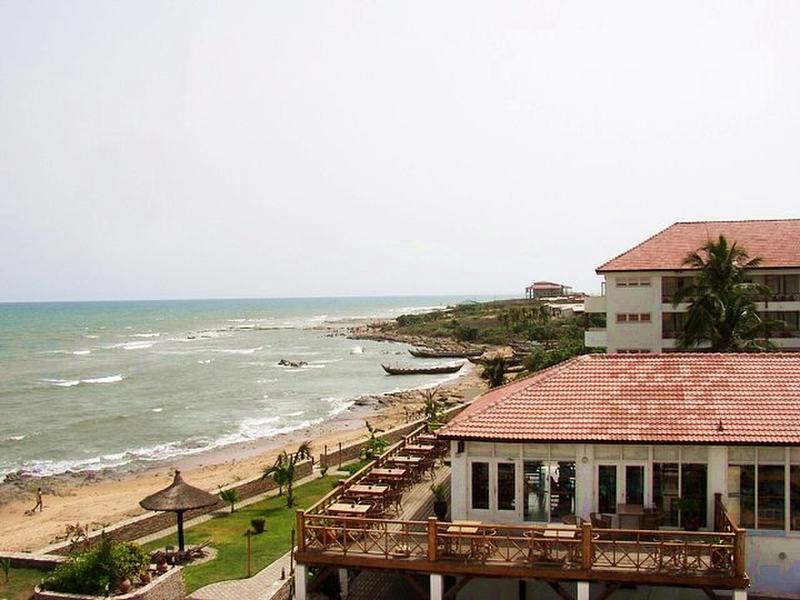
4.Walk the working beach at Teshie
Teshie's Atlantic shoreline is a fishing beach, not a sunbathing one. Come early to watch canoes go out and nets be sorted, and to see the town's oldest economy at work. The beach also shows the coast's fragility: erosion has taken much of the sand and many landing sites, and sea defence works have been built at La and Teshie. Walk with awareness of the sea and of people's livelihoods.
Tip: Early morning is both the most active and the coolest time; keep clear of canoes being launched and hauled.
-
Attraction
5.Pay your respects at the Osabu-Ayiku Shrine
The Osabu-Ayiku Shrine is the seat of the Teshie Wulomo, the town's chief priest, and the customary venue for the Bloahejuu and Abele kuu rites that open the Homowo season. It is a place of active worship, not a visitor attraction. If you are fortunate enough to be in Teshie during the Homowo period, you may be able to observe public elements of the season; the shrine rites themselves are restricted to traditional leaders and initiates.
Tip: Never enter or photograph the shrine without an explicit invitation; ask a trusted local host to advise on what is appropriate.
-
6.Time a visit to the Homowo season
Homowo, 'hooting at hunger', is celebrated by Ga communities across Greater Accra, and Teshie keeps its own sequence of rites. The season begins with the planting of crops before the rains and runs through to the harvest, with the main celebrations in August. In Teshie the Bloahejuu cleansing rites come first, followed a couple of weeks later by the Abele kuu corn rites. It is the single best reason to plan a trip around a particular date.
Tip: Dates shift with the Ga calendar and are set locally each year — confirm with the municipal assembly or a local host before booking travel.
-
7.See the Kpeshie Lagoon and the town's western edge
Teshie runs from the Kpeshie Lagoon east to the Teshie-Nungua Estates, and the lagoon marks the town's western boundary. It is a wetland that has long served as natural flood control and a resource for local livelihoods, though it has deteriorated under urban pressure and pollution. A look at it rounds out your sense of Teshie as a place shaped by water on both sides.
Tip: View it as part of a walk along the Teshie Road rather than as a destination in itself.


Plan your time
Suggested itinerary
Half a day: coffins and the coast
Start mid-morning at the Kane Kwei Carpentry Workshop (place_id 483), where the benches are busiest and the carvers most willing to talk. Give it a good hour. Then walk or take a short taxi ride to one or two of the other design-coffin workshops (place_id 658) nearby, to see the same craft practised in different hands. Finish at Teshie Beach (place_id 482) as the light softens, watching canoes come in and the day's work wind down. This is the essential Teshie, and it fits comfortably into a morning and early afternoon.
Kane Kwei Carpentry Workshop→Teshie fantasy coffin workshops→Teshie Beach
One day: history, craft and ritual
Begin early at Teshie Beach (place_id 482) to catch the fishing fleet going out. Move on to Fort Augustaborg (place_id 432) and its lone cannon, taking time with the uncomfortable history of the Atlantic slave trade that these coastal forts served. After lunch, spend the afternoon at the Kane Kwei Carpentry Workshop (place_id 483) and the wider cluster of coffin workshops (place_id 658), then walk the length of the town from the Kpeshie Lagoon towards the Teshie-Nungua Estates to see how the fishing town and the Accra suburbs run into one another. If your visit falls in the Homowo season, ask locally about public elements of the celebrations around the Osabu-Ayiku Shrine (place_id 484).
Teshie Beach→Fort Augustaborg→Kane Kwei Carpentry Workshop→Teshie fantasy coffin workshops→Osabu-Ayiku Shrine (Teshie Wulomo Shrine)
Two days: Teshie and its neighbours
Day one as above, ending with an evening on the shore. On day two, use Teshie as a base for the surrounding Ga coast: the neighbouring town of Nungua, which shares the coffin-making tradition and the Homowo cycle, and the beaches and castles of the wider Greater Accra shoreline. If you want the fuller story of Ghana's forts, this is the day to travel to one of the larger castles, where the interpretation is more developed than at Teshie's ruin. Return to Teshie for a final walk along the beach road.
Teshie Beach→Fort Augustaborg→Kane Kwei Carpentry Workshop→Teshie fantasy coffin workshops

Seasons and festivals
When to go
Teshie sits on the Gulf of Guinea, so expect heat and humidity year-round, with the main rains falling in the middle of the year and a shorter wet spell later. The single most important date in the local calendar is Homowo, the Ga harvest festival that remembers a historic famine. The season opens with the planting of crops — mainly maize — before the rains begin, and runs through to the harvest, with the main celebrations in August. In Teshie the sequence starts with the Bloahejuu cleansing rites, performed at dawn by the Osabu-Ayiku Wulomo, followed a couple of weeks later by the Abele kuu sacred corn rites. Because the Ga calendar is set locally each year and can shift by a week or two, confirm dates with the municipal assembly or a local host before you book. Outside the festival season, the workshops are the main draw and are best visited on weekday mornings.
- Homowo · August, with the season opening earlier in the year at planting time
- The annual harvest festival of the Ga people, whose name means 'hooting at hunger'. It commemorates a famine in Ga history and is celebrated by Ga communities across Greater Accra, with Teshie keeping its own rites. Expect drumming, processions and the sharing of kpokpoi, the festival dish of maize and palm-nut soup.
- Bloahejuu rites · Dawn, on a Sunday, ahead of the main Homowo celebrations
- The cleansing rites that open Teshie's Homowo season, performed by the Osabu-Ayiku Wulomo for the town's principal deities. The ceremony is held indoors at dawn and is restricted to traditional leaders and initiates.
- Abele kuu (sacred corn rites) · At dawn, a couple of weeks after the Bloahejuu rites
- Libation is poured to seek the blessing and guidance of the ancestral spirits, corn is hung at the shrine entrance as a plea for rain and a good harvest, and the corn is shared among the heads of Teshie's five divisions and the divisional chiefs.
Access
Getting there and around
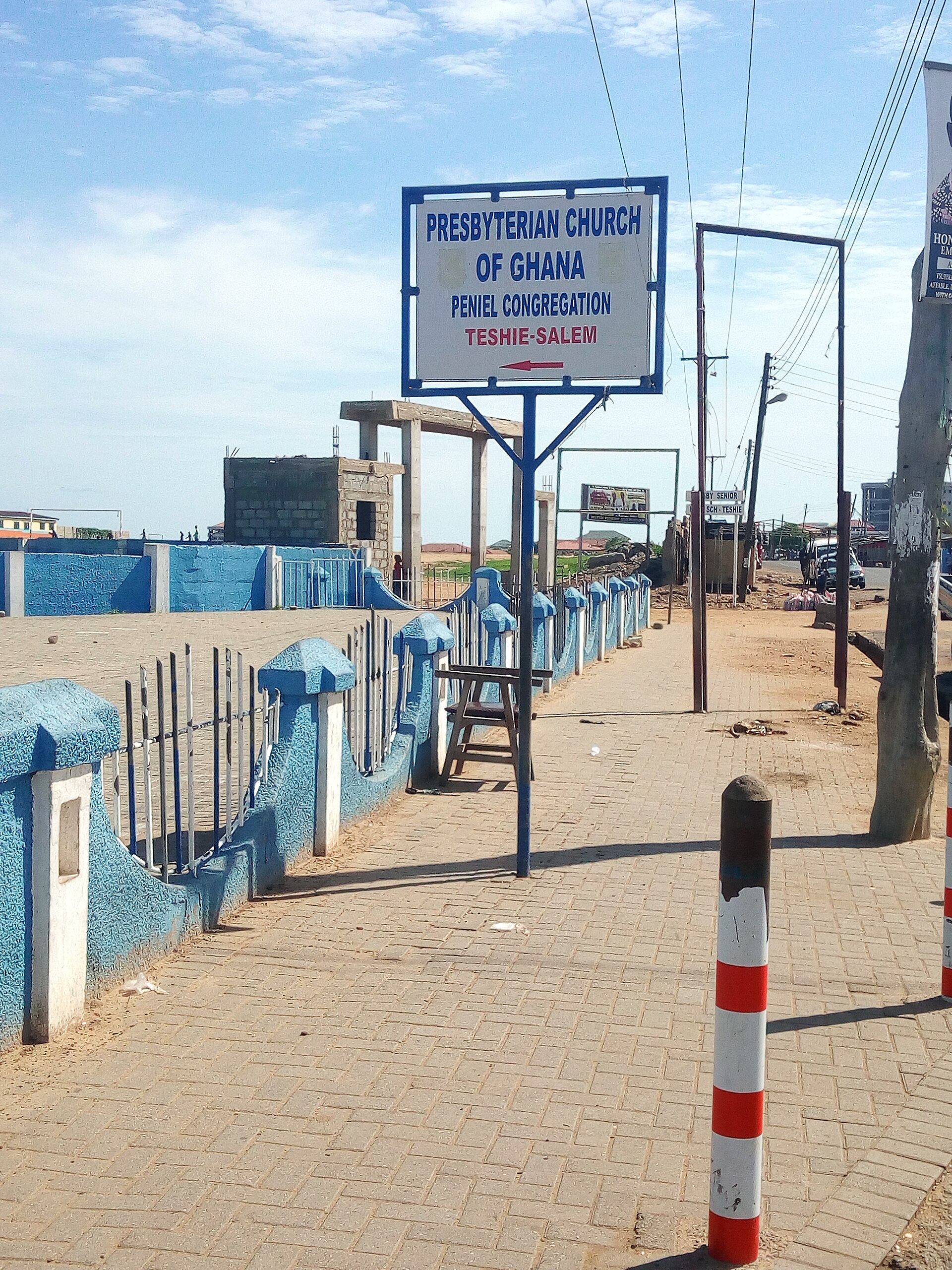
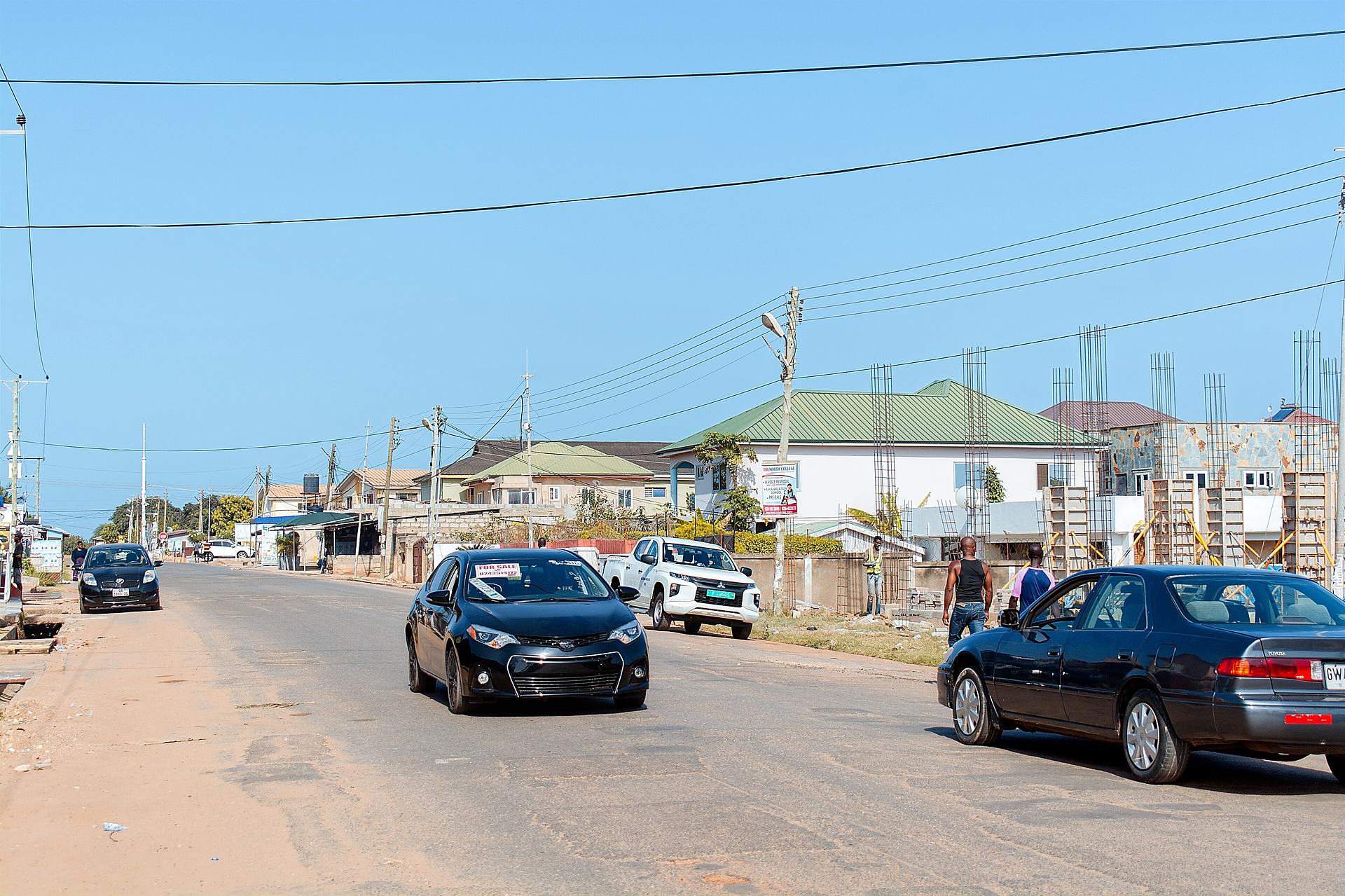
Teshie lies on the eastern side of Accra, in the Ledzokuku Municipal District of the Greater Accra Region, and is reached from the city by road along the Teshie Road, which runs through the town from the Kpeshie Lagoon east to the Teshie-Nungua Estates. The town is served by tro-tros — the privately run minibuses that are the mainstay of public transport in Accra — with routes connecting Teshie and Teshie-Nungua to destinations including Achimota and Kwame Nkrumah Circle, and stops such as Teshie Rasta Road and Teshie Tsui Bleoo. Teshie also has a station on the eastern section of Ghana's national railway system. Taxis and ride-hailing are straightforward options for reaching specific workshops or the fort site, which are not always on obvious main routes. Once you are in Teshie, most of the places in this guide are close enough to combine by short taxi hops or, for the beach and the workshops, on foot. Distances are short but traffic on the Teshie Road can be heavy, so allow generous time between stops.
Good to know
Before you go
Teshie is a living Ga town, not a heritage park, and the coffin workshops are working businesses. Always ask before entering a yard or photographing carvers, coffins or funerals, and accept a refusal without pressing. The Osabu-Ayiku Shrine and the Homowo rites are sacred: the Bloahejuu and Abele kuu ceremonies are restricted to traditional leaders and initiates, so do not attempt to enter or film them, and follow the guidance of a trusted local host. Dress modestly, especially near the shrine and during festival season. On the beach, remember that this is a fishing shoreline where people earn a living — keep clear of canoes being launched, and do not walk on or disturb nets. Coastal erosion is a real and visible problem here, so stay back from unstable edges. Carry water, use sun protection, and be prepared for heat and humidity. Finally, buy from local traders and craftspeople where you can; tourism that circulates money locally is the kind that Teshie can build on.

FAQ
Questions travellers ask about Teshie
Where is Teshie?
Teshie is a coastal town in the Ledzokuku Municipal District of Ghana's Greater Accra Region, on the eastern side of Accra. The district's capital is Teshie-Nungua, and the town stretches from the Kpeshie Lagoon east to the Teshie-Nungua Estates.
What is Teshie famous for?
Teshie is best known for its design coffins — abebuu adekai, or 'boxes with proverbs' — figurative coffins carved in the shape of a person's trade, status or clan totem. The Kane Kwei Carpentry Workshop has made them here since the 1950s, and examples have been exhibited in major international art museums.
Can I visit a coffin workshop?
Yes — the workshops are working studios and visitors are generally welcome to watch the carvers at work. Ask permission before taking photographs, and go on a weekday morning when the benches are busiest.
Is there anything left of Fort Augustaborg?
Very little. The Ghana Museums and Monuments Board records that the 1787 Danish fort is now untraceable and that a cannon is all a visitor can see at the site. It is nonetheless part of the UNESCO World Heritage listing of Ghana's coastal forts and castles.
When is Homowo in Teshie?
Homowo is celebrated by Ga communities in August, with the season opening earlier in the year at planting time. Teshie's own sequence begins with the Bloahejuu rites, followed about a fortnight later by the Abele kuu corn rites. Dates are set locally each year, so confirm them before travelling.
Can I watch the Homowo rites?
The Bloahejuu and Abele kuu ceremonies are held at dawn and are restricted to traditional leaders and initiates, so they are not open to visitors. Public elements of the wider Homowo season may be observable; ask a local host what is appropriate.
How do I get to Teshie from Accra?
By road along the Teshie Road, by tro-tro on routes linking Teshie and Teshie-Nungua with destinations such as Achimota and Kwame Nkrumah Circle, or by taxi. Teshie also has a station on the eastern section of Ghana's national railway system.
In pictures
Teshie in pictures


Keep exploring
More destination guides
Sources for this guide (14)
- Fort Augastaborg, Accra — Ghana Museums and Monuments Board
- Fort Augustaborg — Wikipedia
- Teshie — Wikipedia
- Ledzokuku Municipal District — Wikipedia
- Fantasy coffin — Wikipedia
- Kane Kwei Carpentry Workshop — Wikipedia
- Eric Adjetey Anang — Wikipedia
- Homowo — Wikipedia
- Ga-Dangme (Ga people) — Wikipedia
- List of castles in Ghana — Wikipedia
- How Teshie Wulomo performs sacred Bloahejuu Rites to kick start Homowo — ModernGhana
- Homowo: Teshie Wulomo performs sacred corn rites — ModernGhana
- Rise In Sea Level Haunts 4 Coastal Communities — ModernGhana / Daily Guide
- Ghana's coastline, swallowed by the sea — The UNESCO Courier
Written September 29, 2026 from these sources and reviewed by the VisitGhana.app team. Confirm practical details locally before travelling.


