
A fort at the edge of the Gold Coast
Until 1670 there was no fort west of the River Ankobra, and goods — gold and slaves alike — were brought to the shore where captains of every nation haggled for them. To hold off Dutch ambitions that had already brought intermittent warfare to Nzema country, the Nzema chief Amenihyia granted the English Committee of Merchants permission to build on the elevated platform known as Cape Apollonia. Building materials were gathered from 1766 and construction began two years later, making Fort Apollonia the last fort the English built on the Gold Coast. The name itself came from a Portuguese explorer who first sighted the headland on St Apollonia's Day.
The fort's story is inseparable from the trade it served. When the slave trade was abolished its economic purpose faded and it was abandoned in 1819, though it was occupied again from 1836. In 1868 it passed to the Dutch under the Anglo-Dutch exchange of forts and was renamed Fort Willem III; it reverted to the British in 1872. A year later a British gunboat bombarded it during an attack on Beyin for the town's alliance with Asante, and the fort fell into ruin. Because of its testimony to the Atlantic slave trade, Fort Apollonia was inscribed on the UNESCO World Heritage List in 1979 along with Ghana's other forts and castles. Walk the ramparts slowly; this is ground where commerce and cruelty were the same business.


An eco-museum of Nzema life
After decades of neglect, Fort Apollonia was restored with funds from the Italian Ministry of Foreign Affairs, and in 2010 it reopened as the Museum of Nzema Culture and History. It is not a conventional museum of glass cases. The project was conceived as an eco-museum — a living reference point for local identity, run in constant conversation with the territory around it — and it was the first of its kind in Ghana. The concept was developed with the Italian NGO COSPE and the University of Rome 'La Sapienza', working alongside the Ghana Museums and Monuments Board, the Ghana Wildlife Society, the Western and Eastern Nzema Traditional Councils and the Jomoro and Ellembele district assemblies.
Inside, the displays are meant to be handled as much as read: clan emblems, festival traditions, traditional treatments of disease, the Amansuri ecosystem and the different voices of talking drums. The museum is also dedicated to Kwame Nkrumah, Ghana's first president and the most important figure to come from the Nzema area. Beyond the exhibits it works as a conservation education centre, hosting workshops, art and craft production, performances and temporary exhibitions. The building was finished by local artisans using local materials and symbols, so that it sits in harmony with the wetland it explains.


The blackwater world of the Amansuri
The Amansuri is a blackwater wetland: its waters are dark with plant tannins, and the surrounding catchment is wet evergreen forest, with swamp forest in the wettest parts. Raffia palm grows in almost pure stands along the channels, with the large spiny aroid Cyrtosperma senegalense at its edge and sedges and grasses on the drier patches. The terrain is so difficult to cross that large areas have been left largely untouched, and the wetland is recognised as the largest stand of intact swamp forest in Ghana. It is a Key Biodiversity Area, and the coastal stretch supports appreciable numbers of waterbirds, including species seen with unusual frequency along this part of the Ghanaian coast.
The wetland is also a working landscape. The freshwater lagoon is fished by the community of Nzulezo, and that fishing is regulated by a wide range of well-enforced taboos designed to keep the lagoon sustainable and unpolluted. The stilt village itself — Nzulezo means 'surface of the water' in Nzema — is said to have been founded by people who migrated from Walata in the ancient Ghana Empire, guided, by tradition, by a snail. Life there happens entirely above the lake: fufu is pounded, children go to school, worshippers are baptised and the dead are buried, all on water. Thursday is a sacred day on the lake, when villagers avoid strenuous work.


What to do
Things to do in Beyin
-
Attraction
1.Canoe to Nzulezo stilt village
The journey is the point. From the visitor centre at Beyin you board a dugout canoe and travel roughly 5 km — about an hour — through narrow, lush channels and open pools before the water opens into the wide expanse of the lake and the stilt village appears. Egrets, herons and kingfishers work the margins, and crocodiles and monkeys are sometimes seen. Nzulezo is one long pier the locals call Main Street, with homes on one side and businesses, a school and a community centre on the other.
Tip: Trips are arranged through the community tourism office at Beyin; lifejackets are provided, and visitors are sometimes asked to help paddle. Wear clothes you don't mind splashing.
-
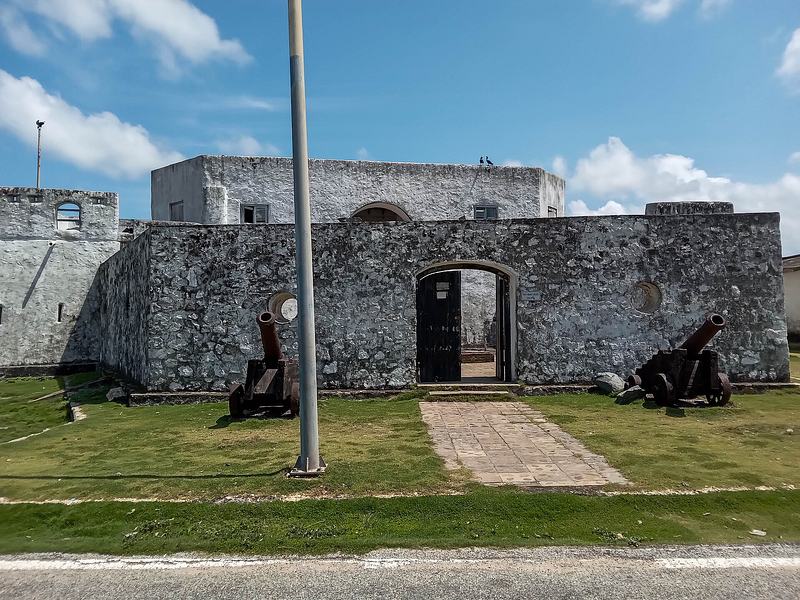
2.Fort Apollonia and the Museum of Nzema Culture and History
The seafront fort is the anchor of any visit to Beyin. Built from 1768 as the last English fort on the Gold Coast, it was bombarded in 1873 and later restored, reopening in 2010 as an eco-museum of Nzema culture and history. Exhibits cover clan emblems, festivals, traditional medicine, talking drums and the Amansuri ecosystem, and the museum is also dedicated to Kwame Nkrumah, the Nzema area's most famous son. The setting, looking straight out to sea, is part of the experience.
Tip: Allow more time than you think — the displays reward slow reading, and the fort's layered history (English, Dutch, British again) takes a while to absorb.
-
Attraction
3.Evening sea-turtle watch
The beach beside the Beyin visitor centre is the site of a sea turtle conservation project run in cooperation with the Ghana Wildlife Society, protecting three endangered species that nest there. Guided evening tours give visitors the chance to watch the turtles haul themselves ashore to lay their eggs, or to see hatchlings make their first scramble to the sea. It is a quiet, patient kind of wildlife watching, and the fees help fund the protection work.
Tip: Tours run from October through August. Bring a red-light torch if you have one, keep noise and flash photography to a minimum, and follow the guide's instructions exactly — nesting turtles are easily disturbed.
-
Beach
4.Beyin Beach and the fishing shore
The sandy Atlantic beach at Beyin runs beside the fort and the wetland, and it is a working shore rather than a resort strip. Seine-net fishing is part of daily life here, and watching a crew haul a net is one of the most honest ways to spend an hour on this coast. The same sand doubles as the turtle nesting beach, so it changes character entirely between day and night.
Tip: Walk the beach in the late afternoon when the light softens and the fishing crews are active; keep a respectful distance from nets and boats.
-
Attraction
5.Birdwatching on the Amansuri wetland
The Amansuri is a Key Biodiversity Area and an Important Bird Area, and the canoe route to Nzulezo is the easiest way to see it. The coastal lagoon, estuary and nearby beach support appreciable numbers of waterbirds, and the inland freshwater lagoon and swamp hold gallinules, crakes and jacanas. Raffia palm grows in almost pure stands along the channels, giving the whole trip a green, cathedral-like quiet.
Tip: More birds and monkeys are seen during the rainy season, roughly mid-May to August, when you can also canoe the whole way rather than walking the first stretch in the dry season.
-
Attraction
6.Nzema drumming and dancing
Evening drumming and dancing by a local cultural group can be arranged by special request, and it is a fine way to hear the traditions the museum describes. The Nzema are an Akan people, and their music and performance are bound up with the Kundum festival, a harvest and religious celebration that involves drumming, dancing, feasting and libation. Hearing the drums in the open air, close to the fort and the sea, connects the museum's exhibits to living practice.
Tip: Ask at the visitor centre or your accommodation in advance — these performances are arranged by special arrangement rather than staged on a fixed schedule.
Plan your time
Suggested itinerary
Half a day: fort and beach
Arrive in Beyin and head straight for Fort Apollonia, where the Museum of Nzema Culture and History sets out the town's layered past and the ecology of the wetland around it. Give the exhibits a proper hour, then walk the ramparts and look out to sea. Afterwards, drop down to Beyin Beach beside the fort and watch the seine-net crews working the surf. If you are staying the night, book an evening turtle watch at the visitor centre before you leave.
Fort Apollonia (Beyin)→Museum of Nzema Culture and History→Beyin Beach→Beyin Sea Turtle Conservation (evening turtle tours)
One day: canoe, fort and turtles
Start early at the Beyin visitor centre and take the dugout canoe to Nzulezo, allowing about three hours for the return trip through the Amansuri wetland. Back on the mainland, eat and rest, then spend the afternoon at Fort Apollonia and its museum. As dusk falls, join the guided turtle walk on the beach beside the visitor centre, hoping for a nesting female or a rush of hatchlings heading for the water.
Amansuri Wetland→Amanzule Wetlands Nature Preserve→Fort Apollonia (Beyin)→Museum of Nzema Culture and History→Beyin Sea Turtle Conservation (evening turtle tours)→Beyin Beach
Two days: wetland, culture and coast
Day one: the canoe trip to Nzulezo in the morning, when the light and the birdlife are at their best, then the fort and museum in the afternoon and a turtle watch after dark. Day two: return to the wetland margins for slower birdwatching, or simply walk the beach and the town, talking to the fishing families and visiting the museum again with fresh questions. If your visit coincides with Kundum, build the day around the drumming and processions instead.
Amansuri Wetland→Amanzule Wetlands Nature Preserve→Fort Apollonia (Beyin)→Museum of Nzema Culture and History→Beyin Beach→Beyin Sea Turtle Conservation (evening turtle tours)


Seasons and festivals
When to go
Beyin sits on Ghana's far-western coast, where the wet season shapes what you can do. From roughly mid-May to August the rains bring more birds and monkeys to the canoe route, and the water is high enough to paddle the whole way to Nzulezo; in the dry season you may walk the first kilometre before boarding. Guided sea-turtle walks run from October through August, so the nesting season overlaps neatly with the drier months and the Christmas period. The fort and museum can be visited year-round. Note that Thursday is a sacred day on the lake, when villagers avoid strenuous activity — plan your canoe trip around it.
- Kundum Festival · Traditionally around the harvest period, with towns scheduling independently; commonly celebrated in the Western Region between August and November
- Kundum is celebrated by the Ahanta and Nzema peoples of Ghana's Western Region to thank God for the abundance of food at harvest time. It is both a harvest and a religious festival, lasting four weeks, with drumming and dancing at first confined to the outskirts of town before the final week's public celebration. The ritual Kundum fire is lit at the chief's palace and kept burning throughout; sacrifices are offered in the stool room, and the chief enters on a palanquin accompanied by singing and drumming. The dancing, performed by men and women in distinctive dress, is traditionally meant to drive evil spirits from the town. Each town in the Nzema and Ahanta paramountcy schedules its own start, so dates vary locally.
Access
Getting there and around
Beyin is about 90 km west of Takoradi, on the coast road towards the Côte d'Ivoire border, and roughly a seven-hour drive from Accra. The usual approach is to reach Takoradi first, then take a bus or trotro towards the Alabokazo junction and continue the last stretch to Beyin by taxi or by a minibus waiting at the junction. Once in Beyin, everything of interest clusters within walking distance: the visitor centre, the beach, Fort Apollonia and the canoe departure point. Nzulezo itself is about 5 km north of Beyin and is reached only by canoe from the visitor centre, where trips are arranged and lifejackets provided. If you are based at one of the Western Region beach resorts such as Busua or Axim, Beyin can be visited as a day trip.
Good to know
Before you go
Beyin is a small working town, not a resort, so come with patience and a willingness to go at local pace. Arrange your canoe trip and any turtle watch at the visitor centre on arrival, and treat the wetland and the village as a community's home rather than a set: ask before photographing people, keep voices low near nesting turtles, and never use white light or flash on the beach at night. Thursday is a sacred day on the lake, so avoid planning a Nzulezo trip then. Bring cash, as card payment is not the norm this far west, along with sun protection, insect repellent, a hat and a refillable water bottle. Wear shoes you can get wet for the canoe boarding, and pack a light rain layer if you travel in the wet season. Support the conservation project and the community tourism office directly — your fees help protect the turtles and the swamp forest.


FAQ
Questions travellers ask about Beyin
Where is Beyin in Ghana?
Beyin is a coastal town in the Jomoro Municipal District of Ghana's Western Region, about 90 km west of Takoradi and close to the border with Côte d'Ivoire. It sits beside the Amansuri wetland and is the departure point for canoe trips to Nzulezo stilt village.
How do I get to Nzulezo stilt village?
You reach Nzulezo only by canoe from the visitor centre at Beyin, a trip of roughly 5 km that takes about an hour through the Amansuri wetland. Trips are arranged at the centre, lifejackets are provided, and the return journey takes around three hours in total.
What is Fort Apollonia and can I go inside?
Fort Apollonia is a colonial-era fort at Beyin, built from 1768 as the last English fort on the Gold Coast and inscribed on the UNESCO World Heritage List in 1979. Since 2010 it has housed the Museum of Nzema Culture and History, an eco-museum with interactive exhibits on Nzema heritage and the Amansuri ecosystem.
When can I see sea turtles at Beyin?
Guided evening turtle walks on the beach beside the Beyin visitor centre run from October through August. The conservation project, run with the Ghana Wildlife Society, protects three endangered species that nest there, and visitors may see females laying eggs or hatchlings heading to the sea.
What is the best time of year to visit the Amansuri wetland?
The rainy season, roughly mid-May to August, brings more birds and monkeys and enough water to canoe the whole way to Nzulezo. In the dry season you may have to walk the first kilometre before boarding the canoe. Turtle walks overlap with the drier months from October onwards.
Is there anywhere to stay in Beyin or Nzulezo?
Nzulezo has a small guesthouse within the stilt village, and camping is possible at the visitor centre in Beyin. There are also beach resorts in the wider area, including around Beyin and the nearby Western Region coast, which make the town reachable as a day trip.
What is the Kundum festival?
Kundum is a harvest and religious festival celebrated by the Ahanta and Nzema peoples of Ghana's Western Region, involving drumming, dancing, feasting and libation. It lasts four weeks, with each town scheduling its own start, and is traditionally held around the harvest period.
Keep exploring
More destination guides
Sources for this guide (10)
- Fort Apollonia, Beyin (1768) – Ghana Museums and Monuments Board
- Museum of Nzema Culture and History – Fort Apollonia (2010) – Ghana Museums and Monuments Board
- Fort Apollonia – Visit Ghana
- Nzulezu stilt village – Visit Ghana
- Fort Apollonia – Wikipedia
- Kundum Festival – Wikipedia
- Amansuri wetland (6341) – Key Biodiversity Areas
- Nzulezu (Nzulezo): The Stilt Village of Ghana – GhanaTRVL
- Nzulezo Stilt Village Tourism Project
- The Kundum Festival in Ghana – The Cultural Encyclopaedia
Written September 29, 2026 from these sources and reviewed by the VisitGhana.app team. Confirm practical details locally before travelling.