
A fort built on a promise of gold
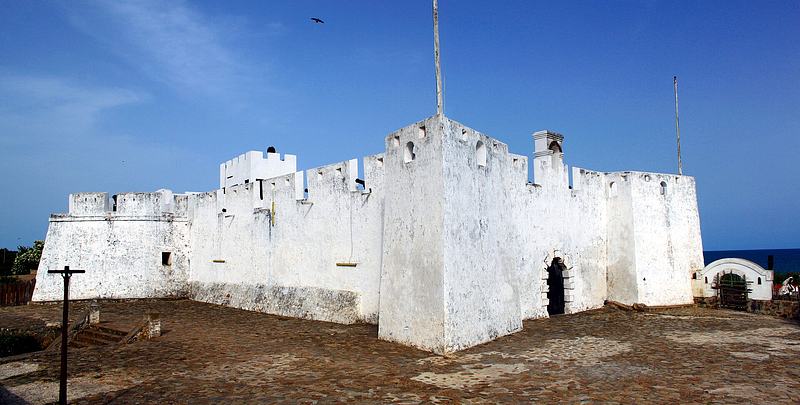
Fort Metal Cross began as Dixcove Fort, an English fortification raised on a promontory beside the fishing village of Infuma. The Ghana Museums and Monuments Board records that the British motive for starting construction in 1692 was the same as the Dutch motive at nearby Fort Batenstein: to tap the promise of gold in the hinterland, and to win back English captains who were trading instead at the Brandenburgers' Fort Gross Friedrichsburg in nearby Princestown. The work did not go smoothly. The people of Infuma, whose two chiefs' allegiances shifted between the British and the Dutch, besieged the fort several times on behalf of the Dutch, stalling its completion. By 1750 it was equipped to carry up to 25 cannons.
The gold never lived up to its billing. What was mined was largely impure, and the fort earned the wry title of 'the fake mint of the Gold Coast' from the author Bosman. Instead it became a service station for repairing ships and supplying timber from the surrounding forest. Then came the darker chapter: during the slave trade, Fort Metal Cross became a slave prison. UNESCO describes these fortified trading posts as a 'collective historical monument' — a monument not only to the evils of the slave trade but also to centuries of pre-colonial Afro-European commerce, and a significant and emotive symbol of the starting point of the African Diaspora. Walk the ramparts with that weight in mind.
Ownership changed hands more than once. Under the 1867 fort exchange agreement the Dutch took the fort in 1868, renaming it Metalen Kruis after one of the gunboats that brought their reinforcements — the local populace was furious at a swap they had not been consulted on. The cost of control persuaded the Dutch to sell, and in 1872 the fort reverted to the British, who gave it the name it carries today. In later years it served as a police station and a post office, and it has since been leased to a private operator and maintained as a tourist site.

A town that lives by the sea
Dixcove is a fishing community first. Reporting for Luv FM, ModernGhana described a town in the Ahanta West District where about 95 per cent of inhabitants depend on the sea for their livelihood — a place where fishing is life and the sea a lifelong companion. That dependence shapes the daily rhythm of the harbour: canoes going out before dawn, nets spread across the beach, fish smoked and sold at the water's edge, outboard motors coaxed into life.
The town has long been divided into two quarters, Ntwarkro (Upper Dixcove) and Daazikessie (Lower Dixcove), a split that dates back to the trading days of the early 17th to 19th centuries. The current Paramount Chief of Upper Dixcove is Obrempong Hima Dekyi XIV. Land disputes between rival chiefs have at times turned violent, in 2020 and 2022, and infrastructure in both quarters is part-funded by the sale of pre-mixed fuel to fishermen. This is a real, lived-in place, not a stage set, and visitors do best when they arrive curious and unhurried.
The sea is also a source of anxiety. ModernGhana reported that rising sea levels and tidal flooding have washed away commercial buildings, houses and a recreational ground, and that residents have resisted resettlement, asking instead for sea defences. A fisherman told the reporter that when the sea strikes, 'you must run away for your life leaving the canoes and outboard motors'. The community's attachment to this shoreline — 'this is where we were born so we can't go anywhere' — is part of what you are visiting.

The bay, the canoes and the light
The landscape is simple and generous: a sheltered cove whose quiet waters suit small boats and canoes, while larger ships anchor about two kilometres offshore. The fort sits on a bluff on the eastern side of the village and dominates the fishing village and town below. From up there the composition is almost too neat — white fort walls, dark green headland, the harbour basin, and the painted fleet drawn up on the sand.
Down at water level the scale changes. Canoes are carved, caulked and repainted on the beach; boys bail out hulls; women move between the landing beach and the smoking racks. The harbour is a working artisanal port with a canoe basin and a fish landing beach, and the beach itself is the town's front room — part workplace, part playground, part promenade.
Beyond the immediate bay, the Ahanta coast rewards a slower look. The same stretch of shoreline holds several European-built forts within a short distance, and the wider Western Region offers beaches, rainforest and the stilt village of Nzulezo. But Dixcove's own view — fort above, canoes below, Atlantic beyond — is the one that stays with you.

What to do
Things to do in Dixcove
-
1.Climb to Fort Metal Cross
The fort is the reason most travellers come, and it earns the climb. Begun by the English in the 1680s and 1690s on a promontory above the bay, it later passed to the Dutch and back to the British, and it is now part of the UNESCO-listed Forts and Castles of Ghana. Inside you can read the layers: the gold-trade origins, the years as a slave prison, its later life as a police station and post office. The sea-facing ramparts give you the best view in town.
Tip: The Ghana Museums and Monuments Board lists opening hours of 9:00am to 4:30pm; build your day around that window rather than arriving late.
-
Attraction
2.Watch the fleet at Dixcove Harbour
Dixcove Harbour is a natural harbour and a working artisanal fishing port, with a canoe basin and a fish landing beach tucked below the fort. Come when the canoes return and the beach turns into a market: fish sorted and sold, nets repaired, outboard motors tested. The cove's quiet water suits small boats and canoes, while larger ships anchor roughly two kilometres offshore. It is the most honest introduction to how this town earns its living.
Tip: Ask before photographing people at work, and keep clear of lines, nets and moving canoes — this is a workplace, not a viewing platform.
-
3.Spend time on Dixcove Beach
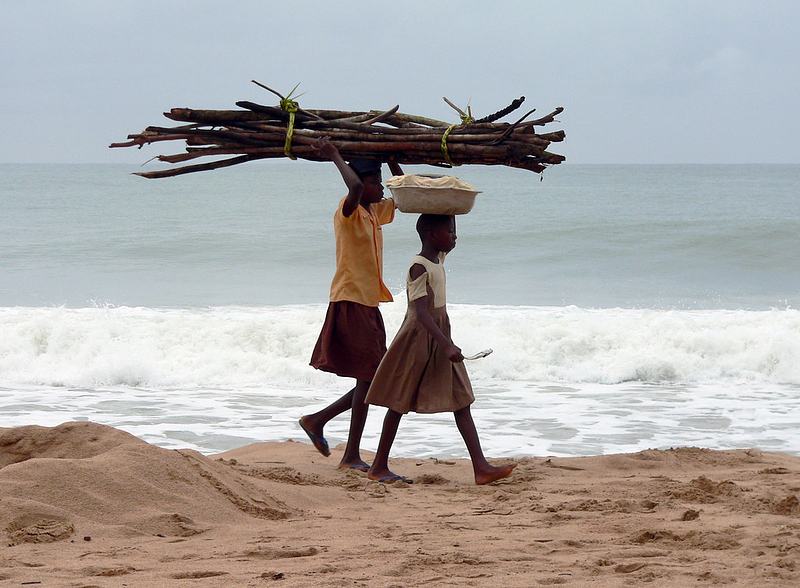
Dixcove Beach is the working fishing shoreline of the town, set below the bluff-top fort. It is not a sun-lounger beach: expect painted wooden canoes drawn up in rows, smoking racks, and the constant traffic of a landing beach. That is precisely what makes it worth your time — the colour, the noise and the light are the town's signature. Walk its length slowly, from the harbour end towards the open sand, and let the place set its own pace.
Tip: Swimming is not the point here and currents along this coast are not to be taken lightly; treat the beach as a place to walk, watch and photograph.
-
4.Time your visit to Kundum
Kundum is the harvest festival of the Ahanta and Nzema people, and Dixcove is one of the coastal towns where it is celebrated. It is a rolling festival rather than a single event: different communities hold their own week in a traditional rotation, so the celebration moves along the coast. Expect masked dancers performing spiritual cleansing, first fruits presented to the chief and elders, drumming, and a grand durbar. It is a genuine community occasion, not a show staged for visitors.
Tip: If you want to watch the masked dancers, keep your distance, do not touch them or block their path, and ask a guide or elder before photographing.
-
5.Walk the bluff for the bay view
The fort's promontory is the town's natural viewpoint, and the walk up to it is half the pleasure. From the bluff the whole composition resolves: the harbour basin, the canoe fleet on the sand, the headland, and the Atlantic running out to the horizon. Wikipedia notes the fort dominates the fishing village and town from a bluff on the eastern side of the village, which is exactly why the light here is best in the softer hours of morning and late afternoon.
Tip: Bring water and wear shoes with grip — the paths up to the fort are uneven and can be slippery after rain.
-
6.Follow the Ahanta coast's fort trail
Dixcove sits in a remarkable cluster of colonial fortifications. UNESCO's listing includes Fort Metal Cross at Dixcove alongside Fort Batenstein at Butre, Fort Gross Friedrichsburg at Princestown, Fort St. Anthony at Axim and Fort Orange at Sekondi, among others. If the history grips you, use Dixcove as a base and visit one or two neighbours — the stories of gold, timber, ship repair and the slave trade interlock across the whole coastline.
Tip: Check opening arrangements locally before setting out; not every fort in the region is open or staffed at all times.
-
7.Eat fish where it was landed
The most memorable meal in Dixcove is the simplest: fresh fish from the landing beach, grilled or in a light stew, eaten within sight of the canoes that caught it. Because roughly 95 per cent of residents depend on the sea, seafood here is not a menu item so much as the local economy on a plate. Ask locally what has come in that day and let that decide your order.
Tip: Ask about preparation and spice levels if you are not used to Ghanaian pepper — and carry small cash, as card payment is not the norm in a fishing town.


Plan your time
Suggested itinerary
Half a day: fort, harbour and beach
Arrive in Dixcove by mid-morning and head straight for Fort Metal Cross while the light is still soft and the day is cool. Give the fort an unhurried hour — the ramparts, the gun emplacements, the view down over the bay. Then walk down to Dixcove Harbour and the landing beach, timing it for when canoes are coming in or going out. Finish with a slow walk along Dixcove Beach and a late lunch of fresh fish. This is a compact, walkable half-day; the three stops sit almost on top of one another.
Fort Metal Cross→Dixcove Harbour→Dixcove Beach
One day: Dixcove in depth
Start early on the beach to catch the dawn fleet and the first landings, when the harbour is at its busiest. Move up to Fort Metal Cross mid-morning and take your time with the history — the gold trade, the slave prison, the Dutch and British exchanges. After lunch, walk the bluff for the wide bay view, then return to the harbour as the afternoon light turns the canoes gold. If your visit falls between August and October, ask locally whether a Kundum celebration is happening in Dixcove or a neighbouring town that week, and shape your evening around it.
Dixcove Beach→Fort Metal Cross→Dixcove Harbour
Two days: Dixcove and the Ahanta coast
Day one belongs to Dixcove: the fort, the harbour, the beach, and an evening of fish and conversation. On day two, use the town as a base for the wider Ahanta coast. UNESCO lists a dense cluster of forts along this shoreline — Fort Batenstein at Butre, Fort Gross Friedrichsburg at Princestown and Fort St. Anthony at Axim among them — so pick one or two and travel between them, reading the coastline as a single connected story of trade, gold and the slave trade. Return to Dixcove for a last look at the bay from the bluff.
Fort Metal Cross→Dixcove Harbour→Dixcove Beach


Seasons and festivals
When to go
Ghana's Western Region coast is warm year-round, and the practical question is less about temperature than about rain and road conditions. The editor's brief warns that coastal roads into Dixcove can be difficult in the rainy season, and the wider region's rainfall is heavy enough that a robust vehicle and a flexible schedule are sensible. The most compelling reason to choose your dates carefully is Kundum, the harvest festival of the Ahanta and Nzema people, which runs from August through October. Because each town celebrates on its own week in a fixed rotation, there is usually a Kundum celebration somewhere on the Ahanta coast across those months, and Dixcove is one of the towns that takes part. If you can, plan around it.
- Kundum Festival · August to October, with each town celebrating on its own week in a traditional rotation
- Kundum is the harvest festival of the Ahanta and Nzema people of the Western Region, and Dixcove is one of the coastal towns where it is held. The celebration includes the banishing of evil spirits by masked dancers, the presentation of first fruits to the chief and elders, drumming and community dancing, and a grand durbar where the paramount chief sits in state. It is a rolling festival rather than a single event, so different communities celebrate on different weeks between August and October.
Access
Getting there and around
Dixcove lies in the Ahanta West Municipal District of the Western Region, approximately 35 km west of the regional capital Sekondi-Takoradi. VisitGhana's route notes are the clearest guide: from Accra, travellers can reach Takoradi either by road or by air, with the road journey taking roughly four hours and the flight around 45 minutes. From Takoradi, take the Takoradi–Tarkwa road to Agona Junction, or board public transport from the Ajip Fuel Station in Takoradi to Agona Junction, then follow the road signage to Dixcove. Once you are in the town, the fort, the harbour and the beach are close enough to cover on foot. Because the coastal roads can be rough in the rainy season, allow extra time and favour a sturdy vehicle.
Good to know
Before you go
Dixcove is a working fishing town, so dress and behave as a guest in someone's workplace: ask before photographing people, boats or ceremonies, and accept a no gracefully. The fort is a protected national monument and part of a UNESCO World Heritage property, so stay on the paths, do not climb on fragile masonry, and treat the slave-trade history with the gravity it deserves. Carry cash, since card payment is not the norm here, and bring water, sun protection and shoes with grip for the uneven climb to the fort. If you are visiting during Kundum, remember that the masked dancers and rituals carry real spiritual authority for the community — watch respectfully, keep your distance, and follow the guidance of local elders or a guide. Finally, be mindful that this shoreline is under pressure from tidal flooding; support local businesses and take nothing but photographs from the beach.
FAQ
Questions travellers ask about Dixcove
Where is Dixcove in Ghana?
Dixcove is a coastal village and fishing community in the Ahanta West Municipal District of Ghana's Western Region, approximately 35 km west of the regional capital Sekondi-Takoradi.
What is Fort Metal Cross and why is it significant?
Fort Metal Cross, originally Fort Dixcove, is an English fort begun on a promontory above the bay in the 1680s and 1690s. It served the gold trade, became a slave prison during the slave trade, and later passed between British and Dutch control. It is part of the UNESCO-listed Forts and Castles of Volta, Greater Accra, Central and Western Regions.
How do I get to Dixcove from Accra?
Travel to Takoradi first, either by road (roughly four hours) or by air (around 45 minutes), then take the Takoradi–Tarkwa road to Agona Junction and follow the signage to Dixcove. Public transport from the Ajip Fuel Station in Takoradi also runs to Agona Junction.
When is the best time to visit Dixcove?
The coast is warm year-round, but the Kundum harvest festival runs from August to October, with different towns celebrating on different weeks. If you want to combine the fort and harbour with a major cultural festival, plan around those months.
Can I swim at Dixcove Beach?
Dixcove Beach is primarily a working fishing shoreline rather than a swimming beach, and the sea here is powerful enough that residents have had to flee tidal surges. Treat it as a place to walk, watch and photograph rather than to swim.
What is the Kundum festival?
Kundum is the harvest festival of the Ahanta and Nzema people of Ghana's Western Region, celebrated with masked dancers who perform spiritual cleansing, offerings of first fruits to the chief and elders, drumming, dancing and a grand durbar. It is a rolling festival that moves from town to town between August and October.
Is Dixcove worth visiting if I am already going to Busua?
Yes. Dixcove is a short distance from Busua and offers something different: a working harbour, a UNESCO-listed fort and a fishing beach rather than a resort shoreline. The fort, harbour and beach are all within easy walking distance of one another.
Keep exploring
More destination guides
Sources for this guide (7)
- Fort Metal Cross, Dixcove (1692) – Ghana Museums and Monuments Board
- Fort Metal Cross, Dixcove – Visit Ghana
- Fort Metal Cross – Wikipedia
- Dixcove – Wikipedia
- Forts and Castles, Volta, Greater Accra, Central and Western Regions – UNESCO World Heritage Centre
- Encroaching tides wash Dixcove and livelihood of the people away – ModernGhana / Luv FM
- Kundum Festival — Festival of the Harvest Moon in Western Ghana – Akwaaba App
Written September 29, 2026 from these sources and reviewed by the VisitGhana.app team. Confirm practical details locally before travelling.