
A fort, a river and a name
Akwidaa's story begins with a river crossing. The name is Twi for 'old man', and it is said to honour a man who ferried people across the Ezile River during Dutch colonial times; the town itself was originally named after the river. For centuries before any European arrived, this was Ahanta country, and the people here have fished these waters for generations.
In 1683 the Brandenburger Company built a lodge at Akwida, east of Cape Three Points. According to the historian Albert van Dantzig, Fort Dorothea began as a small triangular building set on a promontory at the end of a peninsula between the mouth of the Suni River and the sea — a position with natural protection on almost every side. The lodge was captured in 1690 and enlarged into a fort by the Dutch, who renamed it Fort Dorothea. Control then passed back and forth: briefly Dutch from 1687 to 1690, returned to the Brandenburgers in 1698, abandoned around 1709, occupied by the Dutch again in 1712, and finally sold to them in 1718. In the late seventeenth and early eighteenth centuries Akwidaa, then known as Fort Dorothea, was the smaller of the two forts that made up the Brandenburger Gold Coast, a German colony on this coast.
What remains today is a ruin, preserved as such, and inscribed on the UNESCO World Heritage List in 1979 along with Ghana's other forts and castles. The listing is a reminder of what these coastal trading posts really were: links in the routes that carried gold and, later, enslaved people across the Atlantic. Standing on the rocky hill above the sea, it is worth holding both things at once — the beauty of the view and the gravity of the trade that built the walls.

Old Town, New Town, and a moving shoreline
Akwidaa is really two places. Old Akwidaa hugs the Gulf of Guinea, low-lying beside a wetland and a river mouth. New Akwidaa sits inland, and it grew because the sea kept coming. Flooding and erosion, worsened by climate change, made life on the coastal strip increasingly precarious, and most residents moved to higher ground. The river still separates the two halves of the town, and there are beaches on either side.
That shift shapes daily life. The economy rests on fishing and farming, and boats still line the shore, but the beach itself is a contested space — sand is dug for building, the tides take more each year, and the wide strand in front of the village narrows. It is also why the turtles matter here. Ghana's western coast is nesting ground for leatherbacks, olive ridleys, green turtles and hawksbills, and the olive ridley is the most commonly recorded. All are protected by Ghanaian law and by international agreement, yet poaching, sand extraction and overfishing press hard on them. Community-led efforts elsewhere on this coast — fishermen pledging to release turtles caught by accident, villages organising their own patrols — show what local stewardship can do.
Akwidaa's people are, by every account, welcoming and curious about visitors. Come as a guest rather than a spectator: buy from the women selling fish and produce, ask before photographing, and if you are invited to a funeral, go — it is a celebration of a life, not a sombre affair.

Where the forest meets the sea
Behind the village lies something rare. The Cape Three Points Forest Reserve is the only coastal forest in Ghana and one of the few remaining coastal rainforest reserves in West Africa. Since 1999 it has been recognised as a Globally Significant Biodiversity Area and an Important Bird Area, and it is counted among Ghana's thirty such areas. It is also the last surviving remnant of evergreen forest in this part of the country.
Surveys in the reserve have recorded more than twenty-seven tree species, seventeen species of medium and large mammals, and forty-five kinds of butterfly. More remarkable still, it falls within the range of two highly threatened primates: the Critically Endangered Roloway monkey and the Endangered white-naped mangabey. The forest is under real pressure — illegal logging, mining, charcoal burning and poaching, plus the conversion of surrounding land to rubber and oil palm. Communities of Ahanta and Nzema people who live along its edges depend on it, and conservation projects here work to strengthen local management rather than push people out.
Between the reserve and the sea, the Ezile River winds through mangroves. Paddling its channels in a wooden canoe, guided by a local navigator, is the gentlest way to meet this landscape: kingfishers and fish eagles overhead, black-and-white colobus monkeys in the trees, and the occasional flash of flying fish breaking the surface. It is a small, quiet ecosystem, and it rewards attention.

What to do
Things to do in Akwidaa
-
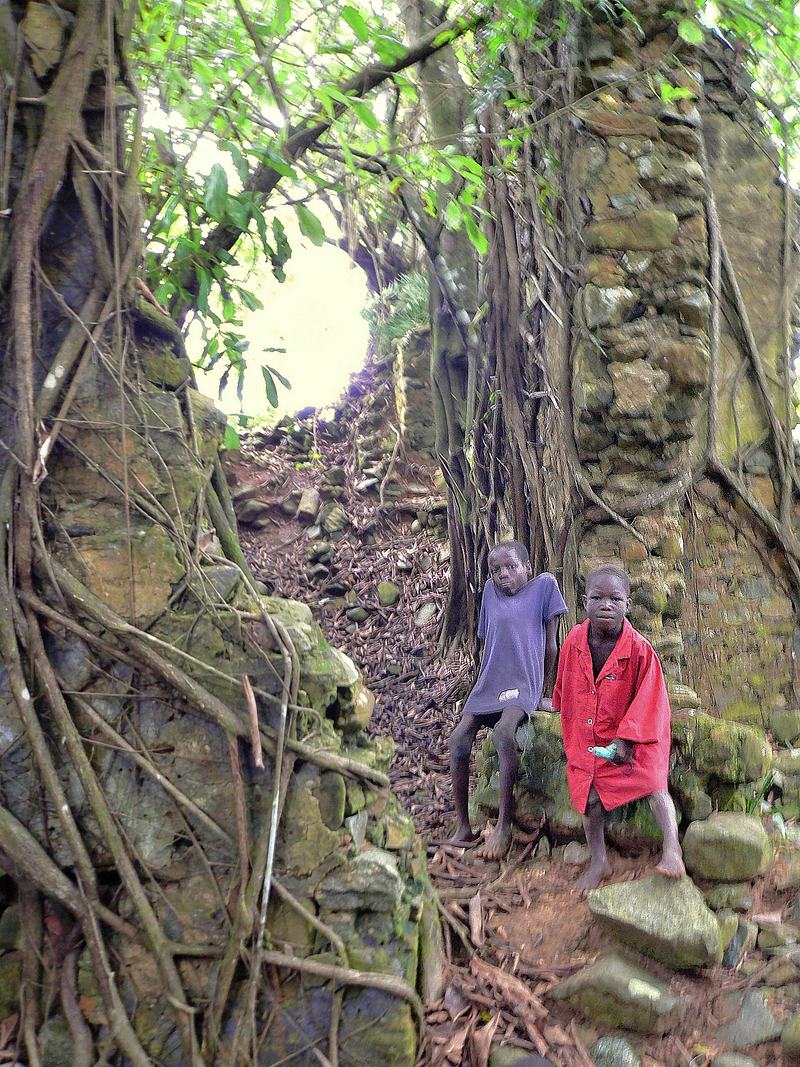
1.Walk up to the Fort Dorothea ruins
The ruined fort sits on a rounded rocky hill above Akwidaa, and the climb is short but steep. What you find is a fragment of a seventeenth-century trading post — the Brandenburger lodge of 1683, later enlarged by the Dutch and renamed Fort Dorothea — with the sea on three sides and a view that explains exactly why it was built here. It is a place to think about the gold and slave trades that these walls served, not just to photograph.
Tip: The land around the ruins is sacred ground and serves as a cemetery for the Akwidaa royal family. You must seek permission before trekking to the site — ask locally, and go with a guide.
-
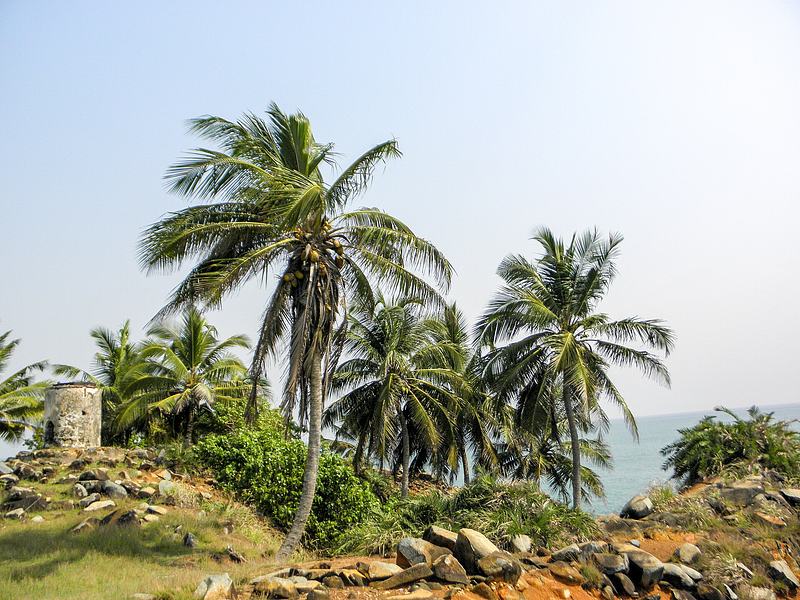
2.Stand at Cape Three Points
This small peninsula and fishing village is the southernmost tip of Ghana, the point where the country reaches furthest into the Atlantic. It is known as the 'land nearest nowhere', because it is the closest land to the spot in the sea at zero latitude and zero longitude, roughly 570 km away. The headland sits between Akwidaa and Princes Town, and the walk out to it passes through forest and along a wild, open coast.
Tip: Combine the cape with the forest reserve in a single outing — they sit side by side, and the shade of the trees makes a good break from the sun.
-
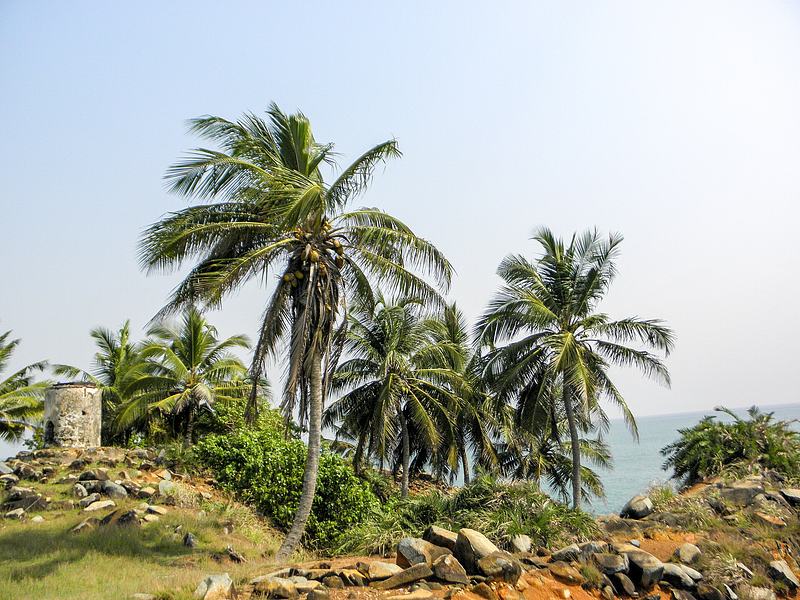
3.Climb the Cape Three Points lighthouse
Two lighthouses stand at the cape. The first was built by the British in 1875 as a navigational aid for trading vessels in the Gulf of Guinea; it is now a ruin. A larger, improved tower was completed in 1925 and is still working today. Climbing to the top of the working lighthouse gives you a full sweep of the coastline, the forest behind and the open water ahead — the best vantage point in the district.
Tip: Go early or late in the day for clearer light and cooler air, and wear shoes with grip for the climb.
-
Attraction
4.Paddle the Ezile River mangroves
A wooden canoe, a local navigator and a slow drift through the mangroves of the Ezile River: this is the most peaceful hour you will spend in Akwidaa. Guides point out kingfishers, fish eagles and black-and-white colobus monkeys in the trees, and if you are lucky you will see flying fish break from the water. The channels are calm and the pace is entirely unhurried, which makes it a good outing for families and photographers alike.
Tip: Trips are usually run in the morning and afternoon and last around an hour and a half to two hours. Arrange yours in the village or through your lodge the day before.
-
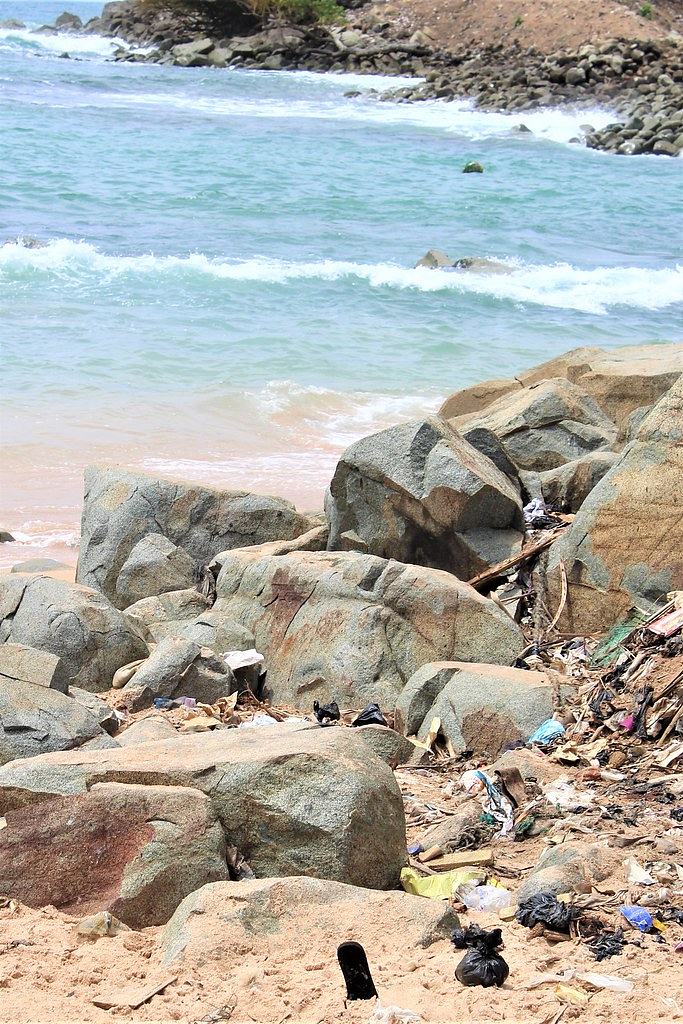
5.Spend a day on Akwidaa Beach
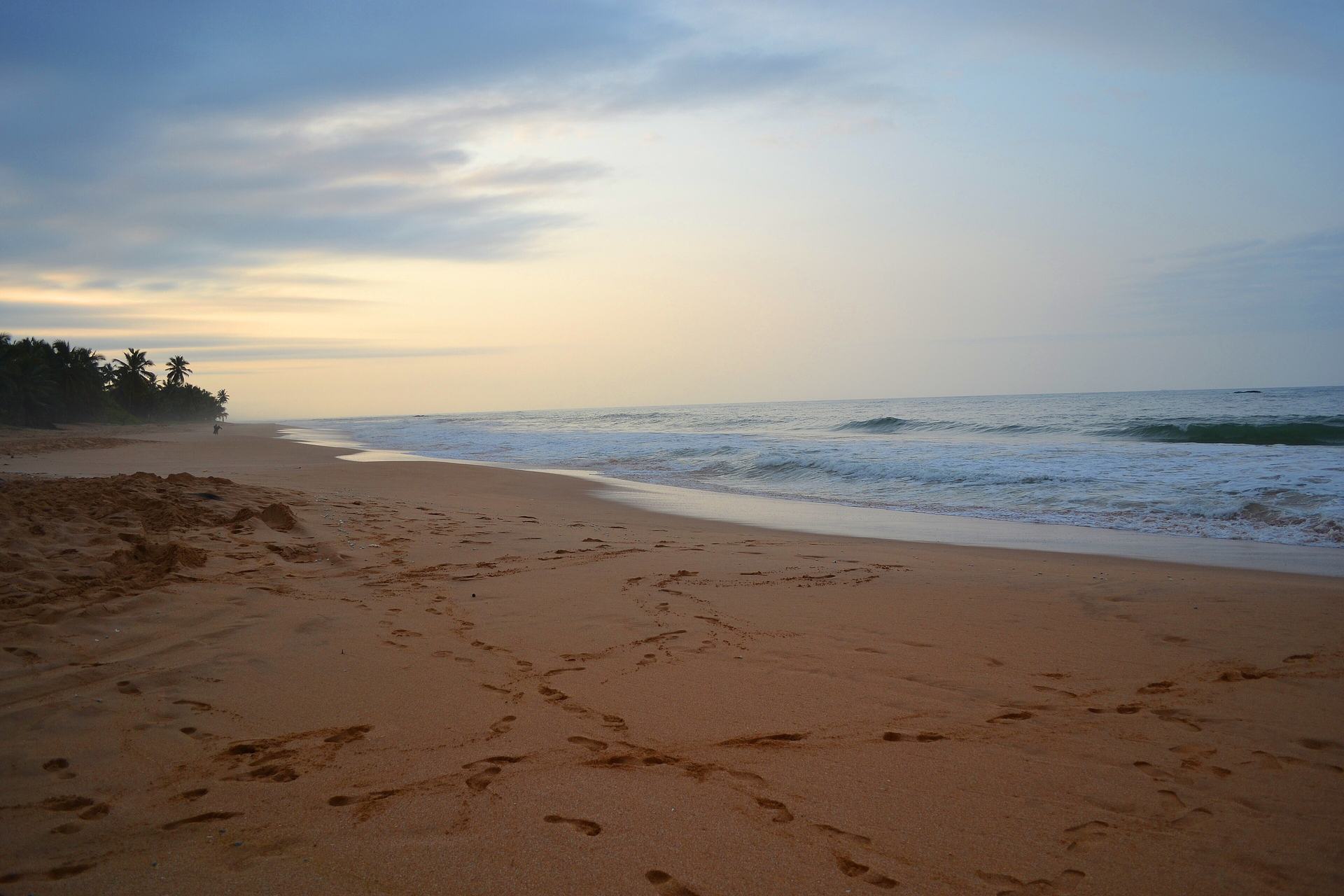
The village shoreline is free and open, backed by fishing boats and the everyday life of the town. It is not a manicured resort beach, and that is the point: you can watch canoes land, join a game of beach football, swim where it is safe, or simply walk the sand in either direction until the village noise fades. The waves are big and the currents can be strong, so this is a beach for respect as much as for lounging.
Tip: Be careful of strong waves breaking near the shore and currents running seawards. Ask locally about the safest stretch before you swim.
-
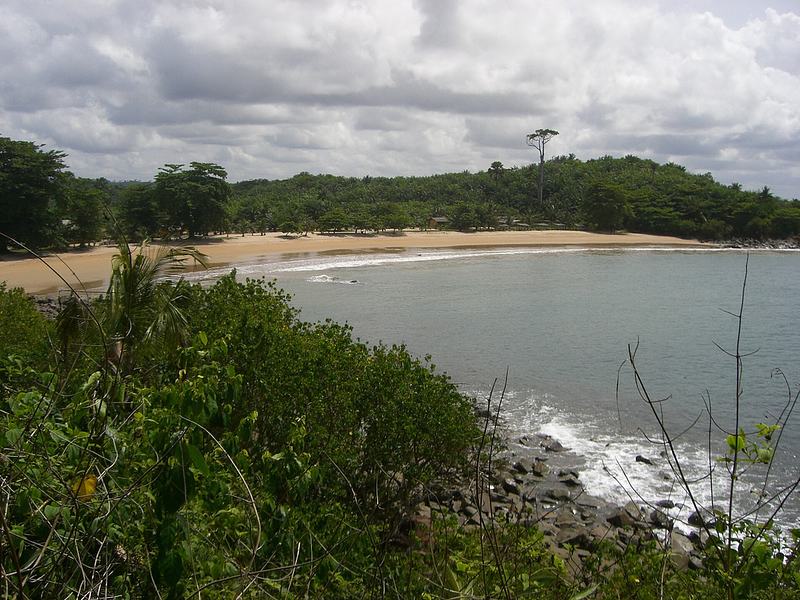
6.Swim in the sheltered bay at Ezile
Ezile Bay is a small, protected cove between Akwidaa and Katakor, shaded by large wild almond and palm trees with the village visible in the background. Because the bay is sheltered, swimming here is usually safer and calmer than on the open coast, which makes it the spot to choose if you want to be in the water rather than just beside it. It is a short walk from town and easy to reach on foot.
Tip: Bring what you need with you — this is a quiet bay with limited facilities, and the nearest cash machine is back in Agona.
-
Attraction
7.Walk into the Cape Three Points Forest Reserve
The reserve is the only coastal forest in Ghana and one of the last coastal rainforest remnants in West Africa, protected as a Globally Significant Biodiversity Area and an Important Bird Area since 1999. More than twenty-seven tree species, seventeen kinds of medium and large mammal and forty-five butterfly species have been recorded here, and the forest lies within the range of the Critically Endangered Roloway monkey and the Endangered white-naped mangabey. Seeing either is a privilege, not a guarantee.
Tip: Walk with a local guide who knows the trails and the wildlife, and keep to the paths — this is a working reserve under pressure from logging and poaching, and visitors should leave no trace.
-
Attraction
8.Look for nesting turtles on the night beach
Ghana's western coast is nesting ground for leatherback, olive ridley, green and hawksbill turtles, and the olive ridley is the most commonly recorded. On a quiet night, with a guide and no torchlight, you may watch a female haul herself up the sand to lay. It is a slow, extraordinary thing to witness — and a fragile one, since poaching, sand extraction and coastal erosion all threaten these beaches.
Tip: Never approach a nesting turtle without a guide, keep lights off and voices low, and keep your distance. All sea turtle species are protected under Ghanaian law.


Plan your time
Suggested itinerary
Half a day: the fort and the bay
Start in the morning while it is still cool. Ask permission in the village, then walk up to the Fort Dorothea ruins for the view and the history — allow an hour for the climb, the site and the descent. Come back down through Old Akwidaa and follow the shoreline to the sheltered bay at Ezile, where you can swim and sit under the almond trees. Finish with a late lunch and a slow walk back through town as the canoes come in.
Fort Dorothea ruins→Ezile Bay Beach→Akwidaa Beach
One day: cape, lighthouse and mangroves
Give the whole day to the coast west of the village. Head first to Cape Three Points, walking out to the headland and climbing the working 1925 lighthouse for the panorama, with a look at the 1875 ruin nearby. Continue into the Cape Three Points Forest Reserve for a guided walk through the coastal rainforest, keeping an eye out for monkeys and birds. In the afternoon, return to Akwidaa and take a wooden canoe through the Ezile River mangroves as the light softens — a gentle end to a full day.
Cape Three Points→Cape Three Points Lighthouse→Cape Three Points Forest Reserve→Ezile River Mangrove Canoe Experience
Two days: slow Akwidaa
Day one: settle in, walk the length of Akwidaa Beach, swim at Ezile Bay and spend the evening in the village. Day two: climb to Fort Dorothea in the morning, then take the mangrove canoe trip on the Ezile River. If you have a third morning, use it for the cape and the forest reserve, or simply for another swim before you leave. The pleasure here is in repetition — the same beach at different hours, the same path walked twice.
Akwidaa Beach→Ezile Bay Beach→Fort Dorothea ruins→Ezile River Mangrove Canoe Experience→Cape Three Points→Cape Three Points Forest Reserve


Seasons and festivals
When to go
Akwidaa sits on Ghana's wet south-western coast, and the state of the road matters as much as the weather. The track out from Dixcove and Agona is gravel and dirt, and parts of it wash away during the rainy season, so travel is easiest and most comfortable in the drier months. The sea is warm year-round, but the surf is powerful and the currents can be strong, so swimming is best in the sheltered bay at Ezile rather than on the open beach.
Turtle nesting is one of the reasons people time a visit carefully. Ghana's western beaches host leatherback, olive ridley, green and hawksbill turtles, with the olive ridley the most commonly recorded. Nesting is a night-time event and never guaranteed; if seeing it matters to you, arrange a guide in the village and be prepared to be patient, quiet and lucky.
Access
Getting there and around
Akwidaa lies 12 km west of Dixcove and 6 km east of Cape Three Points. By road it is about a 30-minute drive from Dixcove, an hour from Agona and roughly an hour and a half from Takoradi.
By private vehicle from Takoradi, take the Airport Road exit at the Kwame Nkrumah Roundabout, beside the Goil petrol station, and drive about 30 minutes to the centre of Agona. At the Agona roundabout, turn left onto the road to Dixcove. At Dixcove, ask for the Akwidaa road and follow it straight on, passing through villages, until you reach Old Akwidaa. If you want to combine Akwidaa with Cape Three Points, it is better to use the Cape Three Points road: from the Agona roundabout take the Dixcove road, and after about ten minutes turn right at the junction with the small Cape Three Points sign. Drive straight on; where you enter the rubber plantation you will reach a fork — take the left turn and continue until the Akwidaa junction, then veer left into the village.
By public transport, go to Takoradi's West End, near Tarkwa station by the STC bus terminal, or to the Goil petrol station at the Kwame Nkrumah Roundabout, and take a tro-tro to Agona. From Agona there are regular tro-tros and taxis onward to Akwidaa via Dixcove. Once you are in the village, everything — the beach, the bay, the fort path, the river — is within walking distance, and local guides can arrange canoe trips and forest walks.
Good to know
Before you go
Bring cash. The nearest cash machine is in Agona, and it is a Visa-only machine, so do not rely on cards in the village. The road to Akwidaa can be rough and is often worse after heavy rain, so allow extra time and travel in daylight if you can.
Treat the fort with care. The land around the ruins is sacred ground and serves as a cemetery for the Akwidaa royal family, so you must seek permission before trekking to the site. Ask in the village and go with a local guide.
On the beach, respect the water: waves break hard near the shore and currents run seawards. Swim in the sheltered bay at Ezile rather than the open coast, and ask locally about conditions. Keep valuables out of sight, especially when you are alone in quiet places.
Finally, tread lightly. The forest reserve and its primates are under real pressure, and the turtles are protected by law. Walk with guides, keep lights and noise low around wildlife, take your rubbish away, and spend your money in the village.


FAQ
Questions travellers ask about Akwidaa
Where is Akwidaa in Ghana?
Akwidaa is a fishing village in the Ahanta West Municipal District of Ghana's Western Region, on the coast between Dixcove and Cape Three Points. It is about 12 km west of Dixcove and roughly an hour and a half's drive from Takoradi.
Why is Akwidaa split into Old Town and New Town?
Old Akwidaa sits low beside the Gulf of Guinea, next to a wetland and river mouth, and suffers from flooding and erosion worsened by climate change. Most residents moved inland, creating New Akwidaa, and the river still separates the two halves of the town.
Can I visit the Fort Dorothea ruins?
Yes, but you must seek permission first. The land around the ruins is sacred ground and serves as a cemetery for the Akwidaa royal family, so ask locally and go with a guide. The fort itself is a preserved ruin, inscribed on the UNESCO World Heritage List in 1979.
Is Akwidaa Beach safe for swimming?
The open beach has big waves and currents that run seawards, so it is not the best place for a casual swim. The sheltered bay at Ezile, a short walk away, is usually calm and safer for swimming.
What wildlife can I see around Akwidaa?
The Cape Three Points Forest Reserve is a Globally Significant Biodiversity Area and Important Bird Area, home to the Critically Endangered Roloway monkey and the Endangered white-naped mangabey, among many birds and butterflies. The Ezile River mangroves are good for kingfishers, fish eagles and colobus monkeys, and the beaches host nesting sea turtles.
How do I get to Akwidaa without a car?
Take a tro-tro from Takoradi to Agona, then another tro-tro or a taxi onward to Akwidaa via Dixcove. From Agona there are regular services, and the final stretch is on a gravel road that can be rough after rain.
What is Cape Three Points known for?
Cape Three Points is the southernmost tip of Ghana, a small peninsula and fishing village between Akwidaa and Princes Town. It is known for its two lighthouses — the 1875 British tower, now a ruin, and the working 1925 lighthouse — and as the 'land nearest nowhere'.
In pictures
Akwidaa in pictures
Keep exploring
More destination guides
Sources for this guide (12)
- Fort Dorothea – Visit Ghana
- Fort Dorothea, Akwidaa (1685) – Ghana Museums and Monuments Board
- Akwidaa – Wikipedia
- Cape Three Points – Wikipedia
- List of castles in Ghana – Wikipedia
- Enhancing Participatory Planning and Management of Cape Three Points Key Biodiversity Area – Hεn Mpoano
- Protecting Endangered Primates in the Cape Three Points Key Biodiversity Area – Hεn Mpoano
- Cape Three Points Forest Reserve, Ghana – Royal Commonwealth Society
- Ezile Tours – One Africa Foundation Ghana
- Akwidaa Beach – Beachmeter
- Sea Turtle Conservation in Ghana's Western Region: The Bigger Picture – Marine Turtle Newsletter 136
- Fort Dorothea, 17th-century fort in Akwidaa, Ghana – Around Us
Written September 29, 2026 from these sources and reviewed by the VisitGhana.app team. Confirm practical details locally before travelling.