
A frontier that was fought over
The Upper East has always been a crossroads. It sits between the old conquest states of Dagbon and Mamprugu to the south and the Mossi kingdoms to the north, and for centuries it was a frontier belt that traders crossed and raiders preyed upon. Its farming communities were dense and prosperous, which made them targets: the Daily Graphic's account of the Tongo Hills records that a large proportion of the people enslaved in the Akan forest kingdoms came from frontier communities like these.
That history is not abstract here. At Pikworo, about three kilometres west of Paga, a transit camp founded in 1704 held captives brought down from the north before they were marched roughly 150 kilometres south to the Salaga market and on to the coast. The site is quiet and largely unmarked — a scatter of boulders, scooped hollows in the rock where people ate, a punishment stone, a cemetery. Guides read it aloud, and it is worth the discomfort of listening.
The hills above Tongo tell a different story of the same era. From the 1880s the Tongo Hills sheltered people fleeing slave raiders, and in 1911 they became the focus of resistance to British colonial rule. The Talensi were evicted from the hills and access to the shrines was banned; within four years British officers found people slipping back, and by the 1920s the great ancestor shrine was flourishing again. It has not stopped since.

Mud, murals and a living faith
The region's architecture is its own argument: that mud, properly handled, is monumental. At Navrongo, the Old Catholic Cathedral is built entirely of mud bricks and plastered with mud mortar — 60 metres long, 14 wide, with a 13-metre bell tower and a floor of compacted gravel, cow dung and dawa-dawa. Three missionaries arrived at the garrison of Navarro in April 1906; a first chapel followed in 1907, a larger one in 1910, and the cathedral was completed in 1920. The Ghana Museums and Monuments Board calls it the last of its kind in Ghana, and it is still used for worship.
Inside, the walls carry a mixture of Nankani-Kassena imagery and Catholic symbolism, painted by women of the Navrongo community from 1973 onwards. That same instinct — women decorating the surfaces of the buildings they live in — reaches its fullest expression at Sirigu, where geometric murals in black, white and red are painted onto the mud walls of inhabited family compounds. These are homes, not exhibits, and the designs are renewed by hand.
Faith here is layered rather than replaced. At Navrongo, a stone grotto with an altar and a statue of the Madonna was built at the White Fathers' mission. Twenty kilometres away, the shrines of the Tongo Hills still draw people from across Ghana and neighbouring countries who come for guidance and the resolution of problems.

The hills that whistle
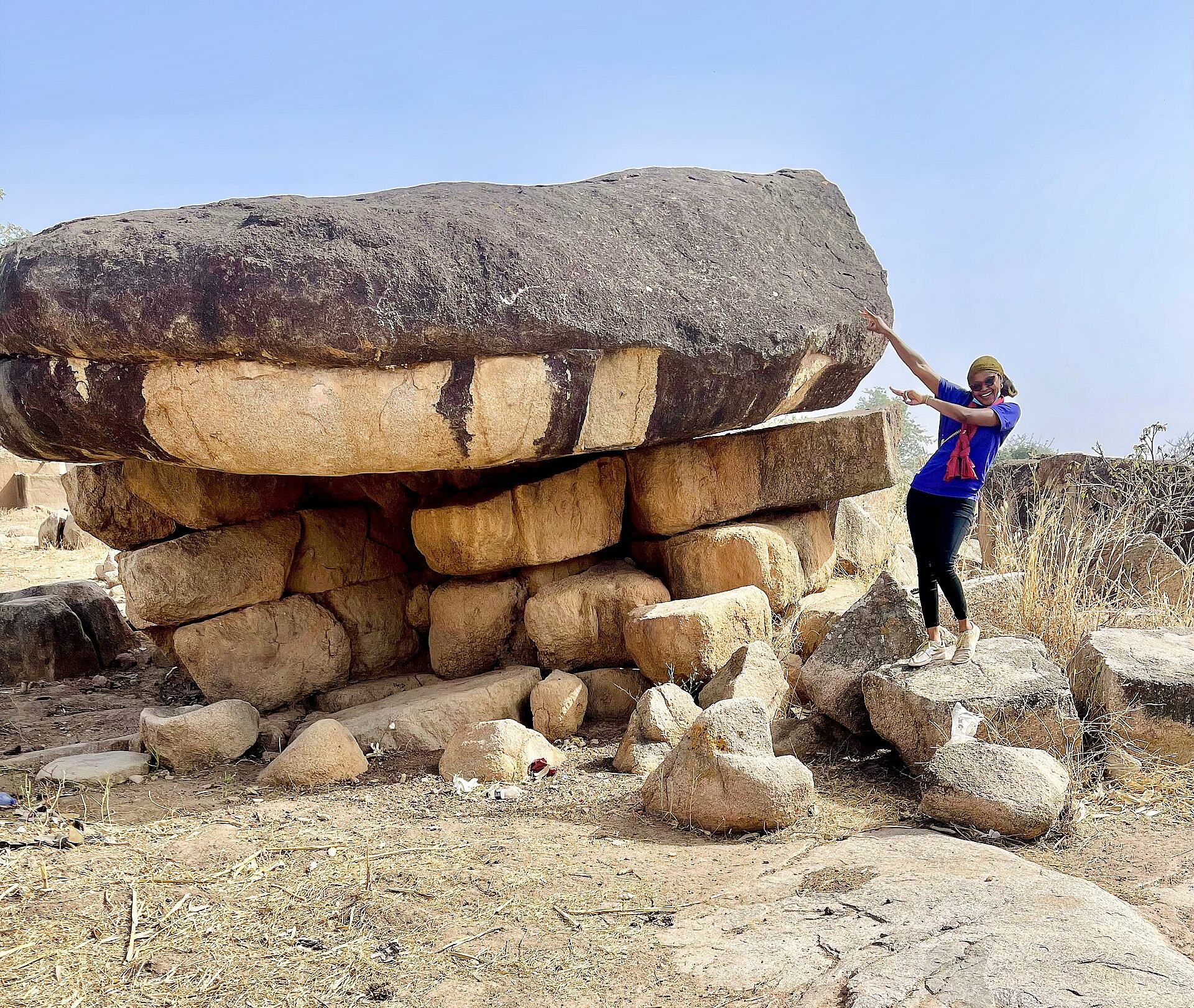
The Tongo Hills are a granite range rising to about 355 metres, roughly six kilometres long, south of the small town of Tongo and about fifteen kilometres south-east of Bolgatanga. What makes them strange is the stacking: boulders balanced on boulders, caves, rock shelters and a horseshoe-shaped chain of hills at whose base lie the sacred ancestral shrines of the Talensi. The most recognised is the Ba'ar Tonna'ab Ya'nee shrine, known to Asante traditionalists as Nana Tongo.
Archaeological survey has found evidence of human use of the caves and shrines dating back to 500 BC. Among the sites are the Hiding Caves, where the local chief took refuge and commanded his forces against the British around 1911, and the Hyena Caves, where he and other leaders met during the fighting. There is also the Cave School, where formal education began between 1965 and 1985 with an initial 25 pupils, with separate areas of rock mapped out for cooking, eating and lessons.
Then there is the sound. Between December and February the harmattan blows down from the Sahara, and as it passes through the rocks it produces a whistling note — the reason these formations are known as the Whistling Rocks. The Talensi say the landscape is timeless: their ancestors, grandfathers and fathers all met the Tona'ab deity here.

What to do
Things to do in Upper East
-
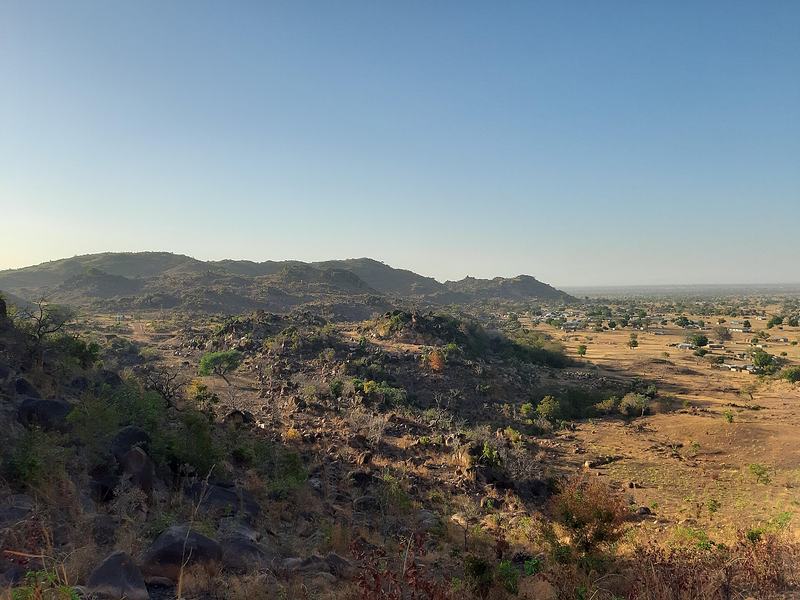
1.Tongo Hills and the Tengzug shrines
The single best reason to come north. A granite range of balanced boulders, caves and rock shelters, with the sacred ancestral shrines of the Talensi at its base — the Ba'ar Tonna'ab Ya'nee shrine is the best known. Archaeological evidence of human use of the caves and shrines goes back to 500 BC, and the Hiding and Hyena Caves recall the resistance to British rule in 1911. The landscape has been short-listed for future UNESCO World Heritage consideration.
Tip: Hire a local guide at Tengzug rather than wandering alone; the shrines are active places of worship, and the caves are not signposted.
-
Attraction
2.Tongo Whistling Rocks
Granite formations in the Tongo Hills that produce a strange whistling sound when the harmattan wind blows through them. The effect belongs to November and December, when the dry Saharan wind crosses northern Ghana — so this is one sight that genuinely has a season. Even outside those months the rock shapes are worth the walk, and the formations sit within the same sacred landscape as the shrines.
Tip: If the whistle is the point of your visit, plan for late November or December and ask locally whether the wind has started.
-
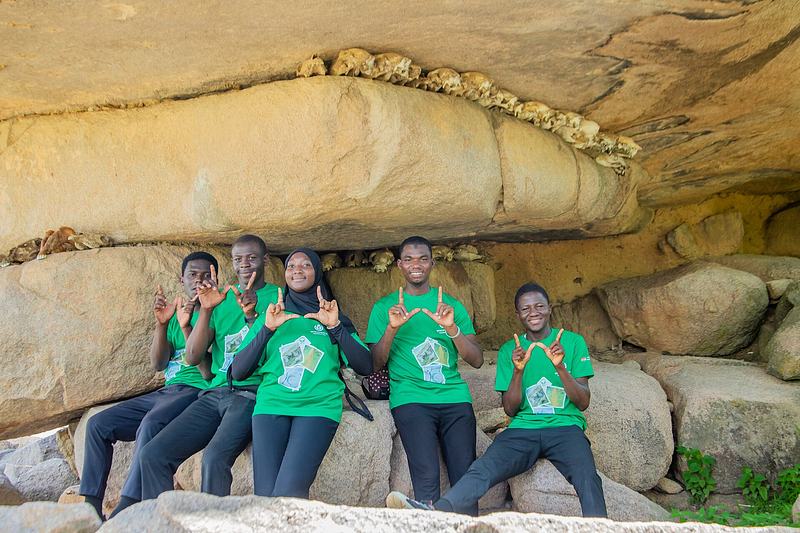
3.Tenzug Cave School
A rock overhang in the Tongo Hills where formal education in the area began between 1965 and 1985, starting with 25 pupils. Separate areas of rock were mapped out for cooking, eating and classrooms. A government school now stands beside the original site, after the community built a three-unit classroom block that was later absorbed into the public system. It is a small, affecting stop that says a great deal about how education arrived here.
Tip: Combine it with the Chief's Palace and the shrines on the same guided walk — they are close together and usually visited as one tour.
-
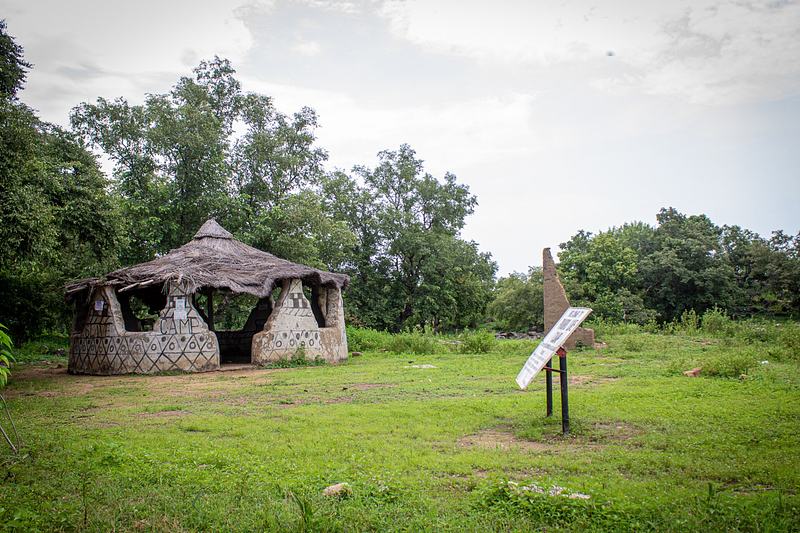
4.Pikworo Slave Camp
A former slave transit camp at Paga Nania, about three kilometres west of Paga, founded in 1704 and active until 1845. Captives brought down from the north were held here before being marched roughly 150 kilometres south to the Salaga market and on to the coast. The site holds the punishment rock, a mass grave cemetery, hollows scooped into the stone where people ate, and the traders' watch point. It is unmarked and understated, which makes a guide essential.
Tip: Go with a guide who can read the site; without one, the rocks give up very little. Allow time afterwards to sit quietly rather than rushing to the next stop.
-
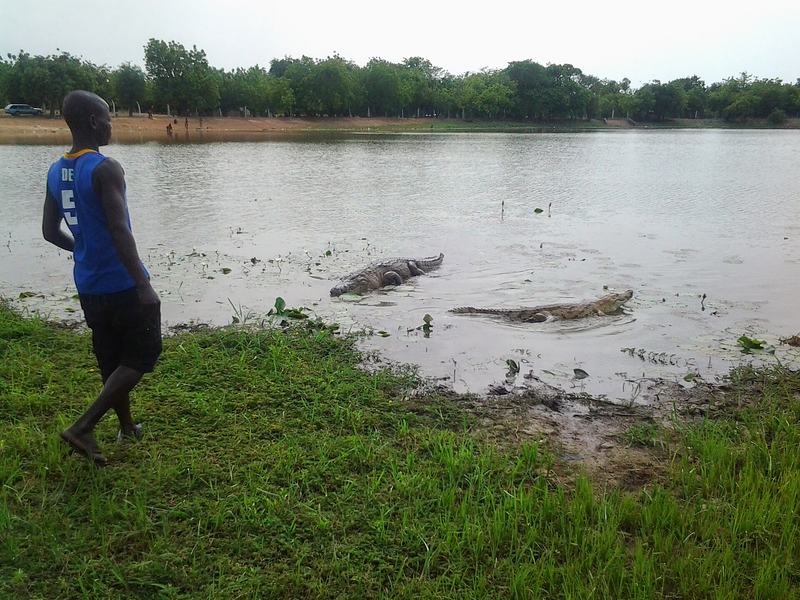
5.Paga Crocodile Pond
A sacred pond in Paga, 44 kilometres from Bolgatanga, inhabited by wild West African crocodiles, some said to be up to 90 years old. Local tradition holds that the crocodiles carry the souls of the people of Paga, and killing one is an offence. Guides whistle and the animals come to the bank, where visitors can sit beside them and, after a chicken has been fed to them, hold their tails for photographs. The pond now depends on tourism to keep the crocodiles fed.
Tip: Bring a small amount of cash for the chicken the guide feeds the crocodiles — it is part of how the animals are sustained, not a gimmick.
-
Attraction
6.Sirigu painted houses
Sirigu is known for geometric murals painted by Kassena-Nankani women onto the mud walls of inhabited family compounds, in black, white and red. These are homes rather than heritage exhibits, and the designs are renewed by hand. The same decorative instinct appears inside the Old Navrongo Cathedral, where women of the Navrongo community have painted Nankani-Kassena imagery alongside Catholic symbolism since 1973.
Tip: Ask before photographing a compound, and expect to be shown round by a member of the household or a local guide rather than to wander freely.
-
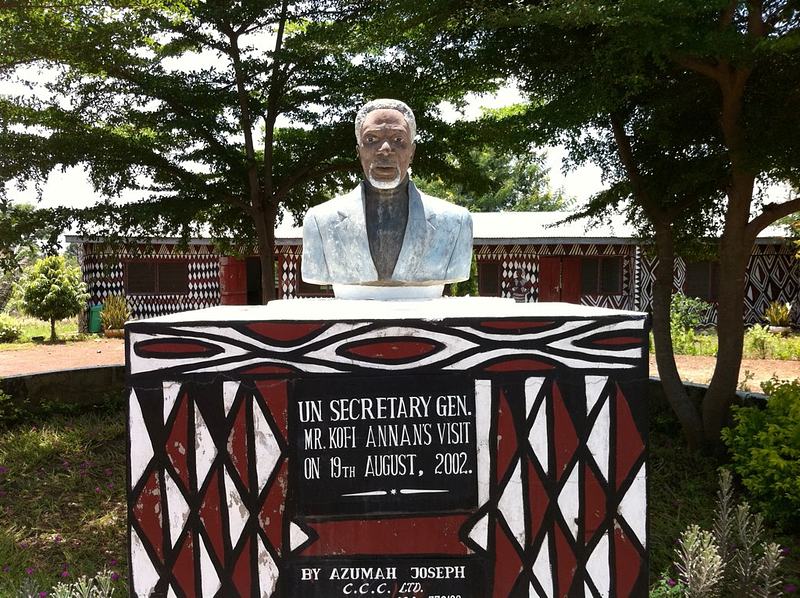
7.SWOPA, the Sirigu women's craft organisation
The Sirigu Women's Organisation for Pottery and Art was established by Melanie Kasise in 1997 to support the women of Sirigu. It began with 54 women and has grown to 345 active members working in basketry, weaving, pottery and other crafts, and it is self-funded. There is a visitor centre, gallery, workshop and guesthouse, so you can watch work in progress and buy directly from the makers rather than from a middleman.
Tip: Buying a piece here puts money straight into the cooperative; ask which crafts are made by which group if you want your purchase to reflect what you saw.
-
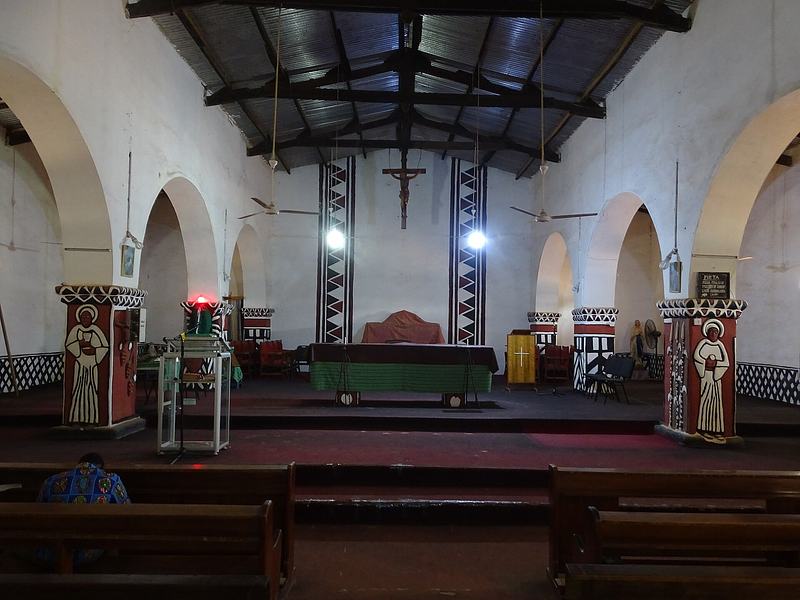
8.Old Navrongo Catholic Cathedral
Built entirely of mud bricks and plastered with mud mortar, 60 metres long and 14 wide with a 13-metre bell tower, this is described by the Ghana Museums and Monuments Board as the last of its kind in Ghana. Missionaries arrived at the garrison of Navarro in April 1906; the cathedral was completed in 1920 and became the Mother Parish of northern Ghana, attaining cathedral status in 1934. It is still used for worship, and the interior murals are remarkable.
Tip: It is a working church, so check locally before entering during Mass and dress accordingly; the museum attached to the old cathedral is a good companion stop.
-
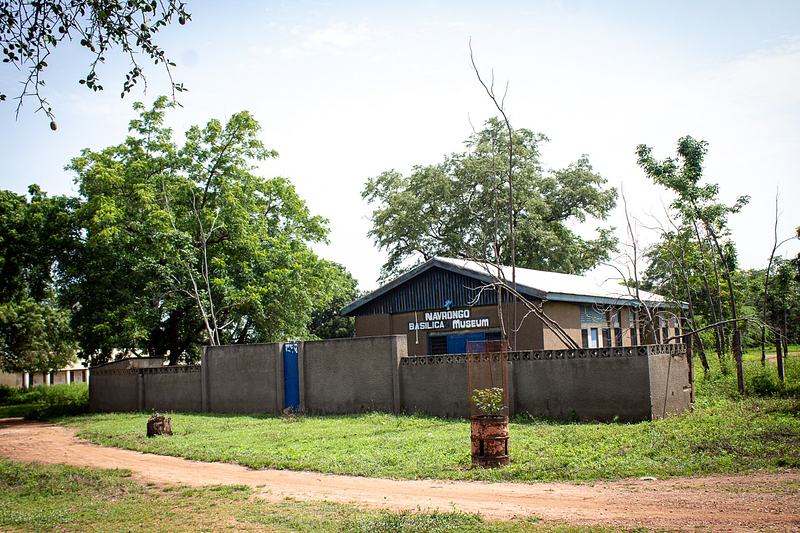
9.Navrongo Basilica Museum
A small museum attached to the Old Navrongo Catholic Cathedral, which is itself a mud-brick national monument. It is the natural place to make sense of what you have just seen: the mission history, the building techniques, and the community that has kept the cathedral standing and in use for a century. Small, local and unhurried — the kind of museum that rewards a slow half-hour rather than a quick circuit.
Tip: Pair it with the cathedral itself and the grotto, all within the same mission compound, so you only need one visit to Navrongo's religious quarter.
-
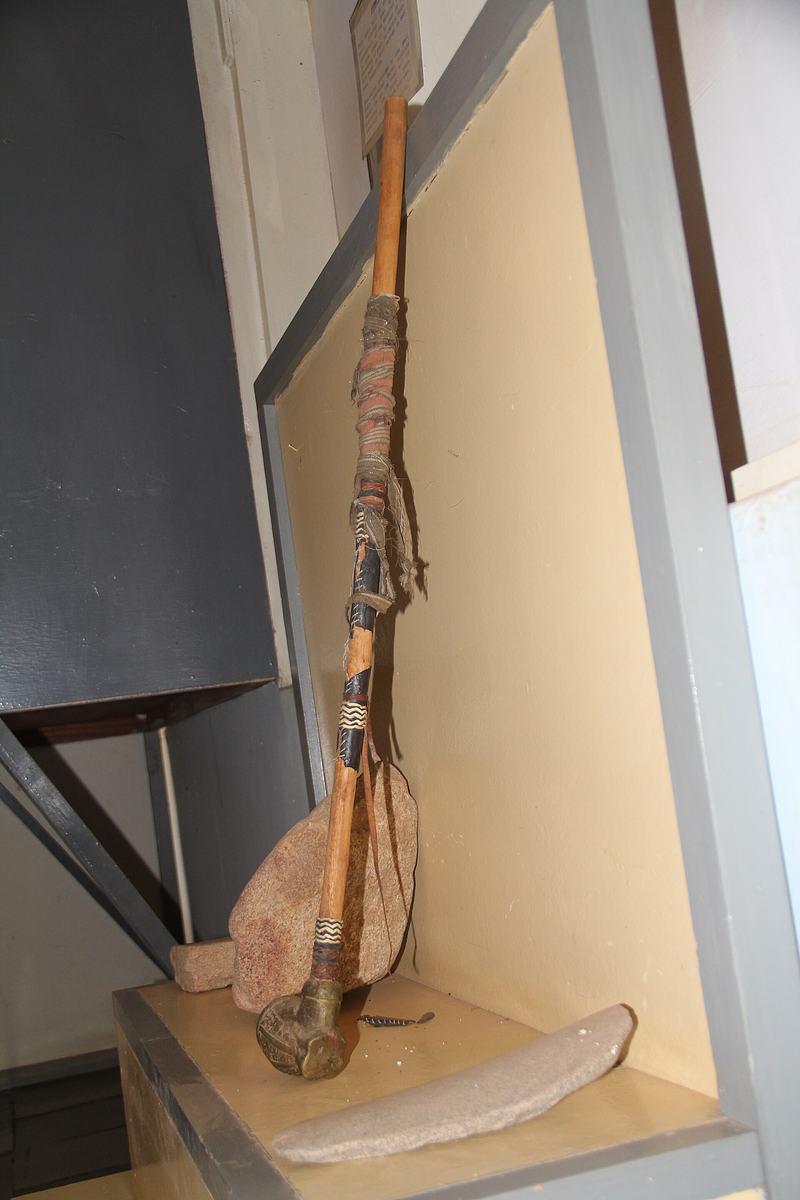
10.Upper East Regional Museum, Bolgatanga
Established in 1972 by the Ghana National Commission on Culture and moved to its current site behind the Regional Library in 1991, this ethnographic museum preserves the material culture of the region. The collection includes local pottery, paintings, musical instruments, jewellery, weaponry, chiefs' possessions, carved dark wood stools and bronze ancestral vases. It also arranges tours to the Tongo-Tengzuk Hills and the Paga Crocodile Pond, making it a sensible first stop in Bolgatanga.
Tip: Visit on your first morning in Bolga — the context it gives will sharpen everything you see afterwards, and it sits next to the craft village.
-
11.Bolgatanga Market
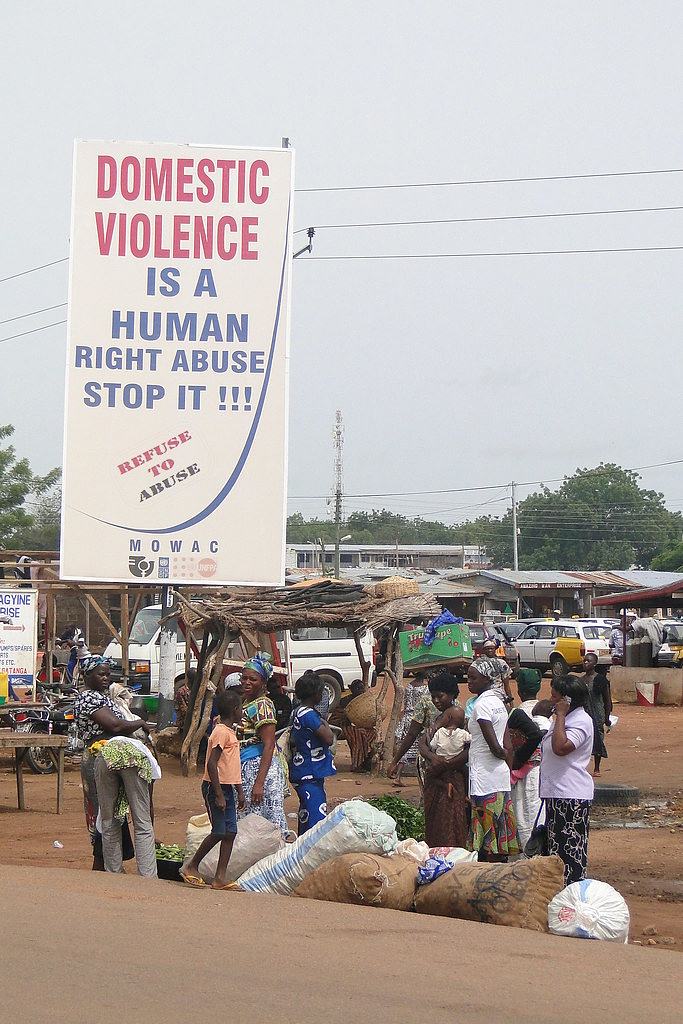
The large central market of Bolgatanga, held on a three-day cycle, and the place to see the region's crafts gathered in one sprawl: baskets, leather goods and smocks among the food stalls. Bolgatanga is renowned for its handicrafts — straw hats, baskets, cloth and jewellery — and the market is where the town's trading identity, built over generations of exchange with traders from Mali and Burkina Faso, is most visible.
Tip: Come early in the day for the best of the craft stalls, and expect to bargain; it is the norm rather than an insult.
-
Attraction
12.Baba Tree Basket Company
A design-led weaving company in Bolgatanga, founded in 2002, making Bolga baskets and, more recently, basket pendant lampshades from elephant grass prepared and woven by hand. Between 180 and 200 weavers work with the company, and each piece is attributed to a named maker. In 2026 the Baba Tree master weavers received a special mention at the LOEWE FOUNDATION Craft Prize for Frafra Tapestry, made with Spanish designer Álvaro Catalán de Ocón's PET Lamp project.
Tip: Bolgatanga is known as the City of Baskets; if you want to understand why, see the weaving here and then compare prices and styles at the market.


Plan your time
Suggested itinerary
Half a day: Bolgatanga on foot
Start at the Upper East Regional Museum behind the Regional Library, where the region's pottery, instruments, stools and ancestral vases give you the context for everything else. Walk next door to the craft village and the Baba Tree workshop to watch elephant grass being prepared and woven, then finish at Bolgatanga Market, which runs on a three-day cycle — check the day before you build a plan around it. This is an easy, low-mileage introduction to the region and works well on the afternoon you arrive.
Upper East Regional Museum→Baba Tree Basket Company→Bolgatanga Market
One day: Navrongo and Paga
Head west from Bolgatanga to Navrongo first, while the light is soft, for the Old Catholic Cathedral — mud brick, 60 metres long, still in use — plus the museum attached to it and the stone grotto at the White Fathers' mission. Then continue to Paga, 44 kilometres from Bolgatanga, for the sacred crocodile pond, where guides whistle the animals to the bank. Finish at Pikworo Slave Camp at Paga Nania, three kilometres west of Paga, and give it proper time rather than treating it as a last stop. The day ends heavy; that is appropriate.
Navrongo Minor Basilica→Navrongo Basilica Museum (Old Navrongo Catholic Cathedral Museum)→Our Lady of Lourdes Grotto, Navrongo→Paga Crocodile Pond→Pikworo Slave Camp
Two days: Tongo, Sirigu and the border country
Day one goes south-east to the Tongo Hills: the Tengzug shrines, the Hiding and Hyena Caves, the Cave School and the Chief's Palace, all on one guided walk, with the Whistling Rocks if the harmattan is blowing. Day two heads east to Sirigu for the painted compounds and SWOPA, where you can watch pottery and basketry being made and buy from the women who made it. If you have a third morning, add the Navrongo and Paga loop above, or the Paga border market, which trades daily.
Tongo Hills→Tongo Whistling Rocks→Tenzug Cave School→Tengzug Shrine→Sirigu Painted Houses (Traditional Mural Architecture)→Sirigu Women's Organisation for Pottery and Art (SWOPA)→Paga Border Market


Seasons and festivals
When to go
The Upper East has a single rainy season and a long, dry, dusty harmattan. The harmattan blows down from the Sahara between December and February, and it is this wind that makes the Tongo Hills whistle as it passes through the rocks — so if the Whistling Rocks are on your list, aim for late November through December. The same months bring hazy skies and cooler nights, which makes walking the hills far more comfortable than in the build-up to the rains.
Festivals cluster around the agricultural calendar, which means they are tied to harvest and planting rather than to fixed tourist dates. The Talensi perform the Boar Dam festival in late October to celebrate the harvest, centred on the Ba'ar Tonna'ab Ya'nee shrine and other ancestral shrines; the Golib or Gologo festival marks the start of the rainy season and the run-up to planting, lasting a month from March to April at the Nyoo Earth Shrine, and its tenets include a prohibition on fighting. The Kusasi celebrate Samanpiid, a harvest thanksgiving first held in 1987, in the Kusaug Traditional Area. The region also holds Feok and Willa festivals celebrating planting and harvest.
- Boar Dam (Talensi) · Late October
- A harvest celebration performed by the Talensi and centred on the Ba'ar Tonna'ab Ya'nee shrine and other ancestral shrines in the Tongo Hills.
- Golib / Gologo (Talensi) · March to April, lasting a month
- Marks the inception of the rainy season and the prelude to planting, celebrated at the Nyoo Earth Shrine in the Tongo Hills. One of its fundamental tenets is the prohibition of fighting.
- Samanpiid (Kusasi) · Annual; first celebrated in 1987
- A harvest thanksgiving celebrated by the Kusasi in the Kusaug Traditional Area of the Upper East Region.
- Feok and Willa · Seasonal, tied to planting and harvest
- Festivals held in the Upper East Region celebrating the planting season and the harvest.
Access
Getting there and around
Bolgatanga is the regional capital and the practical base for the whole region. The Upper East occupies Ghana's north-eastern corner, bounded to the north by Burkina Faso and to the east by Togo, and it has long been a crossroads for trans-Saharan trade — Bolgatanga itself has been a meeting point for traders from Mali and Burkina Faso. Paga, on the Burkina Faso frontier, is 44 kilometres from Bolgatanga and about 12 kilometres from Navrongo; Navrongo is roughly 18 kilometres north-west of Bolgatanga. Tongo and the Tongo Hills lie about 15 kilometres south-east of Bolgatanga, and Sirigu is east of the regional capital.
Distances are short but roads and vehicles vary, so most visitors base themselves in Bolgatanga and take day trips rather than moving hotels each night. The Upper East Regional Museum arranges tours to the Tongo-Tengzuk Hills and the Paga Crocodile Pond, which is a straightforward way to cover the far-flung sites without your own transport. For the hills and shrines, local guides at Tengzug and Tongo are effectively essential — the sites are not signposted and the shrines are active places of worship. Paga's border market trades daily, so it can be slotted in around other stops.
Good to know
Before you go
This is a region of active shrines, working palaces and inhabited decorated houses, not a heritage theme park. Ask before photographing people, compounds or ceremonies, and accept a refusal without argument. At the Tengzug shrines, both men and women may enter but must do so without clothing on the upper body; follow whatever your guide instructs, and expect that entering a shrine may involve a donation to the elders, which has no fixed amount. Dress modestly at the Navrongo cathedral and grotto, which are working religious sites.
Guides are not a formality here. At Pikworo, the Tongo Hills and the Sirigu compounds, a local guide is the difference between seeing rocks and understanding what happened. Hire from the site or through the regional museum, and pay directly. Carry cash, since card payment is not the norm outside the towns, and bring water and sun protection for the hills — the terrain is exposed and the harmattan months are hazy and dry. Finally, treat Pikworo with the gravity it deserves: it is a memorial, and others may be there to mourn.


FAQ
Questions travellers ask about Upper East
Where is the Upper East Region and what is the capital?
It is Ghana's north-eastern corner, bounded by Burkina Faso to the north and Togo to the east, and it is the second-smallest of Ghana's ten administrative regions. The capital is Bolgatanga, usually shortened to Bolga.
How far is Paga from Bolgatanga, and can I cross into Burkina Faso?
Paga is 44 kilometres from Bolgatanga and about 12 kilometres from Navrongo, sitting right on the Burkina Faso frontier. It has been a trade centre for centuries, and the border market trades daily.
Is it safe to touch the crocodiles at Paga?
The crocodiles are wild West African crocodiles but are habituated to people, and local children swim in the pond alongside them. Guides whistle them to the shore and feed them a chicken before visitors pose with them. Follow your guide's instructions and do not approach the water alone.
When can I hear the Tongo Whistling Rocks?
The rocks whistle when the harmattan wind blows through them, which happens in November and December. The harmattan more generally is felt between December and February.
What is the dress code for the Tengzug shrines?
Both men and women are permitted to enter the shrine, but must do so without any clothes on their upper body. Entering may also involve a donation to the elders, which has no fixed amount.
What is a Bolga basket and where can I buy one?
A Bolga basket is handwoven from elephant grass, a craft Bolgatanga is so devoted to that it is known as the City of Baskets. You can see the work at the Baba Tree workshop and buy baskets, leather goods and smocks at Bolgatanga Market, which runs on a three-day cycle.
Which languages are spoken in the Upper East Region?
Gurene, also called Frafra, is common around Bolgatanga; Kusaal is predominant among the Kusaasi; and Kasem is spoken in Navrongo and the surrounding area. Buli and Nankam are also spoken, and English is widely understood in towns.
In pictures
Upper East in pictures
Sources for this guide (12)
- Upper East Region — Visit Ghana
- Tongo-Tengzuk Cultural Landscape and Sacred Shrines — Ghana Museums and Monuments Board
- Old Navrongo Catholic Cathedral Building — Ghana Museums and Monuments Board
- Tengzug Tongo Hills and Shrines — Visit Ghana
- Pikworo Slave Camp — Visit Ghana
- Paga Crocodile Pond — Wikipedia
- Tongo Hills — Wikipedia
- Sirigu Women's Organisation for Pottery and Art — Wikipedia
- Samanpiid Festival — Wikipedia
- About The Baba Tree Basket Company
- Upper East Regional Museum — Ghana Museums and Monuments Board via GhanaTRVL
- Tongo Hills, Tengzug Shrine, Whistling Rocks — Daily Graphic
Written September 29, 2026 from these sources and reviewed by the VisitGhana.app team. Confirm practical details locally before travelling.