
The Timbuktu of the south
Salaga's name comes from the Dagomba word salgi, meaning to get used to a place of abode — a fitting name for a town that drew people from across a continent. From the sixteenth century it grew into one of West Africa's leading market centres, and by the eighteenth and nineteenth centuries it was the pivot of the kola trade, funnelling the stimulant north from the forest belt to the Muslim savanna and Sahel. Control of Salaga meant a near-monopoly on trade running north and south. Sitting at the southern edge of the Sahel, it was nicknamed "the Timbuktu of the south" for its cosmopolitan character: Gonja, Hausa, Wangara, Dagomba and Gurma communities lived side by side, and Islam took root here early. Kola, beads, ostrich feathers, animal hides, textiles and gold all passed through. So, too, did cattle and groundnuts from Yendi, and salt and cloth from the north. The town was founded by the Mande leader Dyakpa Ndewura Jakpa in the sixteenth century, then overrun by Asante forces in 1744. Asante rule ended with the British defeat of Asante in 1874, and in 1892 a civil war — the Kpembewura war — emptied much of the town in a mass exodus of Zongo families. Salaga never regained its former size, but its relics survived.

A market for human beings
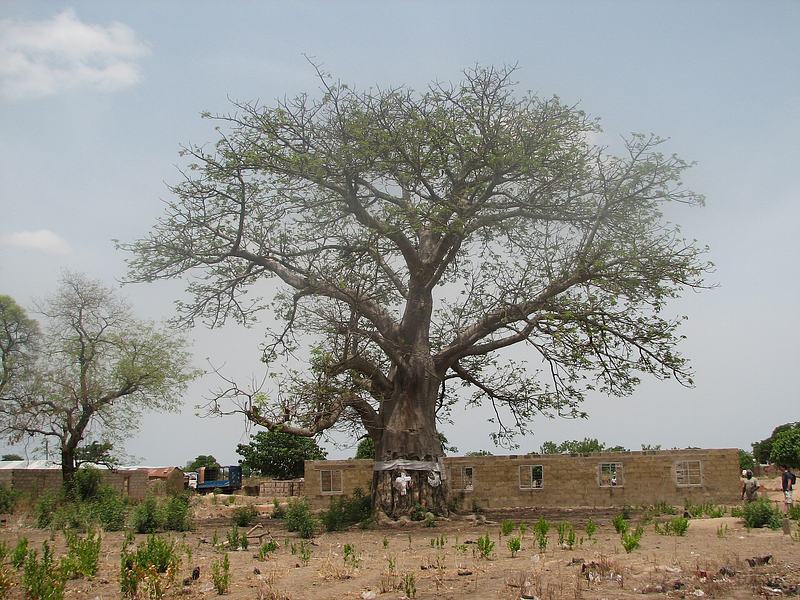
The same networks that carried kola carried people. In the eighteenth century Salaga became a key centre in the trade in enslaved Africans, and by the 1880s it was among the leading slave markets in West Africa. Captives were brought from the Upper West, Upper East and Northern Regions and beyond, held in a warehouse with a mud roof during the rains, then inspected and bargained over at stands set aside for slaves, cattle, sheep and merchandise. They were exchanged mostly for kola nuts, cowries and gold. Local chiefs profited; the trade became a commercial venture woven into ordinary life. From Salaga, caravans moved south towards Kintampo and the coast, feeding both the trans-Saharan routes and the transatlantic trade. The human cost is written into the town's geography. Wells around the market are linked by oral tradition to slave labour, though the water system itself pre-dates the trade. A stream known as Wonkan Bawa — Hausa for "the bathing place of slaves" — is remembered as where captives were washed before sale. A cemetery called rafia angulu was a mass burial ground for those who died in captivity or in transit. A baobab stands on the old market ground, a replacement for the tree to which people were reportedly chained and displayed for sale. The market was eventually moved south to Kafaba, much of which now lies beneath Lake Volta. Britain's abolition of slavery in the Gold Coast in 1874–75 did not end the practice; caravans continued until it was abolished in 1896.

From trauma to teaching
For decades the old market was neglected — reduced, at its lowest, to a parking space and a place of business. That changed with the 2024 Emancipation Day commemorations, when the Ghana Tourism Authority refurbished and commissioned the Salaga Slave Market and heritage site, together with the slave wells. The new site includes an information office, the wells and statues depicting how captives were chained and handled in the eighteenth century. At the commissioning, Tourism Minister Andrew Egyapa Mercer described Salaga's dual role as a local trade centre and a major outpost of the trans-Saharan slave routes, and spoke of honouring ancestors while fighting the discrimination that persists today. The GTA's Akwasi Agyeman framed the work as transforming a painful past into "a beacon of remembrance and healing". In July 2025 the town again hosted the launch of PANAFEST and Emancipation Day, under the theme "Let's Speak of Reparative Justice". The day included an atonement ceremony, visits to the slave wells and wreath-laying at the slave cemetery, with traditional leaders, diaspora representatives and schoolchildren taking part. Local guides — often descendants of those caught up in the trade — now lead tours, passing on stories carried through generations.

Savanna town, living culture
Salaga today is a predominantly Gonja town with Hausa, Dagomba, Konkomba and Zongo communities, where Gonja, Hausa and Twi are widely spoken and Islam shapes the rhythm of the day. It sits on low-lying Guinea savanna — flat, ringed by farmland, dotted with baobabs and shea trees — and the heat is real. The town is also known as a place of many wells, a legacy of the water systems that made a large settled and migrant population possible. Its daily market still hums, busiest in the morning, trading yams, maize, kola nuts, livestock and cloth; Salaga remains famous for kola, and women's groups sell raw shea butter while Gonja weavers make the hand-woven smock known as fugu. The old town is compact: the main market, the lorry station and the historic sites sit within a short walk or a brief motorbike ride of one another. Beyond the slave heritage, the municipality holds other sites its leaders are keen to develop, among them the Ndewura Jakpa Sword site and the confluence of the Black and White Volta Rivers.
What to do
Things to do in Salaga
-
1.Salaga Slave Market site
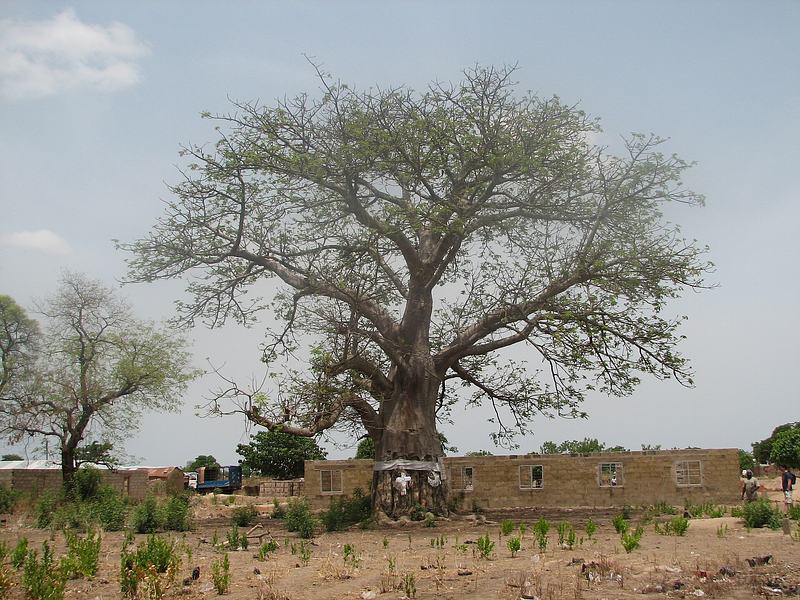
Begin here. The eighteenth-century market ground is where captives were inspected, bargained over and sold, and it anchors the town's story. Refurbished and commissioned in July 2024, the heritage site now has an information office, the slave wells and statues showing how enslaved people were chained and handled. It is the clearest place to grasp Salaga's double life as a great trading crossroads and a market in human beings. Allow time to sit with it rather than rush through.
Tip: Ask at the information office for a local guide — the oral history, much of it passed down through families, is what makes the site legible.
-
2.Salaga slave wells
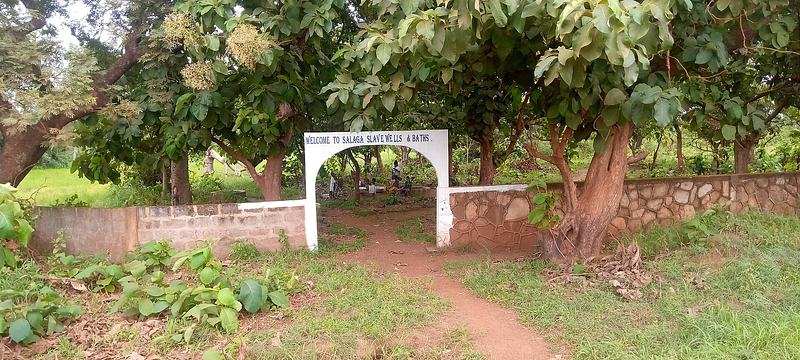
The wells are the most affecting relics in town. Oral tradition links them to slave labour, though the water management system itself pre-dates the trade — a reminder that Salaga's prosperity rested on water as much as on commerce. The site, about 500 metres from the old market, includes the wells, statues and a small museum with records and context. The town is sometimes called the city of many wells, and standing at the draw points makes the scale of the old settlement tangible.
Tip: The entrance is modest; ask for a guide rather than wandering in, and combine the wells with the market site in one walk.
-
Attraction
3.Wonkan Bawa (Slave Bathing Pond)
Wonkan Bawa is a pond and stream remembered as the bathing place where enslaved people were cleansed before being offered for sale. The name is Hausa — "the bathing spot of slaves" — and the site carries a quiet weight that photographs do not convey. It is one of the places where the mechanics of the trade become painfully specific: not an abstraction, but a routine of washing human beings before sale. Visit it as part of a guided walk through the old town.
Tip: This is a place of memory, not a swimming spot — dress modestly and keep voices low.
-
4.Salaga Slave Tree (Baobab)
On the ground of the former slave market stands a young baobab, a replacement for the original tree to which enslaved people were reportedly chained and displayed as goods for sale. It is a modest tree for such a story, which is part of its power: the market that once drew merchants from the Sahel and the forest belt is now a transport terminal and a patch of shade. The tree is a natural stopping point on any walk through the old market area.
Tip: The tree is easy to miss without a guide — ask specifically for the slave tree so you are shown the right baobab.
-
Attraction
5.Salaga Slave Cemetery
Known in oral tradition as rafia angulu, this mass grave and burial ground holds enslaved people who died during captivity or the journey through Salaga. It is the starkest evidence of the trade's mortality, and a place where wreaths have been laid during Emancipation commemorations. There is little interpretation on site, so the visit depends on what your guide can tell you. Come to pay respects rather than to sightsee.
Tip: Ask your guide to explain the cemetery's place in the Emancipation ceremonies before you arrive, so the visit has context.
-
6.Salaga Central Mosque
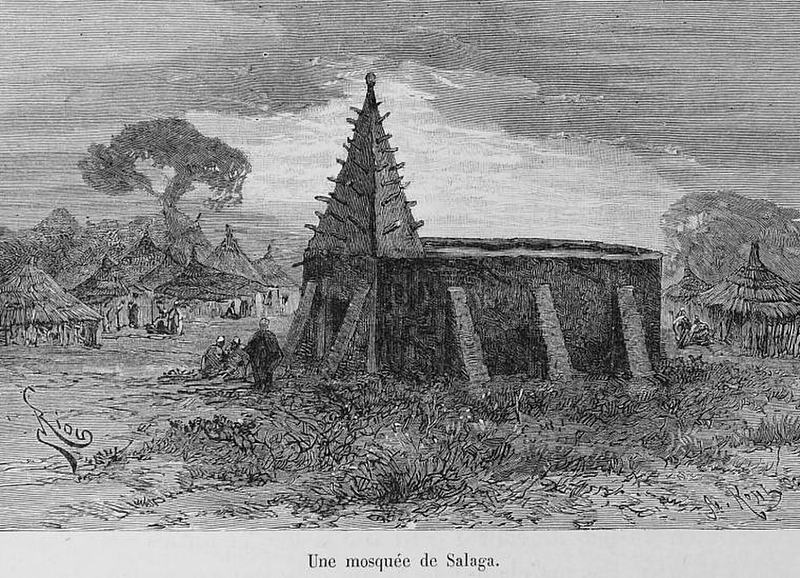
The active Sunni central mosque stands in the historic Zongo quarter, at the heart of the Muslim town that grew up around the trade routes. Salaga was an early centre of Islam in this part of Ghana, and the mosque is a living counterpart to the heritage sites — proof that the town's story did not end with the slave trade. The 1892 view of Salaga was recorded with the minaret of the old mosque on the right, a reminder of how long it has anchored the skyline.
Tip: This is a working place of worship: dress modestly, remove shoes as directed, and avoid visiting during prayer times unless invited.
-
7.Walk the old town with a local guide
The single best thing you can do in Salaga is hire a local guide and walk. The slave market, wells, bathing pond, baobab and cemetery are all within a short distance of one another in the old town, and the connections between them only make sense when narrated. Guides are often descendants of people involved in the trade, and their family stories give the sites a human texture that signage cannot. Allow around two hours for a proper walk.
Tip: Arrange a guide through the heritage site's information office or the East Gonja Municipal Assembly, and agree the route and duration up front.
-
8.Salaga Market
The town's daily market is the living descendant of the great trading centre. It is busiest in the morning and trades yams, maize, kola nuts, livestock, cloth and household goods. Salaga is famous for kola, and the market is the place to see the commodity that built the town's fortune, alongside raw shea butter from women's groups and hand-woven fugu smocks from Gonja weavers. It is a working market, not a craft village, which is exactly why it is worth an hour.
Tip: Bring small cedi notes, expect to bargain, and go before midday when the market is at its fullest.


Plan your time
Suggested itinerary
Half a day: the heritage core
Start at the Salaga Slave Market site (615) when it opens, spending time with the information office and the statues before the heat builds. Walk the short distance to the Salaga slave wells (455) and the small museum, then continue to Wonkan Bawa (620), the bathing pond, and the Salaga Slave Tree (622) on the old market ground. Finish at the Salaga Slave Cemetery (619) for a quiet moment of reflection. This is an intense few hours; build in time to sit and process rather than moving straight on.
Salaga Slave Market site→Salaga slave wells→Wonkan Bawa (Slave Bathing Pond)→Salaga Slave Tree (Baobab)→Salaga Slave Cemetery
One day: heritage and living town
Give the morning to the heritage walk above, guided throughout so the sites connect. Break for lunch near the market, then spend the early afternoon in Salaga Market, looking for kola, shea butter and fugu cloth. Afterwards, visit the Salaga Central Mosque (618) in the Zongo quarter, respecting prayer times, and take a slow wander through the old town to see the wells that gave Salaga its reputation as a town of many wells. End the day with tea or pito near the market as the heat eases.
Salaga Slave Market site→Salaga slave wells→Wonkan Bawa (Slave Bathing Pond)→Salaga Slave Tree (Baobab)→Salaga Slave Cemetery→Salaga Central Mosque
Two days: Salaga and the wider municipality
Day one follows the one-day plan, with an unhurried evening in town. On day two, ask locally about the wider East Gonja sites the municipal leadership is promoting — the Ndewura Jakpa Sword site and the confluence of the Black and White Volta Rivers — and arrange transport and a guide in advance, as these are less developed than the heritage core. Alternatively, use the second day to travel on towards Tamale or Yeji, treating Salaga as the heritage hinge of a longer northern Ghana route.
Salaga Slave Market site→Salaga slave wells→Wonkan Bawa (Slave Bathing Pond)→Salaga Slave Tree (Baobab)→Salaga Slave Cemetery→Salaga Central Mosque
Seasons and festivals
When to go
Salaga has a hot Guinea savanna climate. The dry season, roughly November to March, brings very high temperatures and harmattan haze, with daytime figures commonly between 30 and 40°C; the rainy season, roughly April to October, brings heavy showers, softer roads and a green landscape. November to February is generally the most comfortable window for travel and coincides with festival season. The most significant time to visit is late July, when the town hosts the launch of PANAFEST and Emancipation Day commemorations. In 2024 the refurbished slave market and wells were commissioned on 22 July as part of the Emancipation programme, and in 2025 the launch was held at the Salaga Slave Market on 18 July, with an atonement ceremony, visits to the slave wells and wreath-laying at the slave cemetery. Emancipation Day itself is observed on 1 August. If you want to witness the town at its most purposeful, plan around these dates — but expect crowds and book accommodation early.
- PANAFEST and Emancipation Day launch, Salaga · July (launch held 18 July 2025; market commissioned 22 July 2024); Emancipation Day observed 1 August
- The Ghana Tourism Authority has launched the annual PANAFEST and Emancipation Day celebrations at the Salaga Slave Market, drawing traditional leaders, government officials, diaspora representatives, students and community members. Activities have included an atonement ceremony, visits to the slave wells and wreath-laying at the Salaga slave cemetery, alongside poetry and drama from local students. The 2025 theme was "Let's Speak of Reparative Justice – Pan Artistic Activism".
- Damba Festival · Third month of the Islamic lunar calendar, so the Gregorian date shifts about eleven days earlier each year; often falling around October or November
- Damba is celebrated by the Dagomba, Mamprusi, Gonja and Nanumba peoples and marks the birth of the Prophet Muhammad, growing into a major cultural festival in northern Ghana. It runs over several days, with Somo Damba, then Naa Damba, climaxing in a mounted chiefs' durbar with drumming, dancing and horse displays. Gonja communities in the Savannah Region, including around Salaga, observe it.
Access
Getting there and around
Salaga is the capital of East Gonja Municipal in the Savannah Region, about two hours east of Tamale by road on a route that sees relatively little traffic. The closest major airport is Tamale Airport (TML); from Accra, flying to Tamale takes about an hour, while driving from Accra via Kumasi takes roughly ten to eleven hours on paved roads. From Tamale, travellers reach Salaga by tro-tro or shared taxi in around two to two and a half hours on a paved road. From Kumasi, the route runs via Ejura and Atebubu and takes six to eight hours; from Yeji, a shared taxi takes about two hours on a partly unpaved road. Once in town, the main way to get around is by motorbike taxi, known locally as yellow-yellow, with shared taxis available for nearby villages. The centre is walkable, and the main market, lorry station and historic sites all lie within a ten- to fifteen-minute walk or a short motorbike ride of one another in the old town. Travel by day, especially on the Yeji road in the rainy season.
Good to know
Before you go
Salaga is a place of memory, and the way you behave matters as much as what you see. Dress modestly, especially around the mosque and the burial sites, and ask before taking photographs — particularly at the slave cemetery, where photography may be inappropriate. Hire a local guide: the sites are lightly interpreted, and the oral history carried by residents is the real substance of a visit. Salaga is a predominantly Muslim town, so dress and conduct should reflect that, and Friday prayers shape the day. The town is generally safe, but travel by day and take care on the Yeji road in the rainy season. Malaria is a risk, so use repellent and sleep under a net. The town is largely cash-based, with mobile money agents widely available, and electricity outages are common. The nearest referral hospital is in Tamale, though there is a municipal hospital in town.
FAQ
Questions travellers ask about Salaga
Where is Salaga in Ghana?
Salaga is the capital of East Gonja Municipal District in the Savannah Region of northern Ghana, roughly two hours east of Tamale by road. It sits on low-lying Guinea savanna at about 8°33'N, 0°31'W.
Why is Salaga important in the history of the slave trade?
In the eighteenth and nineteenth centuries Salaga was one of West Africa's leading market centres and, by the 1880s, among the leading slave markets in the region. Enslaved people were brought from the interior, inspected and sold here, then moved south towards the coast or along trans-Saharan routes.
What can visitors see at the Salaga slave heritage sites?
The main sites are the slave market ground with its information office and statues, the slave wells and small museum, the Wonkan Bawa bathing pond, the baobab known as the slave tree, and the slave cemetery. The market and wells were refurbished and commissioned in July 2024.
How do I get to Salaga from Tamale?
From Tamale you can take a tro-tro or shared taxi to Salaga, a journey of about two to two and a half hours on a paved road. Tamale Airport is the closest major airport, with flights from Accra taking about an hour.
When is the best time to visit Salaga?
November to February is generally the most comfortable window, avoiding the worst heat and the rains. Late July is the most significant time for heritage travel, when the town hosts the launch of the PANAFEST and Emancipation Day commemorations.
Do I need a guide to visit the Salaga slave sites?
It is strongly recommended. The sites are lightly interpreted, and local guides — often descendants of people involved in the trade — provide the oral history that gives them meaning. Guides can be arranged through the heritage site's information office or the municipal assembly.
Is Salaga worth visiting for diaspora travellers?
Many travellers of West African heritage find Salaga a genuinely emotional and important stop, and the town has become a focus for Emancipation and PANAFEST commemorations aimed at healing and atonement. It is not a conventional tourist highlight, but it earns its place in a northern Ghana itinerary.
Keep exploring
More destination guides
Sources for this guide (12)
- Salaga — Wikipedia
- Salaga Slave Market — Wikipedia
- Salaga — Wikivoyage travel guide
- Salaga slave market, heritage site inaugurated — Graphic Online
- Ghana Tourism Authority commissions rehabilitated Salaga slave market, slave wells — Ghana Business News
- Ghana Tourism Authority launches PANAFEST, Emancipation Day celebrations at Salaga — Ghana News Agency
- The history behind the Salaga Slave Market In Ghana — Face2Face Africa
- Salaga Slave Market and Heritage Site — GhanaTRVL
- Salaga Slave Market — Ghana Uncovered Journals
- Northern Ghana Travel Guide: Mole, Tamale, Bolgatanga & Beyond — Akwaaba
- Salaga Central Mosque — Prayers Connect
- Damba Festival — Tour Ghana
Written September 29, 2026 from these sources and reviewed by the VisitGhana.app team. Confirm practical details locally before travelling.