
A landscape people have used for millennia
Archaeological surveys have found evidence of human use of the caves and shrines of the Tongo Hills dating back to around 500 BC, and the Talensi are believed to have lived in and around these hills for centuries. The landscape itself is the monument: a horseshoe-shaped chain of hills whose base is crowded with balancing granite boulders, natural rock shelters and sacred Talensi ancestral shrines. The most recognised of these is the Ba'ar Tonna'ab Ya'nee shrine, which draws Asante traditionalists who know it as Nana Tongo. The Ghana Museums and Monuments Board describes the whole ensemble — rocks, shrines, caves and earthen houses — as a cultural landscape, and it has been put forward for consideration as a UNESCO World Heritage Site. The hills are also a working landscape: the people here are mainly farmers, and the shrines sit among fields rather than apart from them.

Refuge, resistance and the slave trade
The Tongo Hills sit on what was once a frontier belt between the conquest states of Dagbon and Mamprugu to the south and the Mossi kingdoms to the north. That position, and the dense farming population around the hills, made the area a target for predatory slave raiders from the surrounding cavalry states; a large proportion of the people enslaved in the Akan forest kingdoms are said to have come from frontier communities like these. From the 1880s to the 1890s the hills served as a refuge for people fleeing marauding slave raiders, and the hiding caves — where the local chief is said to have taken shelter and commanded his forces — remain part of the landscape today. The hills were also among the last areas in Ghana to submit to British rule. The ancestor shrine Tona'ab became a symbol of resistance, and it was only in 1911 that a British military expedition stormed the hills and ended it. The Talensi were evicted and access to the sacred sites was banned; within four years British officers realised people were returning secretly and the shrines had been reactivated, and a second assault followed in 1915. By the 1920s the great ancestor shrine was flourishing again. It is a history worth walking through slowly and quietly.

The Talensi and their shrines
The Talensi are Gur-speaking agriculturalists of the wider Gurune or Frafra cluster, and they are among the most studied communities in African anthropology — Meyer Fortes's fieldwork in the 1930s made Taleland a byword in the discipline. Their religious life revolves around ancestral and earth shrines, and the Tongo Hills hold three prominent ones: Tona'ab, Bona'ab and Nyoo. People come from across Ghana and neighbouring countries for consultation, spiritual healing, fortification and guidance, and the shrines are also the venues of the principal ritual festivals, which are tied to the farming seasons and accompanied by song and dance. The Nyoo earth shrine is the setting for the Golib or Gologo festival, which marks the start of the rainy season and the run-up to planting and lasts about a month from March to April; one of its tenets is the prohibition of fighting. The Bo'araam or Boaram thanksgiving festival follows the harvest, and young men are ritually inducted as part of it. The shrines are not exhibits. They are places of active belief, and visitors enter them on the community's terms.

Houses, caves and a school under a rock
The built heritage of Tengzug is as striking as the geology. The Chief's Palace is a cluster of earthen houses built into one another and linked by a labyrinth of narrow passages; each house belongs to a household, and outside many stands a shrine — a stone stump plastered with chicken blood and feathers. At the upper terrace you get a panoramic view over cylindrical houses with miniature doorways, joined by short walls that once protected occupants from intruders. A security deity is said to guard the entrance, which is always open, and a section of the palace holds the tombs of former chiefs. Higher in the hills is the Cave School, where formal education began between 1965 and 1985 with an initial 25 pupils; separate areas of rock were mapped out for classrooms, cooking and eating. A modern school has since been built beside it. Elsewhere in the hills are the Donkey, Hyena and Hiding caves, each with its own story.

What to do
Things to do in Tongo
-
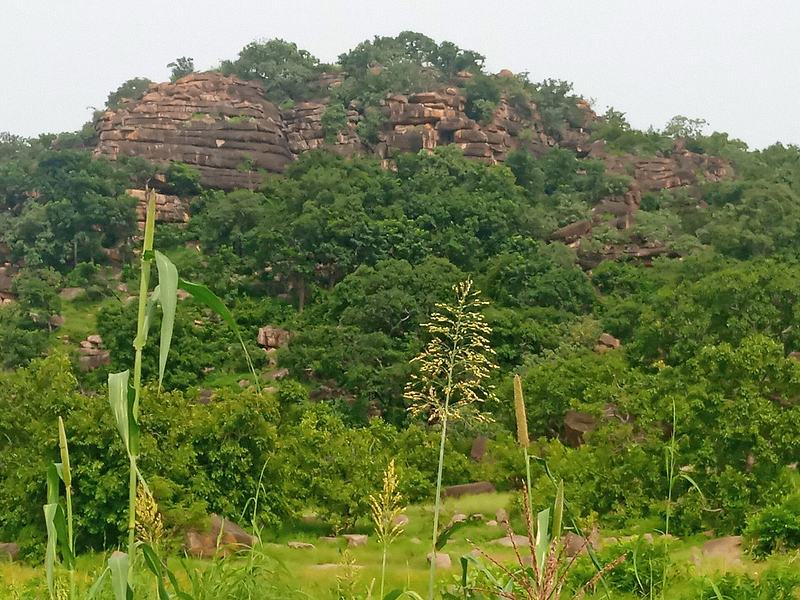
1.Climb to the Tengzug Shrine
The paramount shrine of the Talensi people, set among the sacred shrines at the base of the Tongo Hills, is the heart of any visit. With a guide you scale the rocks to reach it, and the reward is both spiritual and scenic: a panorama over the hills and the dry, boulder-strewn country around them. Pilgrims come from across Ghana and neighbouring countries believing the shrine can offer guidance and resolution, and you may witness consultation or sacrifice while you are there.
Tip: Both men and women may enter, but you must remove your upper clothing as a sign of respect. Bring a light cloth to cover up again afterwards, and ask your guide before photographing anything.
-
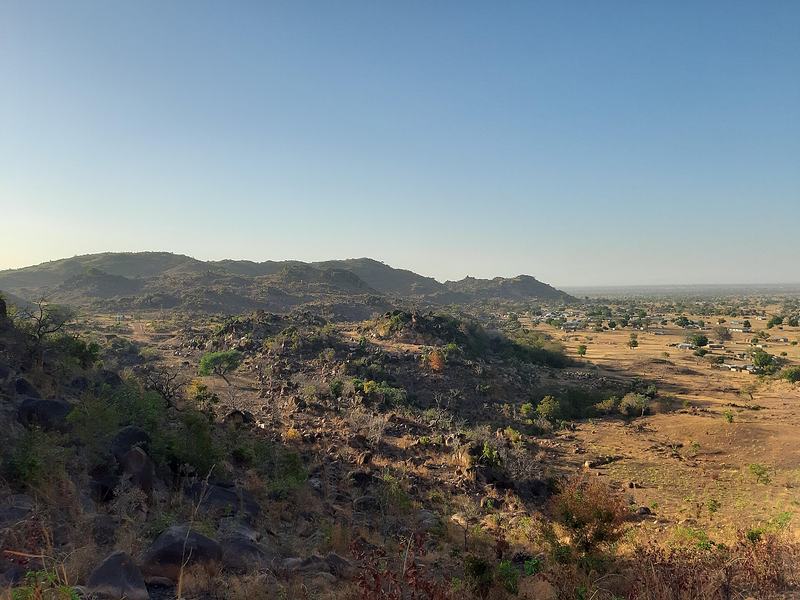
2.Walk the Tongo Hills
The granite hill range is the reason the shrines are here at all: a horseshoe of high ground packed with balancing rock formations, caves and natural rock shelters, with sacred Talensi ancestral shrines tucked among the boulders. Walking here is not a formal trail so much as a slow unravelling of the landscape, past baobabs and stacked stone, with wide views back towards Bolgatanga. The hills are compact but dense with interest, so a couple of unhurried hours will pass quickly.
Tip: Wear shoes with grip — the granite is smooth and polished in places — and carry more water than you think you need, as there is little shade on the upper slopes.
-
Attraction
3.Listen for the Tongo Whistling Rocks
Among the granite formations of the sacred hills are the rocks that give the area one of its nicknames. When the harmattan wind blows down from the Sahara across northern Ghana, the rocks are said to emit a strange whistling sound — an eerie, unearthly note that has become one of the region's signature experiences. The effect is seasonal rather than constant, so treat it as a piece of luck rather than a guarantee, and let your guide point out the formations most associated with it.
Tip: The whistling is associated with the harmattan winds of November and December. If hearing it matters to you, plan your trip for those months and ask locally whether the wind has been blowing.
-
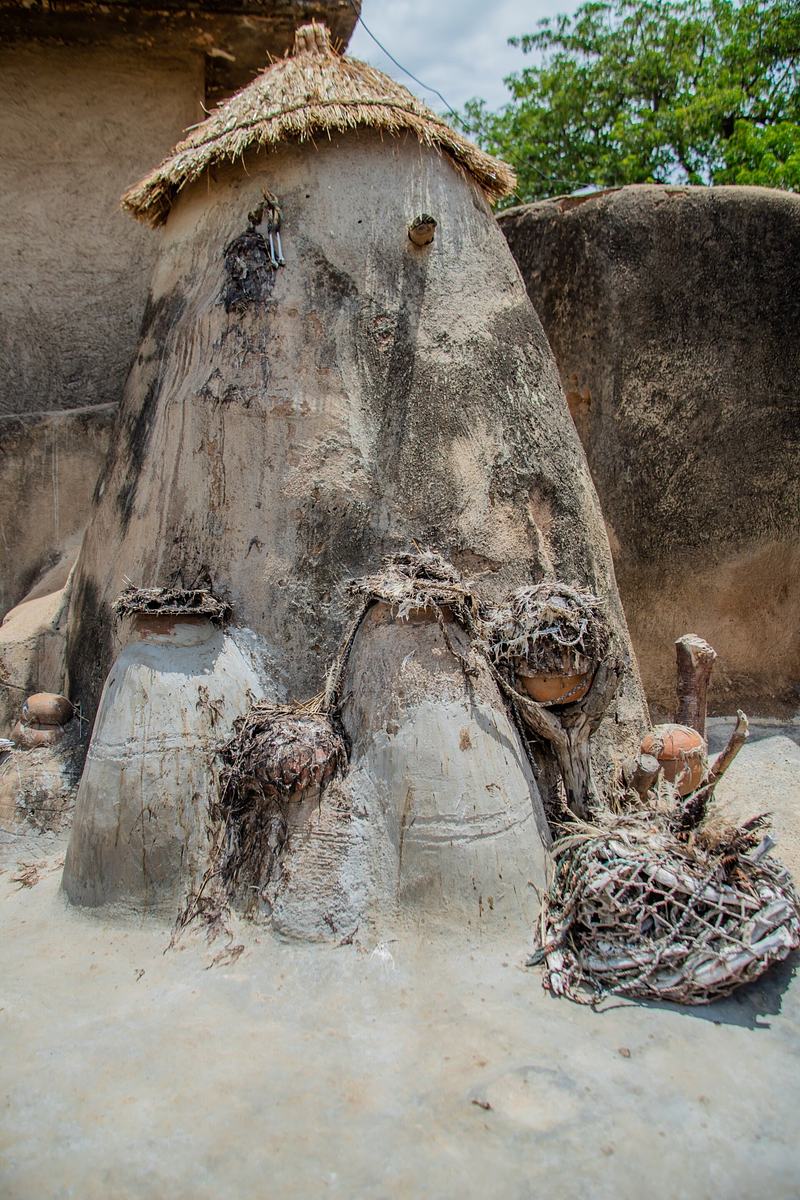
4.Tour the Tongo Chief's Palace
The royal court of the Paramount Chief of the Talensi Traditional Area is a stop on the official Tongo-Tengzuk Cultural Landscape tour, and it is one of the most atmospheric places in the hills. You are led through mud houses that belong to individual households, all built into one another and connected by a labyrinth of narrow passages, past shrines marked with chicken blood and feathers. From the upper terrace there is a fine view over the cylindrical houses and their miniature doorways.
Tip: This is a working royal court and people live here, so keep your voice down, ask before entering any compound, and follow your guide's lead on where you may and may not walk.
-
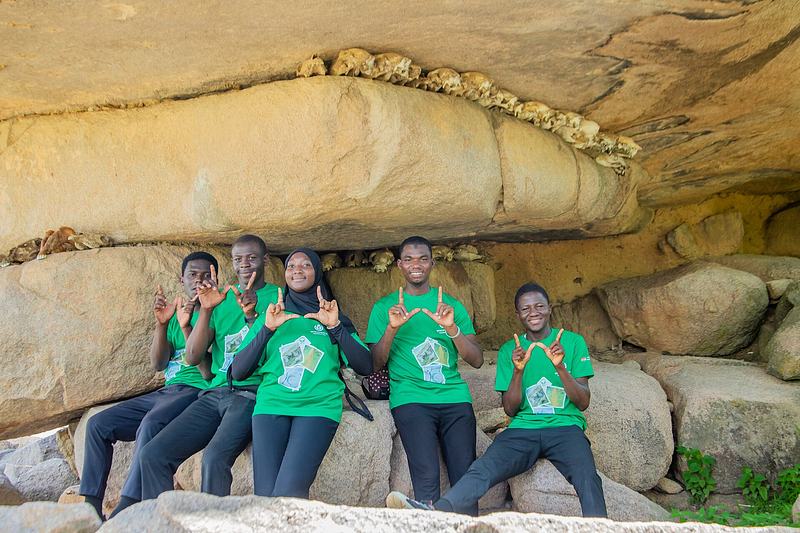
5.See the Cave School
High in the hills is a rock overhang that served as a school between 1965 and 1985, when formal education in the area began with an initial 25 pupils. Separate patches of rock were set aside as classrooms and as places to cook and eat. A government school now stands beside the original site, which makes the contrast between the two all the more affecting: a reminder of how recently and how resourcefully schooling arrived in these hills.
Tip: Ask your guide to explain how the rock overhang was divided up for lessons, cooking and eating — the layout is easy to miss without someone to point it out.
-
6.Find the hiding and hyena caves
The hills are riddled with caves that carry the weight of the area's history. The Hiding Caves are where the local chief is said to have taken refuge and commanded his forces against the British around 1911, and the Hyena Caves are where the chief and other leaders are said to have met during that resistance. Earlier, from the 1880s to the 1890s, the hills sheltered people fleeing slave raiders. Standing in these cool, shadowed recesses is the most direct way to feel how the landscape itself became a defence.
Tip: Some caves are tight and unlit. Bring a torch, watch your footing, and do not enter any cave that your guide says is restricted or sacred.
-
7.Time your visit to a Talensi festival
The shrines are the venues of the Talensi people's principal ritual festivals, which are tied to the farming calendar and accompanied by song and dance. The Golib or Gologo festival marks the onset of the rainy season and the run-up to planting, is celebrated at the Nyoo earth shrine, and runs for about a month from March to April. The Bo'araam or Boaram thanksgiving festival follows the harvest, and young men are ritually inducted as part of it. Attending one is a privilege, not a spectacle.
Tip: Festival activity can close the shrine to visitors — travellers have arrived during Golob preparations to find the shrine inaccessible. Check dates locally before you travel and be flexible about what you will be able to see.
-
8.Pair it with the Upper East Regional Museum
If you are basing yourself in Bolgatanga, the Upper East Regional Museum is the natural place to put the hills in context before or after your visit. Its collection covers local pottery, paintings, musical instruments, jewellery, weaponry, chiefs' possessions, carved stools and bronze ancestral vases, and the museum runs tours to the Tongo-Tengzuk Hills and Shrines as well as to the Paga crocodile pond. It is a useful orientation for the region's cultures, of which the Talensi are one.
Tip: The museum sits behind the regional library and next to the craft village, so you can combine a visit with browsing Bolgatanga's basket and leather crafts.


Plan your time
Suggested itinerary
Half a day: the essentials
Base yourself in Bolgatanga and drive out to Tongo in the morning, while the air is still cool. Meet your guide at Tengzug and start with the walk up to the Tengzug Shrine, removing your upper clothing before you enter and taking in the view from the rocks. Come down through the boulder maze to the Tongo Chief's Palace, where you can see the interlinked earthen houses, the household shrines and the tombs of former chiefs. If time allows, ask your guide to point out the Whistling Rocks formations on the way back. This is a compact, high-impact half day that covers the shrine, the palace and the landscape without rushing.
Tengzug Shrine→Tongo Chief's Palace (Talensi Paramount Chief's Palace)→Tongo Whistling Rocks
One day: hills, caves and the Cave School
Give the landscape a full day. Start early with the Tengzug Shrine, then spend the middle of the day walking the Tongo Hills properly — the balancing rocks, the baobabs and the wide views — and finding the hiding and hyena caves that sheltered people during the slave-raiding years and the 1911 resistance. After a rest and some food, climb to the Cave School to see where formal education began in the hills between 1965 and 1985, and finish at the Chief's Palace as the light softens. If your visit coincides with the Golib or Bo'araam festival, build the day around that instead and accept that the shrine may be closed.
Tengzug Shrine→Tongo Hills→Tenzug Cave School→Tongo Chief's Palace (Talensi Paramount Chief's Palace)
Two days: Tongo and the wider Upper East
Spend your first day as above, staying overnight in or near Bolgatanga. On the second morning, visit the Upper East Regional Museum to see the region's pottery, instruments, stools and ancestral vases, and to understand where the Talensi sit among the Upper East's peoples. Then use the rest of the day for the wider area: the craft village and market in Bolgatanga for baskets and leatherwork, or a run north to Paga for the crocodile pond and the slave camp. Two days lets you see Tongo as part of a region rather than an isolated stop, which is how it makes most sense.
Tengzug Shrine→Tongo Hills→Tenzug Cave School→Tongo Chief's Palace (Talensi Paramount Chief's Palace)→Tongo Whistling Rocks


Seasons and festivals
When to go
The Upper East Region has two seasons: a rainy season from roughly May to October and a harmattan season from November to April, when cold, dry, dusty winds blow down from the Sahara. Daytime temperatures in the harmattan can reach around 40°C while nights can drop to about 14°C, and humidity is low, which makes the heat less oppressive than the numbers suggest. The natural vegetation is savannah woodland, and the dry season scorches it. For the Whistling Rocks, the harmattan months are the point: the rocks are said to make their strange whistling sound in November and December when the wind blows across northern Ghana. If you want festivals, the Golib or Gologo festival falls around March to April and the Bo'araam or Boaram thanksgiving follows the harvest, with the Boar Dam harvest celebration held in late October. Be aware that festival activity can restrict access to the shrine.
- Golib (Gologo) Festival · March to April, lasting about a month
- Celebrated by the Talensi to mark the onset of the rainy season and as a prelude to planting, and held at the Nyoo earth shrine, the third largest shrine in the Tongo Hills. One of its fundamental tenets is the prohibition of fighting. The Ghana Tourism Authority describes it as serving to reinforce community belief in the Nnoo shrine or Golib god, which regulates Talensi agricultural life.
- Bo'araam (Boaram) Festival · After the harvest, around October to November
- A thanksgiving festival at the end of harvest, centred on the Ba'ar Tonna'ab Ya'nee shrine and other Talensi ancestral shrines. Young men are ritually inducted as part of the celebration, and the Ghana Museums and Monuments Board notes that the Boar Dam harvest festival is performed in late October.
- Tengana Festival · Held in the Tongo Traditional Area
- A thanksgiving offering held at Balungu, Winkongo and Pwalugu in the Tongo Traditional Area, one of the festivals of the Talensi, climaxed by traditional music and dancing.
Access
Getting there and around
Tongo lies about 15 km southeast of Bolgatanga, the Upper East Regional capital, in the Talensi District. Most travellers reach the area through Bolgatanga, which is north of Tamale and reachable by road; the drive from Tamale takes roughly two to three hours depending on the vehicle, on the asphalt road through Walewale. If you are coming from Burkina Faso, you can also approach through Navrongo. From Bolgatanga, Tongo and the Tengzug hills are a short drive, and the practical way to do it is to arrange a private driver from Bolga station and have them wait while you tour, rather than relying on shared transport, which requires a transfer in the town of Tongo and takes considerably longer. Once you arrive at Tengzug you will be met by a local guide, who will lead you through the village and the hills; the official Tongo-Tengzug Cultural Landscape tour includes a model home, the hills, the caves, the Chief's house and the shrine. The Upper East Regional Museum in Bolgatanga also runs tours to the Tongo-Tengzuk Hills and Shrines, which is a useful option if you would rather join an organised group.
Good to know
Before you go
This is a place of active worship, not a heritage theme park, so let the community set the terms. Both men and women may enter the shrine, but you must remove your upper clothing to do so; dress modestly elsewhere, and bring a light cloth or shirt to put back on afterwards. Ask before photographing people, shrines, sacrifices or compounds, and accept a refusal without argument. Hire a local guide — the passages through Tengzug are a genuine maze, and the stories that make the place meaningful are not written on any sign. Wear sturdy shoes with grip for the granite, carry plenty of water and sun protection, and expect little shade on the upper slopes. Some caves are tight and unlit, so a torch helps. Festival periods can close the shrine to visitors, so check locally before you travel and stay flexible. Finally, remember that people live and farm here: keep to paths, close gates, and treat the Chief's Palace as someone's home and court rather than a monument.


FAQ
Questions travellers ask about Tongo
Where is Tongo in Ghana?
Tongo is a small town in the Talensi District of the Upper East Region, about 15 km southeast of the regional capital, Bolgatanga. It is the district capital and the base for visiting the Tongo-Tengzuk Cultural Landscape and its shrines.
Why do visitors have to remove their upper clothing at the Tengzug Shrine?
Entering the shrine bare-chested is a mark of respect required by the Talensi, and it applies to both men and women. The Ghana Museums and Monuments Board confirms that both genders may enter the shrine but must do so without any clothes on their upper body.
When can you hear the Tongo Whistling Rocks?
The rocks are said to make a strange whistling sound in November and December, when the harmattan wind blows from the Sahara across northern Ghana. The effect is seasonal, so it cannot be guaranteed on any given day.
What is the Cave School at Tongo?
It is a rock overhang in the Tongo Hills that served as a school between 1965 and 1985, when formal education in the area began with an initial 25 pupils. Separate areas of rock were used as classrooms and for cooking and eating, and a modern school has since been built beside it.
Is the Tongo-Tengzuk Cultural Landscape a UNESCO World Heritage Site?
Not yet. It has been put forward for consideration and appears on Ghana's tentative list as the Tenzug-Tallensi settlements, but a nomination examined by the World Heritage Committee was deferred rather than approved. VisitGhana describes it as short-listed for future consideration.
How do you get to Tongo from Bolgatanga?
It is a short drive southeast of Bolgatanga. The simplest approach is to arrange a private driver from Bolga station and have them wait while you tour; shared transport is possible but requires a transfer in the town of Tongo and takes much longer.
What festivals are held at Tongo?
The main Talensi festivals are the Golib or Gologo festival, held around March to April to mark the onset of the rainy season, and the Bo'araam or Boaram thanksgiving festival after the harvest. The Tengana festival is also held in the Tongo Traditional Area. Festival activity can restrict access to the shrine.
Keep exploring
More destination guides
Sources for this guide (11)
- Tongo-Tengzuk Cultural Landscape and Sacred Shrines — Ghana Museums and Monuments Board
- Tongo Hills, Tengzug Shrine, Whistling Rocks — Graphic Online
- Iconic Tongo hills, Tengzug Shrine, Whistling Rocks — Graphic Online
- Tongo, Ghana — Wikipedia
- Tengzug Tongo Hills and Shrines — Visit Ghana
- Tengzug Shrine — Atlas Obscura
- Tallensi People: Custodians of Ancient Gurunshi Traditional Shrines — Trip Down Memory Lane
- The Tengzug Hills — Ghana For 91 Days
- Upper East Region — Ghana Advisor
- Upper East Regional Museum — GhanaTRVL (Ghana Museums and Monuments Board)
- Tenzug - Tallensi settlements — UNESCO World Heritage Centre Tentative List
Written September 29, 2026 from these sources and reviewed by the VisitGhana.app team. Confirm practical details locally before travelling.