
A castle built on someone else's shore
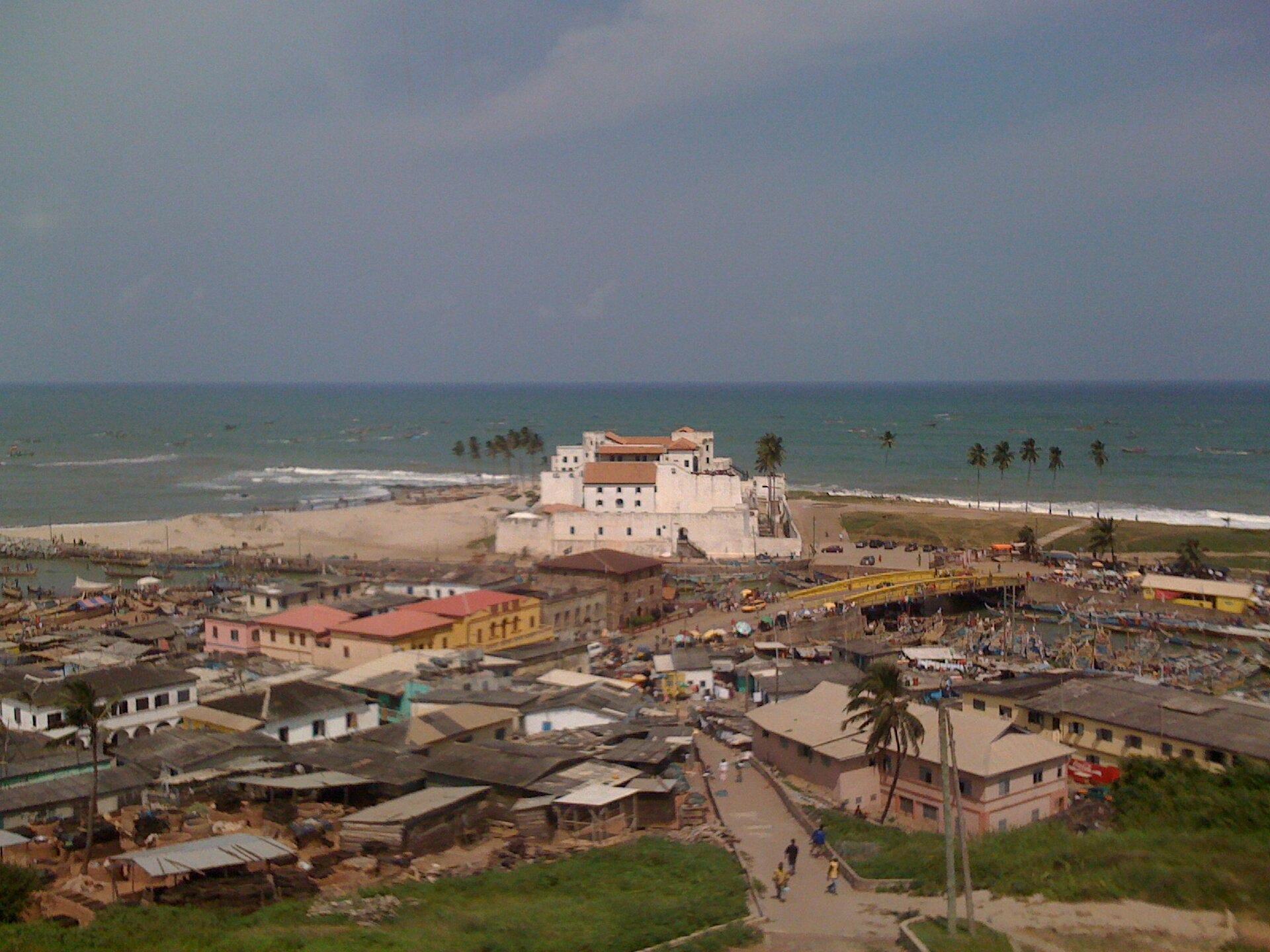
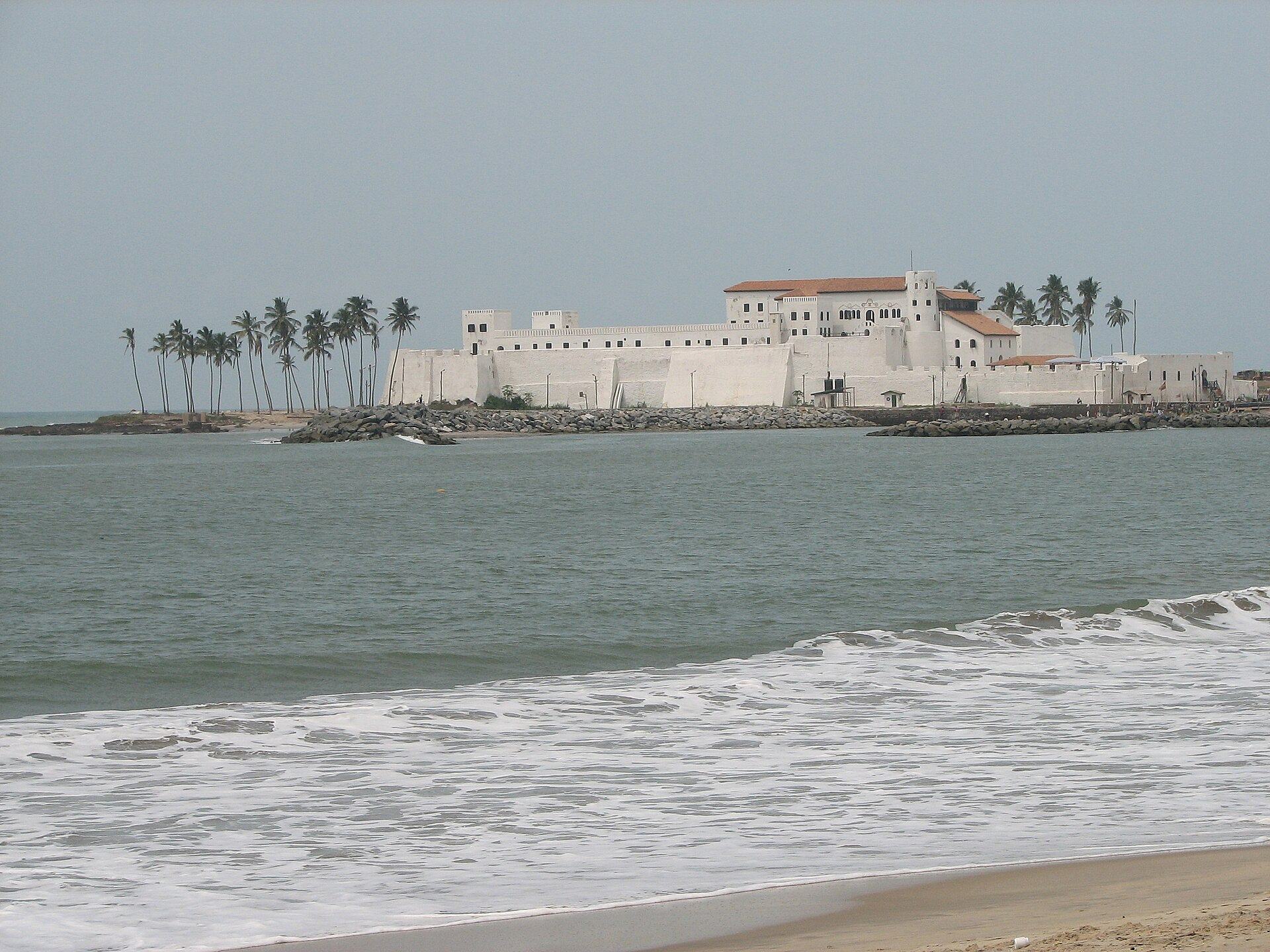
The Portuguese reached this coast in 1471 and found a gold trade already thriving. In 1481 King John II sent the materials for a fortress in prefitted form aboard ten caravels and two transports, and under Diogo de Azambuja the fleet arrived at Elmina in January 1482. The local chief, Kwamin Ansah, was wary of a permanent settlement; the Portuguese offered gifts, made promises and hinted at consequences, and got their reluctant agreement. Building began the next morning. To clear the most defensible ground the Portuguese demolished villagers' homes and tried to quarry a rock the people of Elmina held sacred as the home of the Benya river god. The villagers attacked; the Portuguese burned the village in reprisal. Even so, the first storey of the tower was up within twenty days, and Castelo de São Jorge da Mina — St. George of the Mine — became the first prefabricated European building planned and executed in sub-Saharan Africa. It was the first trading post on the Gulf of Guinea, and it is the oldest European structure still standing south of the Sahara.
For a century it was a gold fortress. At the height of the trade in the early sixteenth century some 680,000 grams of gold left the Gold Coast each year, about a tenth of the world's supply. Then the trade turned, and the castle became something far darker. From the outset the Portuguese preferred not to capture people themselves, buying captives instead from the Slave Coast and São Tomé and holding them here as a transshipment point. By the seventeenth century most West African trade was in human beings, and St. George served as a depot where enslaved Africans from many kingdoms were held before sale. The Dutch seized the castle in 1637 after a failed attempt in 1596, made it the capital of the Dutch Gold Coast, and continued the triangular Atlantic trade until 1814, when they abolished it under the Anglo-Dutch treaty. They rebuilt much of the castle between 1770 and 1775. In 1682 the French author Jean Barbot judged it to have "no equal on all the coast of Guinea" for beauty and strength. Britain took over the Dutch Gold Coast in 1872, and Ghana has held the castle since independence in 1957. UNESCO inscribed it in 1979. Today it is a national museum and a place of pilgrimage for many African Americans seeking their heritage. Walk its courtyards and dungeons slowly, and let the guides — who speak plainly about what happened here — set the pace.

The hill, the graves and the Java Hill families
The Dutch learned in 1637 that whoever held the hill above the castle could bombard it. They used the height as a gun position to take Elmina from the Portuguese, then built an earthwork there the following year so no one could do the same to them. In the 1660s Director General J. Valckenburgh replaced it with a permanent fort of local sandstone, on the site of a Portuguese chapel to Saint Jago that the Dutch had burned. Fort Coenraadsburg was purely military — no warehouses — and served as a prison for European convicts and a disciplinary post for officers. After 1872 it passed through uses as a prison, a hospital and a rest house, and it stands in good condition today.
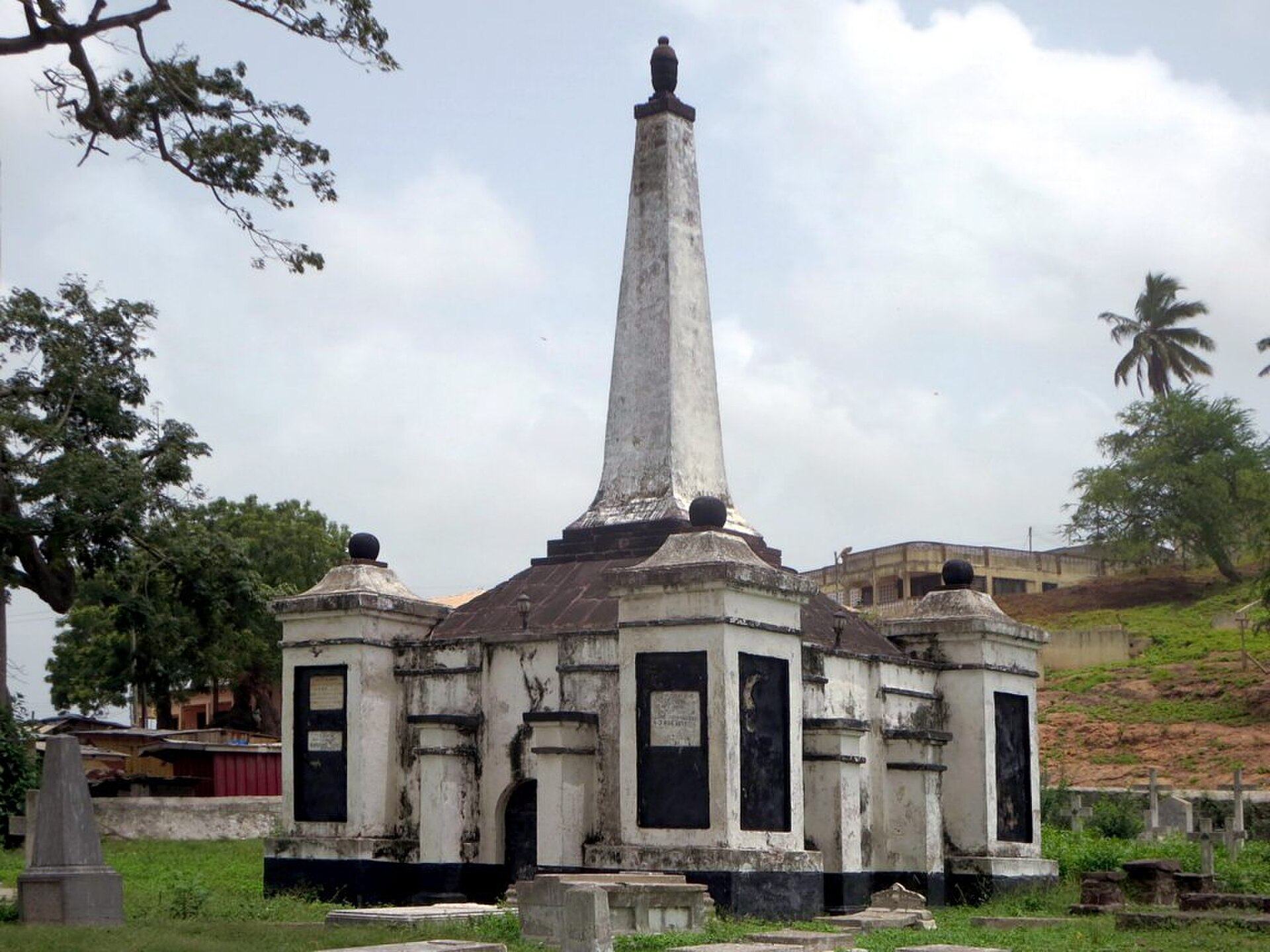
Below it, in what was once called "the Garden", the Dutch laid out a cemetery in 1806 on the orders of Governor Johannes Petrus Hoogenboom, because the space inside and around the castle had run out. About seventy people are buried there, among them governor-general Herman Willem Daendels, the Euro-African merchant Carel Hendrik Bartels, R. P. Baffour, Chief Kweku Andoh and Elmina King Nana Kobina Gyan. Hoogenboom himself was one of the first interred, after he was killed by Elminese people with whom he had quarrelled. The Dutch embassy funded a restoration in 2006, and the gate again carries its Dutch inscription: "O weldadige moeder, ontvang uwe kinderen weder" — Oh benevolent mother, receive your children once again.
A short walk away is a stranger chapter. Between 1831 and 1872 some three thousand African recruits sailed from Elmina to Batavia, now Jakarta, to serve in the Dutch colonial army in the East Indies. Veterans who returned were given plots behind St. George's Castle, on ground still called Java Hill, and collected their pensions in the castle. On Java they and their descendants were known as Belanda Hitam, Black Dutchmen. The Elmina Java Museum, opened in 2003 and funded by the Edward A. Ulzen Memorial Foundation, tells their story — the first private museum in Ghana, and a family's act of remembrance.

A town that still goes to sea
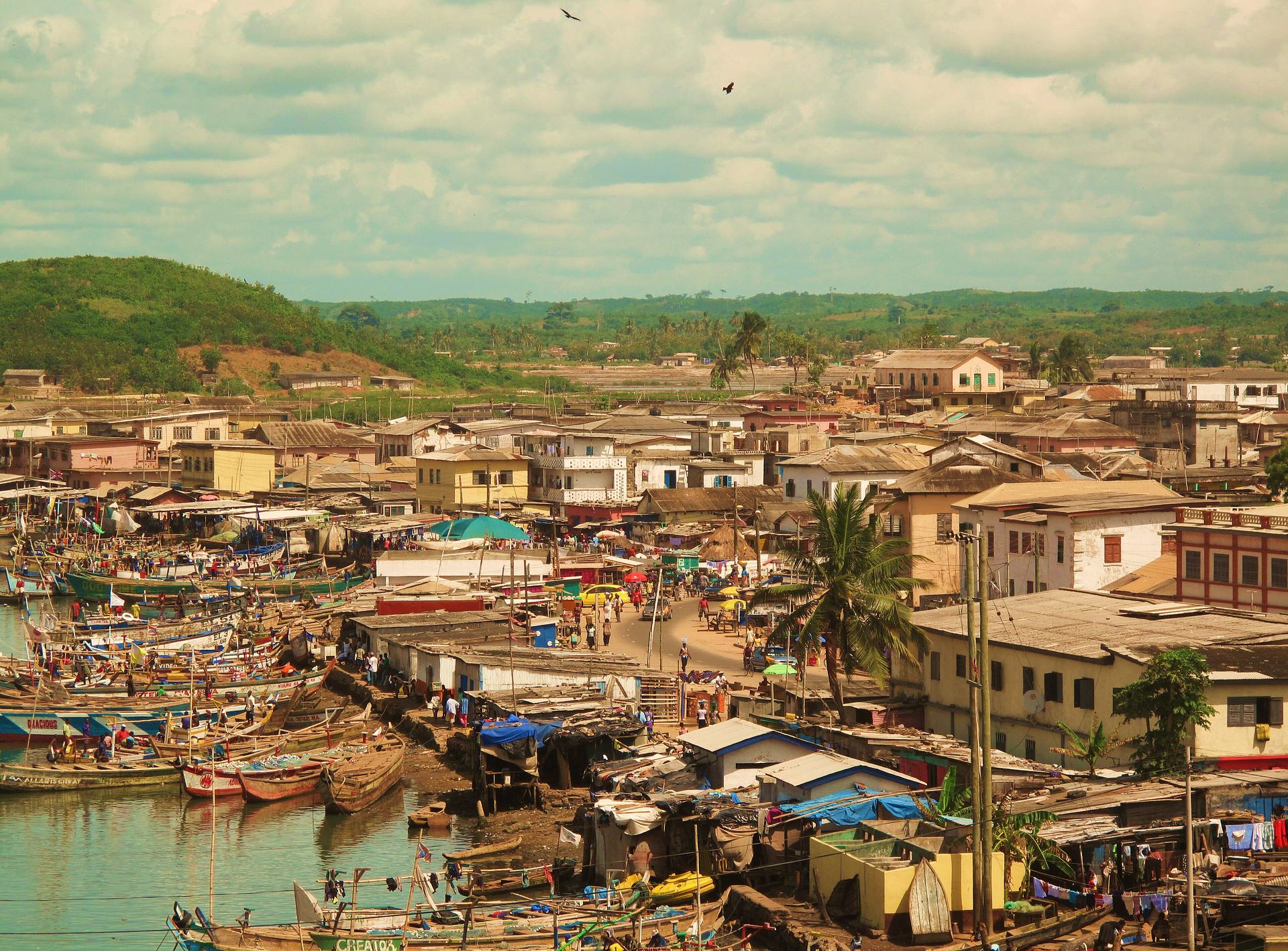
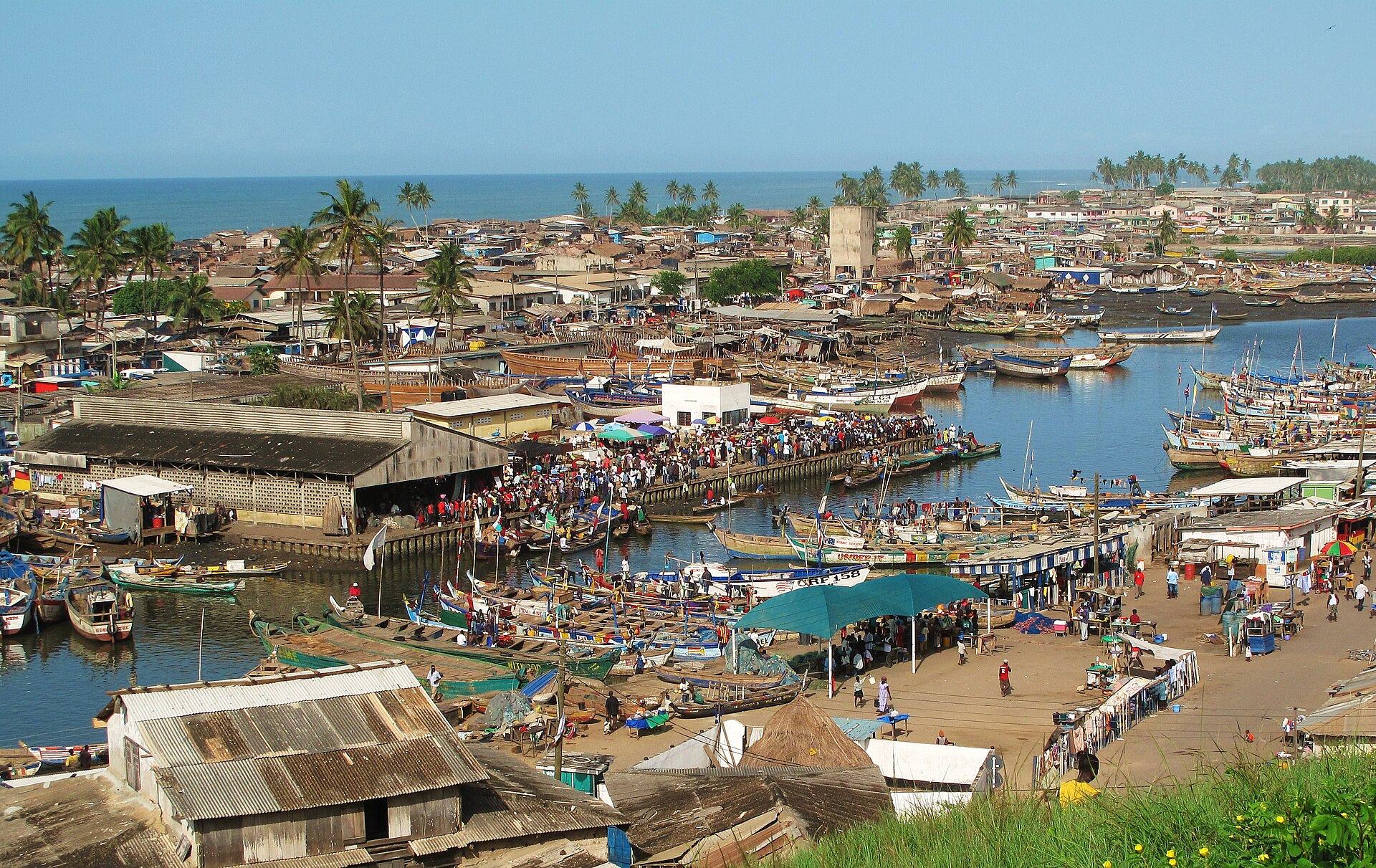
Elmina's Fante name is Edina, and its older name was Anomansah, from its position on the peninsula between the Benya Lagoon and the sea. Oral tradition credits its founding to Kwaa Amankwaa, a hunter who found a stream and said "M'enya" — I have found it. The town grew around the castle and was part of the Eguafo kingdom until the late sixteenth century, when it broke away with Portuguese backing. Its economy today rests on fishing, salt production and tourism, and the fishing is not a performance. The harbour is the third largest fish landing site in Ghana, after Tema and Sekondi; the town accounts for about fifteen per cent of the country's total fish output, and roughly three-quarters of local livelihoods depend on fishing or related work. Boats land from around six in the morning and head out again in the evening, and the market on the quay beside the castle runs on that rhythm.
Once a year the whole town turns out for the water. The Bakatue Festival, recorded by the Dutch as far back as 1847, falls on the first Tuesday of July and takes its name from the Fante for "draining of a lagoon". It marks the opening of the fishing season. On the Monday the customary rites are performed; on the Tuesday the paramount chief, his sub-chiefs and the state of Elmina offer eggs and mashed yam mixed with palm oil to Nana Brenya, the river god, and pray for peace. Chiefs ride in decorated palanquins, there is a durbar with drumming and dancing, and the chief priest casts his net three times into the Benya Lagoon. Tuesday is held to be the sea god's day, which is why Elmina's fishermen do not put to sea on Tuesdays at all.

What to do
Things to do in Elmina
-
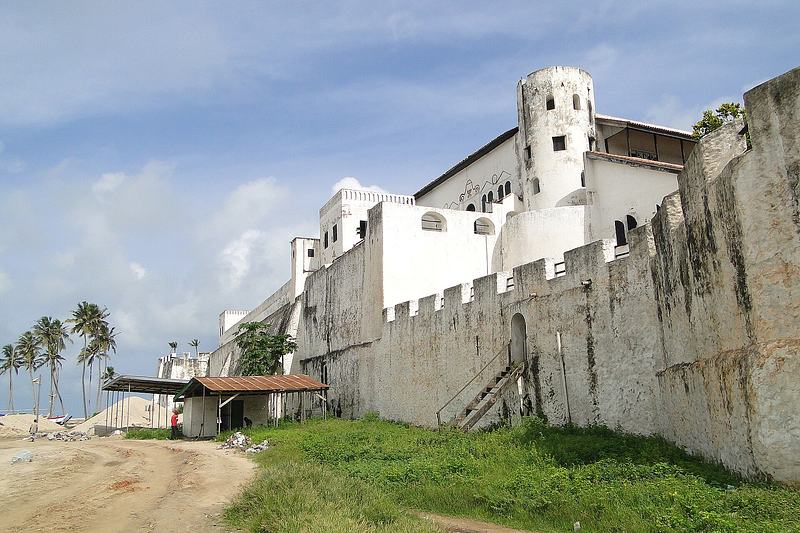
1.Elmina Castle (St. George's Castle)
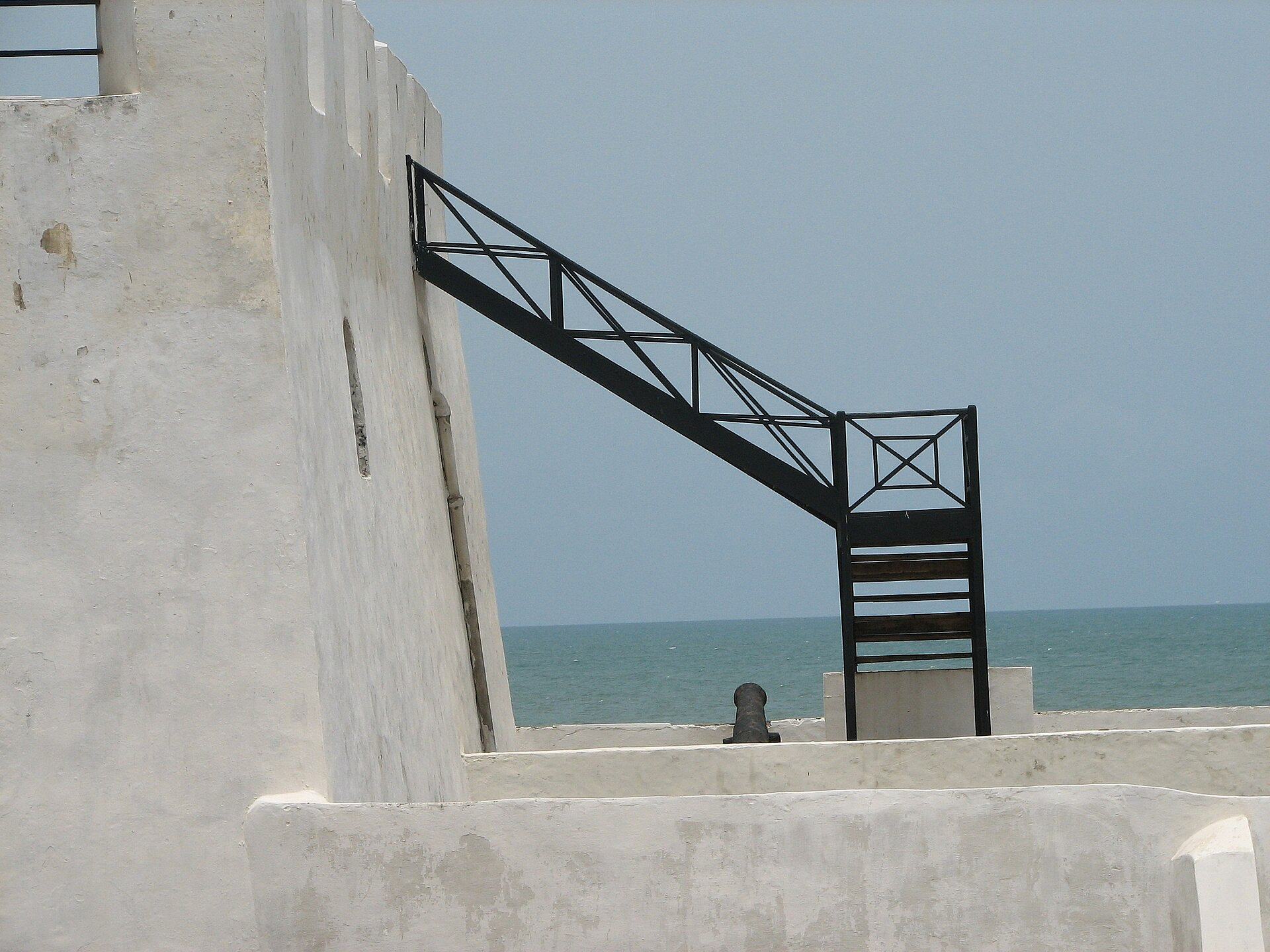
This is the reason most people come, and it earns the visit. Founded by the Portuguese in 1482, it is the oldest surviving European building in sub-Saharan Africa and the first trading post on the Gulf of Guinea. A guided walk takes you through the courtyards, the governor's quarters and the dungeons where enslaved Africans were held before the Atlantic crossing, and the guides do not soften the story. It is a UNESCO World Heritage Site and a national museum, and it is a place of pilgrimage for many in the diaspora.
Tip: Hire a guide at the entrance rather than wandering alone — the architecture only makes sense with the history attached, and the castle is open daily from 9:00am to 4:30pm.
-
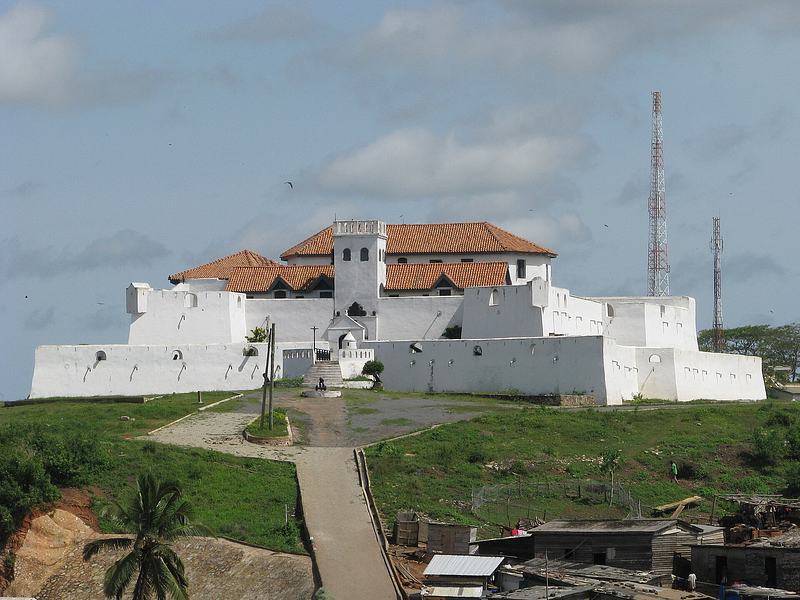
2.Fort Coenraadsburg (Fort St. Jago)
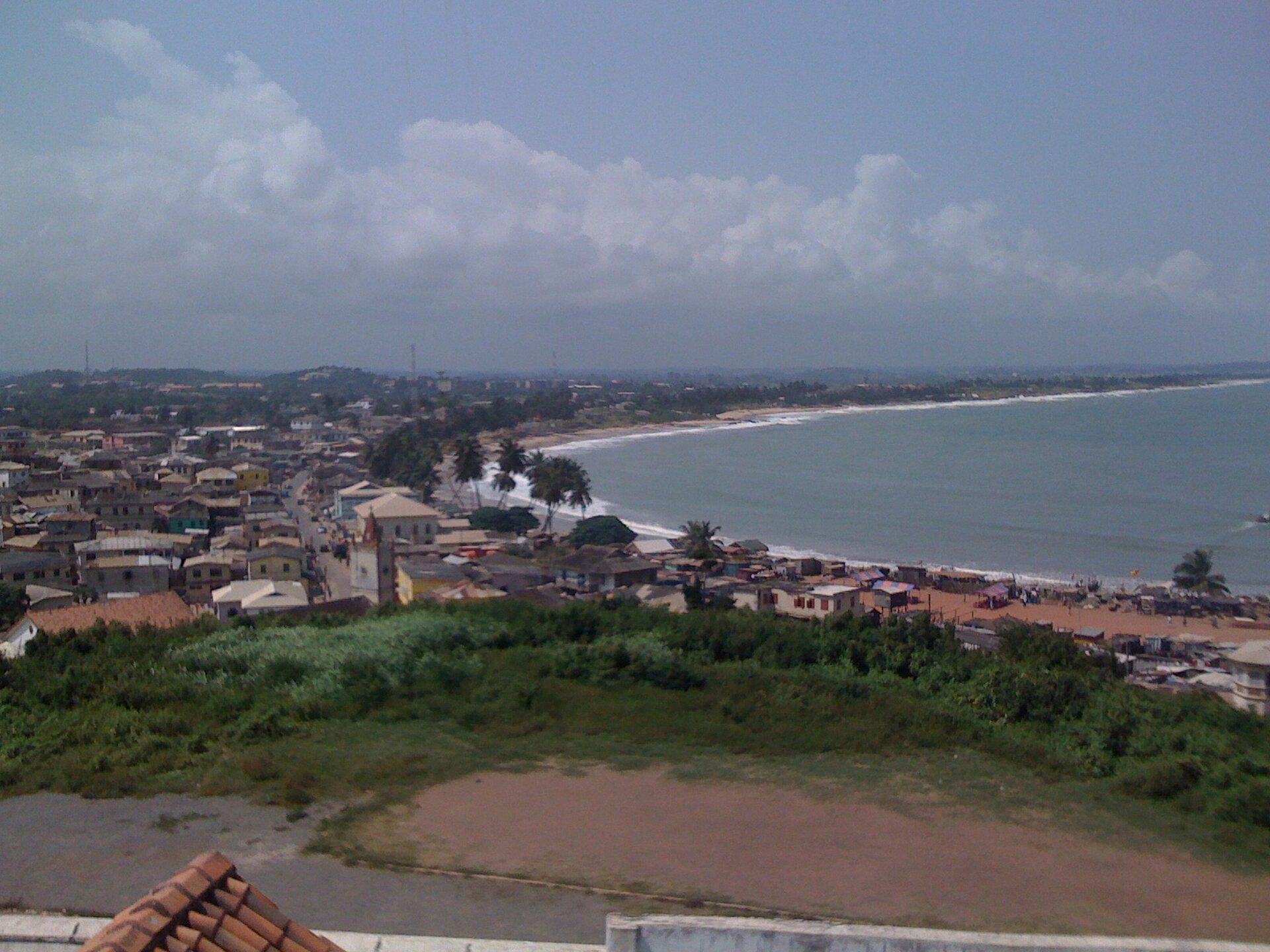
The small Dutch fort on the hill opposite the castle was built in the 1660s on the site of a Portuguese chapel, purely for defence — it has no trading warehouses. Climb up for the best view in Elmina: the castle below, the lagoon, the canoes and the open Atlantic. It is a UNESCO World Heritage Site in its own right, and its later life as a prison, hospital and rest house gives it a layered, lived-in feel that the grander castle lacks.
Tip: Come here after the castle, not before — seeing the castle from above makes the geography of the whole town click into place.
-
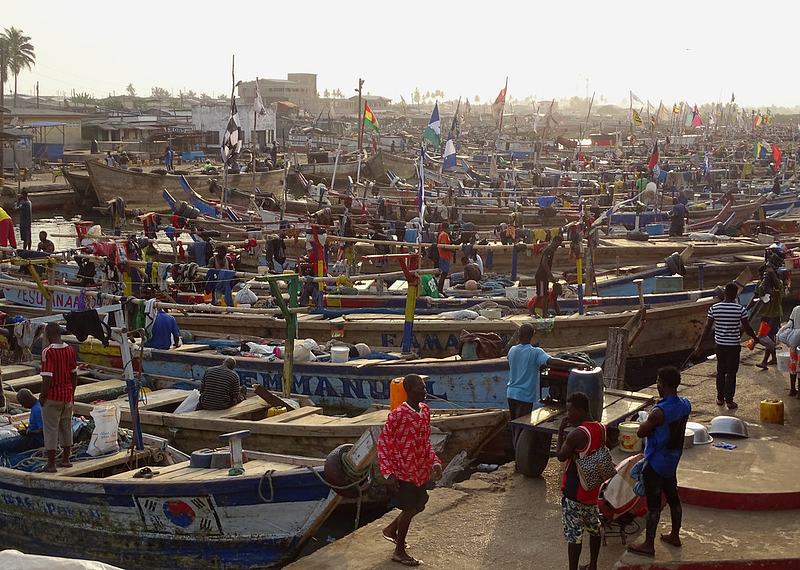
3.Elmina Fishing Harbour
Below the castle, this is one of Ghana's busiest working harbours and the third largest fish landing site in the country. The theatre is the arrival: pirogues coming in with the night's catch, crews shouting, nets being mended, ice being shifted. It is busiest at the morning returns and again as boats head out in the evening. Nothing here is staged for visitors, which is precisely the appeal — you are watching a town earn its living.
Tip: Ask before photographing people at work, and keep clear of the slipways when boats are landing.
-
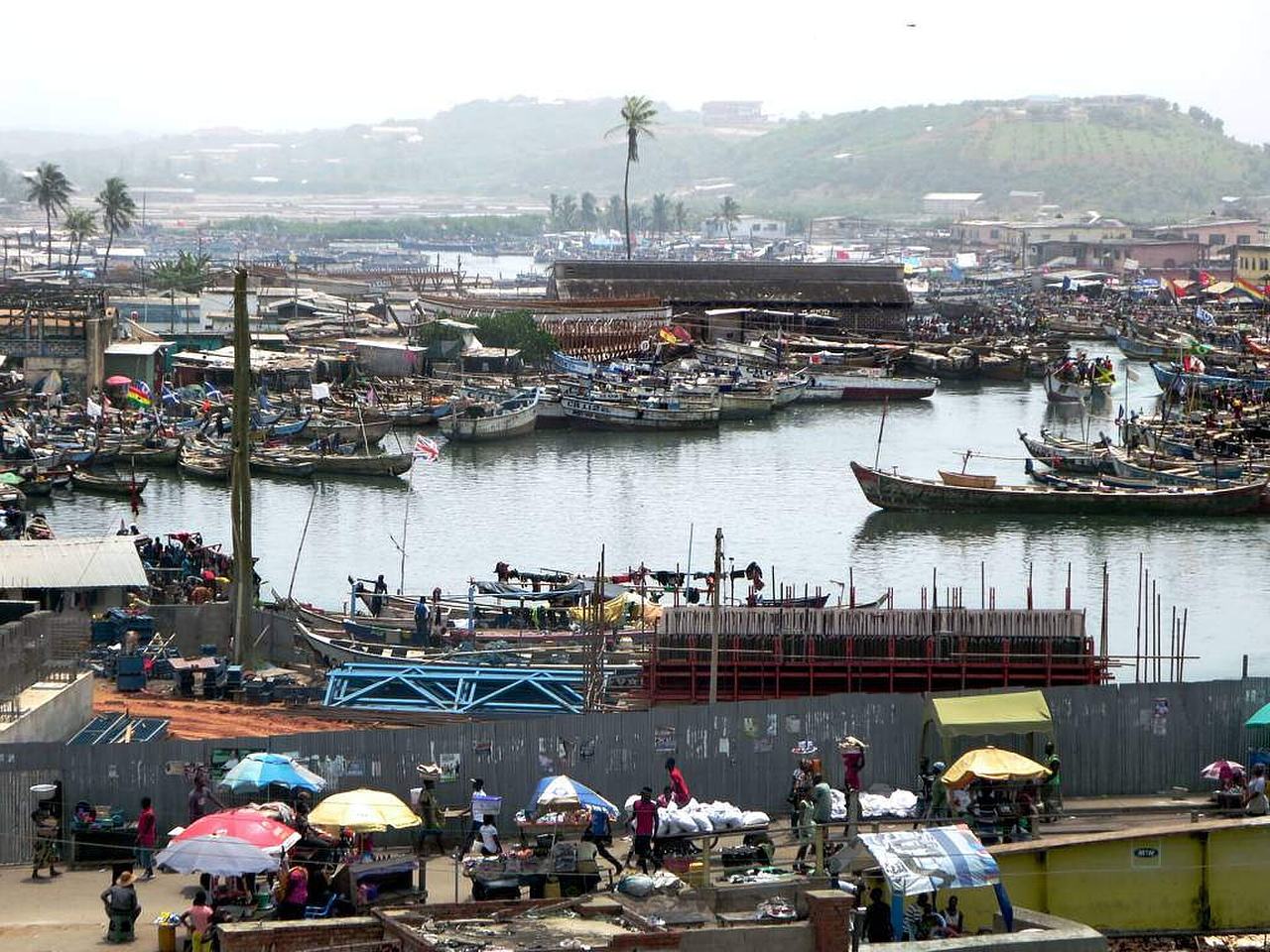
Photo: David Stanley from Nanaimo, Canada · CC BY 2.0 · Source 4.Elmina Fish Market
The market sits on the quay of the fishing harbour on the Benya Lagoon, right beside the castle, and it comes alive as boats land from around six in the morning. This is where the catch is sorted, priced and sold, and where you can see the full range of what the fleet brings in. It is a working market rather than a craft market, so go to watch and to buy fish, not souvenirs.
Tip: Arrive early — by mid-morning the best of the trade is done and the quay is already winding down.
-
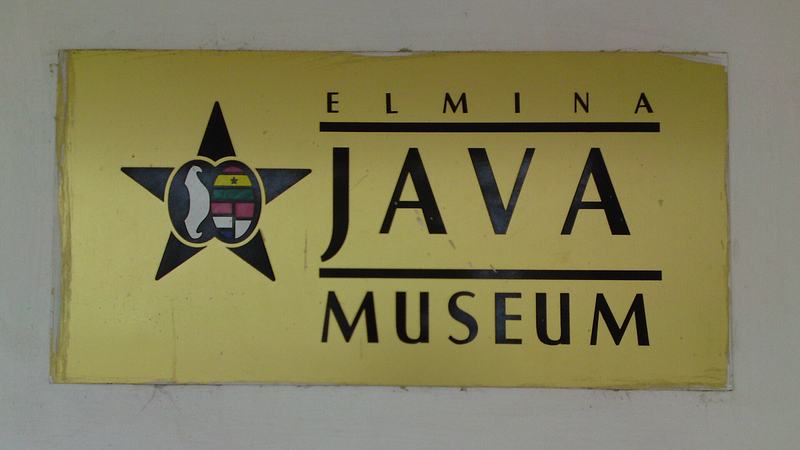
5.Elmina Java Museum
A small, deeply personal museum devoted to the Belanda Hitam — the roughly three thousand African soldiers recruited on the Dutch Gold Coast between 1831 and 1872 for the Royal Netherlands East Indies Army. Many veterans settled on Java Hill behind the castle; others founded Indo-African communities in Java. Opened in 2003 and funded by the Edward A. Ulzen Memorial Foundation, it is Ghana's first private museum and tells a story most visitors have never heard.
Tip: It is a short walk from the castle but easy to miss — ask locally for Java Hill, and allow an hour to read the exhibits properly.
-
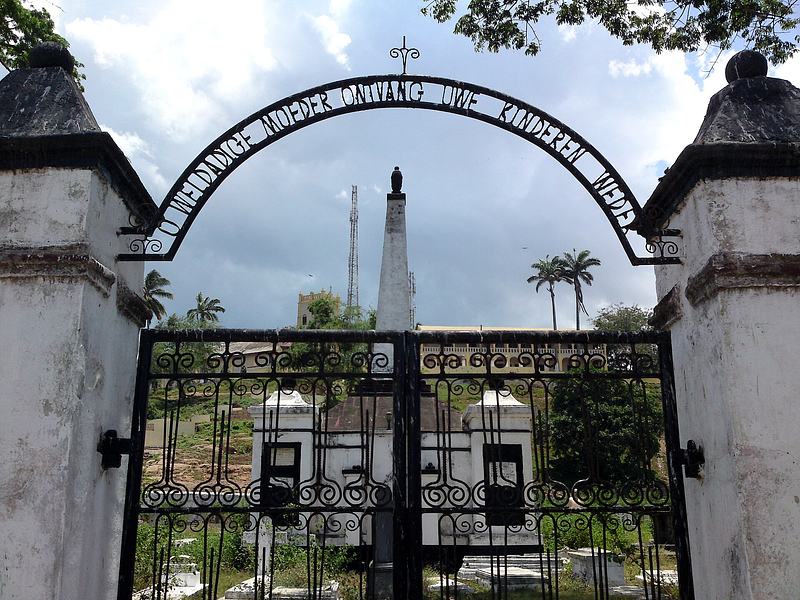
6.Dutch Cemetery, Elmina
Laid out in 1806 in what was then called "the Garden", this public, non-denominational burial ground holds about seventy interments, including governor-general Herman Willem Daendels, the merchant Carel Hendrik Bartels and Elmina King Nana Kobina Gyan. A large central tomb carries the most prominent names, and the restored gate bears its Dutch inscription asking a benevolent mother to receive her children once again. It is quiet, shaded and unexpectedly moving.
Tip: Read the gate inscription before you go in — it reframes the whole cemetery as a place of return rather than simply a colonial graveyard.
-
7.Walk the old town and the lagoon shore
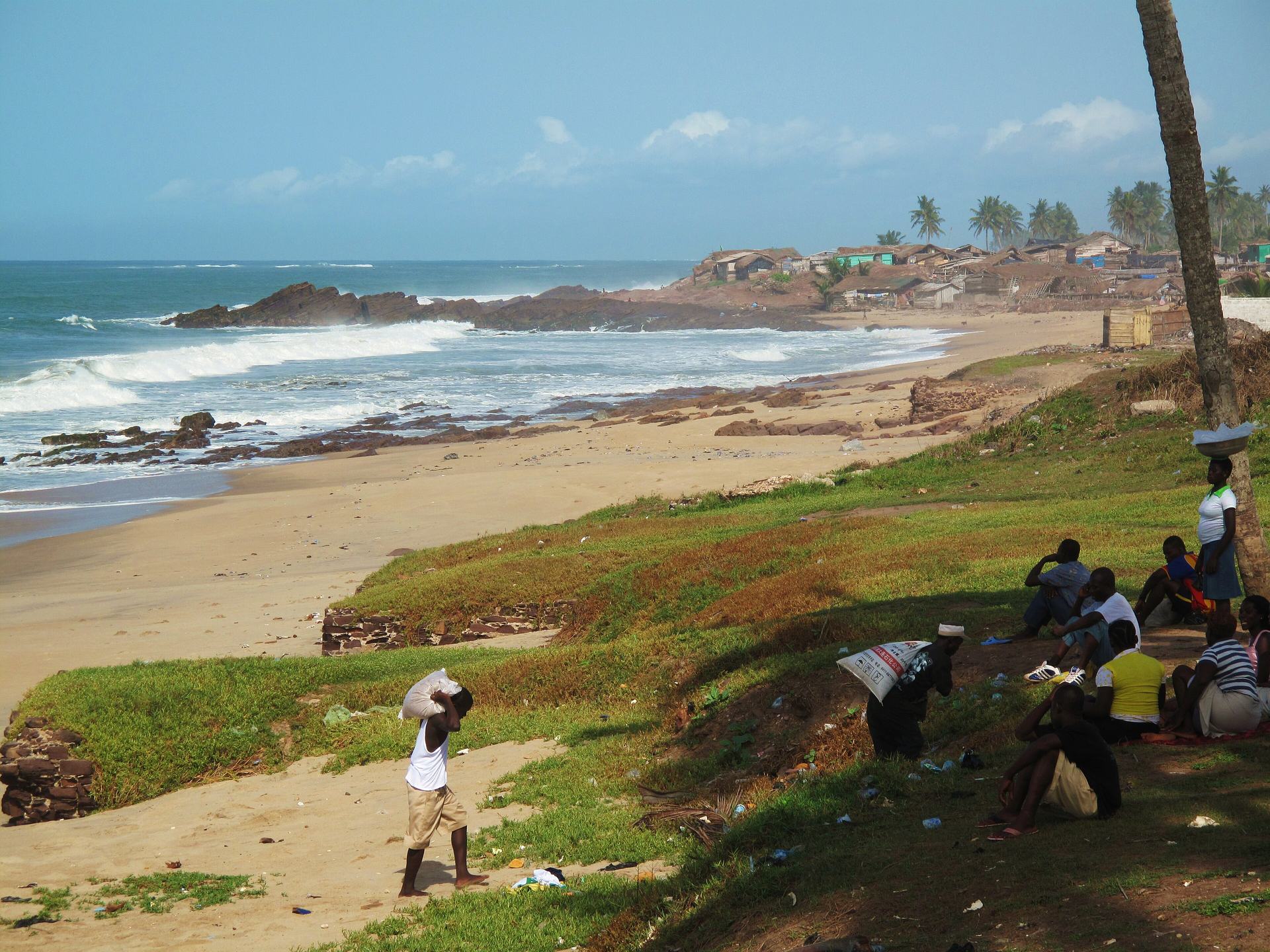
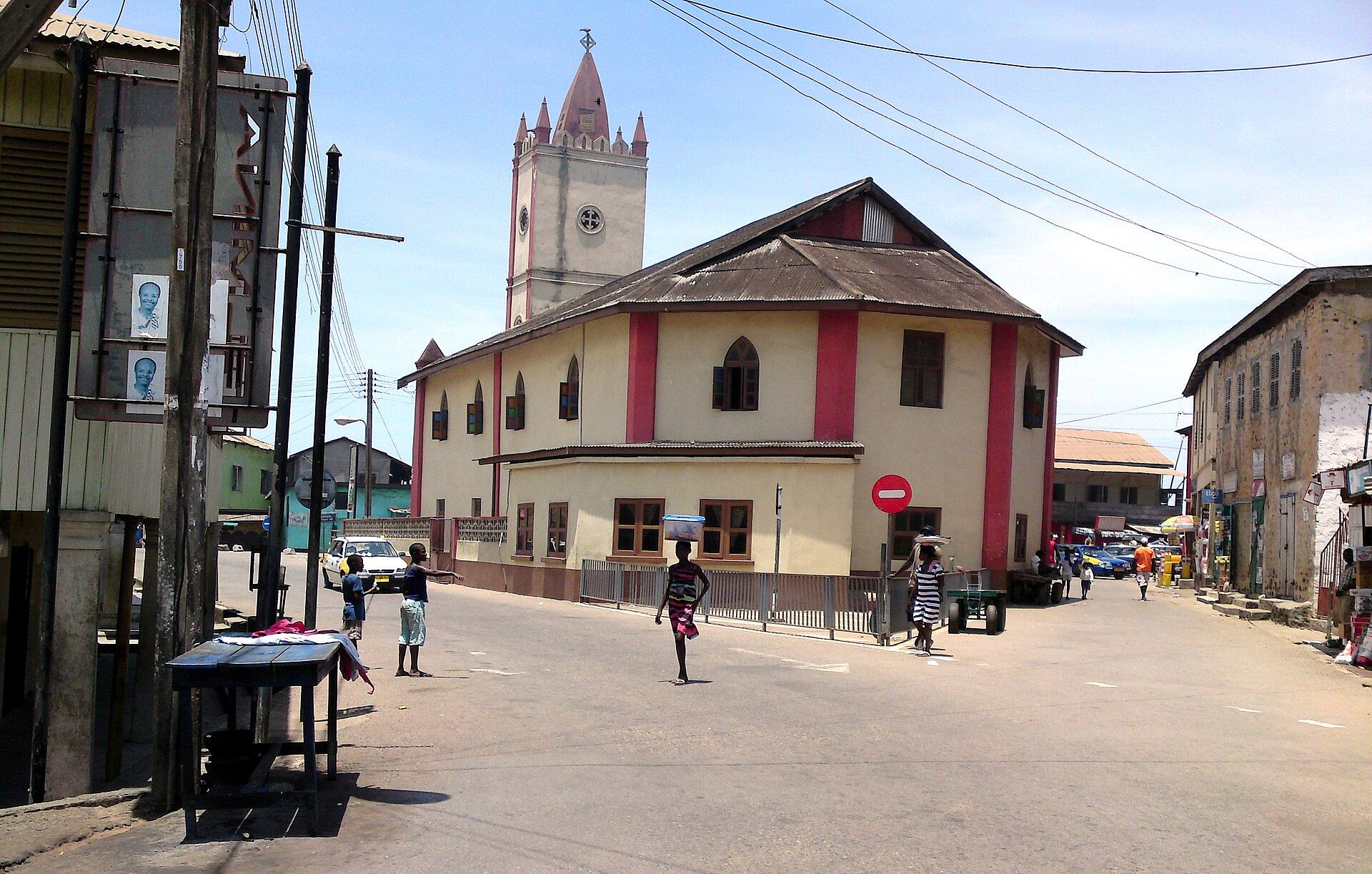
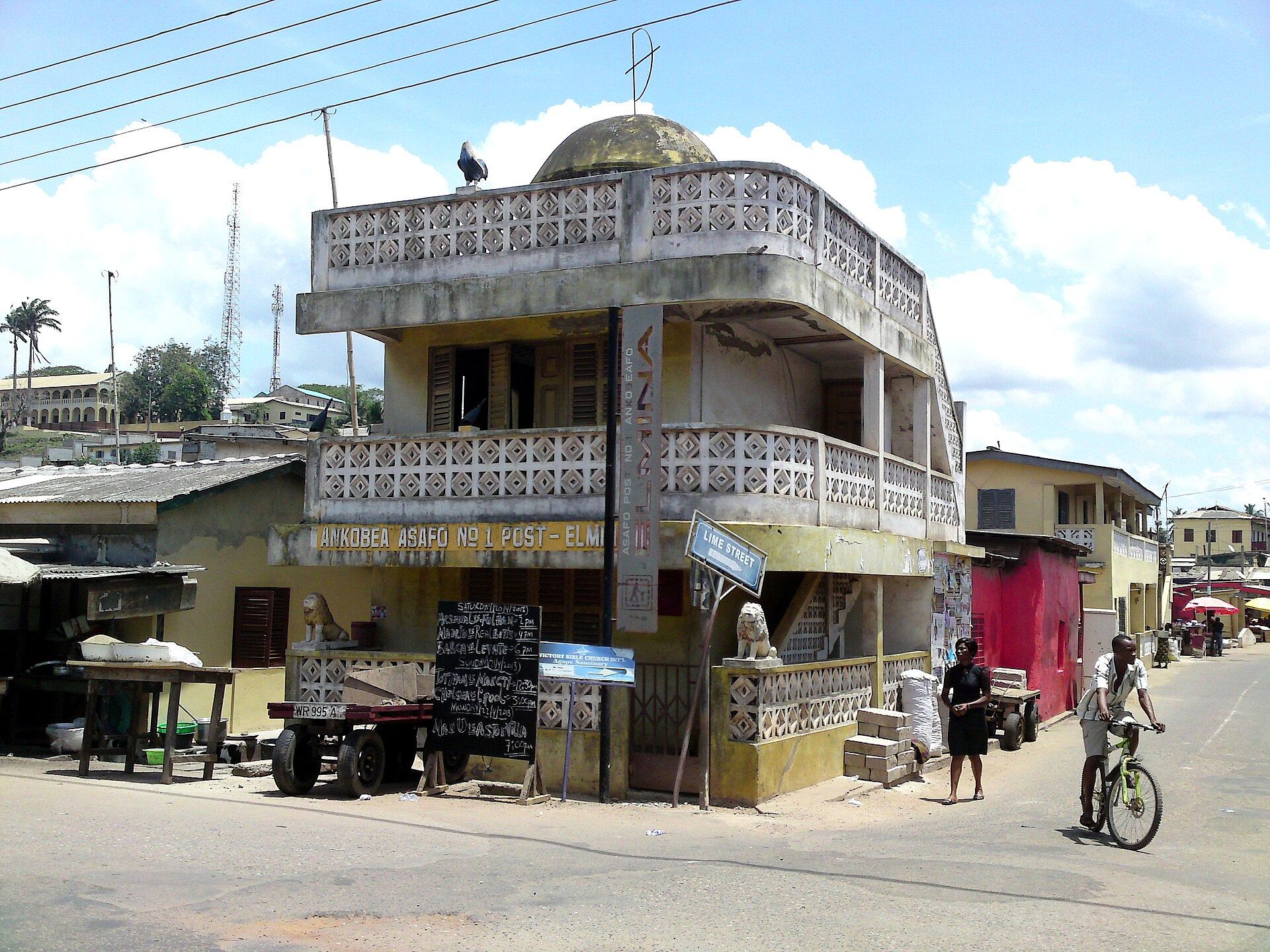
Elmina rewards slow walking. Between the castle, the lagoon and the sea you pass the Posuban shrine buildings of the Asafo companies, colonial-era merchant houses, salt pans and the everyday bustle of a fishing town that has been trading with outsiders since the fifteenth century. The peninsula setting — lagoon on one side, Atlantic on the other — is the reason the Portuguese chose this spot in the first place.
Tip: Go in the cooler hours of early morning or late afternoon, and take water; the sun on the exposed quay is fierce.


Plan your time
Suggested itinerary
Half a day: the castle and the harbour
Start at Elmina Castle when it opens at 9:00am, before the heat and the crowds, and take the guided tour — allow ninety minutes to two hours. Walk straight down to the fishing harbour and the fish market on the Benya Lagoon, where the morning landings are still being sorted. Finish with a slow loop through the old town along the lagoon shore. If you have energy left, climb to Fort Coenraadsburg for the view back over everything you have just seen.
Elmina Castle (St. George's Castle)→Elmina Fishing Harbour→Elmina Fish Market→Fort Coenraadsburg (Fort St. Jago)
One day: castle, hill, graves and Java Hill
Begin at the castle at opening time and give it a full guided tour. Walk up to Fort Coenraadsburg for the panorama, then come down to the Dutch Cemetery and read the gate inscription and the central tomb. Break for lunch in town. In the afternoon, walk to Java Hill for the Elmina Java Museum, then return to the harbour as the boats head out in the evening. This order keeps the hardest history first, when you are freshest, and ends on the living town.
Elmina Castle (St. George's Castle)→Fort Coenraadsburg (Fort St. Jago)→Dutch Cemetery, Elmina→Elmina Java Museum→Elmina Fishing Harbour
Two days: Elmina properly, with Cape Coast alongside
Day one: the castle, Fort Coenraadsburg, the Dutch Cemetery and the Java Museum, with the fish market early and the harbour at dusk. Day two: return to the quay at six in the morning for the landings, then walk the lagoon shore and the old town at leisure. Elmina is only about twelve kilometres from Cape Coast, so the afternoon can be spent at Cape Coast Castle, the other great fortress of the slave trade, before returning for a last evening on the Elmina waterfront.
Elmina Castle (St. George's Castle)→Fort Coenraadsburg (Fort St. Jago)→Dutch Cemetery, Elmina→Elmina Java Museum→Elmina Fish Market→Elmina Fishing Harbour

Seasons and festivals
When to go
Elmina has a tropical savanna climate, hot all year, with two rainy seasons and two dry ones. The main rains run from April to June, with May and June the wettest months, and a lighter rainy season falls from September to November. The harmattan dry season runs from December to February, and a second, less typical dry spell lasts from mid-July to mid-September, when temperatures ease and fog is common. December to February and the mid-July to mid-September window are the most comfortable times to walk the castle and the quay. If you can, time a visit to the Bakatue Festival in early July, when the town is at its most itself.
- Bakatue Festival · First Tuesday of July, with customary rites on the preceding Monday
- Elmina's great festival marks the opening of the fishing season and takes its name from the Fante for "draining of a lagoon". It has been recorded since at least 1847. The paramount chief, his sub-chiefs and the state of Elmina offer eggs and mashed yam mixed with palm oil to Nana Brenya, the river god, and pray for peace; chiefs ride in decorated palanquins, there is a durbar with drumming and dancing, and the chief priest casts his net three times into the Benya Lagoon. Because Tuesday is held to be the sea god's day, Elmina's fishermen do not go to sea on Tuesdays at all.
Access
Getting there and around
Elmina lies on Ghana's south coast in the Central Region, about 12.2 kilometres west of Cape Coast, and it is the capital of the Komenda/Edina/Eguafo/Abirem Municipality. The municipality borders the Gulf of Guinea to the south, the Cape Coast Metropolitan area to the east, Twifo/Hemang/Lower Denkyira to the north and Mpohor and Wassa East to the west and north-west. Most travellers reach Elmina by road from Cape Coast, which is the nearest large town and the usual base, or on from Accra. Once you are in town, the historic core is compact and walkable: the castle, the fishing harbour and fish market, Fort Coenraadsburg, the Dutch Cemetery and the Java Museum all sit within easy walking distance of one another, which is why Elmina works so well on foot. Tourism in the town is regulated by the Central Region Development Commission, with the castle as its principal centre.
Good to know
Before you go
Elmina's history is not abstract, and the castle in particular is a site of grief for many visitors, especially those tracing enslaved ancestors. Go with that in mind: keep voices low in the dungeons, give people space to be moved, and follow your guide's lead on where photography is appropriate. Around the harbour and market, ask before taking anyone's picture and accept a no gracefully. Dress modestly, particularly away from the beach, and carry water and sun protection — the quay and the castle courtyards are exposed. Bring small cash for guides, museum entries and market purchases, and remember that the castle is a museum with set opening hours, so plan your day around them. Above all, treat Elmina as a town where people live and work, not a backdrop; the fishing fleet, the salt pans and the market are livelihoods, and a little courtesy goes a long way.


FAQ
Questions travellers ask about Elmina
Where is Elmina and how far is it from Cape Coast?
Elmina is a town on Ghana's Atlantic coast in the Central Region, and the capital of the Komenda/Edina/Eguafo/Abirem Municipality. It lies about 12.2 kilometres west of Cape Coast, which makes the two easy to combine in a single trip.
Why is Elmina Castle so important?
Built by the Portuguese in 1482, it is the oldest surviving European building in sub-Saharan Africa and the first trading post on the Gulf of Guinea. It later became a major depot in the Atlantic slave trade under first the Portuguese and then the Dutch, and it is a UNESCO World Heritage Site and a national museum.
When is the Bakatue Festival and what happens?
It falls on the first Tuesday of July, with customary rites on the preceding Monday. It marks the opening of the fishing season: the paramount chief and the state of Elmina make offerings to the river god Nana Brenya at the Benya Lagoon, there is a durbar of chiefs with drumming and dancing, and the chief priest casts his net three times into the lagoon.
Can I visit Elmina Castle and Fort St. Jago on the same day?
Yes. Fort Coenraadsburg (Fort St. Jago) sits on the hill directly opposite the castle, and the two are within walking distance, as are the fishing harbour, the fish market, the Dutch Cemetery and the Java Museum. A half day covers the castle and harbour comfortably; a full day takes in everything.
What is the Elmina Java Museum about?
It tells the story of the Belanda Hitam, the roughly three thousand African soldiers recruited on the Dutch Gold Coast between 1831 and 1872 to serve in the Royal Netherlands East Indies Army. Many veterans settled on Java Hill behind the castle. Opened in 2003, it is Ghana's first private museum.
When is the best time of year to visit Elmina?
The most comfortable windows are the harmattan dry season from December to February and the milder dry spell from mid-July to mid-September. The heaviest rain falls from April to June, with a lighter rainy season from September to November.
Is Elmina a good base for visiting Cape Coast Castle?
Yes. Elmina is only about twelve kilometres from Cape Coast, and the two castles are the best-known fortresses of Ghana's slave-trade coast. Many travellers stay in one and visit the other, or see both in a single day.
In pictures
Elmina in pictures
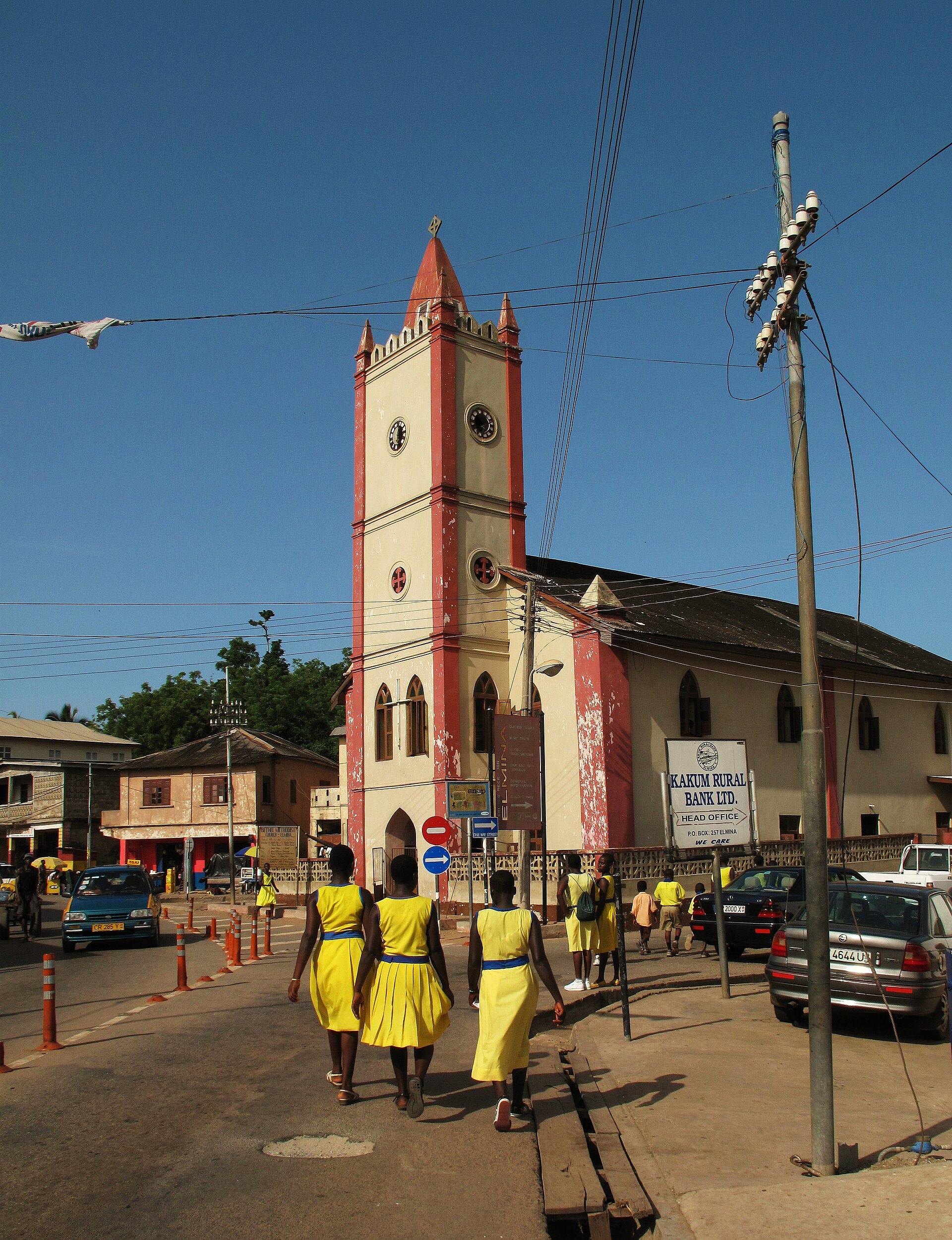
Keep exploring
More destination guides
Sources for this guide (8)
- Elmina Castle — Wikipedia
- St. George's Castle (Elmina Castle), Elmina (1482) — Ghana Museums and Monuments Board
- Elmina — Wikipedia
- Fort Coenraadsburg — Wikipedia
- Dutch Cemetery, Elmina — Wikipedia
- Elmina Java Museum — Wikipedia
- Elmina – Java Museum — Edward A. Ulzen Memorial Foundation
- Bakatue Festival — Wikipedia
Written September 29, 2026 from these sources and reviewed by the VisitGhana.app team. Confirm practical details locally before travelling.