
A fort built on hope, and what it became
The Dutch first set up a lodge at Senya Beraku in the 1660s, but abandoned it when the British built a fort at nearby Winneba. They returned, and in 1667 — the date most histories give — established Fort de Goede Hoop, 'Good Hope', on a promontory beside a cove with a good landing beach. It was the last fort the Dutch raised on the Gold Coast, and the name carried their expectation of a rich trade in gold with the hinterland kingdom of Akyem. The hope did not hold. Gold never flowed as the company imagined, and the fort's fortunes shifted instead to the trade in enslaved people, which grew as wars between Asante, Akyem and Akwamu produced prisoners for sale. The original triangular fort, with three bastions and a curtain wall, was too small for what it was being used for. It was enlarged — the Ghana Museums and Monuments Board dates the expansion to 1715, when large male and female slave prisons were added — and rebuilt into the rectangular, four-bastioned structure you see today, with officers' quarters, kitchens, a granary and a powder magazine around a central courtyard. An official report of 1804 called it 'one of the finest and most spacious forts on the coast'. Britain seized it during the Anglo-Dutch war of 1782 to 1785, the local Akim briefly controlled it between 1811 and 1816, and in 1868 it passed to the British under the exchange of forts. It fell into disuse, was reported partly ruined by 1957, and was restored in the 1980s. Today it is a rest house and small bed-and-breakfast, and part of the UNESCO World Heritage site inscribed in 1979 for the role these buildings played in European colonial trade and the Atlantic slave trade. Walk the ramparts and the view is all Atlantic; stand in the low, cool rooms where people were held, and the view is something else entirely. This is a place to visit slowly and with respect.


The Guans of Senya Beraku
Senya Beraku is a Guan town, and the Guans are among Ghana's oldest indigenous peoples. Local history holds that their ancestors migrated south from the Mossi region of what is now Burkina Faso around AD 1000, moving down through the Volta valley before settling on the coastal plains. Oral tradition says that when they reached this spot they said to one another, ani na ani sɔ ani nya bɔ iye — 'brethren, let us rest here' — and so the place became Senya, from a word for rest. Another telling reads Senya as 'major (se) festival (nya)'. Either way, the town is one of three Guan states in the Central Region, alongside Efutu Bireku at Winneba and Obutu Bireku at Awutu. The people speak Senya, a Guan language, and their chief food is ode na inu — kenkey and fish. Fishing is the dominant occupation, but farming, trading, dressmaking, hairdressing, driving, mechanics and teaching all sustain households here. The town's great celebration is the Akumase festival, which grows out of the farming year: it recounts a historic famine and the systematic agricultural work that ended it, and it closes with a bumper harvest. It is a living calendar, not a performance for visitors, and it is worth timing a trip around if you can.


Between the cove and the canoes
The landscape here is gentle and worked: a low, sandy shore, a sheltered cove, coconut palms along the beach, and the open Atlantic beyond. The fort's siting tells you why the Dutch chose it — a promontory for defence, a cove for landing, and a beach that could take canoes and cargo alike. That same beach is still the town's engine. Senya Beraku is one of the coastal communities selected for Ghana's national programme of fishing harbours and landing sites, a scheme of ten sites funded through a China Development Bank loan and built by China Harbour Engineering Company, with facilities that include an administration block, a net-mending area, a workshop, an ice-making factory, a fish market and a premix fuel station. The town sits between Winneba to the west and Gomoa Fetteh to the east, so it makes an easy stop on a longer Central Region run. Come in the late afternoon, when the boats come in, and the beach becomes a theatre of shouting, hauling and bargaining. Come at dawn and you will have the light and the palms almost to yourself.


What to do
Things to do in Senya Beraku
-
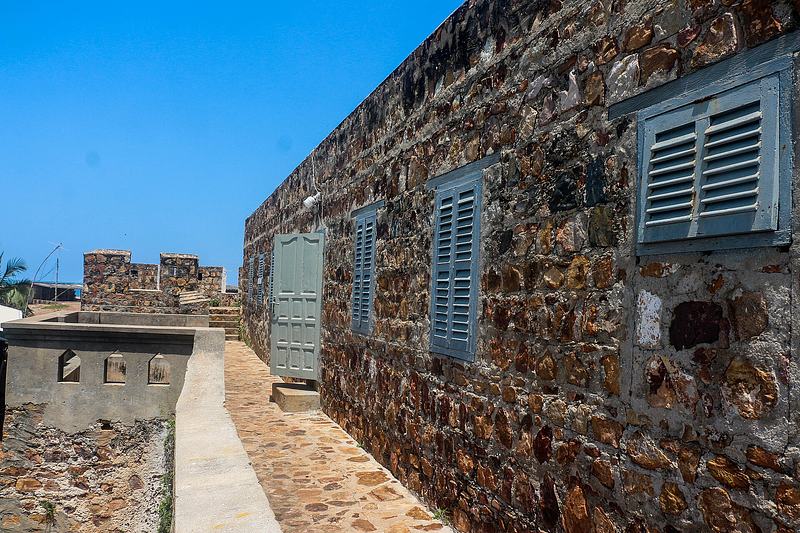
1.Tour Fort Good Hope (Fort de Goede Hoop)
The reason most travellers come. This restored Dutch fort on its promontory is the last the Dutch built on the Gold Coast, and it is part of Ghana's UNESCO World Heritage listing of forts and castles. You can walk the four bastions and curtain walls, look into the courtyard where officers' quarters, kitchens, a granary and a powder magazine once stood, and stand in the spaces that served as male and female slave prisons after the 1715 expansion. The Atlantic view from the ramparts is wide and bright; the history inside is heavy. Go slowly, and let it be both.
Tip: The fort also operates as a rest house and small bed-and-breakfast, so it can be busy with overnight guests — ask at the entrance about a guided walk-through rather than wandering unaccompanied.
-
Attraction
2.Spend time at the fishing beach and landing site
Senya Beraku's shore is a working beach, not a resort. Canoes are hauled up the sand, nets are spread and mended, and the catch is sorted and sold on the spot. The town is one of the coastal communities in Ghana's national programme of fishing harbours and landing sites, a ten-site scheme whose facilities include an administration block, a net-mending area, a workshop, an ice-making factory, a fish market and a premix fuel station. Watching the boats come in is the best free entertainment in town, and it tells you more about the place than any plaque.
Tip: Ask before photographing people at work, and keep clear of ropes, engines and hauling lines — this is a workplace first and a viewpoint second.
-
3.Walk the cove and the palm-lined shore below the fort
The fort was sited for a reason: a promontory for defence and a cove with a good landing beach beside it. That beach, lined with coconut palms, is still the calmest stretch of shore in town and the easiest place to understand why the Dutch chose this spot over any other. It is a short, flat walk from the fort, and the light in the late afternoon, when the palms throw long shadows across the sand, is the best of the day.
Tip: The sea here is open Atlantic with no lifeguards — paddle, don't swim far, and keep an eye on the swell.
-
Attraction
4.Eat kenkey and fish the way the town does
Ode na inu — kenkey and fish — is the chief food of Senya Beraku, and eating it here, freshly landed and simply prepared, is part of understanding the place. Tom's Garden, on Senya Beraku Road just past the senior high school, is a garden bar and restaurant as well as a guesthouse, with a shaded outdoor setting that makes an easy, unhurried stop after a morning at the fort. It is the kind of place where lunch stretches into the afternoon.
Tip: Fish is best when it is freshest — ask what came in that morning rather than ordering from habit.
-
5.Time a visit to the Akumase festival
If your dates are flexible, the Akumase festival is the moment Senya Beraku shows itself most fully. It grows out of the farming year and recounts a historic famine and the agricultural work that ended it, closing with a celebration of the harvest. The week-long programme runs from the third Tuesday of August and includes clean-up exercises, path clearing by the two Asafo companies, a children's parade, family reunions, sports, traditional rituals, a regatta, church services, a state dance and a durbar. It is a community event, not a staged attraction, and that is exactly its value.
Tip: The festival is organised by local families and the traditional council — dress modestly, follow the crowd's cues, and ask before filming rituals.
-
6.Pair Senya Beraku with Winneba and the wider fort coast
Senya Beraku sits between Winneba to the west and Gomoa Fetteh to the east, which makes it a natural link in a Central Region coastal route. Fort Good Hope is one of fifteen forts in the UNESCO listing that also includes Fort Patience at Apam, Fort Amsterdam at Abandzi and the great castles at Cape Coast and Elmina. Seeing a smaller, quieter fort first changes how you read the bigger ones: the scale of the trade, and the reach of it along this whole coast, becomes clearer.
Tip: Build the day west-to-east or east-to-west rather than doubling back — the coastal road rewards a single direction.
Plan your time
Suggested itinerary
Half a day: the fort and the shore
Arrive by mid-morning and go straight to Fort Good Hope while the light is still soft and the site is quiet. Give the fort an unhurried hour: the bastions, the courtyard, the prison rooms, the view down over the cove. Then walk down to the beach below, follow the palm line, and sit for a while with the Atlantic in front of you. Finish with a late lunch of kenkey and fish at Tom's Garden on Senya Beraku Road before heading back towards Accra or on to Winneba.
Fort Good Hope (Fort Goedehoop)→Tom's Garden
One day: fort, fishing beach and the wider coast
Start early at the fishing beach and landing site, when the canoes are going out and the beach is at its most alive. Move up to Fort Good Hope for a full tour once the morning's work has settled, then take lunch at Tom's Garden. In the afternoon, drive west to Winneba to see the town and its own stretch of coast, or east towards Gomoa Fetteh, using Senya Beraku as the anchor of a single-direction coastal run. Return to the fort's promontory for the late-afternoon light over the sea.
Senya Beraku Fishing Harbour / Fish Landing Site→Fort Good Hope (Fort Goedehoop)→Tom's Garden
Two days: Senya Beraku and the fort coast
Day one: the fishing beach at dawn, Fort Good Hope in the late morning, lunch at Tom's Garden, and a slow afternoon on the cove and palm-lined shore, staying overnight in the area. Day two: head west along the coast to Winneba and on towards Apam's Fort Patience, or continue to the larger castles at Cape Coast and Elmina, reading them with the smaller fort fresh in mind. If you can, plan the trip around the third week of August, when the Akumase festival fills the town.
Senya Beraku Fishing Harbour / Fish Landing Site→Fort Good Hope (Fort Goedehoop)→Tom's Garden
Seasons and festivals
When to go
Senya Beraku sits on Ghana's Central Region coast, where the climate is tropical and the year divides broadly into a wetter season and a drier one. The town's own calendar is set by the Akumase festival, which runs from the third Tuesday of August and closes on the following Tuesday, and by the farming rituals that begin as early as mid-February and build towards it. If you want the town at its fullest, aim for August. If you want the fort and the beach to yourself, come outside the festival week and on a weekday, when the site is quietest. Mornings and late afternoons give the best light on the promontory and the coolest hours for walking the shore.
- Akumase Festival · Third week of August, from the third Tuesday to the following Tuesday
- Senya Beraku's major festival, rooted in the farming year. It recounts the historic famine that struck the community and the systematic agricultural work that ended it, and it culminates in a celebration of the bumper harvest. The week-long programme includes clean-up exercises, path clearing by the two Asafo companies, a children's parade with brass band music, family reunions, sports and games, traditional rituals, a regatta, church services, a state dance, a durbar, fundraising and variety entertainment. It is spearheaded by the Nkyiew Anu patrilineal family, with other families leading individual rites.
Access
Getting there and around
Senya Beraku lies on the coast of the Central Region, with Winneba to its west and Gomoa Fetteh to its east. It is reached from Accra on the Accra–Winneba highway; the drive is described locally as taking less than an hour when traffic is clear, and the town is roughly 56 to 77 kilometres west of the capital depending on the route measured. Travellers coming from Accra will find the turn-off on the coastal highway, with the sea to the south. Once in town, the fort, the beach and the landing site are all within easy walking distance of one another, and the town is small enough to cover on foot. For onward travel, Winneba to the west and Gomoa Fetteh to the east are the natural next stops along the coast.
Good to know
Before you go
Fort Good Hope is a monument to the Atlantic slave trade as well as a Dutch trading post, and it should be visited with that weight in mind: keep your voice low in the prison rooms, and treat the site as a place of memory rather than a backdrop. It is also a working rest house and bed-and-breakfast, so parts of the building may be in use by guests — ask before entering rooms. The beach is a workplace, not a leisure facility: ask permission before photographing fishermen, nets or boats, and stay clear of hauling lines and engines. There are no lifeguards on this open Atlantic shore, so paddle rather than swim. Dress modestly, particularly if you attend the Akumase festival or visit during ritual periods, and follow the cues of the traditional authorities. Bring cash, water and sun protection, and expect a small, quiet town rather than a tourist hub.
FAQ
Questions travellers ask about Senya Beraku
Where is Senya Beraku?
Senya Beraku is a coastal town in the Awutu Senya District of Ghana's Central Region, with Winneba to its west and Gomoa Fetteh to its east. It lies on the Accra–Winneba highway, roughly an hour's drive west of Accra.
What is Fort Good Hope and why is it important?
Fort Good Hope, or Fort de Goede Hoop, is a Dutch fort established at Senya Beraku in 1667 and the last fort the Dutch built on the Gold Coast. It was built for the gold trade, became heavily involved in the slave trade, and is part of the UNESCO World Heritage listing of Ghana's forts and castles inscribed in 1979.
Can you stay overnight at Fort Good Hope?
Yes. After restoration in the 1980s, part of the fort was adapted for use as a rest house, and it now also operates as a small bed-and-breakfast alongside its role as a visitor attraction.
When is the Akumase festival in Senya Beraku?
The Akumase festival is celebrated in the third week of August each year, running from the third Tuesday to the following Tuesday. It grows out of the farming year and marks the harvest, with rituals, a regatta, a state dance and a durbar.
Who are the people of Senya Beraku?
They are Guans, one of Ghana's indigenous groups, and Senya Beraku is one of three Guan states in the Central Region alongside Winneba and Awutu. They speak Senya, a Guan language, and fishing is the dominant occupation, supported by farming and trading.
Is there a fishing harbour at Senya Beraku?
Senya Beraku is one of the coastal communities in Ghana's national programme of fishing harbours and landing sites, a ten-site scheme funded through a China Development Bank loan and built by China Harbour Engineering Company. The facilities include an administration block, net-mending area, workshop, ice-making factory, fish market and premix fuel station.
How long do you need in Senya Beraku?
Half a day covers the fort and the beach comfortably. A full day lets you add the fishing landing site and a run to Winneba or Gomoa Fetteh, and two days makes a relaxed base for exploring the wider fort coast.
Keep exploring
More destination guides
Sources for this guide (9)
- Fort Good Hope, Senya Beraku (1705) — Ghana Museums and Monuments Board
- Fort Goede Hoop, Ghana — Wikipedia
- Senya Beraku — Wikipedia
- Forts and Castles, Volta, Greater Accra, Central and Western Regions — UNESCO World Heritage Centre
- Fort Good Hope in Senya Beraku, Ghana — Castlopedia
- Get to know more about Senya Beraku history — SENYA BERAKU
- Senya Akumase Festival – Brief History — SENYA BERAKU
- Government to construct landing site and fishing harbour at Moree — Ministry of Transport
- President Akufo-Addo commissions €84 million Elmina Fishing Harbour — Ghana News Agency
Written September 29, 2026 from these sources and reviewed by the VisitGhana.app team. Confirm practical details locally before travelling.