
Two forts, one river, and a war that Africans decided
Komenda's story begins with trade. The Portuguese were the first Europeans in the area in the fifteenth century, but it was the Dutch and the British who built a lasting presence. The British put up a fort here in 1682 as a trading post for gold, ivory and, later, enslaved people; the Dutch built Fort Vredenburgh on the left bank of the Komenda River in the same year, on a site where they had earlier kept a trading post. The two stood within cannon-shot of each other, and the name the Dutch chose for theirs — Vredenburgh, 'peace fortress' — reads bitterly against what came next.
From the middle of the seventeenth century, the state of Komenda, part of the Kingdom of Eguafo, was contested by English, Dutch, Danish, Brandenburgish and French traders. That European rivalry was tangled up with rivalry between African states, which made and remade alliances with whichever power suited them. In 1687 the French trader Jean-Baptiste du Casse opened a post at Komenda with the backing of the powerful local merchant John Cabess; the Dutch, allied with Elmina and Eguafo forces, destroyed it about a month later. In 1694 the English built Fort Komenda on the right bank, within range of Fort Vredenburgh, with Cabess's help.
Between 1694 and 1700 the Komenda Wars were fought over trade rights — the Dutch trying to keep the English out, the English trying to re-establish themselves. The fighting drew in the Dutch West India Company, the English Royal African Company, the Eguafo Kingdom, a prince of Eguafo attempting to take the throne, Cabess's own forces, and Akan polities including Twifo, Denkyira, Fante, Asebu and others. There were four separate periods of warfare, including a civil war in Eguafo, and the wars ended with the English placing Takyi Kuma in power. The historian John Thornton found in them 'no finer example of [the] complicated combination of European rivalry merging with African rivalry'.

John Cabess and the people who chose sides
The most important figure in Komenda's history was not a European. John Cabess, born in the 1640s or 1650s, was an African trader in the port city of Komenda who became a major ally of the British and a supplier to the Royal African Company. He moved to Komenda in the 1670s to work with British attempts to establish trade there, and by 1686 had taken over as the leading African merchant in the port. One British trader put his importance bluntly: without Cabess in Komenda, 'nothing will be done'.
Cabess supplied shells, food and manpower for fort and factory construction, and eventually became a major slave trader out of Komenda, supplying thousands of enslaved people on a continuing basis. He also had real leverage. He refused to trade with the Dutch, slowing their building work; in 1688 the Dutch panyarred him — seized him and his goods — and the British secured his release. In 1694 and 1695 he attacked the Dutch fort more than once, and during negotiations the Dutch commander Willem Bosman drew a pistol and tried to shoot him, and missed. British representatives at the fort were removed at his request in 1687, 1698 and 1714. By the end of his life he largely held sovereign power along that stretch of coast and possessed his own stool, a symbol of Akan leadership. He died in June 1722 and was buried at the British fort after a public viewing of his body; his son Ahenaqua took over much of his trade and political power.
This is the part of Komenda's history that deserves to be held whole. African rulers and merchants could decide which European company held a fort — and could also decide who was sold through it. Both facts belong in the same account. The slave trade ran through Komenda as it ran through dozens of positions along this coast: people captured inland were brought here and held in dungeons before being shipped across the Atlantic. Komenda's fort is a smaller building than the great castles, and that is instructive. The scale of the trade is not visible in any single fort; it is visible in how many of them there were.

Sandstone, sea and a working town
Komenda is not only a historical site. The town — also known as Ekitakyi or Akitekyi — sits in the Komenda/Edina/Eguafo/Abirem Municipal District, whose capital is Elmina, and a concrete bridge links British Komenda and Dutch Komenda across the river. Local tradition holds that the land was first Komeh Krom, named for Komeh, a hunter from Techiman who settled at Kanka (Dutch Komenda) after reaching agreement with the elders of the land; the name Komenda is said to come from the caution 'Kɔ ma nda' — 'if you go, do not sleep' — given to anyone sent to Komeh Krom.
West of the town, the sea has carved a set of erosional features into the sandstone, and the most distinctive is the Komenda Sea Cave: a small tunnel open at both ends, with a floor of roughly 200 square metres, its mouth opening west at beach level and running northeast parallel to the shore. Rock debris restricts the corridor and the low ceiling limits how much of the floor can be used. The beach is reached by stairs leading down from the Komenda College premises to the shore. The college itself sits on high ground above the coast, and the sweep of bay below it has long been noted as a fine view.
Inland from the shore, Komenda Market is one of the market centres of the district, and the town remains a working coastal community rather than a monument. Further along the district's story is the Komenda Sugar Factory, established in 1964, whose operations ground to a halt in the early 1990s through poor management and technical problems. It was revived with a $35 million developmental grant from the Indian government and inaugurated in 2016, but has remained largely dormant since, and in 2026 the Trade Minister told Parliament that the factory had been disconnected from power and water supply over unpaid bills. It stands as a landmark of industrial heritage — and of how hard it is to make such projects run.
What to do
Things to do in Komenda
-
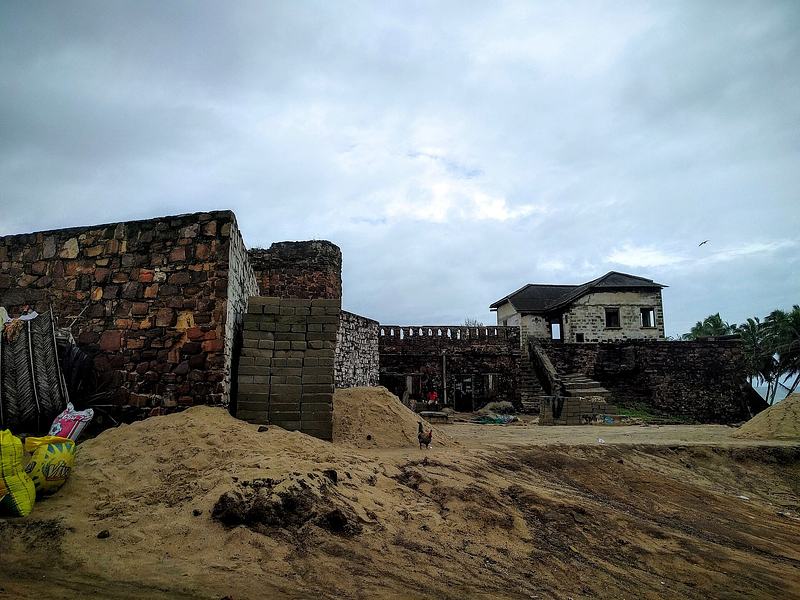
1.Walk between the two rival forts
Fort Komenda is the ruined British fort on the Komenda River, established between 1695 and 1698 around an earlier English trading post of 1633, and abandoned in 1816 after the abolition of the slave trade. Its four-bastioned plan is unusual, and enough walls and features survive to read the shape of the place. The point of the visit is the proximity: the Dutch fort stood within cannon-shot, and seeing how close the two were makes the Komenda Wars instantly comprehensible.
Tip: This is a ruin, not a restored monument. Wear proper shoes, watch your footing, and do not climb on anything that looks unsure.
-
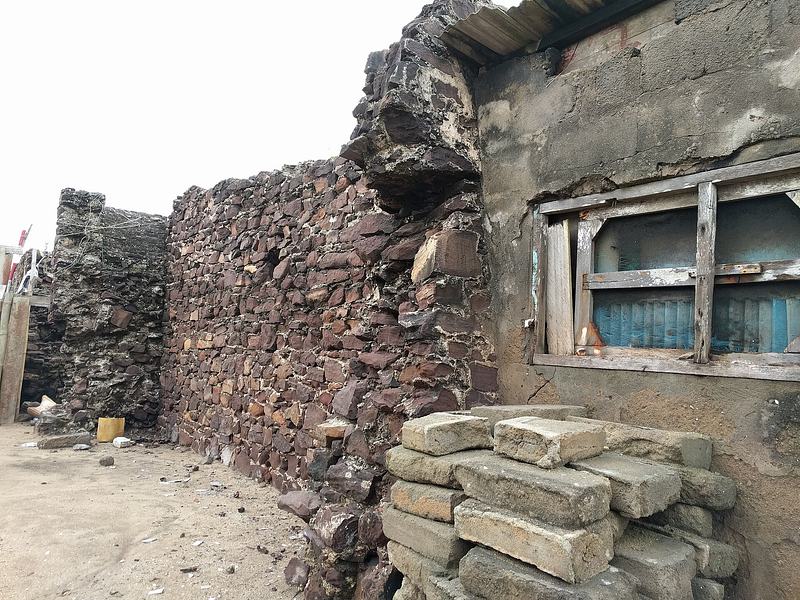
2.Cross to Fort Vredenburg at Dutch Komenda
Fort Vredenburgh was built by the Dutch in 1682 on the left bank of the Komenda River, on a site where they had kept a trading post around 1600. It was extended in 1689, and its influence waned after the Dutch offended the merchant John Cabess by driving out the French. It survives as ruins with visible structures, and is part of the same UNESCO World Heritage property as the British fort. A concrete bridge links British Komenda and Dutch Komenda, so you can walk between the two.
Tip: Visit both forts in one outing and in the morning, while the light is soft and the heat is manageable.
-
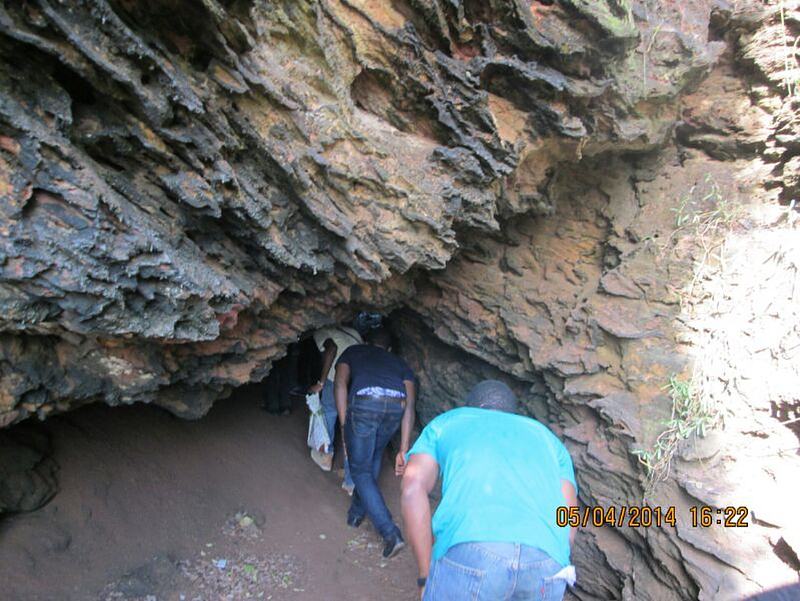
3.Find the Komenda Sea Cave
West of Komenda town, the sea has carved a group of erosional features into the sandstone, and the sea cave is the most distinctive: a small tunnel open at both ends, with a floor of about 200 square metres, its mouth opening west at beach level and running northeast parallel to the shore. Rock debris narrows the corridor and the low ceiling limits the usable floor, which is part of its character. It is a short, strange, memorable stop on the same stretch of coast as the forts.
Tip: Go with a local guide who knows the tide and the footing; the cave is reached by stairs down from the Komenda College premises.
-
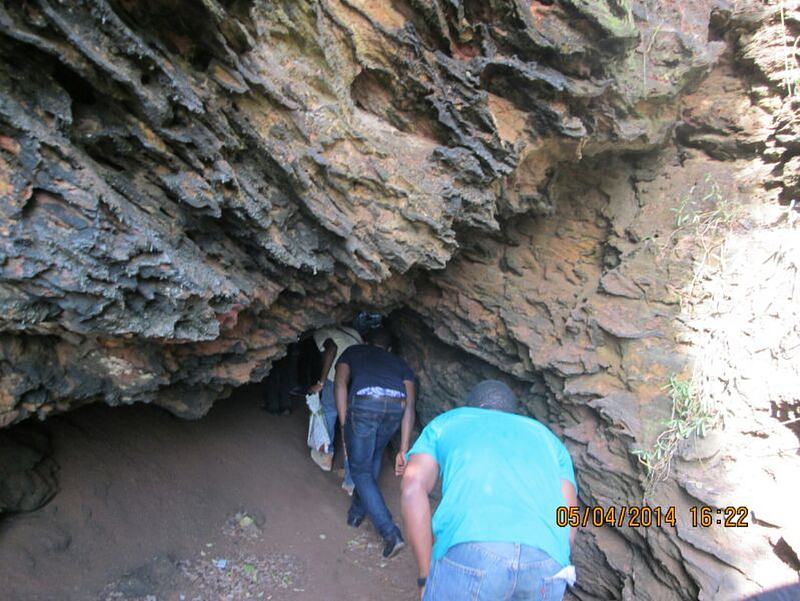
4.Spend time on Komenda Beach
Komenda's beach is a Gulf of Guinea shoreline best known for the sea cave a few metres from the Komenda College of Education. The college sits on high ground above the coast, and the bay below it forms a wide sweep that has long been admired. It is a working coast rather than a resort: expect fishing activity, local life and a lot of space, with the sandstone formations giving the shoreline its particular shape.
Tip: There are no resort facilities to rely on, so bring water and shade, and take your litter away with you.
-
Attraction
5.Shop and eat at Komenda Market
Komenda Market is one of the market centres of the Komenda/Edina/Eguafo/Abirem Municipal District, and it is where the town's daily life is most visible — produce, provisions and the ordinary commerce of a coastal community. It is a good counterweight to the ruins: after a morning among colonial fortifications, an hour here puts you back in the present-tense Ghana that the history belongs to.
Tip: Ask before photographing people or stalls, and greet traders before you start looking — it goes a long way.
-
Attraction
6.See the Komenda Sugar Factory from outside
The Komenda Sugar Factory was established in 1964 and its operations halted in the early 1990s. Revived with a $35 million developmental grant from the Indian government and inaugurated in 2016, it has remained largely dormant since, and in 2026 the Trade Minister told Parliament it had been disconnected from power and water over unpaid bills. It is a landmark of industrial heritage and a sobering companion piece to the forts: another grand coastal project that did not deliver what was promised.
Tip: This is a dormant industrial site, not a visitor attraction — view it from outside and do not attempt to enter the plant.


Plan your time
Suggested itinerary
Half a day: the forts and the river
Start early at Fort Komenda on the British side, walking the ruined bastions while the light is still low. Cross the concrete bridge to Dutch Komenda and spend an hour at Fort Vredenburg, looking back across the river to see how close the two forts stood. Finish with a slow walk through Komenda Market before the heat builds. This is the essential Komenda visit: two rival forts, one river, and the whole argument of the Komenda Wars made visible in a few hundred metres.
English Fort Komenda→Fort Vredenburg→Komenda Market
One day: forts, cave and beach
Give the morning to the forts as above, then take the stairs down from the Komenda College premises to the shore. Walk west along the beach to the Komenda Sea Cave and spend time at the sandstone formations and the water's edge. Eat and rest in town in the early afternoon, then return to the beach for the cooler hours. If you have time and interest, drive past the Komenda Sugar Factory on the way out for a look at the town's twentieth-century industrial story.
English Fort Komenda→Fort Vredenburg→Komenda Sea Cave→Komenda Beach→Komenda Market→Komenda Sugar Factory
Two days: Komenda and the wider district
Day one: the forts, the market, the cave and the beach, at an unhurried pace. Day two: use Komenda as a base for the wider Komenda/Edina/Eguafo/Abirem Municipal District, whose capital is Elmina and which holds a cluster of forts and castles along the same coast. The district's history runs continuously from the fifteenth-century European arrival to the present, and Komenda is the quieter, less-visited end of it — a good place to start before the busier sites to the east.
English Fort Komenda→Fort Vredenburg→Komenda Sea Cave→Komenda Beach→Komenda Market
Seasons and festivals
When to go
Komenda sits on Ghana's Gulf of Guinea coast in the Central Region, and the practical rhythm of a visit is set by the coast itself: mornings are cooler and better for walking ruins and beaches, and the middle of the day is best spent in town or in shade. The forts are open-air ruins with no shelter, so plan around the heat rather than around a timetable. Because the sites are not heavily visited, you will often have them largely to yourself, which is part of their value — and part of why you should ask locally about access rather than assuming fixed opening arrangements.
- Bakatue · Annual, in the Elmina area
- The Komenda/Edina/Eguafo/Abirem Municipal District, whose capital is Elmina, is associated with cultural festivals including Bakatue, the fishing festival of the Edina (Elmina) people. If your visit coincides with a festival in the district, it is worth planning around — but confirm dates and details locally, as arrangements vary from year to year.
Access
Getting there and around
Komenda lies on Ghana's central coast in the Central Region, west of Elmina and Cape Coast, and is easily reached as a detour if you are travelling the coastal road. The district's administrative capital is Elmina, which is the natural base for the area and is itself a major heritage destination. Within Komenda, a concrete bridge links British Komenda and Dutch Komenda, so the two fort sites are walkable from each other. The beach and the sea cave are reached by stairs leading down from the Komenda College premises to the shore. There are no published itineraries that include Komenda — it is a detour, and detours do not sell — so the practical approach is to travel the coastal road with a driver and ask to add Komenda, or to base yourself in Elmina and arrange a local guide in the town. Ask in Komenda about access to the forts; someone will have the key or know who does.
Good to know
Before you go
Komenda's forts are ruins in the custody of the Ghana Museums and Monuments Board, and they are not staffed like the great castles. Ask in the town about access, and expect that a small payment to whoever opens up is customary. Wear proper shoes and watch your footing among the walls; do not climb on anything unstable. Treat the sites with the gravity they deserve: this was a place where people were held before being shipped across the Atlantic, and the trade here was run by European companies and African merchants together. Ask before photographing people, stalls or ceremonies, and greet before you look. Take water and sun protection, carry your litter out, and remember that Komenda is a working town, not a stage set — the market, the college and the fishing are the life of the place, and the ruins are only part of it.
FAQ
Questions travellers ask about Komenda
Where is Komenda in Ghana?
Komenda is a town on Ghana's central coast in the Komenda/Edina/Eguafo/Abirem Municipal District of the Central Region, west of Elmina and Cape Coast. It sits on the Komenda River, with British Komenda and Dutch Komenda linked by a concrete bridge.
Why are there two forts at Komenda?
The British and the Dutch each built a fort here in 1682, within cannon-shot of each other, because both wanted control of the same trade in gold, ivory and enslaved people. The rivalry produced the Komenda Wars of 1694 to 1700, fought by the Dutch West India Company and the English Royal African Company alongside their African allies.
Are the Komenda forts UNESCO World Heritage Sites?
Yes. Both the English Fort at British Komenda and Fort Vredenburg at Dutch Komenda form part of the serial World Heritage property 'Forts and Castles, Volta, Greater Accra, Central and Western Regions', inscribed in 1979. The English fort is listed among the forts partially in ruins, and Fort Vredenburg among the ruins with visible structures.
Can you visit the Komenda Sea Cave?
Yes. The cave lies west of Komenda town near the shoreline, reached by stairs leading down from the Komenda College premises to the beach. It is a small tunnel open at both ends with a floor of roughly 200 square metres, and it is best visited with a local guide who knows the tide and the footing.
Who was John Cabess?
John Cabess was a prominent African trader in Komenda, part of the Eguafo Kingdom, who became a major ally of the British and a supplier to the Royal African Company. He played an active role in the Komenda Wars and became one of the most powerful merchants on the coast; the historian Kwame Daaku named him one of the 'merchant princes' of the Gold Coast.
Is the Komenda Sugar Factory open to visitors?
No. The factory was established in 1964, halted operations in the early 1990s, and after a 2016 revival has remained largely dormant; in 2026 the Trade Minister told Parliament it had been disconnected from power and water over unpaid bills. It is a landmark of industrial heritage rather than a visitor attraction, so view it from outside.
How do you get to Komenda?
Komenda is easily reached as a detour on the coastal road west of Elmina and Cape Coast, and Elmina — the district capital — is the natural base. There are no published itineraries that include Komenda, so the usual approach is to travel the coastal road with a driver and ask to add it, or to arrange a local guide in the town.
Keep exploring
More destination guides
Sources for this guide (11)
- Fort Komenda — Wikipedia
- Fort Vredenburgh — Wikipedia
- Komenda Wars — Wikipedia
- John Cabess — Wikipedia
- Komenda Sugar Factory — Wikipedia
- Komenda, Ghana — Wikipedia
- Komenda/Edina/Eguafo/Abirem Municipal District — Wikipedia
- Forts and Castles, Volta, Greater Accra, Central and Western Regions — UNESCO World Heritage Centre
- Fort Komenda: Two Forts, One Beach, and Wars Africans Decided — Cape Coast Castle Museum
- Fort Vredenburgh: A Dutch fortress and the turbulent history of Komenda — GhanaRemembers
- Komenda Cave — Yural Tours
Written September 29, 2026 from these sources and reviewed by the VisitGhana.app team. Confirm practical details locally before travelling.