
A trading town before the fort
Anomabo did not begin with Europeans. Oral tradition says a hunter of the Nsona clan found the place, saw white birds on a rock by the sea, and named it Obo noma — "bird's rock" — which in time became Anomabu. By the late seventeenth century it had grown from a fishing village into a prosperous Fante merchant town, trading gold and grain and, increasingly, enslaved people. The art historian Courtnay Micots records that it became the largest city on the coast, with a population of some 15,000 by 1806.
Europeans came to an existing market, not an empty shore. The Dutch built a lodge in the 1640s; the English began Fort Charles in 1672 and abandoned it in 1730; the French moved in for a time. When the British returned in 1753 to build the fort that still stands, they were reasserting a commercial position that depended on Fante merchants, brokers, supplies and permission. The fort was European; the trading town around it was African, and the system needed both.

Fort William and the slave trade
In 1753 the British Parliament voted large sums for a new trading fort at Anomabu, built on "an eroded shelf of hard rock close to a sandy beach indentation with a sheltered anchorage". The engineer John Apperley designed it and became its first governor; after his death in 1756, Richard Brew took over and completed the work. It was renamed Fort William in the nineteenth century by its commander Brodie Cruickshank, who added a storey and honoured King William IV.
The fort became the centre of British slave trading on the Gold Coast until abolition in 1807. The scale is hard to hold: the Ghana Museums and Monuments Board cites an English captain's report that between January 1702 and August 1708, at least 30,141 enslaved people were taken from Anomabo to Barbados and Jamaica — a figure that excludes other ships and destinations, so it is a fragment of a larger, incompletely recorded trade. Anomabo was also a haunt of independent traders known as "ten percenters", who paid for access to the Royal African Company's monopoly and exported vast numbers of captives.
This is not a story of passive victims or of Europeans alone. Fante political authorities and merchants negotiated the terms of trade, and some participated directly in it; others resisted, and many were themselves caught in the wars and raids that produced captives. The fort's own history shows how entangled trade and violence became: in 1806 it was besieged by Asante forces and capitulated the following day, and the town suffered terribly. Fort William later served as a rest house, a post office and a state prison before becoming a community library.

Asafo companies and the art of the town
Anomabo's most distinctive art is not in a museum. The town has seven posuban — cement shrines built for its Asafo companies, the historic military and civic organisations of Fante towns. Micots describes posuban as both sculpture and architecture, often richly painted and covered with figures, sometimes three storeys high, serving as religious, political and community centres. Their imagery deliberately borrows the symbols of power it observes: European forts, naval vessels, arches.
The artist Kwamina Amoaku (1898–1987), born in Anomabo, built three of them — Etsiwa No. 2, Dontsin No. 3 in 1948, and Akomfodzi No. 7 in 1977. The Dontsin No. 3 shrine was rebuilt in 1966. Elsewhere in town, the painter and healer Mark E. Adiou covered a building called Holy Land with images blending Christian, Fante and Indian religious iconography. This is a living visual culture, not a fossil, and it rewards a slow walk with a local guide.

The shore, the festival and the return
Fishing still shapes the day. Anomabo is a smaller fishing settlement than Elmina, with several small landing sites, and the beach is where boats are pushed out before dawn and where the catch is traded afterwards. Women dominate the fish trade even though they do not go to sea; by 2002, according to research cited on Wikipedia, women owned around 38 per cent of the town's canoes, and ownership brings status as well as income.
In October the town holds the week-long Okyir festival, whose name means "abomination" and which serves as a reminder of society's social vices. Anomabo also has a place in Ghana's recent story of return. Beside the fort, a Heroes Garden with statues of figures including Kwegyir Aggrey, Ekem Ferguson and Nana Amonoo I was redeveloped for the Year of Return, Ghana 2019, and reopened as the Memorial Garden of Return, with added symbolic statues of people of the African diaspora coming home.

What to do
Things to do in Anomabo
-
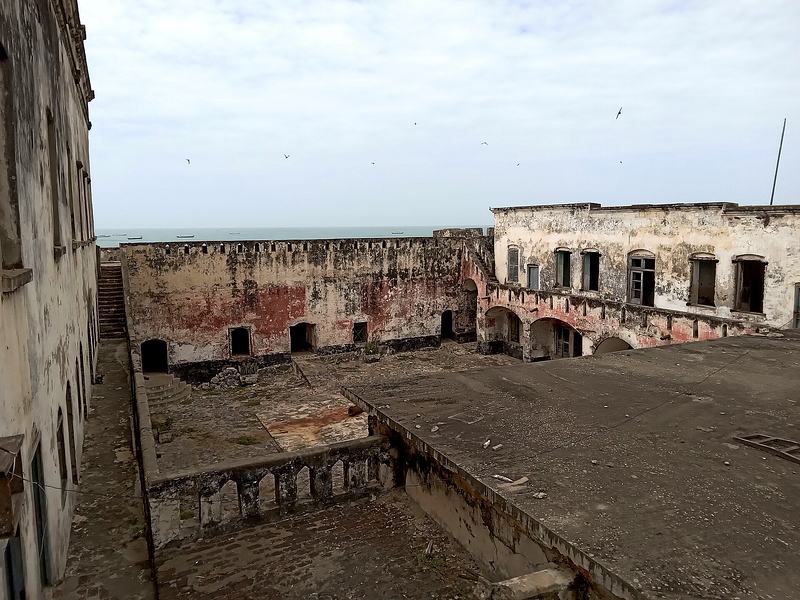
1.Fort William
The reason most travellers come. Built from 1753 on a rock shelf above a sheltered anchorage, Fort William is almost square with bastions at each corner, and was constructed largely with local materials. Its history is heavy: it became the centre of British slave trading on the Gold Coast, and the Board notes that nowhere else does a fort's original structure include a large prison built specifically to hold enslaved people awaiting shipment. It later served as a prison and is now a community library.
Tip: The fort is in the custody of the Ghana Museums and Monuments Board and has served as a library, so opening arrangements can vary — check locally in Anomabo before making it the centrepiece of a tight schedule.
-
Attraction
2.Memorial Garden of Return / Anomabo Heroes Centre
Beside the fort, this garden and tourist centre was redeveloped as the Memorial Garden of Return for the Year of Return, Ghana 2019. Before the refurbishment it held portrait statues of Kwegyir Aggrey, Ekem Ferguson and Nana Amonoo I of Anomabo; symbolic statues of people of the African diaspora returning "home" were added. The adjoining centre was intended as an information point and a welcoming place for visitors. It is a quiet, reflective counterpoint to the fort next door.
Tip: Read the statues as a set: the local figures and the returning diaspora figures were placed together deliberately, and the pairing is the point of the garden.
-
Attraction
3.Dontsin No. 3 Company Posuban Shrine
One of seven Asafo posuban in Anomabo, this cement shrine for the Dontsin No. 3 company was outdoored in 1948 and rebuilt in 1966, and is attributed to the Anomabo-born artist Kwamina Amoaku. Posuban are simultaneously sculpture and architecture, often brightly painted and crowded with proverbial figures, and they still function as religious, political and community centres for the Asafo companies. Look for the borrowed power motifs — forts, ships, arches — that Fante artists made their own.
Tip: These are active shrines, not exhibits. Ask before photographing, dress modestly, and if a company elder is present, greet them before you look around.
-
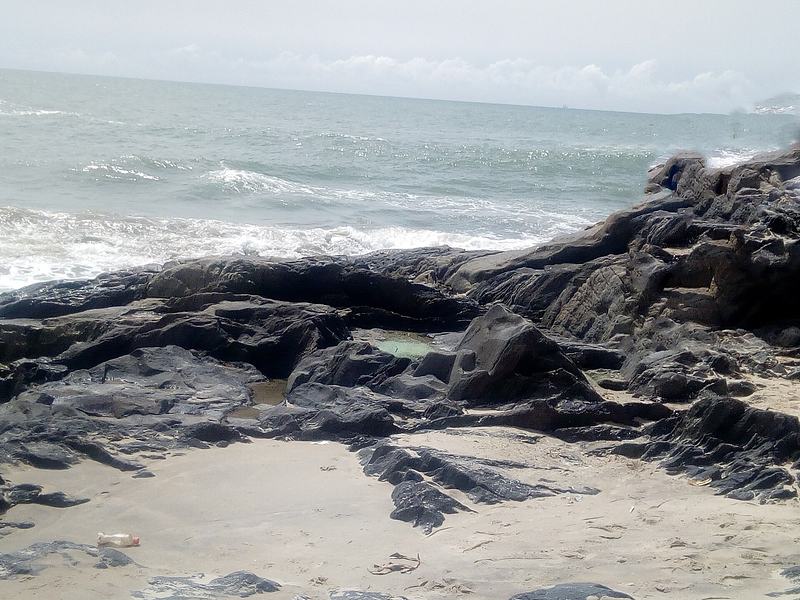
4.Anomabo Beach and the fishing landing sites
A wide Atlantic beach with a working life of its own. Anomabo is a smaller fishing settlement than Elmina, with several small landing sites, and the rhythm of the day is set by the canoes: out before dawn, back by mid-morning, then the sand becomes a fish market. It is a good place to sit and watch rather than to swim, and the light in the late afternoon, with boats drawn up along the shore, is the town at its most itself.
Tip: Come in the morning for the landings and the market. Sea conditions on this stretch of coast can be rough, so treat swimming with caution and follow local advice.
-
5.Walk the old town for its merchant architecture
Anomabo was once the largest trading town on the coast, and its buildings still carry that history. Micots describes ruined buildings reused as schools and hostels, and a townscape shaped by long contact — Fante houses, European-influenced merchant mansions, and the shrines of the Asafo companies. A slow walk through the streets around the fort, with someone who knows the town, turns a scatter of old walls into a readable account of a cosmopolitan port.
Tip: Hire a local guide through your accommodation or the tourist centre; the architecture is easy to walk past without knowing what you are looking at.
-
6.See the Little Fort (Castle Brew) from outside
The Ghana Museums and Monuments Board lists "The Little Fort at Anomabu" among its protected monuments, describing it only as preserved as a ruin. Research by the art historian Courtnay Micots identifies it as Castle Brew, the two-storey house built in the early 1760s by the Irish slave trader Richard Brew, known in Fante as aban kakraba, the little fort. It stands about fifty yards from the north-western corner of Fort William, and its courtyard and warehouses are thought to have held captives.
Tip: This is private family property, not a museum. Look from outside, ask before photographing anyone, and do not enter without permission.


Plan your time
Suggested itinerary
Half a day
Start at Fort William while the morning is still cool, and give the building and its history proper time rather than treating it as a photo stop. Walk the few steps to the Memorial Garden of Return and sit with the statues for a while. Then head down to the beach for the late-morning landings, when the canoes come in and the sand turns into a fish market. If you have energy left, ask locally for the Dontsin No. 3 posuban and see one of the town's Asafo shrines before you leave.
Fort William (Anomabu)→Memorial Garden of Return / Anomabo Heroes Centre→Anomabo Beach→Dontsin No.3 Company Posuban Shrine (Anomabo)
One day
Begin at Fort William, then the Memorial Garden of Return. Take a guided walk through the old town to read its merchant architecture and ruined buildings, stopping at the Dontsin No. 3 posuban shrine. Break for lunch, then spend the afternoon on Anomabo Beach as the boats return and the market winds down. Finish by looking for Castle Brew, the Little Fort, from the outside near the fort's north-western corner — a reminder that the trade here was run by private traders as well as companies.
Fort William (Anomabu)→Memorial Garden of Return / Anomabo Heroes Centre→Dontsin No.3 Company Posuban Shrine (Anomabo)→Anomabo Beach
Two days
Day one: Fort William, the Memorial Garden of Return, the old-town walk and the posuban shrines, with the beach at the end of the afternoon. Day two: return to the beach early for the dawn departures and the landings, then use Anomabo as a base for the wider coast — Cape Coast Castle and Elmina are both within easy reach on the same road, and the town's position about 12 km east of Cape Coast makes it a quieter place to come back to at the end of the day.
Anomabo Beach→Fort William (Anomabu)→Memorial Garden of Return / Anomabo Heroes Centre→Dontsin No.3 Company Posuban Shrine (Anomabo)


Seasons and festivals
When to go
Anomabo sits on Ghana's Atlantic coast in the Central Region, and its calendar is shaped by the fishing year and by two festivals. The town's own Okyir festival is a week-long celebration held in October, described as a reminder of society's social vices. The Akwambo festival, which literally means "path-clearing", is celebrated in August by the people of the Agona and Gomoa districts of the Central Region and commemorates the journey and arrival of the founding settlers of four towns; it is a week-long affair with ritual path clearing, libation at ancestral shrines, drumming, dancing and a durbar. If you want the town at its most active, plan around these dates; otherwise the beach and the fort are there year-round, and the morning landings are the most reliable spectacle of all.
- Okyir Festival · October, over about a week
- Anomabo's own annual festival, held in October. The name means "abomination", and the people celebrate it as a reminder of society's social vices. It is a week-long event led by the chiefs and people of the town.
- Akwambo Festival · August
- Celebrated by the people of the Agona and Gomoa districts of the Central Region, Akwambo means "path-clearing" and commemorates the journey and arrival of the founding settlers of Gyinankoma, Ekrawfo, Atakwaa and Otabenadze. The week includes ritual clearing of paths to farms, rivers and shrines, libation by the chief, processions with drumming and musketry, and a durbar.
Access
Getting there and around
Anomabo lies on the main Cape Coast–Accra road, roughly 12 km east of Cape Coast and about 115 km west of Accra, which makes it one of the easiest heritage stops on the coast to reach by road. Any trotro travelling that stretch of the coastal road will stop in the town, and the fort and beach are a short walk from the roadside. Once you are in Anomabo, everything in this guide — the fort, the memorial garden, the beach and the shrines — is within walking distance of the centre, though you will want a local guide to find the posuban shrines and the old merchant buildings tucked among the streets. Anomabo also works well as a base: Cape Coast Castle and Elmina are both along the same road, so you can see the bigger sites and return to a quieter town at the end of the day.
Good to know
Before you go
Anomabo is a living town, not a heritage park, and the sites that matter most here are also places where people work and worship. Dress modestly, especially around the shrines and the fort, and ask before photographing people, shrines or private houses — the Little Fort, in particular, is private family property and should be viewed from outside unless you are invited in. The history you will encounter is painful: Fort William was a centre of the slave trade, and the figures recorded in the archives are people, not statistics. Approach the fort and the memorial garden with the gravity they deserve, and let local guides tell the story in their own words. Bring water and sun protection, wear shoes you do not mind getting sandy, and carry small notes for purchases at the beach market. Finally, be cautious in the sea: this is an exposed Atlantic shore with a working fishing fleet, not a resort beach.
FAQ
Questions travellers ask about Anomabo
Where is Anomabo in Ghana?
Anomabo is a town on the coast of the Mfantsiman Municipal District in Ghana's Central Region, about 12 km east of Cape Coast on the main road to Accra. It sits roughly 115 km west of Accra.
What is Fort William and why does it matter?
Fort William is a British trading fort built from 1753 on a rock shelf above a sheltered anchorage. It became the centre of British slave trading on the Gold Coast until the trade was outlawed in 1807, and it is now in the custody of the Ghana Museums and Monuments Board.
Is Anomabo worth visiting compared with Cape Coast or Elmina?
Yes, if you want the history without the crowds. Anomabo is a smaller, quieter fishing town with its own fort, a memorial garden, a beach and a remarkable set of Asafo shrines, and it is close enough to Cape Coast and Elmina to combine with them in one trip.
What are the posuban shrines in Anomabo?
Posuban are cement shrines built for Asafo companies, the historic military and civic organisations of Fante towns. Anomabo has seven of them, including the Dontsin No. 3 shrine outdoored in 1948 and rebuilt in 1966, attributed to the artist Kwamina Amoaku.
When is the Okyir festival in Anomabo?
Okyir is a week-long festival held in October. Its name means "abomination", and it is celebrated as a reminder of society's social vices.
Can I swim at Anomabo Beach?
Anomabo Beach is a wide Atlantic beach and a working fishing shore with several small landing sites, rather than a resort beach. Sea conditions can be rough, so treat swimming with caution and follow local advice.
What is the Memorial Garden of Return?
It is a garden and tourist centre beside Fort William, redeveloped as the Memorial Garden of Return for the Year of Return, Ghana 2019. It holds portrait statues of local figures including Kwegyir Aggrey, Ekem Ferguson and Nana Amonoo I, plus symbolic statues of people of the African diaspora returning home.
Keep exploring
More destination guides
Sources for this guide (12)
- Fort William, Anomabu (1753) — Ghana Museums and Monuments Board
- Forts and Castles — Ghana Museums and Monuments Board
- Fort William, Ghana — Wikipedia
- Anomabu — Wikipedia
- Decision 22 COM VII.35 SOC: Forts and Castles of Ghana — UNESCO World Heritage Centre
- Fort William at Anomabo: Ghana's Forgotten Slave Trade Powerhouse — Cape Coast Castle Museum
- Castle Brew: The Little Fort at Anomabu — Ghana-Net
- Art and Architecture of Anomabo, Ghana: A Case Study in Cultural Flow — Courtnay Micots, Athanor XXVII
- History of Anomabu — Asafo Flags
- Akwambo Festival — Visit Ghana
- Year of Return generates $1.9 billion — Graphic Online
- Anomabo Beach Resort
Written September 29, 2026 from these sources and reviewed by the VisitGhana.app team. Confirm practical details locally before travelling.