
A mosque older than most nations
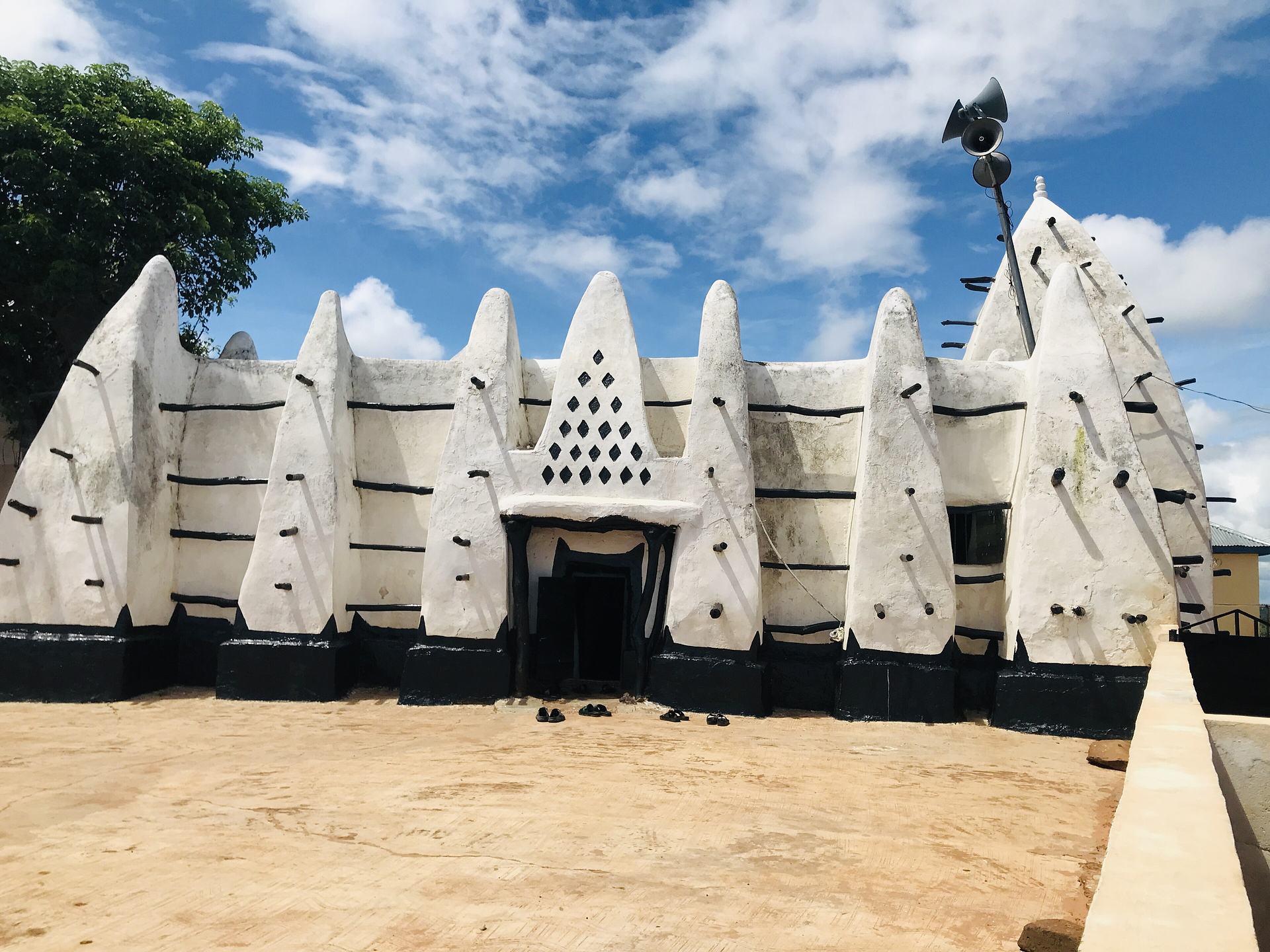
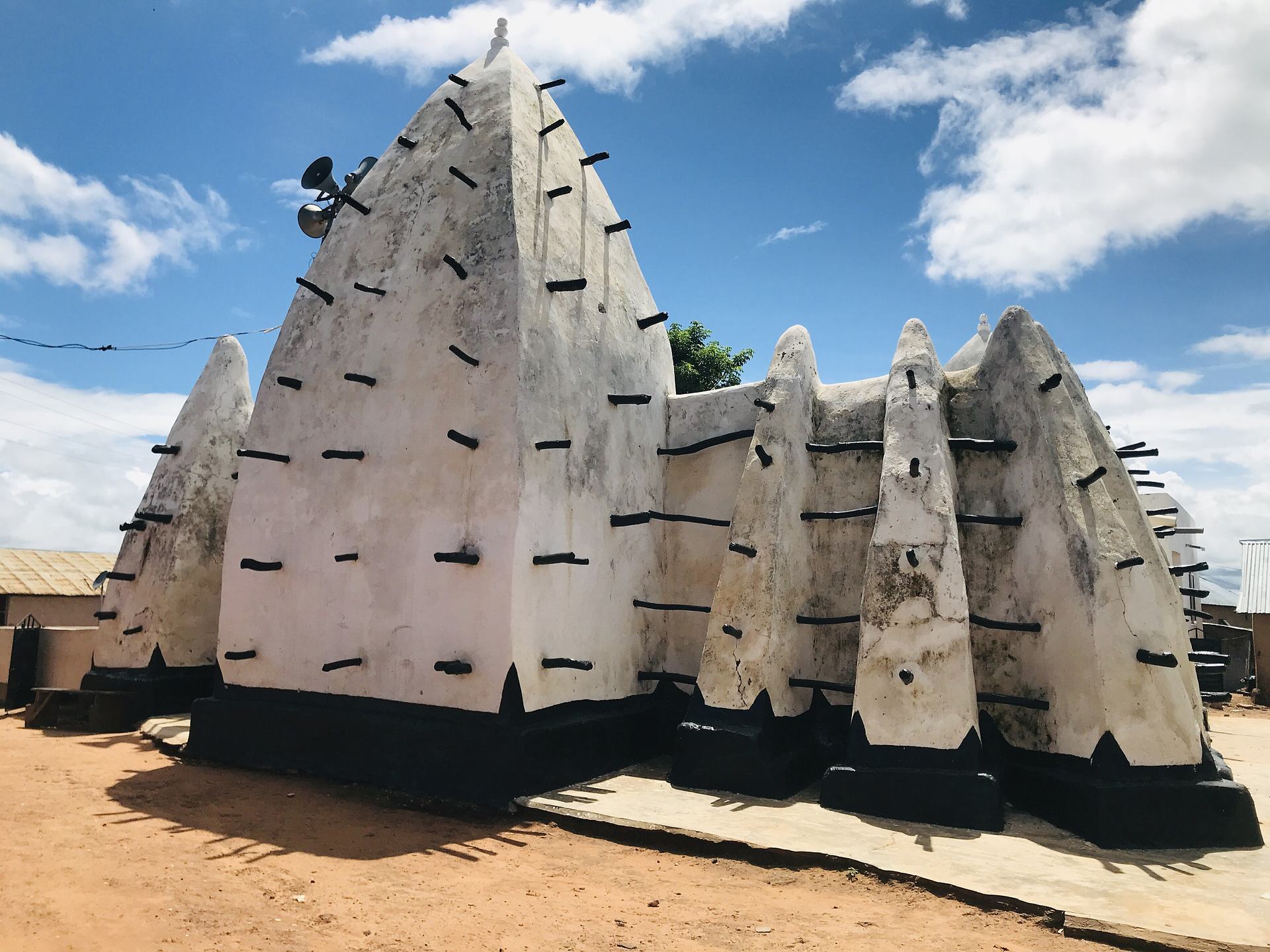
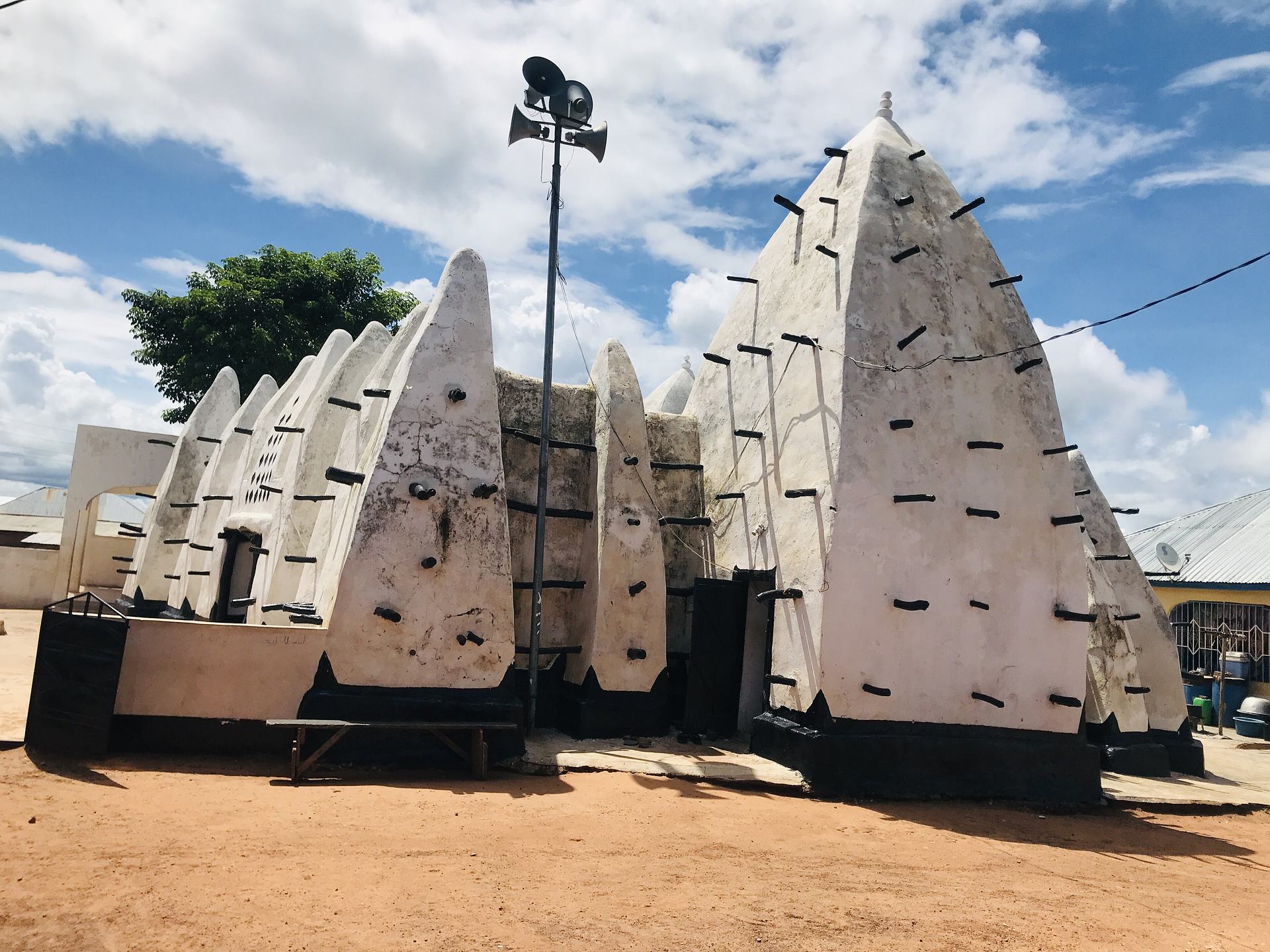
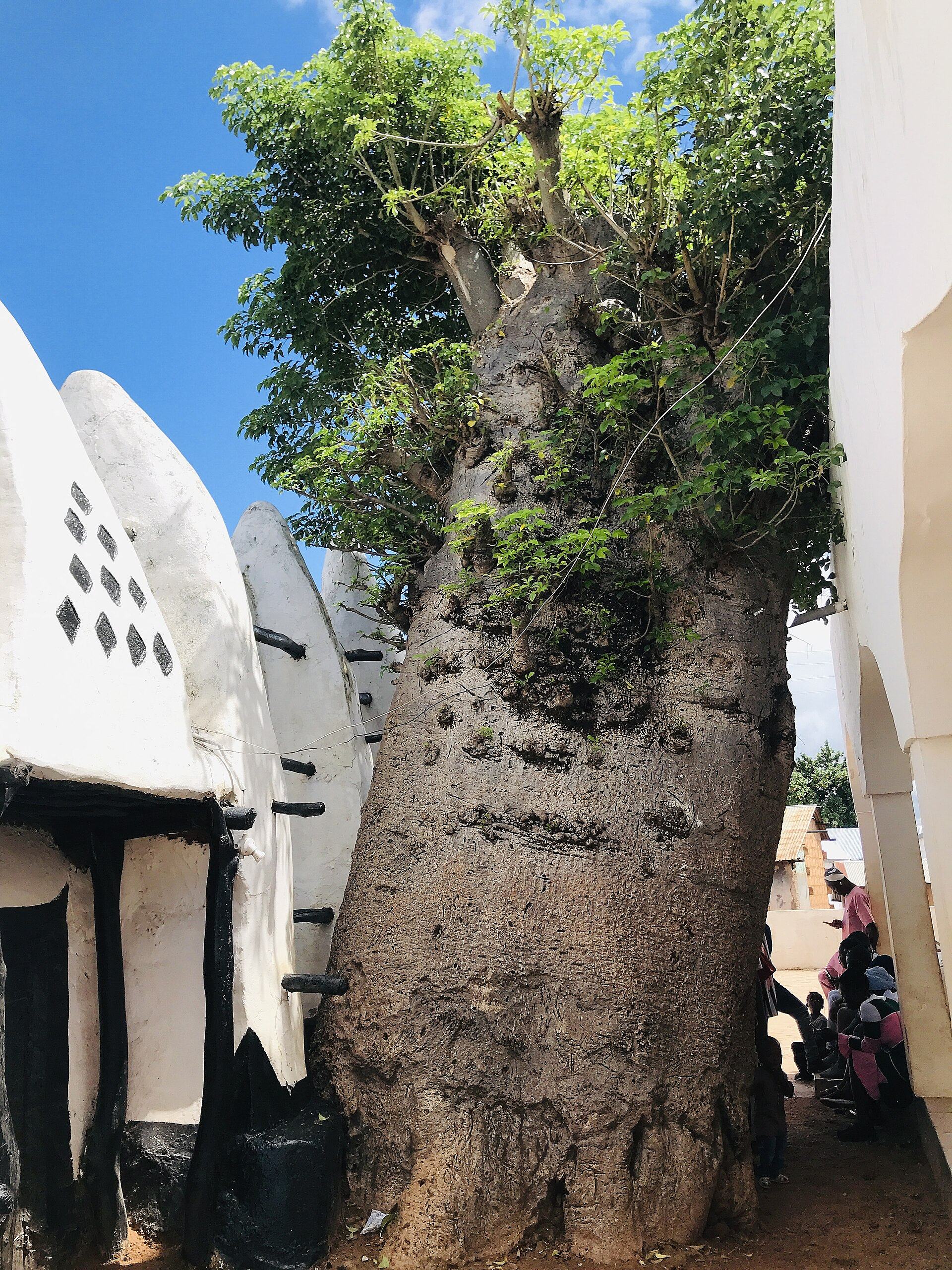
The Larabanga Mosque is built in the Sudano-Sahelian style — sometimes called flat-footed adobe architecture — using wattle and daub, local timber and a whitewash that glows against the dry-season dust. It measures roughly eight metres by eight metres, with two pyramidal towers: one housing the mihrab that faces Mecca, the other a minaret in the north-east corner, both buttressed by twelve conical supports strengthened with horizontal timber beams. Local tradition holds that in 1421 an Islamic trader named Ayuba dreamed, while staying near a mystic stone, that he should build a mosque; he woke to find the foundations already laid. The baobab beside the building is reputed to mark his grave, and townsfolk have long used its leaves and stem for healing. The mosque has been restored many times, most recently in 2023, and the World Monuments Fund has listed it among the world's most endangered sites. A 1970s cement render trapped moisture in the earthen walls and drew termites; a later conservation effort, guided by the Ghana Museums and Monuments Board with earthen-building specialists, stripped the cement back and returned the walls to traditional mud plaster, reviving local knowledge of adobe maintenance along the way. It remains an active place of prayer and pilgrimage, and is often called the Mecca of West Africa.

The stone that would not move
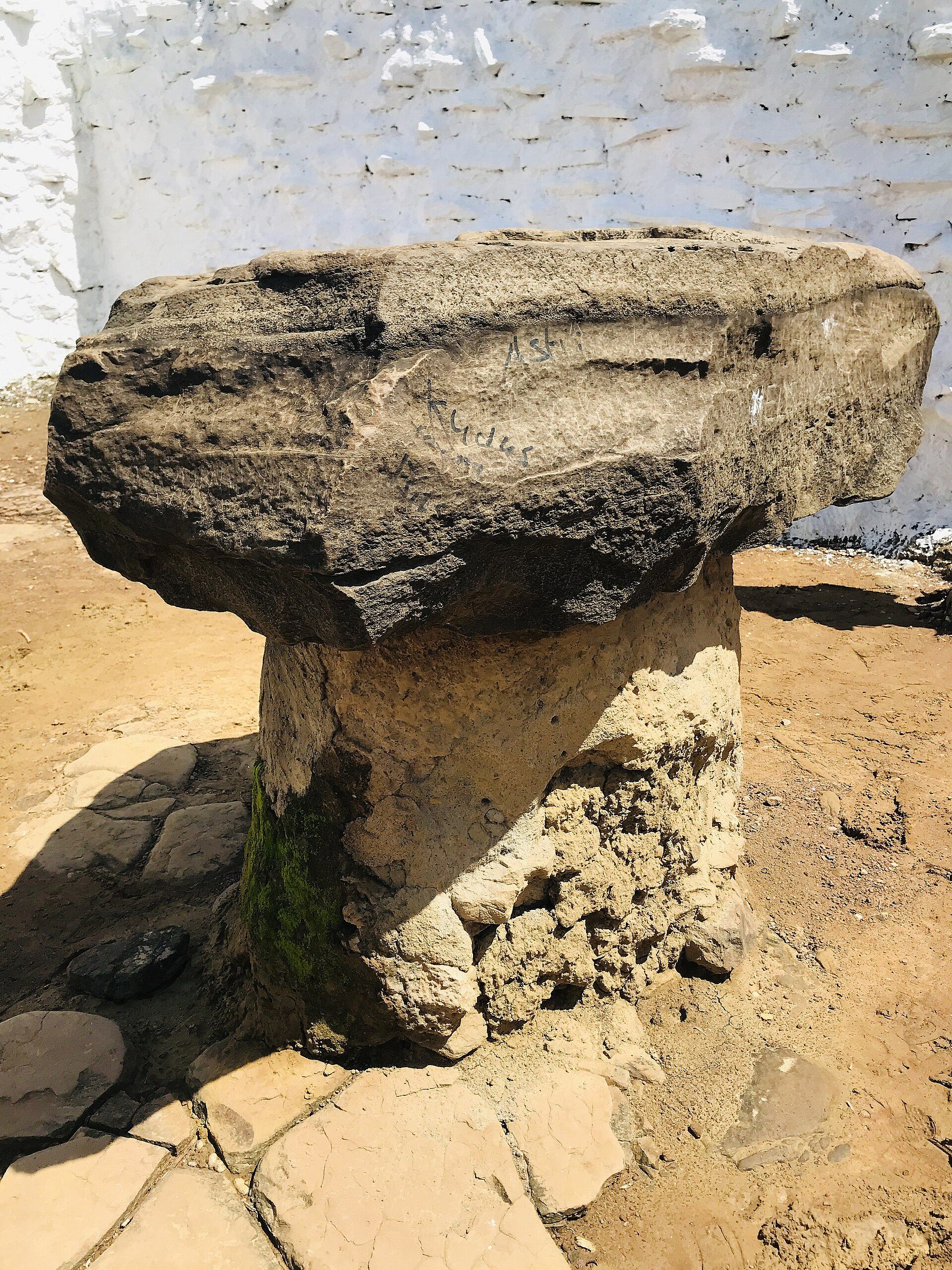
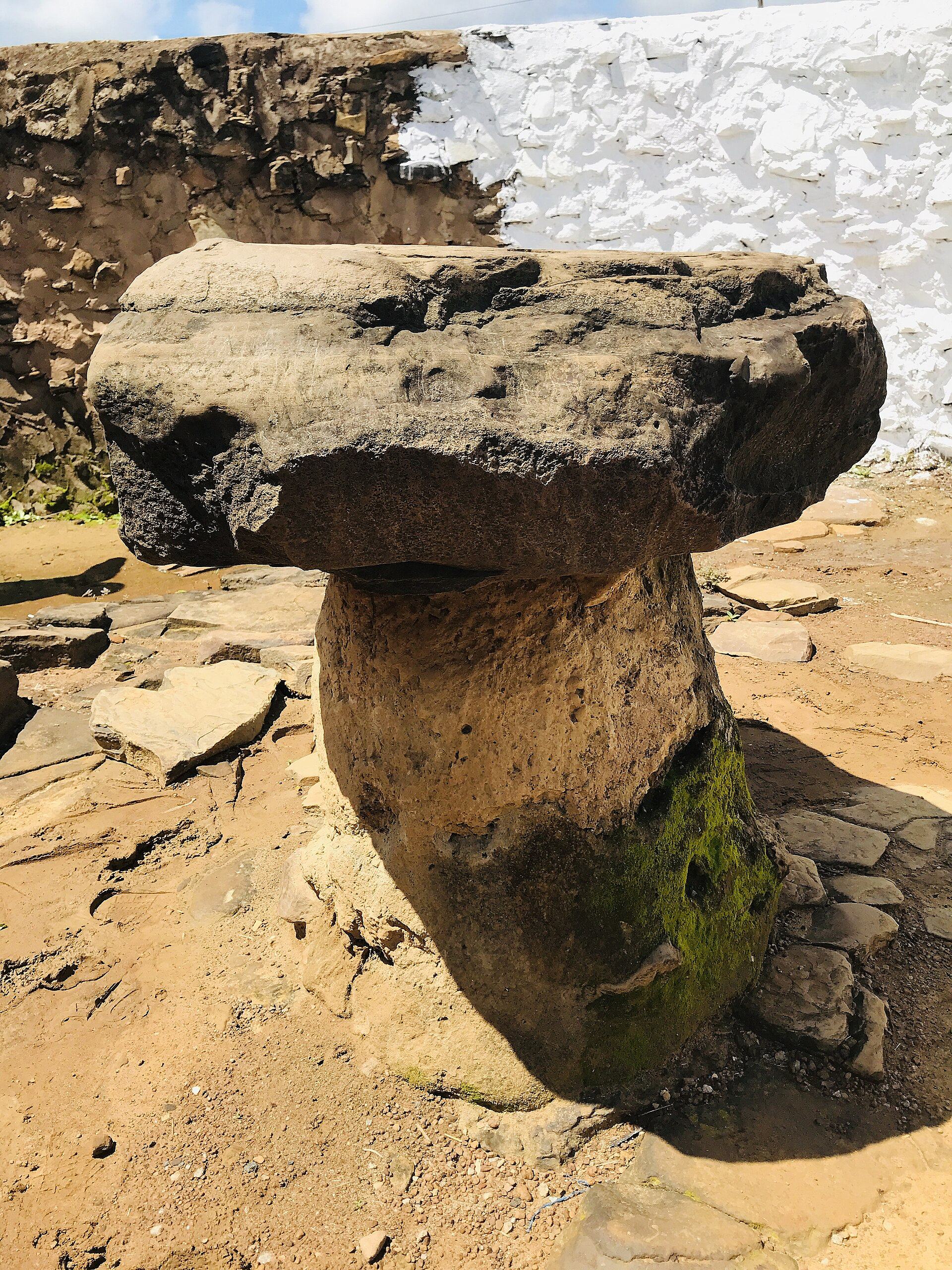
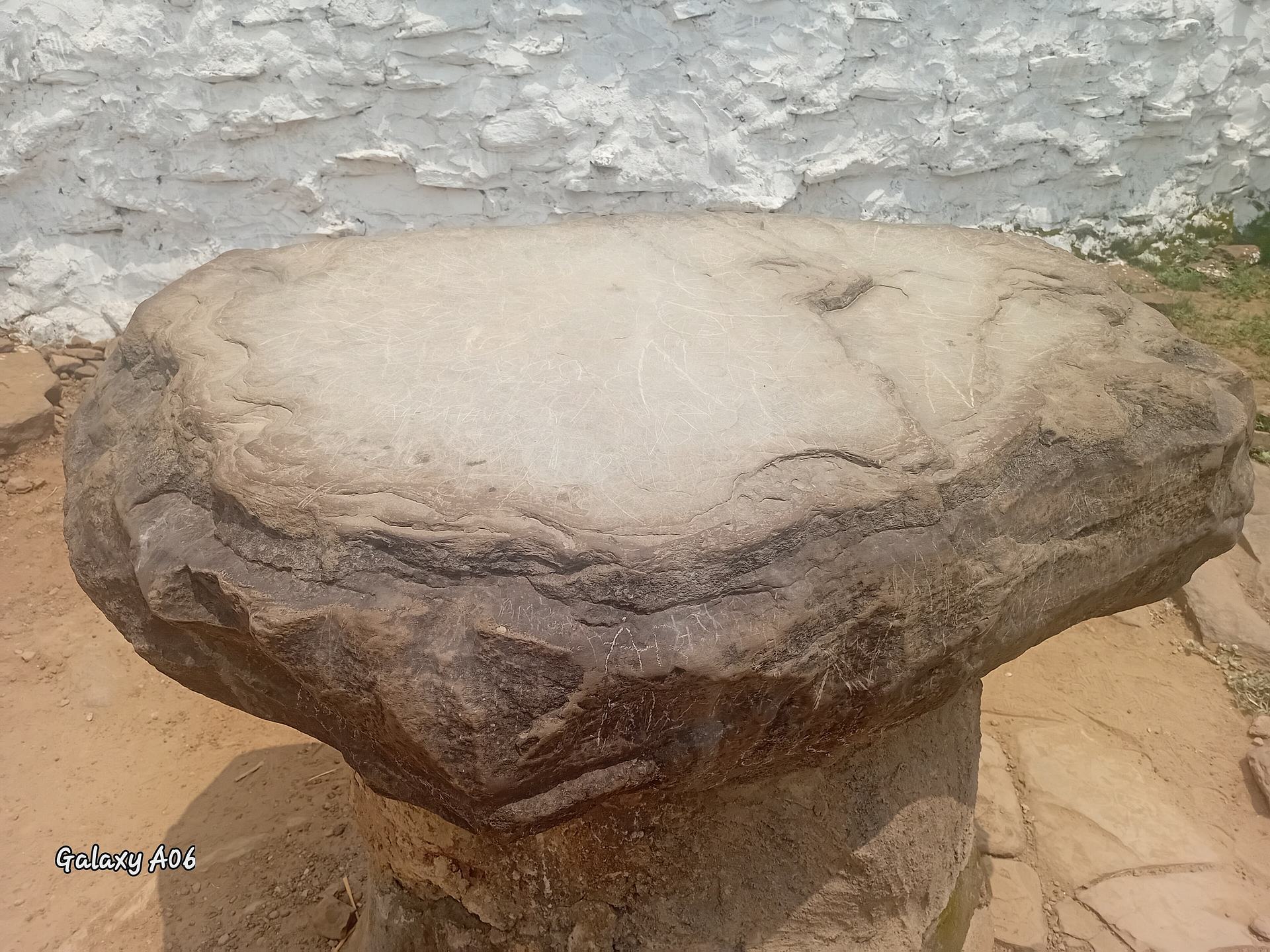
On the outskirts of town, near the mosque, sits the Larabanga Mystic Stone — a boulder that carries as much weight in local memory as the mosque does in architectural history. The story most often told dates to the 1950s, when British road builders laying a route through Larabanga found the stone in their path. They moved it, and by the next morning it had returned to its original resting place. They moved it again, and again, three times in all, before giving up and redirecting the road around it. The stone became known as the Mystic Stone, or Wish Stone, and is now both a site of worship, believed by some to have healing properties, and a community-run tourist site whose guides tell its story and whose fees support the village. It is a short walk from the mosque, and the two are almost always visited together.

Gonja country: people, farms and the park next door
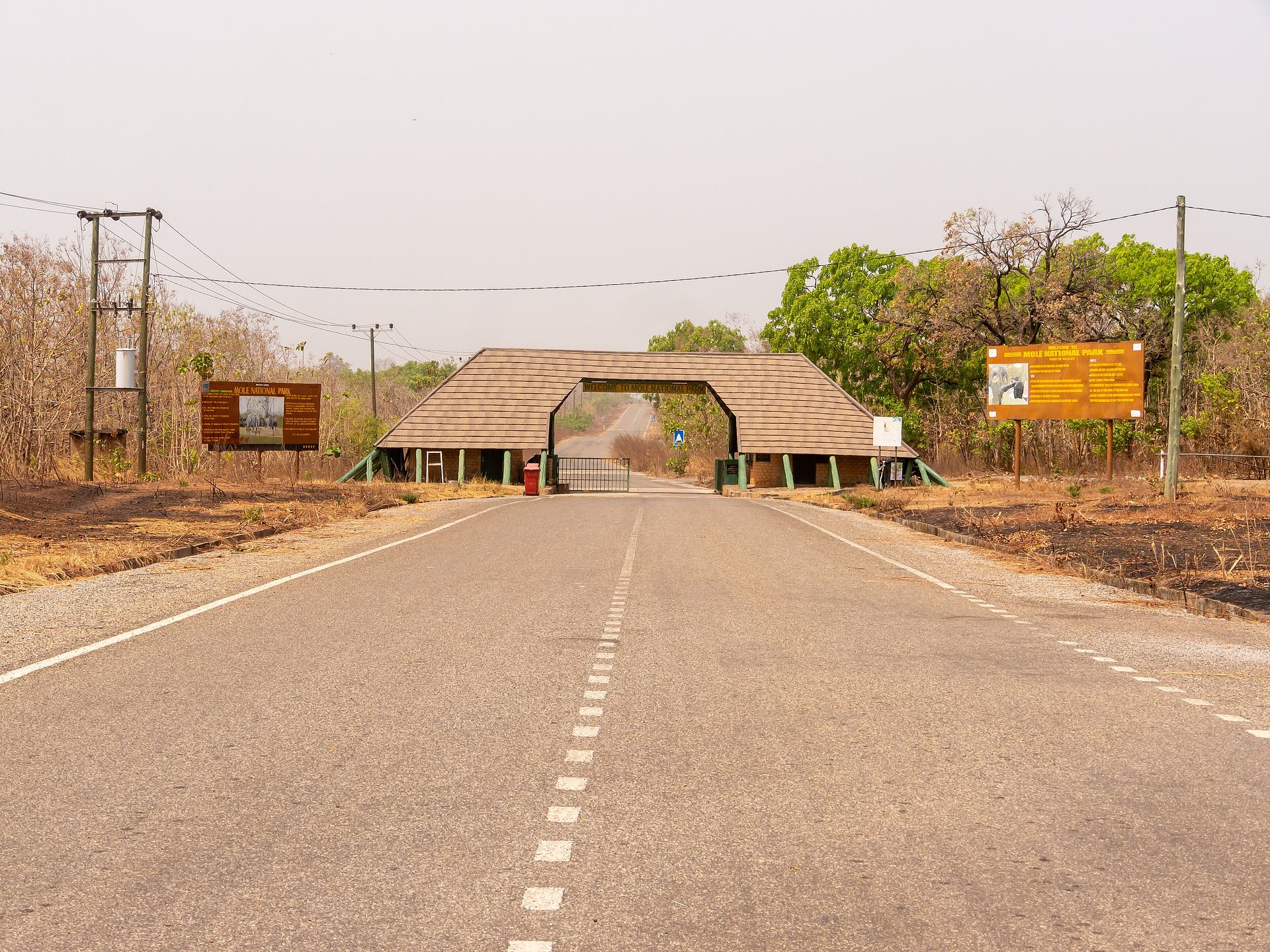
Larabanga lies in West Gonja, one of seven districts in the Savannah Region, with its capital at Damongo about fifteen kilometres to the south. The wider district is rural and agricultural: in the 2010 census, more than half of the employed population worked in fishing, agriculture and forestry, and the great majority of residents were Ghanaian by birth. The town's identity is inseparable from its faith — it is a predominantly Muslim community, and the mosque is woven into daily life rather than set apart from it. Just beyond the town, the land tilts into Mole National Park, Ghana's largest wildlife refuge, established as a reserve in 1958 and covering thousands of square kilometres of Guinea savannah, riparian forest and escarpment. The park's single main entrance lies three kilometres from Larabanga, which is why the town has become the natural base for visitors. On the park's south-eastern edge, the farming village of Mognori — home to the Hanga clan — runs its own eco-village tourism, offering village tours, canoe safaris and cultural performances, with some families hosting overnight guests and, in the dry season, visitors sleeping on the flat roofs of mud houses under the stars.

What to do
Things to do in Larabanga
-
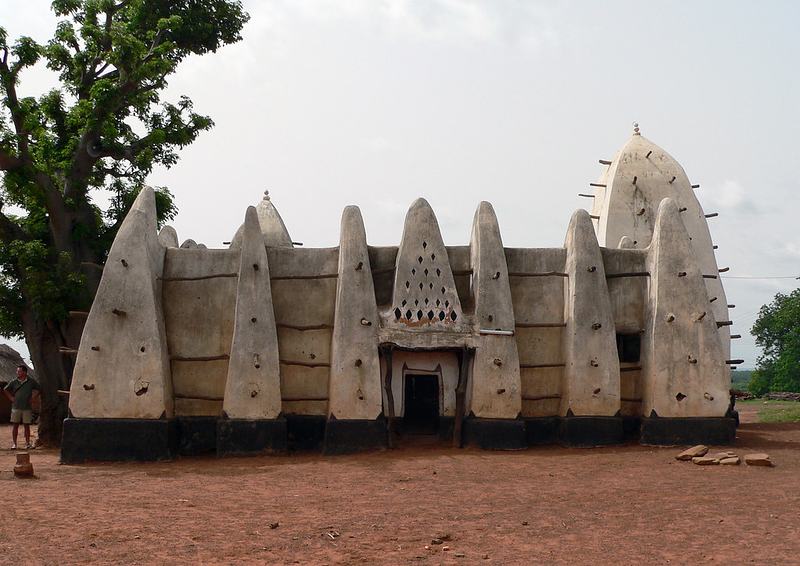
1.Larabanga Mosque
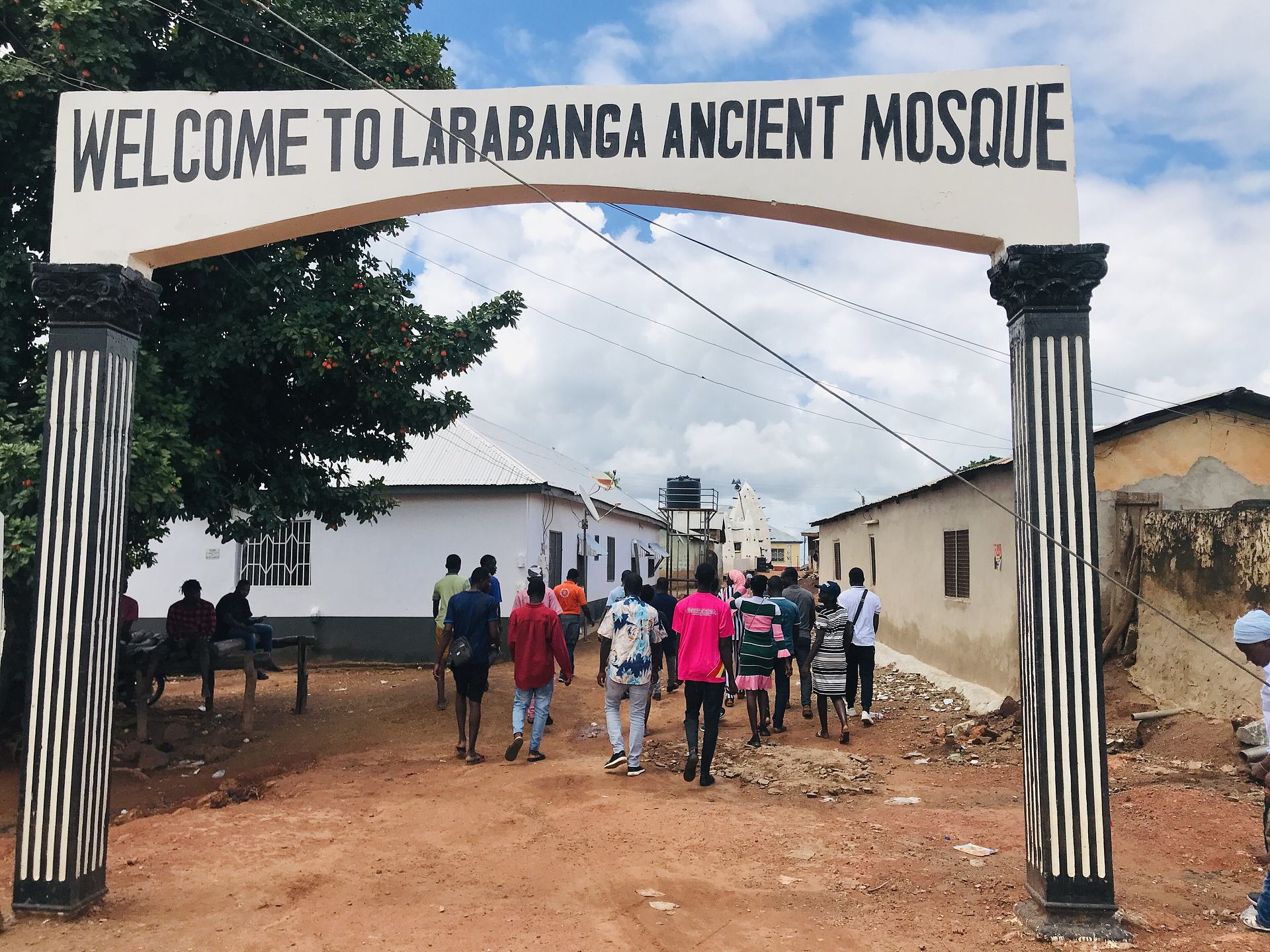
The reason most travellers turn off the highway. Ghana's tourism authority describes this whitewashed Sudano-Sahelian adobe mosque as thought to be the oldest in Ghana and West Africa, and it is still an active place of prayer. Stand in the sandy clearing and take in the two pyramidal towers, the twelve conical buttresses and the timber beams that stitch the earthen walls together. A local guide will walk you through the legend of Ayuba, the baobab said to mark his grave, and the mosque's long record of restoration.
Tip: Non-Muslims are not permitted inside, so plan to admire it from the courtyard; dress modestly, ask before photographing people, and go with a village guide who can explain the etiquette.
-
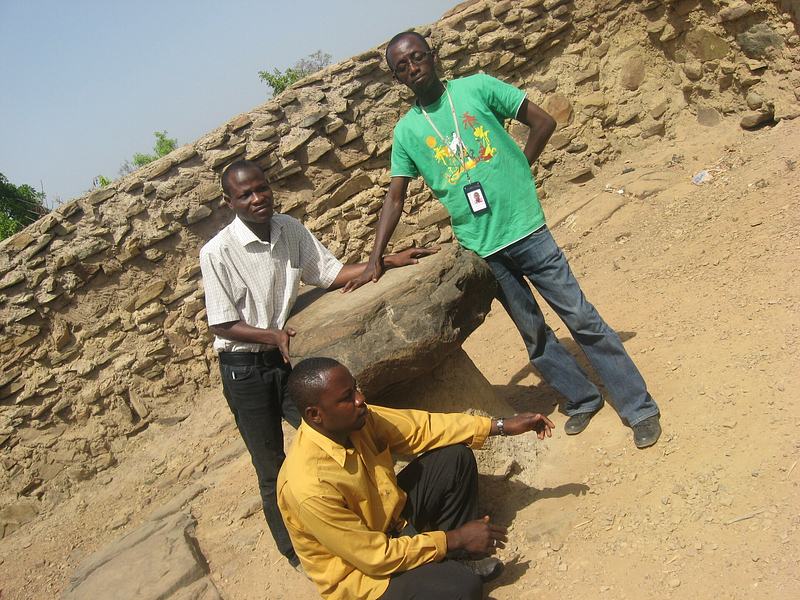
2.Larabanga Mystic Stone
A short walk from the mosque, this sacred boulder is the town's other great story. Legend holds that British road builders in the 1950s shifted it three times, only for it to reappear in its original spot each morning, until they rerouted the road around it. It is now conserved and guided as a community tourist site, and some visitors leave a small offering and make a wish. The walk between mosque and stone is an easy way to see the town's lanes and compounds.
Tip: Combine it with the mosque in a single guided town tour; the two sit close together and a local guide ties the stories together.
-
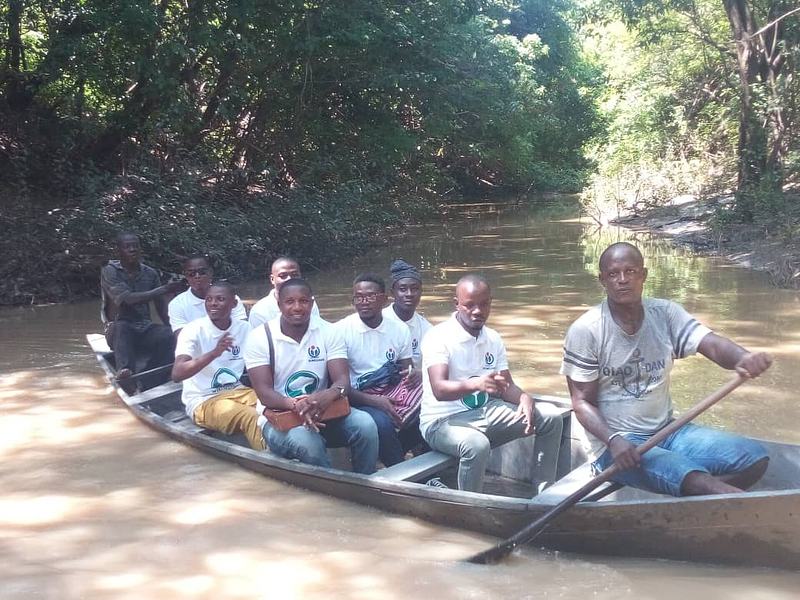
3.Mognori Eco Village
On the south-eastern edge of Mole National Park, this farming village of the Hanga clan runs its own community tourism. Choose a guided village walk, a canoe safari on the river, a shea butter processing demonstration, or a drumming and dance performance. Because the community manages it directly, your visit supports the village rather than an outside operator. Some families offer homestays, and in the dry season you can sleep on the rooftops of mud houses beneath the open sky.
Tip: Arrange the visit through the park's Information Centre or the Larabanga community office so a local guide meets you; add the dance performance or river excursion as an extra to the standard tour.
-
4.Mole National Park safaris
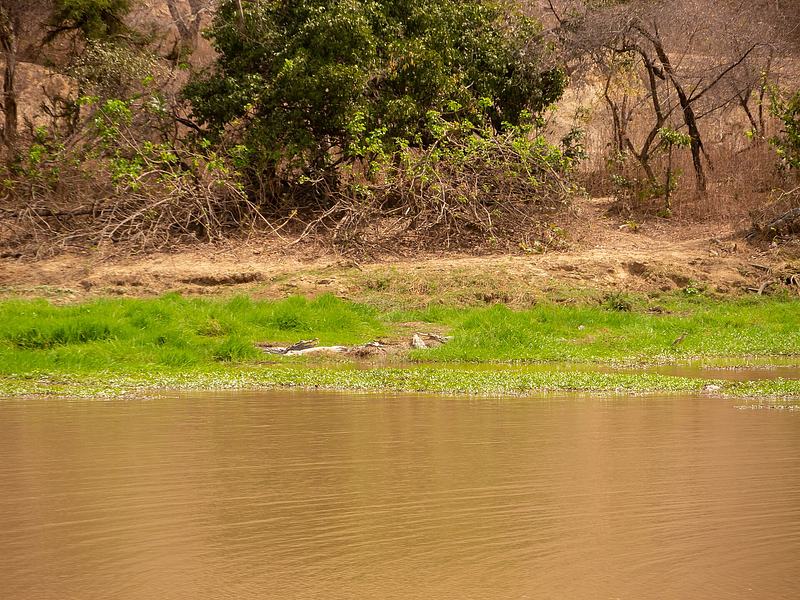
Larabanga is the gateway to Ghana's largest wildlife refuge, and the park headquarters runs the safaris. Walking safaris and vehicle safaris are the staples, with foot, bicycle, motorbike and car options, plus night safaris and an overnight tree hide for watching wildlife at a saltlick. Elephants, buffalo, warthogs, baboons and a rich cast of antelope are the draw, alongside hundreds of bird species. Sightings of elephants are most common in the dry months.
Tip: Safaris depart from the Information Centre and typically set off early; bring water, closed footwear, a hat and insect repellent, and book your slot when you arrive.
-
5.Mole Museum
Inside the park's Information Centre at headquarters, this small museum offers a clear, visual introduction to Mole's biodiversity and ecology and to the communities living around its edges. It has a main exposition room and a multimedia room, and it is a sensible first stop before a safari — half an hour here makes the animals and habitats you meet later far more legible. It is open daily during the day.
Tip: Visit before your first safari rather than after; the context on habitats and fringe communities makes the game drive more rewarding.
-
Waterfall
6.Kparia Waterfalls
A roughly twenty-metre, two-segment waterfall on the Kparia river, inside Mole National Park and reached on a two-day 4x4 tour from the park Information Centre. The trip runs through range camps and fringe communities, and can take in the Daboya smock-weaving industry, the old settlement of Kparia with its caves and graves, and the falls themselves in their evergreen surroundings. It is a serious expedition rather than a quick detour, and the active season is limited.
Tip: This is a two-day commitment with an early start from the Information Centre; bring water, food, protective gear, closed footwear, a torch and bedding, and arrange it in advance through the park.
-
7.Larabanga community town tour
Beyond the two headline sites, Larabanga rewards a slower walk. The town is known for its patterned vernacular architecture, and a guided community tour takes in the mosque, the Mystic Stone and the everyday life of the lanes between them. Local guides, coordinated through the community tourism office, explain the town's history and its relationship with the park. It is the best way to understand Larabanga as a living place rather than a monument.
Tip: A complete community tour takes a couple of hours and includes the mosque fee; ask your guide about the town's other historic sites and about visiting nearby Nabori.


Plan your time
Suggested itinerary
Half a day: mosque, stone and a first taste of Mole
Start in Larabanga town with a guided walk to the Larabanga Mosque, taking time over the architecture and the story of Ayuba, then continue on foot to the Larabanga Mystic Stone. If time allows, drive the short distance to the park's Information Centre to see the Mole Museum and get your bearings before an afternoon or evening safari. This is the essential Larabanga circuit and fits comfortably into a morning.
Larabanga Mosque→Larabanga Mystic Stone→Mole Museum
One day: heritage in the morning, wildlife in the afternoon
Begin early with the mosque and the Mystic Stone while the light is soft and the town is quiet. Mid-morning, head to Mognori Eco Village for a guided village tour, a canoe safari or a shea butter demonstration, adding a drumming and dance performance if you have the appetite. In the afternoon, join a safari from the park's Information Centre — a walking safari or a vehicle safari — and round the day off with a stop at the Mole Museum if you missed it. You will have seen the region's heritage and its wildlife in a single, unhurried day.
Larabanga Mosque→Larabanga Mystic Stone→Mognori Eco Village→Mole Museum
Two days: add the Kparia expedition
Give the first day to Larabanga and Mognori as above, staying overnight near the park. On the second day, take the two-day Kparia Waterfalls tour if you have the time and the vehicle — it runs from the Information Centre through range camps and fringe communities to the falls, with the old settlement of Kparia and its caves and graves along the way. If a two-day expedition is too much, substitute a longer safari, a night safari or an overnight stay in the tree hide, and finish with a slow morning in Larabanga before travelling on.
Larabanga Mosque→Larabanga Mystic Stone→Mognori Eco Village→Kparia Waterfalls→Mole Museum

Seasons and festivals
When to go
The dry season, roughly November to March, is the most comfortable and the most rewarding time to be around Larabanga and Mole. Average temperatures hover around 28°C, dipping to about 26°C in December and climbing towards 31°C in March, with March and April the hottest months, sometimes pushing into the forties. The harmattan winds may blow between December and February, bringing dusty, hazy conditions. As the vegetation thins and water sources shrink, wildlife concentrates and elephant sightings become more common — the park's own guidance notes that elephants are frequently seen from December to April. The rainy season runs from April to October, when the savannah turns lush and green; average annual rainfall is around 1,100 mm, easing to about 1,000 mm in the north of the park. Some experiences are seasonal: the Kparia Waterfalls tour is active from January to June, and the longer wilderness walks and rides run from January to July. If you want to sleep on the rooftops at Mognori, that is a dry-season pleasure.
Access
Getting there and around
Larabanga sits on the Damongo–Sawla road, about fifteen kilometres north of Damongo and roughly four kilometres south of Mole National Park's single main entrance. Most travellers arrive via Tamale, the regional hub, which is about 146 km south-east of the park and reachable by daily bus and coach services from Accra, Kumasi and Bolgatanga, and by flights from Accra and Kumasi. From Tamale you can take a tro-tro from Sankpala Station straight to the park, or a Damongo-bound tro-tro and then a taxi or a Larabanga-bound minibus; a daily Metro Mass Transit bus also links Tamale and the park. Coming from the south by road, the usual route runs from Accra through Kumasi and Techiman, across the White Volta, to the junction at Fufulso (known as Damongo Junction), then 89 km on through Damongo and Larabanga to the park gate. Driving times are long: roughly ten hours from Accra, six from Kumasi, two and a half from Tamale, three from Wa and four from Bolgatanga. Once here, the town, the mosque and the Mystic Stone are walkable, but Mognori, the park headquarters and the safari departure points are best reached by vehicle — local operators run transfers between Larabanga, Mole Village, Mognori and Damongo, and the community tourism office can arrange transport and guides.
Good to know
Before you go
Larabanga is a living Muslim community, not a heritage set, so let respect set the tone. Non-Muslims are not permitted inside the mosque; you visit the courtyard and admire the exterior, and you should dress modestly and remove your shoes where appropriate. Ask before photographing people, and be cautious with drones, which are unwelcome at sacred sites. Go with a local guide — the community tourism office and the park's Information Centre can both arrange one — and expect to pay a modest entry fee that supports the town. The climate is hot and dry for much of the year, so carry water, sun protection, a hat and closed footwear, and add insect repellent and a torch for evenings. Bring cash, as card payment is unreliable this far north, and remember that the harmattan can make December and January hazy. Finally, book safaris and multi-day trips such as Kparia in advance, since departures are early and group sizes are limited.

FAQ
Questions travellers ask about Larabanga
Where is Larabanga and how do I get there?
Larabanga is a town in West Gonja in Ghana's Savannah Region, about fifteen kilometres north of Damongo and roughly four kilometres south of the main entrance to Mole National Park. Most visitors reach it via Tamale, then by tro-tro, bus or taxi towards Damongo and the park.
Can non-Muslims go inside the Larabanga Mosque?
No. Non-Muslims are not allowed to enter the mosque, but you can visit the courtyard and admire the exterior with a local guide. Dress modestly and ask before taking photographs.
How old is the Larabanga Mosque?
It is said to date from 1421, when, according to local legend, a trader named Ayuba was instructed in a dream to build it. It is regarded as the oldest mosque in Ghana and one of the oldest in West Africa, and has been restored several times, most recently in 2023.
What is the Mystic Stone?
The Larabanga Mystic Stone is a sacred boulder on the outskirts of town. Legend says British road builders in the 1950s moved it three times and each time it returned to its original spot, so the road was rerouted around it. It is now a guided community tourist site.
When is the best time to visit Larabanga and Mole National Park?
The dry season, roughly November to March, is the most comfortable and best for wildlife, with elephants most often seen from December to April. The rainy season from April to October turns the savannah green but can make some activities harder.
Can I see elephants near Larabanga?
Yes. Mole National Park, whose main gate is a few kilometres from Larabanga, is home to elephants, and sightings are common in the dry months. Safaris by foot, vehicle, bicycle or motorbike depart from the park's Information Centre.
What is there to do at Mognori Eco Village?
Mognori, a Hanga community on the edge of Mole National Park, offers guided village tours, canoe safaris, shea butter demonstrations and cultural performances, with some families providing homestays. In the dry season visitors can sleep on the rooftops of mud houses.
In pictures
Larabanga in pictures
Keep exploring
More destination guides
Sources for this guide (13)
- Larabanga — Wikipedia
- Larabanga Mosque — Wikipedia
- Larabanga Mystic Stone — Wikipedia
- Mole National Park — Wikipedia
- West Gonja Municipal District — Wikipedia
- Larabanga Mosque — GhanaTRVL
- Preserving the spirit of Ghana's natural and community heritage — CNN / Ghana Tourism
- Foot, Bicycle, Motorbike and Car Safaris — Mole National Park
- Getting There — Mole National Park
- What to Do — Mole National Park
- Mole Museum — Mole National Park
- Weather — Mole National Park
- Tour Descriptions and Arrangements — Visit Larabanga
Written September 29, 2026 from these sources and reviewed by the VisitGhana.app team. Confirm practical details locally before travelling.


