
A salt town on the river
Daboya grew up around two things the land and water provided: salt and a crossing. The town sits on the White Volta in what is now North Gonja District, and for centuries it was the main source of salt for northern Ghana, extracted from saline soils along the floodplain. It was also an important salt trading settlement in the Kingdom of Dagbon, and its position on the trade route that ran from Yendi towards Bouna made it one of the most significant towns in Dagbon at the time. The Dagomba knew it as Burugu.
In the late 1600s the town was invaded and came under Gonja control, and the Wasipewura established Daboya as a border fortress against Dagomba. It was attacked by the Ashanti Empire in 1844. Later, its position on the cattle route from Navrongo in the Upper East down towards Kintampo and the south made it a commercial hub of the north. The salt trade has since shifted: large-scale production at Ada, where salt is more easily extracted, has eclipsed Daboya's output, and the town's salt-making is now a smaller, family-scale affair. But the ponds, the scraping and the filtering are still there, and the history is written into the floodplain itself.


The cloth that dresses the north
Fugu — also called batakari — is the smock of northern Ghana, worn for chieftaincy, ceremony and everyday pride, and Daboya is where much of it is made. Visit Ghana describes the town as the most famous of Ghana's fugu weaving communities, and notes that nearly all of the thousands of residents are involved in producing it. The fabric is hand-woven like kente, but the strips are narrower and carry stripes rather than kente's broad geometric patterns.
The work is a chain of separate skills. Threads are prepared and dyed, cloth is woven in narrow strips on traditional looms, the strips are joined, and the finished cloth is sewn into smocks, caps and other garments. Indigo is central to the palette. Daboya is home to a centuries-old indigo dyeing centre, described as one of the last surviving traditional indigo centres of West Africa, where dyeing has been practised for generations. One Ghanaian writer who travelled there expecting to find a dying craft concluded he had found a tradition very much alive. The town's weavers have been supported by district and national programmes, and the government has declared a National Fugu Day to celebrate the industry.


People of the floodplain
Daboya is a Gonja town, and Gonja (Ngbanye) is the main language, with Hausa and English used in schools and offices. Islam is dominant, and the community is traditional and welcoming. The town is also home to Tampulma, Dagomba and Hanga people, and the Tampulma are said to have settled at Daboya and processed its alluvial salt before the Gonja migrated from the Bole area.
Daily life turns on the river. The White Volta is used for fishing, washing and transport, and small wooden canoes — paddled by a single captain, without outboard motors — still ferry people, goods and motorbikes across in a crossing of a few minutes. The river is loved and respected in equal measure: it has given life to millions and, in flood, has taken homes and people with it. The district assembly has donated life jackets to the canoe operators, and a bridge over the White Volta has been under construction to link the two banks. The town is also changing in other ways: mud houses with thatched roofs are giving way to modern ones, roads are being tarred, and farming, shea processing and small businesses now sit alongside the older crafts.
The landscape
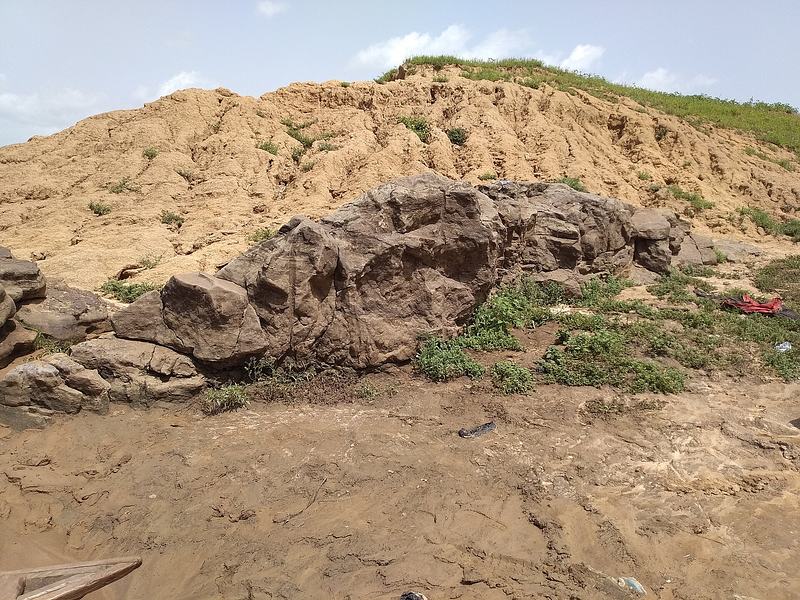
Daboya sits low on the floodplain of the White Volta, in hot Guinea savanna country. The surrounding landscape is savanna woodland with baobabs and dawadawa trees, salt flats near the river, and marshland that swells when the rains come. The town itself is small and flat, and the chief's palace, the mosque, the market and the river all lie within about a fifteen-minute walk of one another.
The river sets the seasons. In the dry months the water drops and the salt flats are worked; in the wet months the floodplain fills and the feeder road in can turn difficult. The White Volta here is known for its birdlife, and the stretch beside Daboya is a recognised birding spot — a place to watch for kingfishers, herons and weavers, and for the Egyptian Plover, for which the town is a known site. Come at dusk and the riverbank becomes the quiet centre of town life.
What to do
Things to do in Daboya
-
Attraction
1.Tour the fugu weaving compounds
This is the reason most people come. Daboya is described by Visit Ghana as the most famous of Ghana's fugu weaving communities, and the work happens in open compounds rather than behind museum glass. With a guide you can follow the whole chain: preparing and dyeing thread, weaving narrow strips on traditional looms, joining the strips and sewing the finished smock. Because the strips are narrower and striped rather than geometric, the cloth has a look distinct from kente. Ask about the designs and how long each cloth takes.
Tip: Go with a local guide and ask before photographing weavers at work; buying directly from the artisans supports the households that keep the craft going.
-
Attraction
2.See the indigo dye pits
Daboya's indigo dyeing is centuries old and has been described as one of the last surviving traditional indigo centres in West Africa. Dyeing is done in pits dug into the ground, producing the deep blue associated with northern Ghanaian cloth. Visitors can watch the process and sometimes buy finished cloth straight from the dyers. It is a working craft site, not a display, so the experience depends on who is dyeing that day — but that is exactly what makes it worth the time.
Tip: Late morning is when dyers tend to be active; a small tip or a purchase is appreciated, and the dye can stain, so dress accordingly.
-
Attraction
3.Walk out to the salt ponds
Along the White Volta floodplain, families still make salt by hand: saline soil is scraped, water is filtered through it, and the brine is sun-dried before being packed for market. The shallow evaporation ponds and the raking and mounding of salt give a clear picture of an economy that sustained Daboya for generations. It is quiet, physical work, and the setting — flat salt ground beside a wide river — is unlike anywhere else in the region.
Tip: Go early in the morning in the dry season, when the work is under way and the light is kind; ask permission before photographing and bring a small thank-you.
-
Attraction
4.Take a boat trip on the White Volta
Visit Ghana describes boat tours and cruises on the White Volta that runs beside the village: a hand-made boat, paddled by villagers, carrying you out to see the area's birdlife, a fishing demonstration with a hand-thrown net, and a beach where salt is harvested. It is a gentle, low-key outing rather than a thrill ride, and it puts the river — the reason the town exists — at the centre of your visit. The crossing canoes themselves are an exact copy of those used centuries ago.
Tip: The district assembly has donated life jackets to canoe operators, so ask for one; the river is not for swimming, and currents and bilharzia are real risks.
-
5.Spend an evening on the riverbank
The stretch of the White Volta at Daboya defines daily life: fishing, washing, canoe traffic and, at dusk, a slow gathering of people and birds. Sitting on the bank as the light goes is one of the simplest and best things to do here. Birders have reason to linger — the river beside Daboya is a known site for the Egyptian Plover, and kingfishers, herons and weavers are common along the water.
Tip: Come for the last hour of daylight, when the heat eases and the birds are active; keep well back from the water's edge and never swim.
-
Attraction
6.Greet the chief and walk the town
Daboya is small enough to see on foot, and the chief's palace, the mosque, the market and the river sit within about fifteen minutes of each other. The palace of the Daboyawura is a natural stop: ask permission to greet, and follow local custom. The daily market is modest — yams, maize, fish and household goods, busiest in the mornings — but it is where the town's ordinary life is most visible, and it is a good place to buy Daboya salt or shea butter from women's groups.
Tip: Dress modestly, greet elders first, and ask before taking photographs; the community is traditional and the courtesy is expected and returned.
Plan your time
Suggested itinerary
Half a day: cloth and river
Start in the weaving compounds while the morning is still cool, following the fugu process from dyed thread to finished smock, then walk to the indigo dye pits to see the dyers at work. Break for a simple lunch, then head to the riverbank for a paddled boat trip on the White Volta — birdlife, a hand-thrown net fishing demonstration and the salt-harvesting beach. Finish with an hour on the bank as the light softens. This is the essential Daboya, and it fits comfortably into a morning and afternoon.
Daboya smock weaving community→Daboya Indigo Dye Pits→White Volta River boat tours at Daboya→White Volta at Daboya
One day: craft, salt and the town
Begin early at the salt ponds on the floodplain, when families are scraping and filtering saline soil and the sun is still low. Return to town for the weaving compounds and the dye pits, then eat and rest through the hottest part of the day. In the afternoon, greet the chief at the palace, wander the market for salt and shea butter, and walk the short distance to the river. End with a boat trip or a quiet hour on the riverbank at dusk. One day gives you the craft, the salt and the river without rushing any of them.
Daboya Salt Ponds→Daboya smock weaving community→Daboya Indigo Dye Pits→White Volta River boat tours at Daboya→White Volta at Daboya
Two days: Daboya and the wider district
Give the first day to Daboya itself — salt ponds at dawn, weaving and dyeing through the morning, the palace and market in the afternoon, and the river at sunset. On the second day, use the town as a base for the surrounding area: a longer boat trip on the White Volta, more time with weavers to order a custom smock, or a motorbike run out towards the Mankarigu area, more than a hundred kilometres away across a large and sparsely settled district. Most visitors stay in Tamale or Damongo and treat Daboya as a day trip, but two days lets the place settle.
Daboya Salt Ponds→Daboya smock weaving community→Daboya Indigo Dye Pits→White Volta River boat tours at Daboya→White Volta at Daboya
Seasons and festivals
When to go
Daboya has a hot Guinea savanna climate with two broad seasons. The dry season runs from November to March: it is very hot and hazy with harmattan dust, temperatures can reach 30–40°C, the river is low and salt extraction is in full swing. The rainy season runs from May to October, when the country turns green and the river floods the floodplain — but the feeder road in from Busunu can be difficult between July and September. The best window is November to February, when the road is dry and both salt making and weaving are in full activity. December and January are the coolest months. Birders should note that the river beside Daboya is a known site for the Egyptian Plover.
- National Fugu Day · Declared by the President as a Wednesday observance
- A national day celebrating fugu and the local smock industry, declared by Ghana's President and marked in the district. It reflects how central the craft is to Daboya's identity and to northern Ghana more broadly.
- Inter-Cluster Youth Cultural Dance Festival · Held periodically in North Gonja District
- A district cultural event that brings youth dance groups together, part of the wider calendar of community celebrations in North Gonja.
Access
Getting there and around
Daboya is reached by road, off the Tamale–Buipe highway. The town sits at the end of a feeder road that leaves the highway at Busunu junction; from there it is a short drive on an unpaved road. From Tamale, the usual route is a shared taxi to Busunu junction followed by a taxi or motorbike to Daboya, and the road is rough after Busunu, especially in the rainy season, when a 4WD is recommended. There is no direct tro-tro to Daboya, so you will change at Busunu. From Damongo or Buipe the approach is also via Busunu junction. The closest airport is Tamale Airport (TML).
Once in Daboya, the town is small and best seen on foot — the palace, mosque, market and river are all within about fifteen minutes of one another. Motorbikes are the practical way to reach the salt sites and the river, and bicycles can sometimes be borrowed through a guesthouse. Most visitors stay in Tamale or Damongo and visit Daboya as a day trip, though there is basic guesthouse accommodation in town. Mobile coverage is limited: MTN is the most reliable network, signal drops near the river, and there is no Wi-Fi, so buy a data bundle and bring cash before you arrive.
Good to know
Before you go
Daboya is a traditional, predominantly Muslim Gonja community, and a little courtesy goes a long way. Dress modestly, greet elders before anyone else, and always ask before photographing people — especially weavers, dyers and salt makers. Buying directly from artisans is the most useful thing a visitor can do, and bargaining is fine if it is done respectfully.
Practicalities matter here. Bring cash from Tamale or Busunu, as mobile money agents are few and bottled water and soft drinks are limited. Power comes from the national grid but outages are frequent, so pack a power bank; malaria is a risk, so use a bed net and repellent. Do not swim in the White Volta — currents are strong and bilharzia is present. The feeder road from Busunu can be impassable after heavy rain, so travel by day and check conditions locally. The nearest health facility is Daboya Health Centre, with referral to Tamale or Damongo.
FAQ
Questions travellers ask about Daboya
Where is Daboya in Ghana?
Daboya is the capital of North Gonja District in the Savannah Region of northern Ghana, on the banks of the White Volta. It sits at the end of a feeder road off the Tamale–Buipe highway, reached via Busunu junction.
What is Daboya famous for?
Two things: fugu (smock) weaving and salt. Visit Ghana calls Daboya the most famous of Ghana's fugu weaving communities, and the town has a centuries-old indigo dyeing tradition. It was also historically the main source of salt for northern Ghana.
How is fugu different from kente?
Both are hand-woven, but fugu is woven in narrower strips with stripes, whereas kente is known for broad geometric patterns. In Daboya the strips are joined and sewn into smocks, caps and other garments.
Can you take a boat trip on the White Volta at Daboya?
Yes. Visit Ghana describes boat tours and cruises on the White Volta beside the village, in a hand-made boat paddled by villagers, with birdlife, a hand-thrown net fishing demonstration and a beach where salt is harvested.
When is the best time to visit Daboya?
November to February is the best window: the road is dry and both salt making and weaving are in full activity. The dry season runs November to March and the rainy season May to October, when the feeder road can be difficult between July and September.
Is it safe to swim in the White Volta?
No. The river has strong currents and bilharzia is a risk, so visitors should stay out of the water. If you take a boat trip, ask for a life jacket — the district assembly has donated them to canoe operators.
Can you stay overnight in Daboya?
There is basic guesthouse accommodation in town, but most visitors stay in Tamale or Damongo and visit Daboya as a day trip. Power outages are frequent and there is no Wi-Fi, so bring a power bank and buy a data bundle before you arrive.
Keep exploring
More destination guides
Sources for this guide (9)
- Daboya fugu Weaving Village – Visit Ghana
- Daboya, Ghana – Wikipedia
- Daboya – Travel guide at Wikivoyage
- Daboya Local Textile Centre – Beyond The Return Travel & Tours
- Blue Gold: The Centuries Old Indigo Centre of Daboya, Ghana – Modern Ghana
- Daboya Rising: How a Historic Ghanaian Town is Thriving Against the Odds – Africa Feature Network
- North Gonja (district) – Wikipedia
- Message of Thanks and Appreciation – North Gonja District Assembly
- Daboya City Guide (Ghana, 2026) – Take Your Backpack
Written September 29, 2026 from these sources and reviewed by the VisitGhana.app team. Confirm practical details locally before travelling.