
The last houses of a lost kingdom
The Asante Empire reached its high point in the 18th century, and its architecture was part of that power. The shrine houses near Kumasi — arranged around courtyards, built of timber, bamboo and mud plaster, and originally roofed in steeply pitched thatch — were the physical expression of a wealthy, organised state. When the empire fell during the British occupation of 1806 to 1901, most buildings of the period were destroyed. Among them was the royal mausoleum, demolished by Robert Baden-Powell in 1895.
What survived were the shrines. Ten of them remain: Abirim, Asawase, Asenemaso, Bodwease, Ejisu Besease, Adarko Jachie, Edwenase, Kentinkrono, Patakro and Saaman. Most sit to the north-east of Kumasi, with Patakro to the south. UNESCO describes them as the last remaining testimony of the unique architectural style of the great Asante Kingdom, inscribed under criterion (v) for that rarity. The buildings were acquired by the Ghana Museums and Monuments Board between 1960 and 1970 and scheduled as a National Monument under Ghanaian law, with chiefs, elders and community members also involved in their care.
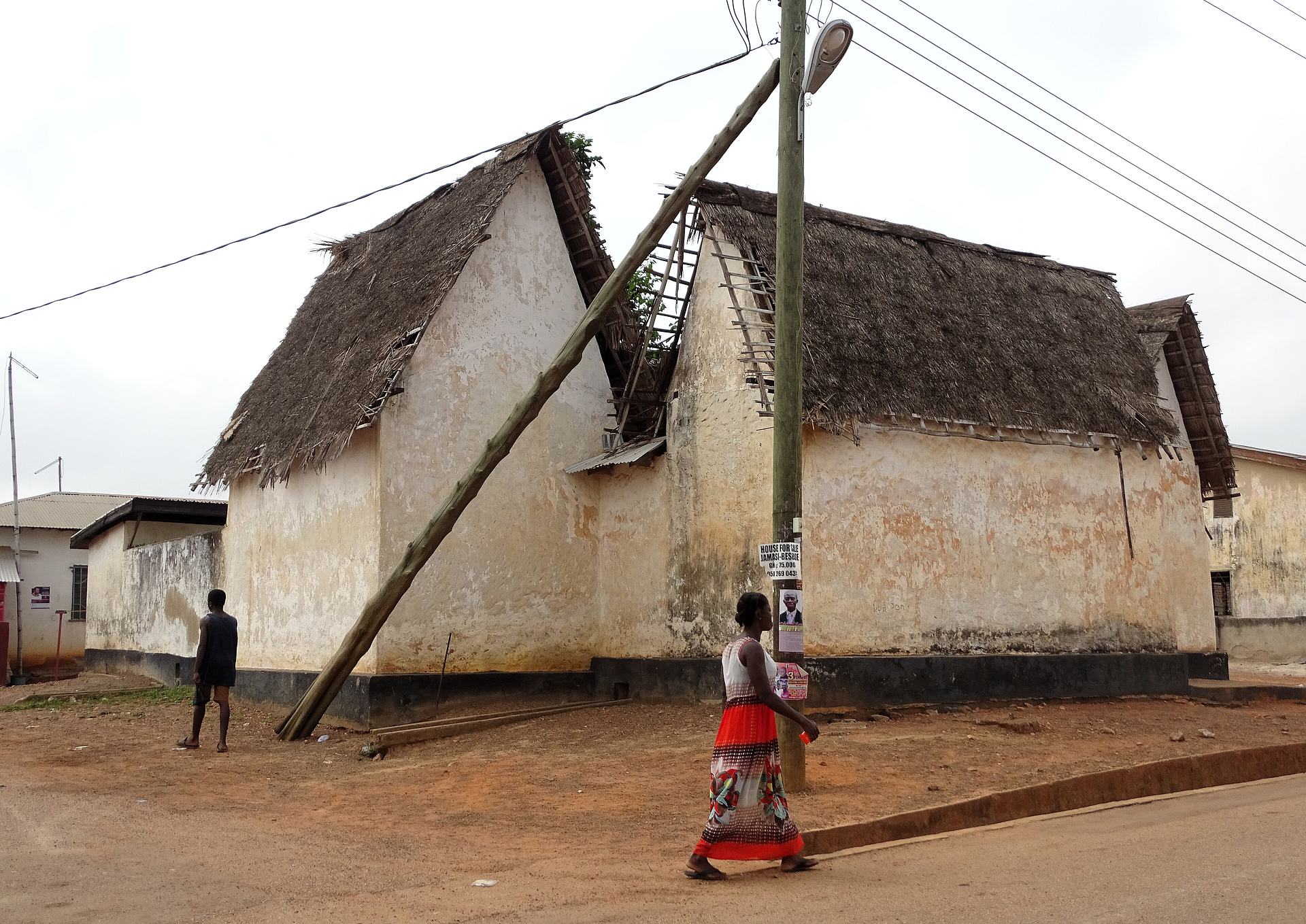
Time has not been kind. Because the structures are made of earth, wood and straw, the warm humid tropical climate is actively destructive: heavy rainfall and high humidity encourage mould on wall surfaces, and termites and other insects breed prolifically. In twelve of the thirteen buildings, the original palm-frond thatch has been replaced by lighter corrugated iron, and paved flooring has replaced rammed earth. The present appearance is largely authentic in form and materials, but many have been substantially reconstructed. Their survival is a running negotiation between conservation, climate and community.

Yaa Asantewaa and the war for the Golden Stool
Yaa Asantewaa was born around 1840 in Besease, the daughter of Kwaku Ampoma and Ata Po. Her brother, Afrane Panin, became chief of Edweso — Ejisu — and appointed her Queen Mother, a position that carried responsibility for protecting the Golden Stool, advising the king and nominating candidates for the next ruler. When her brother died in 1894 she used her right as Queen Mother to nominate her own grandson as Ejisuhene. In 1896 the British exiled him to the Seychelles, along with the Asantehene Prempeh I and other members of the Asante government. Yaa Asantewaa became regent of the Ejisu–Juaben district.
Then the British governor of the Gold Coast, Frederick Hodgson, demanded the Golden Stool itself — the symbol of the Asante nation's soul, never sat upon, kept beside the throne. At a secret meeting in Kumasi, the chiefs argued. Yaa Asantewaa stood and spoke. If the men of Asante would not go forward, she said, then the women would; she would call upon her fellow women and they would fight until the last of them fell. To dramatise her determination, she seized a gun and fired a shot in front of the men. She was chosen by regional Asante kings as war leader — the first and only time a woman held that role in Asante history.
Beginning in March 1900, the rebellion laid siege to the British fort at Kumasi. The governor eventually sent a force of 1,400 to quell it. Yaa Asantewaa and fifteen of her closest advisers were captured and exiled to the Seychelles, where she died on 17 October 1921. The war was the final conflict in the Anglo-Asante wars of the 19th century, and on 1 January 1902 the British annexed the territory as a protectorate. Yet the Golden Stool was never surrendered: a fake was delivered to the governor while the real one was hidden. In 1924 Prempeh I returned and arranged for the remains of Yaa Asantewaa and the other exiles to be brought home for royal burial. Her dream of an Asante free of colonial rule was realised on 6 March 1957, when Ghana became independent.

A living faith, not a ruin
It is easy to read the shrines as monuments. They are not. The traditional religion is still practised at them, which is precisely why they have been maintained. The practice takes the form of consulting the deities for advice on specific situations, or before an important initiative — which is why the shrines have been kept complete with all their symbolic features. UNESCO notes that protection operates on two levels: customary regulations, prohibitions and penalties handed down through generations, and modern statutory regulation through the Ghana Museums and Monuments Board. The two systems complement each other, one built into the belief system of the communities where the sites stand, the other prescribing the Board's role.
The Besease shrine, also called the Yaw Tano Shrine, was built by the komfo Yaw Awua in the 19th century during the reign of Nana Kwaku Dɛɛkyi, the Edwesohene. It houses the shrine of the Besease Tano deity known as Tano Yaw, a protective deity reputed as a great protector of its people in times of war. Local knowledge holds that Yaa Kyaa, a relative of Yaa Asantewaa, gave birth to a mysterious object rather than a child; consultations with mediums revealed it as the representation of the powerful deity Tano, given the day name Tano Yaw because it was born on a Thursday. Yaa Kyaa became the deity's priestess.
The buildings themselves are arranged as four rooms facing a central courtyard on a raised plinth. Three rooms were used for ritual activity; the fourth was the shrine itself, with restricted access. The bas-reliefs are not merely ornamental — the spiral and arabesque forms, the animals, birds and plants, are linked to Adinkra symbols with meanings handed down across generations. At Besease, the nnomaa mmienu motif of two birds feeding from one source sits above the shrine-room doorway, carrying the idea of peaceful coexistence between opposing forces. Both the Ghana Museums and Monuments Board and the French Embassy in Ghana carried out restoration work on the shrine, in 1963 and 1998.

What to do
Things to do in Ejisu
-
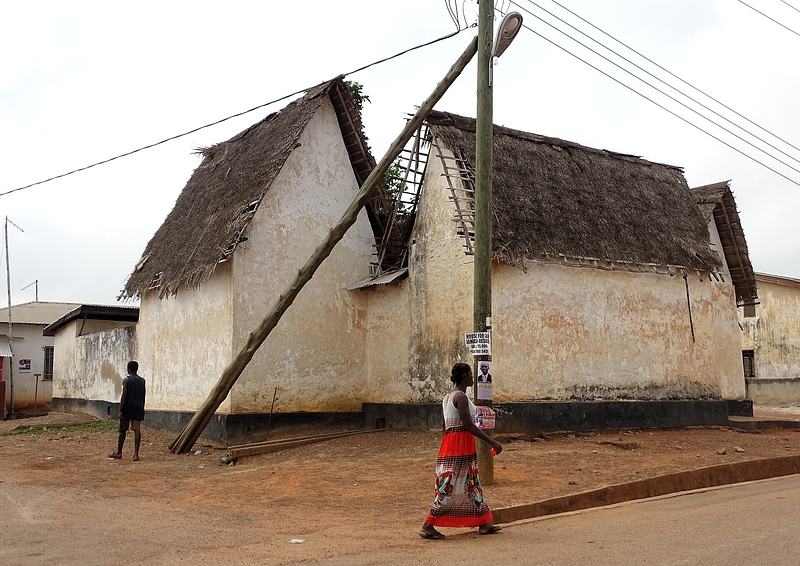
1.Besease Traditional Building (Yaw Tano Shrine)
This is the practical heart of the Asante Traditional Buildings for most visitors, and the one site in the group that is relatively geared up for tourism. The courtyard house, its decorated walls and its shrine room give you the whole architectural story in one place: the raised plinth, the four-room plan, the bas-reliefs and the nnomaa mmienu motif above the doorway. It is a working sacred site, not a museum gallery, which is exactly what makes it worth the time.
Tip: Confirm access before you build a day around it — opening can vary with caretaker availability, ceremonies and conservation work. Ask before photographing anything.
-
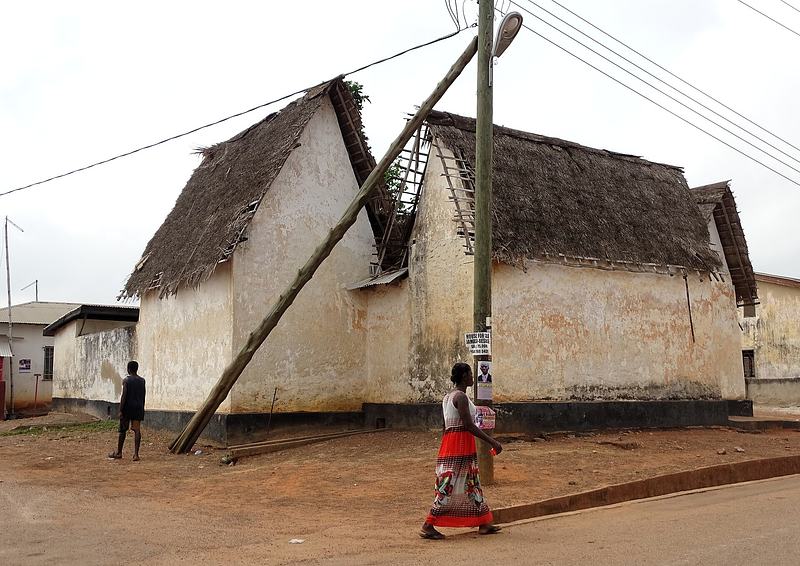
2.Asante Traditional Buildings (the wider UNESCO group)
Besease is one of ten surviving shrine houses, and understanding the group changes how you see any single one. The listing covers Abirim, Asawase, Asenemaso, Bodwease, Ejisu Besease, Adarko Jachie, Edwenase, Kentinkrono, Patakro and Saaman, most to the north-east of Kumasi. Together they are the last material remains of the Asante civilization at its 18th-century height, and the only surviving example of its traditional architecture. If you have time for a second site, it deepens the first.
Tip: Do not assume all ten are open to visitors. Access varies by site, day and caretaker, so treat the listing as a group of sacred places rather than one ticketed attraction.
-
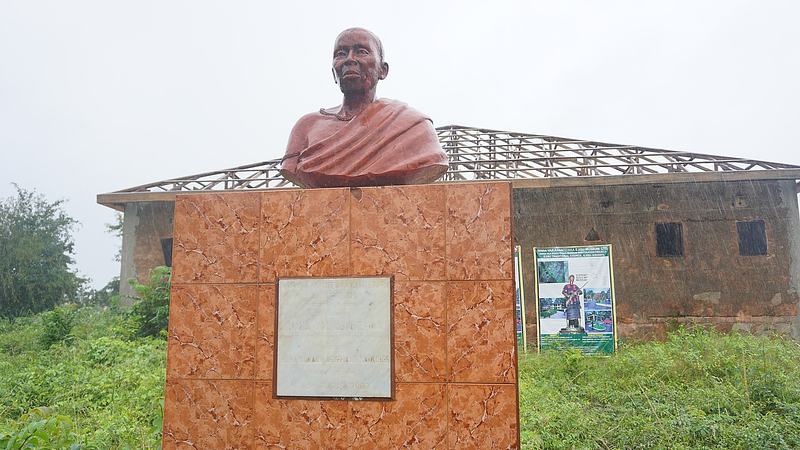
3.Yaa Asantewaa Museum
Established in 2000 to mark the centenary of the Yaa Asantewaa War, the museum was built to recreate a typical Asante royal residence of around 1900, at Yaa Asantewaa's graveside in Besease, her hometown. It honours the Queen Mother of Ejisu who led the 1900–1901 resistance. In 2004 a fire gutted the building and destroyed most of its relics, leaving only a few clay pots, and tourism in the area fell sharply; rebuilding has been pledged and discussed for years. Even in its reduced state, the site is the anchor of her story in the place she came from.
Tip: Check locally whether the museum is open before travelling specifically for it — it has been closed and under reconstruction for extended periods.
-
4.Read the Adinkra symbolism on the walls
The decoration is the intellectual pleasure of the visit. UNESCO notes that the bas-reliefs are bold and varied — spiral and arabesque details with representations of animals, birds and plants, linked to traditional Adinkra symbols — and that these designs carry symbolic meanings associated with Asante ideas and beliefs, handed down from generation to generation. At Besease, the two birds of the nnomaa mmienu motif represent mutual understanding between opposites. Learning two or three motifs turns a wall into a text.
Tip: Ask your guide or the caretaker what a specific symbol means rather than guessing. Good questions are welcome; treating sacred practice as performance is not.
-
5.Walk the Ejisu–Besease heritage corridor
Ejisu sits on the Kumasi–Accra highway about 20 km from Kumasi, and Besease is a village near Ejisu on the same road. The short run between town and shrine passes through the everyday Ashanti landscape that frames the heritage: roadside stalls, small farms, courtyards, and the low green hills of the Ashanti Region. It is a gentle, human counterpoint to the weight of the history, and it is where the community that maintains the shrine actually lives.
Tip: Go in daylight and allow generous time — short distances around Kumasi and Ejisu can stretch with traffic, market days, funerals and road works.
-
6.Pair it with Kumasi's royal and craft heritage
Ejisu works best as part of a wider Asante day. The Manhyia Palace Museum in Kumasi gives the royal-history context that makes the shrines legible, while the kente-weaving villages of Bonwire and Adanwomase and the Adinkra stamping at Ntonso show the living craft traditions behind the motifs on the shrine walls. The Kumasi Fort and Military Museum, the fort the 1900 rebellion besieged, closes the loop on the war itself.
Tip: Choose one companion stop rather than three. Trying to fit everything into a single day flattens the experience and leaves no room for the slower interpretive pace these sites reward.


Plan your time
Suggested itinerary
Half a day: the shrine and the Queen Mother
Start early from Kumasi and drive east on the Kumasi–Accra highway to Ejisu, then on to Besease. Begin at the Besease Traditional Building, the Yaw Tano Shrine, while the light is still soft and the courtyard is quiet — take your time over the bas-reliefs and the nnomaa mmienu motif above the shrine-room doorway. Move on to the Yaa Asantewaa Museum at her graveside in Besease, checking first that it is open. Finish with a slow walk through the village and a cold drink in Ejisu before heading back. Keep the afternoon free; this is a stop that benefits from not being rushed.
Besease Traditional Building→Yaa Asantewaa Museum
One day: Ejisu in the round
Give the whole day to the corridor. Morning at the Besease Traditional Building, with a guide who can explain the Adinkra symbolism and the etiquette of a working shrine. Midday, the Yaa Asantewaa Museum and the surrounding village, then lunch in Ejisu. In the afternoon, if you have transport and confirmed access, add a second shrine from the wider Asante Traditional Buildings group to see how the courtyard plan and decoration vary between sites. Return to Kumasi before dusk, leaving buffer time for traffic on the highway.
Besease Traditional Building→Yaa Asantewaa Museum→Asante Traditional Buildings
Two days: Ejisu and the Asante story
Day one follows the one-day plan above, ending back in Kumasi. Day two widens the frame: the Manhyia Palace Museum for royal context, then the craft villages — Bonwire or Adanwomase for kente, Ntonso for Adinkra stamping — to see the living traditions behind the shrine motifs. If the war is what brought you here, add the Kumasi Fort and Military Museum, the fort besieged during the 1900 rebellion. Two days lets the architecture, the craft and the history sit alongside each other instead of competing.
Besease Traditional Building→Yaa Asantewaa Museum→Asante Traditional Buildings


Seasons and festivals
When to go
Ejisu sits in Ghana's forest belt, where the warm, humid tropical climate is the very thing that threatens the earth-and-wattle shrines. Expect heavy rainfall and high humidity in the wetter months, which encourages mould on wall surfaces and makes rural walking uncomfortable; unpaved village access roads can also turn muddy. The main dry season, roughly November to March, is the more comfortable window for visiting, with easier roads and gentler conditions for walking between sites. Because the shrines are sacred places rather than attractions, timing also depends on the community calendar: if libation, prayer, consultation or a local ceremony is under way, the most respectful visit may be a shorter one, or none that day. Build flexibility into your plan and confirm access close to your travel date.
- Yaa Asantewaa centenary commemorations · 2000, and marked since
- The hundredth anniversary of the Yaa Asantewaa War in 2000 was celebrated throughout Ghana with a week-long programme that included the launch of the Yaa Asantewaa Museum, an international conference, a women's convention and a funeral service for Yaa Asantewaa's remains. The first lady of Ghana, Nana Konadu Rawlings, unveiled the museum alongside her daughters. The centenary is the clearest example of how Ejisu's history is publicly remembered, and it is worth asking locally whether any commemorative events are planned during your visit.
Access
Getting there and around
Ejisu is a town on the Kumasi–Accra highway, about 20 km from Kumasi, and it is the capital of Ejisu Municipal Assembly in the Ashanti Region. Most travellers base themselves in Kumasi, Ghana's second city, and reach Ejisu by road; the drive east on the highway is short in distance but can stretch with traffic, weather, market days, funerals or road works, so allow generous time and travel in daylight. Besease, where the Yaw Tano Shrine and the Yaa Asantewaa Museum stand, is a village near Ejisu on the same Kumasi–Accra road, so the two main sites sit close together once you are in the area. Public transport along the corridor is available, and a local guide is worth arranging not only for directions but for translation, etiquette and handling any caretaker conversation or donation clearly. Once you are in Ejisu and Besease, the sites are close enough to combine on foot and by short local hops, but a vehicle makes the day far easier if you plan to add a second shrine or return to Kumasi the same evening.
Good to know
Before you go
Treat these buildings as living sacred heritage, not ruins. Before entering, ask what is permitted and follow the caretaker or guide. Do not touch the reliefs, posts, thresholds, stools, ritual objects or wall surfaces, and do not step into restricted rooms or sit where you have not been invited. Silence is not permission. If libation, prayer, consultation, mourning or a local ceremony is under way, the respectful choice may be a shorter visit or none at all that day. Dress modestly and simply — nothing beach-like, nightclub-like or costume-like for a sacred community site. Ask before every photograph, especially of caretakers, elders, children, entrances and relief details, and accept a no without argument. Carry water, wear shoes you can walk in, and remember that the site survives because local people maintain it: a clear, courteous conversation about any donation or fee matters more than the amount.


FAQ
Questions travellers ask about Ejisu
Where is Ejisu and how far is it from Kumasi?
Ejisu is a town on the Kumasi–Accra highway about 20 km from Kumasi, and it is the capital of Ejisu Municipal Assembly in the Ashanti Region. The Besease shrine and the Yaa Asantewaa Museum are in the village of Besease, near Ejisu on the same road.
What are the Asante Traditional Buildings?
They are a UNESCO World Heritage group of ten surviving Asante shrine houses near Kumasi, inscribed in 1980 under criterion (v) as the last material remains of the great Asante civilization. They are built of timber, bamboo and mud plaster, arranged around courtyards, and decorated with symbolic bas-reliefs linked to Adinkra motifs.
Can I visit all ten Asante Traditional Buildings?
No — do not assume all the listed shrines are open to tourists. Public access varies by site, day, caretaker, ceremony and conservation condition, so confirm current access before you go. Besease is the one most commonly geared up for visitors.
Who was Yaa Asantewaa and why does Ejisu matter to her story?
Yaa Asantewaa was the Queen Mother of Ejisu, born around 1840 in Besease. In 1900 she led the War of the Golden Stool against British colonial rule, becoming the first and only woman chosen as war leader in Asante history. She died in exile in the Seychelles in 1921, and her remains were later returned for royal burial.
Is the Yaa Asantewaa Museum open?
It has been closed and under reconstruction for extended periods since a fire gutted it in 2004, destroying most of its relics. Rebuilding has been pledged and discussed for years, so check locally before travelling specifically to see it.
Why are the shrine buildings so fragile?
They are made of earth, wood and straw, which the warm humid tropical climate attacks directly: heavy rainfall and high humidity encourage mould on the walls, and termites and other insects breed prolifically. Traditional thatch, bamboo and timber are also becoming harder to obtain as agriculture intensifies.
When is the best time to visit Ejisu?
The main dry season, roughly November to March, is the more comfortable window, with easier roads and gentler conditions for walking. The wetter months bring heavy rain, high humidity and muddy unpaved village access roads.
In pictures
Ejisu in pictures
Keep exploring
More destination guides
Sources for this guide (10)
- Asante Traditional Buildings — UNESCO World Heritage Centre
- Asante Traditional Buildings — Wikipedia
- Yaa Asantewaa Museum — Wikipedia
- Yaa Asantewaa — Wikipedia
- War of the Golden Stool — Wikipedia
- Ejisu — Wikipedia
- Ejisu Municipal Assembly — Wikipedia
- The Besease Shrine — Ejisu Besease community site
- Asante Traditional Buildings Guide: Besease Shrine, UNESCO & Kumasi Tips — SankofaGo
- Ashante Shrine, Kumasi — Zamani Project
Written September 29, 2026 from these sources and reviewed by the VisitGhana.app team. Confirm practical details locally before travelling.