
A crater, a hunter and an antelope
Geologists established in the 1960s that the crater was formed by a meteorite collision roughly 1.07 million years ago. Rain and small streams filled the hollow over the centuries, and because the basin has no surface outlet, the water simply stayed — which is why Lake Bosomtwe is Ghana's only true inland lake. It is a rare thing: one of only six meteorite lakes in the world, about 10.5 kilometres across and up to 81 metres deep, ringed by crater walls that rise steeply from the shoreline.
Asante oral tradition tells it differently, and more beautifully. A hunter from Asamang, named Akora Bompe, shot and wounded an antelope. The animal fled into a small pond and vanished; when the hunter looked, he found fish instead. He returned, and the same thing happened again. The pond grew into a lake, and he named it Bosomtwe — "antelope god" — in remembrance of the spirit that led him there. The Ghana Commission for UNESCO records the story as told by the chief of Aborodwum, with the hunter's wife, his dog Hyiawu, and the rituals performed at Asamang that gave the lake its name. Both accounts are true to the place: one measures its age, the other explains its hold on people.

The lake of souls
For Asante traditionalists, Bosomtwe is sacred. Some hold that a deity called Twi resides in it; others that the souls of the departed visit its waters on their passage to eternity. Each village around the shore keeps its own shrine or fetish grove, and many people still come to these for help in hard times or against illness. At the lakeside stands the Abrodwum Stone, believed to be the spiritual centre of the lake. When yields are poor it is read as a bad omen, and sacrifices are made in the presence of the Asantehene: the innards of a cow are offered to the stone, the rest thrown into the water, and the crowd rushes in to take a share.
The most visible expression of that reverence is on the water itself. It was once taboo for iron to touch the lake, so conventional boats were never used. Fishermen still go out on the padua, a large wooden plank they sit on top of and propel by hand or with a plate — a craft that takes real skill and can capsize easily. Dugout canoes remain taboo, though a few engine-powered boats now cross the lake, an accommodation between old belief and tourist income that sits uneasily with some in the community. The lake was also, in the past, the main source of fish for the tables of Asante kings, and traditional laws were made to keep it clean.

Living around the water
Abono is a fishing community, and the lake has shaped its economy for generations. Around 24 communities ring the crater, and the population of the biosphere reserve is put at roughly 50,000 to 70,000 people whose main work is farming and fishing. Cocoa, subsistence crops and animal rearing have grown in importance as fish stocks have fallen. The lake's level has also been rising over the years, forcing villages to move uphill; you can see the evidence in tree trunks standing out of the water, and in the numbers that follow some village names, marking how many times a settlement has been rebuilt.
This is a place with real pressures as well as real beauty. Overfishing has thinned catches, plastic waste washes into the water, and tourism brings both income and friction — boat traffic disturbs fish, and shorelines take on more litter. In 2016 the area was designated a UNESCO Biosphere Reserve, managed through a community resource management arrangement that gives local people a say in decisions, with zones set aside for protection, research and sustainable use. Scientists from Ghanaian and German universities have worked here on climate research and on ways to broaden livelihoods beyond fishing. Visitors who hire local guides, buy from lakeside traders and tread lightly are part of that balance, not outside it.

What to do
Things to do in Abono
-
1.Walk the crater rim above the lake
The forested trail on the crater rim is the best way to grasp the scale of Bosomtwe. It begins near Abono on the eastern shore and climbs through secondary forest and past cocoa farms, opening at intervals onto wide views down to the water, with the crater walls curving away on every side. The full circuit is a serious undertaking — one guide puts it at roughly 12 kilometres and four to five hours, with steeper ground on the western side — but shorter out-and-back sections give the same reward.
Tip: Start early, before the heat builds, and hire a local guide in Abono: signage is minimal and the path turns slippery after rain.
-
2.Take a boat trip from the Abono shoreline
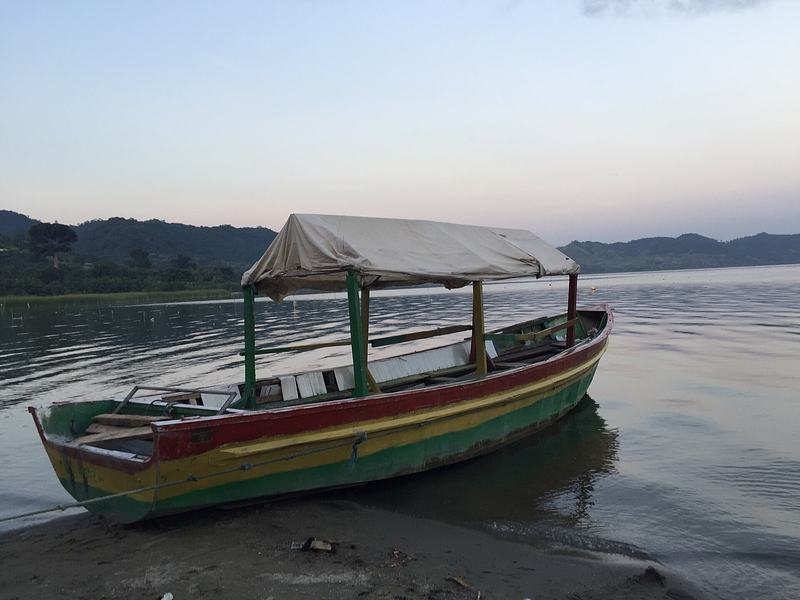
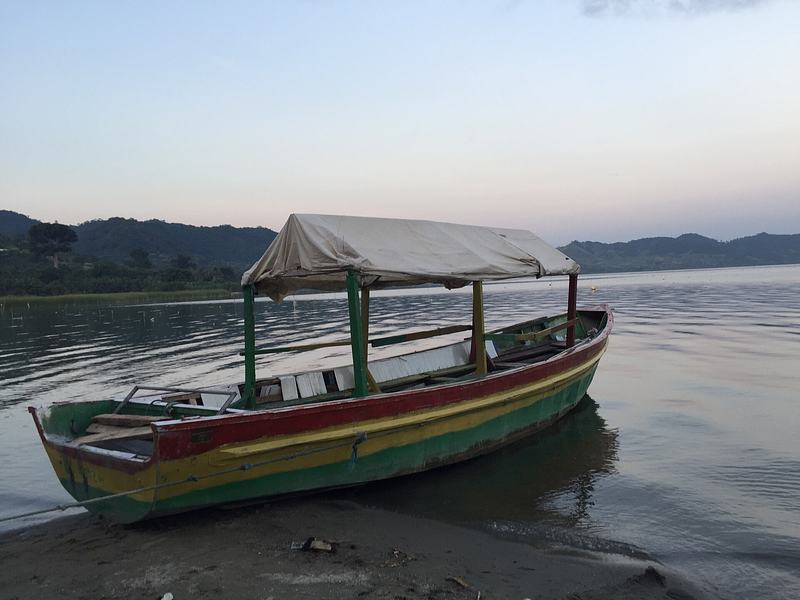
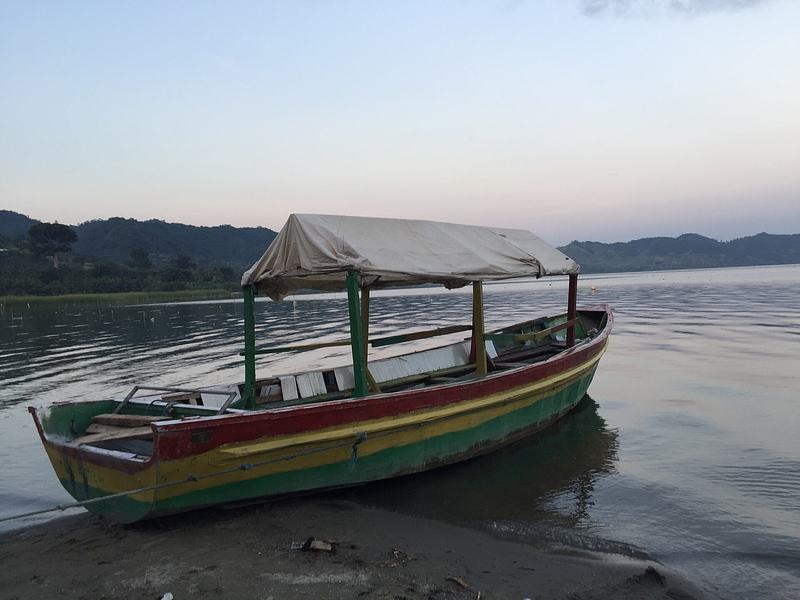
Seeing the crater from the water changes the place entirely: the walls close in, the forest comes right down to the shore, and the villages appear as a string of roofs between lake and hillside. Trips run from the Abono shoreline, and the information centre can help arrange one. Note the local distinction — fishing from a boat is taboo, but boats are used to move about the lake, and the traditional craft you will see out on the water is the flat wooden padua.
Tip: Wear a life jacket if one is offered, and treat any trip as weather- and operator-dependent rather than a guaranteed fixture.
-
3.Start at the Lake Bosomtwe Information Centre
The community information centre at Abono is the sensible first stop. Staff can explain the lake's conservation story and the biosphere reserve, and can arrange a boat trip on the water. It is also the place to ask which hikes and sacred sites are open to visitors on the day you arrive — useful, since access and local rules can shift. If you are lucky, someone will open a coconut or two for you while you plan.
Tip: Ask about the Abrodwum Stone and other sacred areas before setting out, and confirm what may and may not be photographed.
-
4.Watch the padua fishermen at work
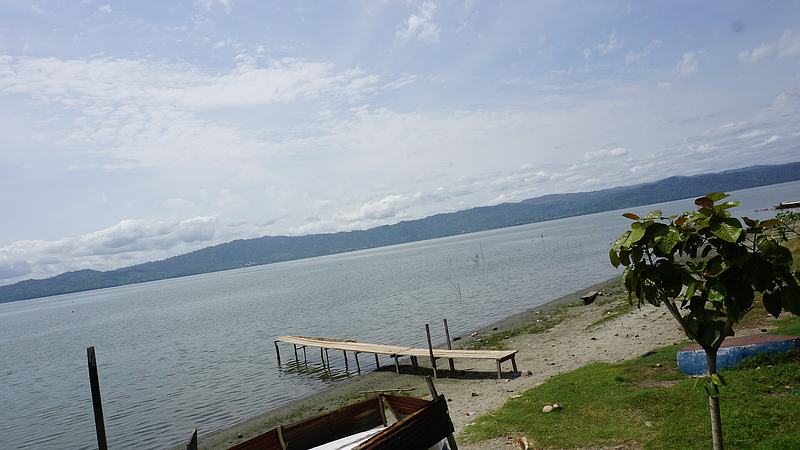
The lake itself is the attraction, and the sight of fishermen balanced on wooden planks, paddling by hand, is its most distinctive image. Because iron is traditionally forbidden to touch the water, the padua replaced the dugout canoe, and the technique survives. Watching from the shore or from the rim trail above gives you the lake's culture and its geology in a single view — a million-year-old crater worked by a method that predates the boats most of us know.
Tip: Keep a respectful distance and ask before photographing fishermen, shrines or people at work.
-
5.Eat tilapia by the water
Meals around the lake are mostly served at the lakeside resorts and small food shacks, and they lean on what comes out of the water: tilapia, scaled and fried over an open fire, served with the usual Ghanaian staples. Fishmongers have traded here for decades, though catches have thinned with overfishing. Eating fresh by the shore, with the crater walls rising behind you, is one of the simplest pleasures the area offers.
Tip: Carry Ghana cedi cash in small denominations; card payment is not something to rely on this far from Kumasi.


Plan your time
Suggested itinerary
Half a day: the lake at a glance
Leave Kumasi early and drive the tarred road over the rim to Abono, stopping at the viewpoint as the crater opens below you. Begin at the Lake Bosomtwe Information Centre to hear the conservation story and arrange a boat trip, then take a short boat ride from the Abono shoreline for the view from the water. Finish with fried tilapia at a lakeside kitchen and a slow walk along the shore before heading back to the city in daylight.
Lake Bosomtwe Information Centre (Abono)→Lake Bosomtwe Boat Trips (Abono)→Lake Bosomtwe
One day: water, forest and the rim
Start at the information centre, then walk a section of the crater rim trail while the morning is cool, climbing through forest for the wide views down to the lake. Come down to the shoreline for lunch, then spend the afternoon on the water with a boat trip from Abono, watching the padua fishermen at work. If time allows, add the canopy walkway for a second, gentler perspective on the crater before the drive back to Kumasi.
Lake Bosomtwe Information Centre (Abono)→Lake Bosomtwe Crater Rim Trail→Lake Bosomtwe Boat Trips (Abono)→Grand Eco Cabana Canopy Walkway→Lake Bosomtwe
Two days: a slow Ashanti pause
Day one follows the one-day plan at an unhurried pace, ending with sunset over the crater and an overnight stay near the lake. Day two begins with early light on the water, when the lake is still and the fishermen are out, then a longer stretch of the rim trail or a walk between shoreline villages. Spend the middle of the day at the information centre and over a long lunch, and leave for Kumasi in the afternoon rather than after dark.
Lake Bosomtwe→Lake Bosomtwe Crater Rim Trail→Lake Bosomtwe Information Centre (Abono)→Lake Bosomtwe Boat Trips (Abono)


Seasons and festivals
When to go
The dry season, roughly November to March, is the most comfortable window. December to February brings the most stable conditions, with minimal rain and clear trails, daytime temperatures around 25–28°C and cooler nights. December and January draw the most visitors, so accommodation is busiest then; late February and early March keep the reliable weather with fewer people about. The wet season runs from April to October, and May to September is best avoided for walking — rainfall peaks from June to August, the trail turns to mud, streams swell and footing becomes genuinely difficult. Humidity is high year-round, so whatever the month, plan walks for the morning and carry more water than you think you need.
- Akwasidae at Manhyia · Recurring Asante festival days, roughly every six weeks
- The Asante festival cycle centred on Manhyia Palace in Kumasi is a major draw for visitors to the region. Festival days are long, crowded and emotionally rich, so it is better not to pair one with a lake visit on the same day — give Bosomtwe its own, quieter slot in your itinerary.
Access
Getting there and around
Lake Bosomtwe lies about 30 kilometres south-east of Kumasi, the Ashanti Region's capital, and is usually reached from the city. A tarred road climbs over the crater rim and descends to Abono, the first village it meets; there is a small fee at a community-run entry point on the way in, so carry cash. By public transport, tro-tros and shared taxis run from Kumasi terminals towards Abono or Kuntanase — if you arrive at Kuntanase, a shared taxi covers the short remaining drop to the lake. Minibuses also serve the area, and hiring a driver who knows the roads makes for a smoother day. Once at the lake, you move around on foot, by boat from the shoreline, or with a local guide for the rim trail. Roads in the district beyond the main access route can be gravel, potholed and muddy in the rainy season, and driving after dark outside the city is best avoided.
Good to know
Before you go
Treat Bosomtwe as a sacred place, not a scenic backdrop. Ask before photographing people, fishing activity, shrines, chiefs, elders or private compounds, and avoid joking about local taboos. Dress modestly and keep voices low around sacred sites. Swimming is a genuine question rather than a given: health guidance for Ghana advises against swimming in fresh, unchlorinated water because of schistosomiasis, so families, pregnant travellers and anyone with cuts or health concerns should take medical advice first and never feel pressured to enter the lake. Carry Ghana cedi cash in small notes for entry fees, boat trips and food, since card payment is unreliable away from Kumasi. Bring water, sun protection and shoes with grip for the trail, and plan to be back on the main road before dark. Confirm access, activity availability and road conditions locally close to your visit, as these change with weather and the lake's rising level.


FAQ
Questions travellers ask about Abono
Where is Lake Bosomtwe and how do I get there from Kumasi?
It lies about 30 kilometres south-east of Kumasi in the Ashanti Region. A tarred road climbs over the crater rim and descends to Abono, the first village it reaches; tro-tros and shared taxis also run from Kumasi towards Abono or Kuntanase.
Is Lake Bosomtwe really Ghana's only natural lake?
Yes. It is described as the country's only true inland lake, formed in a meteorite impact crater with no surface outlet, and it is one of only six meteorite lakes in the world.
Why do fishermen use wooden planks instead of canoes?
It was traditionally taboo for iron to touch the lake, so dugout canoes were never used. Fishermen instead use the padua, a large wooden plank they sit on and paddle by hand — a skill that takes practice, as it can capsize easily.
Can I swim in the lake?
Some visitor information mentions swimming, but health guidance for Ghana advises against swimming in fresh, unchlorinated water such as lakes because schistosomiasis is present in the country. Take medical advice before deciding, and never feel obliged to go in.
Is Lake Bosomtwe a good day trip from Kumasi?
Yes, if you leave early, keep the schedule light and return before dark. A comfortable day takes in the information centre, a boat trip and a lakeside meal, with a short walk if time allows.
What is the best time of year to visit?
The dry season from November to March, especially December to February, offers the most stable weather and the clearest trails. Avoid May to September, when heavy rain makes walking muddy and difficult.
Why is the lake considered sacred?
Asante tradition holds that the lake is sacred — some believe a deity called Twi resides in it, and others that the souls of the dead visit its waters on their way to eternity. Each village around the shore keeps its own shrine, and the Abrodwum Stone is regarded as the lake's spiritual centre.
Keep exploring
More destination guides
Sources for this guide (9)
- Lake Bosomtwe – Visit Ghana
- Lake Bosomtwi – Travel guide at Wikivoyage
- Water Resource Management at Lake Bosomtwe – Ghana Commission for UNESCO
- Making the most of Lake Bosomtwe – D+C Development and Cooperation
- The Green Ranch at Lake Bosomtwe – Location
- The sacred lake: inside one of the world's few lakes situated in an ancient meteor impact crater – ICSF
- Lake Bosomtwe Trail Hike Guide – Take Your Backpack
- Lake Bosomtwe Guide: Sacred Crater Lake, Day Trip & Overnight Tips – SankofaGo
- Lake Bosomtwi – Touring Ghana
Written September 29, 2026 from these sources and reviewed by the VisitGhana.app team. Confirm practical details locally before travelling.