

A town that grew from a hilltop and a groundnut farm
The land around Sefwi Wiawso was once dense forest, rich in game and fertile soil. Hunters and farmers found it first; among the early settlers was the family of Nana Kwasipanin Bumankama, remembered as the sixth king of the Sefwi area. Tradition holds that a woman of the land cleared a groundnut farm on the hilltop because it caught the sun for most of the day, and named the spot "Eyia wo so" — there is an abundance of sunlight here. That name, worn down over time, became Wiawso. Nana Bumankama is said to have killed an elephant in the highlands and built a raised platform there to dry the meat, then recognised the ridge as a defensible place to settle, with a wide view over the lowlands and any approaching enemy. The people moved up, and the settlement they made has become the town you see today.
The wider Sefwi story is one of refuge and mixing. From the middle of the seventeenth century this forest country welcomed people fleeing the wars and centralising politics of their neighbours to the north and east — Bono-Takyiman, Wenchi, Adanse, Denkyira, Assin and Asante. The name Sefwi itself is often explained as a contraction of the Twi phrase "Esa awie", meaning "war is over". The Aowin rulers who had controlled the territory before adopted an open-door policy to build up their population, and the newcomers' language was overlaid so heavily by the Aowin-Bono dialect that Sefwi today is largely unintelligible to other Twi speakers. Gold, ivory and later rubber and cocoa drew traders along the route from Kumasi, and the forest has kept drawing people ever since.
Modern Sefwi Wiawso carries two histories at once. It is an old royal and farming town, and it is a young capital: in February 2019 the President named Sefwi-Wiawso as the capital of the newly created Western North Region, one of six new regions carved out of existing ones. The region was created by Constitutional Instrument 117, decided by referendum on 27 December 2018, and formally inaugurated in April 2019. The reason given was practical — the people of Sefwi had long found it hard to reach government services in the old regional capital, Sekondi-Takoradi, far to the south.
Chiefs, cocoa and a community that looks to Jerusalem
Sefwi Wiawso is the seat of the Omanhene of the Sefwi-Wiawso Traditional Area, Katakyie Kwasi Bumangamah II, whose palace and council grounds are the ceremonial heart of the town. The Sefwi are an Akan people, and collectively they are made up of three traditional states — Anhwiaso, Bekwai and Wiawso — each with its own independent paramount chief, sharing a common deity, Sobore, and a common yam festival. The Western North Region as a whole has six paramountcies, and the Sefwi Wiawso Traditional Council remains a real force in local life, settling disputes and convening the community.
Farming is the town's backbone. Around 80 per cent of the working population is employed in agriculture, and cocoa is the dominant cash crop; the wider Sefwi area is one of Ghana's leading cocoa producers, and the region's rainfall and forest ochrosol soils suit it well. Timber, cashew and food crops such as plantain, cocoyam and cassava round out the picture. The Paramount Chief has publicly pushed for a cocoa processing industry to be established locally, arguing that the ambition long predates any single government — a reminder that this is a place that grows the raw material but wants more of the value to stay at home.
One of the more unexpected threads in Sefwi Wiawso's life is its Jewish community, known as the House of Israel, which maintains the Sefwi Wiawso Synagogue. It is a small, distinctive presence in a predominantly Christian and Muslim town, and a reminder that this forest capital has always been a place where people arrive, settle and make something new. Alongside it, the town's Muslim community gathers at the central mosque in Sefwi Dwenase, and the main market there trades in produce, foodstuffs, clothing and household goods — the everyday meeting point of the conurbation.
Forest, rivers and the road to Bia
Sefwi Wiawso sits in one of the wettest parts of Ghana. The Western North Region has a double-maxima rainfall pattern averaging around 1,600 mm a year, with peaks between May and July and again in September and October, and humidity that can reach 90 per cent at night. Temperatures are moderate for the tropics, roughly 22°C at night to 34°C by day. About three-quarters of the region lies within Ghana's high forest zone, and the vegetation is moist semi-deciduous forest, thick with wawa, mahogany, esa, ofram, edinam, onyina, kyenkyen and odum. The relief is a dissected forest plateau, mostly a plain between about 240 and 300 metres above sea level with isolated hills; the Krokoa peak, roughly 510 metres, lies to the south-west of town.
Three of Ghana's major rivers rise or flow through this region — the Ankobra, the Tano and the Bia. The Ankobra takes its source in the Merewa forest reserves north-east of Wiawso and runs about 190 kilometres south to the Gulf of Guinea. The Tano, the westernmost, rises near Techiman and forms the last stretch of the international boundary with Côte d'Ivoire. The Bia gives its name to the park.
That park is the reason many travellers come. Bia National Park is the northern 77.7 square kilometres of the Bia Conservation Area, a twin protected area of about 306 square kilometres that also includes the Bia Resource Reserve to the south. It sits in the transition zone between moist evergreen forest and moist semi-deciduous forest, and it was Ghana's first UNESCO-recognised biosphere reserve. Sixty-two species of mammals have been recorded, including ten primates — black-and-white colobus, olive colobus, red colobus and chimpanzees among them — as well as forest elephant and the highly threatened bongo. Over 160 bird species have been logged, including the internationally endangered white-breasted guinea fowl, and the park is the only known home of Agama sylvanus, a newly discovered lizard. The forest is dense, so sightings take patience, and the Forestry Commission notes that tourist infrastructure at the park itself is essentially non-existent — the nearest place to stay overnight is Sefwi Wiawso, about 100 kilometres from the park headquarters.
What to do
Things to do in Sefwi Wiawso
-
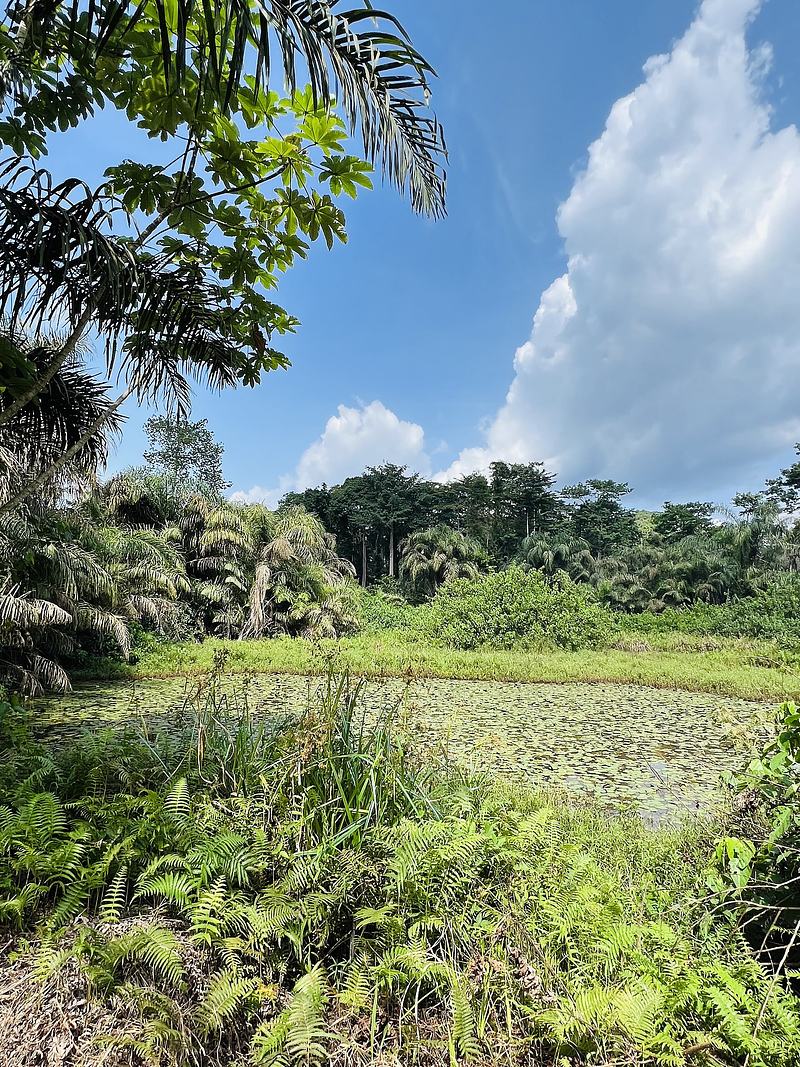
1.Walk the trails of Bia National Park
The forest is the main event here. Bia National Park protects the northern half of the Bia Conservation Area, a transition zone between moist evergreen and semi-deciduous forest where 62 mammal species have been recorded, including ten primates and forest elephant, plus the threatened bongo and over 160 bird species. A number of walking trails and old roads lead into the reserve, and guided walks are the way to appreciate the canopy, the birds and whatever wildlife the dense foliage allows you to see.
Tip: Game viewing is best in the long dry season, November to April; the rainy months bring slippery, sometimes impassable roads. Bring walking boots, long sleeves, a hat and a guide.
-
Attraction
2.Pay respects at the Sefwi-Wiawso Traditional Palace and Council Grounds
The palace and council grounds are the administrative and ceremonial seat of the Omanhene of the Sefwi-Wiawso Traditional Area, Katakyie Kwasi Bumangamah II. This is where the traditional council meets, disputes are settled and the community gathers for major occasions. Even from outside, it is the clearest single place to understand that Sefwi Wiawso is a royal town as much as a regional capital, and the institution at its centre still carries real weight.
Tip: This is a working seat of traditional authority, not a museum. Ask locally before photographing, dress modestly, and follow any guidance on where visitors may go.
-
Attraction
3.Shop and eat your way through Dwenase Market
Dwenase Market is the main market of the Sefwi Wiawso conurbation, trading in produce, foodstuffs, clothing and household goods from Sefwi-Dwenase. It is the everyday engine of the town and the best place to see what this cocoa-and-forest economy actually produces — piles of plantain, cocoyam and cassava, fresh produce, cloth and hardware. Come with an appetite and a little patience, and let the market set your pace for an hour or two.
Tip: Go in the morning when the market is at its liveliest and the day is cooler. Carry small notes and change, and ask before taking photographs of people and stalls.
-
4.Visit the Sefwi-Wiawso Central Mosque
The central mosque in Sefwi Dwenase is the main congregational mosque for the town's Muslim community and a quiet counterpoint to the market bustle around it. Sefwi Wiawso is a town of several faiths living side by side, and the mosque is part of that everyday texture. It is a place of worship rather than a visitor attraction, so the reward is a sense of the town as it actually is.
Tip: Time a visit outside prayer times, dress modestly, remove shoes where appropriate and keep voices low. If in doubt, ask a member of the congregation before entering.
-
5.Follow the cocoa farms around town
Cocoa is the crop that made this region, and the farms begin at the edge of town. Around 80 per cent of the working population of Wiawso is employed in agriculture, with cocoa the dominant cash crop, and the wider Sefwi area is one of Ghana's leading producers. A walk or short drive out past the built-up area takes you into shaded plantations and the smallholder plots that supply them — the landscape that gives the town its living.
Tip: Arrange any farm visit through a local guide or your host rather than wandering onto private land uninvited, and ask before photographing farmers at work.
-
6.Seek out the town's sacred and legendary sites
Local tradition points to several sites around Sefwi Wiawso. The Tree of God (Nyame Dua) at Nyamebekyere, about 5 km from town, is said to have grown around a machete struck into its stump some 150 years ago, the blade still visible in the trunk. The Abombirim sacred tortoise forest at Sefwi Boako, roughly 21 km away, is a preserve associated with a giant tortoise, and the ancestral hole at Sefwi Bosomoiso, about 4 km out, is linked to the origins of a royal family and said to have healing powers.
Tip: These are living cultural and spiritual sites. Go with someone local who can explain the protocols, and treat any restrictions on access or photography as final.
-
7.Time a visit to the Eluo (Yam) Festival
The chiefs and people of the Sefwi-Wiawso Traditional Area celebrate the Eluo, or Alluolue, festival — Eluo meaning yam. It is an annual occasion that brings the community together for development planning and to strengthen bonds of unity and friendship, with a durbar of chiefs, traditional dress, drumming, dancing and food and drink shared with visitors. Disputes are settled beforehand so the celebration can pass off smoothly, and the programme has at times included a street jam with well-known artists.
Tip: Festival dates shift year to year and the programme is announced by the Traditional Council, so confirm the current dates locally before planning a trip around it.
Plan your time
Suggested itinerary
Half a day: the town on foot
Start early at Dwenase Market while it is cool and busy, then walk up to the hilltop where Wiawso began and take in the view over the plain. Continue to the Sefwi-Wiawso Traditional Palace and Council Grounds to see the seat of the Omanhene, and finish at the Sefwi-Wiawso Central Mosque in Sefwi Dwenase, timing your visit outside prayer times. If you have a car and a local guide, add a short drive out to the cocoa farms at the edge of town before the afternoon heat sets in.
Dwenase Market (Sefwi-Wiawso Market)→Sefwi-Wiawso Traditional Palace and Council Grounds
One day: town and forest edge
Spend the morning on the town circuit — market, hilltop, palace and mosque — then take an early lunch and head out towards the forest. With a guide and a vehicle, use the afternoon for a cocoa-farm visit and, if arrangements have been made in advance, the first stretch of walking trails towards the Bia Conservation Area. Bear in mind that the park headquarters is about 100 km from Sefwi Wiawso, so a full day inside Bia is better treated as its own trip rather than squeezed into an afternoon.
Dwenase Market (Sefwi-Wiawso Market)→Sefwi-Wiawso Traditional Palace and Council Grounds→Bia National Park
Two days: Sefwi Wiawso and Bia National Park
Day one covers the town at an unhurried pace: Dwenase Market in the morning, the palace and council grounds, the central mosque, and an afternoon among the cocoa farms, with the evening free to eat and rest. Day two is for Bia. Leave early for the drive to the park, walk the trails with a guide, and give the forest the patience it demands — the foliage is dense and sightings are never guaranteed. Plan the Bia day for the dry season if you can, and arrange transport, a guide and any camping or guest-house stay well ahead, since facilities at the park itself are minimal.
Dwenase Market (Sefwi-Wiawso Market)→Sefwi-Wiawso Traditional Palace and Council Grounds→Bia National Park
Seasons and festivals
When to go
Sefwi Wiawso sits in one of Ghana's wettest regions, with a double-maxima rainfall pattern averaging around 1,600 mm a year. The two peaks fall between May and July and again in September and October, and the region also gets intermittent minor rains all year round. Humidity is high, ranging from about 70 to 90 per cent, and temperatures are moderate for the tropics — roughly 22°C at night to 34°C during the day. The dry season, marked by lower humidity and hazy conditions from November to January, is the most comfortable time to be in town and on the forest trails. For Bia National Park specifically, the best time for game viewing is the long dry season from November to April; the rainy season brings slippery roads and cold weather, and the Forestry Commission notes that the access roads are not first-class at the best of times. The region experiences fewer or no bush fires because its dry season is relatively short.
- Eluo (Alluolue) Festival · Annual; dates announced by the Sefwi Wiawso Traditional Council (a recent edition ran from 19 October to 19 November)
- The yam festival of the chiefs and people of the Sefwi-Wiawso Traditional Area, celebrated to mark a historic event and to bring people together for development planning and to strengthen unity and friendship. Expect a durbar of chiefs, traditional dress, drumming and dancing, and food and drink shared with visitors; disputes are settled beforehand so the event passes off smoothly. The 2023 edition was launched under the theme of proactive socio-economic development and the role of traditional leaders.
Access
Getting there and around
Sefwi Wiawso is reached by road. The Forestry Commission describes access to the Bia Conservation Area from Kumasi as running through Bibiani and Sefwi Wiawso to Sefwi Asempanaye, or alternatively via Goaso through Sankore to Sefwi Asempanaye; from Sunyani the route goes through Berekum, Wanfi, Adabokrom and Debiso, and from Côte d'Ivoire the park can be reached through Osei Kojokrom and Debiso. Visit Ghana notes that the park is accessible by road from Kumasi via Bibiani and from Tarkwa-Sefwi via the Wiawso road. Be aware that the Forestry Commission states plainly that these roads are not first-class, so allow generous time and check conditions locally, especially in the rains. Within the Sefwi Wiawso conurbation, Wiawso and Sefwi-Dwenase have grown together, with most financial institutions, government offices, lorry terminals and the main market located in Sefwi-Dwenase — so the practical centre of town for transport and services is Dwenase rather than the old hilltop settlement. The park headquarters is about 100 km from Sefwi Wiawso, which is the nearest place with overnight accommodation, so a visit to Bia needs a vehicle and a plan. Arrange transport and a guide locally or through a tour operator; the park has walking trails and roads into the reserves but essentially no tourist infrastructure of its own.
Good to know
Before you go
Sefwi Wiawso is a working regional capital and a traditional town, not a resort, so come prepared and come respectful. Dress modestly, especially around the palace, the mosque and any sacred site, and always ask before photographing people, ceremonies or shrines. The palace and council grounds are a seat of traditional authority: follow local guidance on where visitors may go, and treat any restriction as final. Bring cash, since smaller traders and transport are largely cash-based, and carry small notes. Pack for wet, humid forest — light long sleeves, walking boots, a hat, insect repellent and rain protection — and take malaria precautions seriously. Roads in and around the region can be rough and slow, particularly in the rainy season, so build slack into your plans. If you plan to visit Bia, arrange a guide, transport and any overnight stay in advance, and remember that the nearest accommodation is back in Sefwi Wiawso. Learn a few words of greeting in Sefwi or Twi; it goes a long way.
FAQ
Questions travellers ask about Sefwi Wiawso
Where is Sefwi Wiawso?
It is a town in the Sefwi-Wiawso Municipal District of Ghana's Western North Region, roughly 200 km inland from the coast. It serves as the capital of both the municipality and the Western North Region, and as the traditional seat of the Omanhene of the Sefwi-Wiawso Traditional Area.
Is Sefwi Wiawso the gateway to Bia National Park?
Yes. Bia National Park lies in the Western North Region and is reached by road via Sefwi Wiawso, and the town is the nearest place with overnight accommodation — about 100 km from the park headquarters. The Forestry Commission notes that tourist infrastructure at the park itself is essentially non-existent.
What wildlife can I see in Bia National Park?
Sixty-two species of mammals have been recorded, including ten primates such as chimpanzees and several colobus species, plus forest elephant and the threatened bongo. Over 160 bird species have been logged, including the endangered white-breasted guinea fowl, and the park is the only known home of the lizard Agama sylvanus.
When is the best time to visit Bia National Park?
The best time for game viewing is the long dry season, from November to April. The rainy season, from May to June and September to October, brings slippery roads and cold weather, and the park's access roads are not first-class at any time of year.
What is the Eluo festival?
Eluo, or Alluolue, is the annual yam festival of the chiefs and people of the Sefwi-Wiawso Traditional Area. It brings the community together for development planning and to strengthen unity, with a durbar of chiefs, traditional dress, drumming, dancing and food and drink shared with visitors.
Why is Sefwi Wiawso a regional capital?
The Western North Region was one of six new regions created in 2019, decided by referendum on 27 December 2018 and established by Constitutional Instrument 117. Sefwi-Wiawso was named its capital in February 2019, largely because the people of Sefwi had long struggled to access services from the old regional capital, Sekondi-Takoradi.
What is there to do in Sefwi Wiawso itself?
Beyond Bia, the town offers Dwenase Market, the Sefwi-Wiawso Traditional Palace and Council Grounds, the central mosque in Sefwi Dwenase, cocoa farms at the edge of town, and several sacred and legendary sites nearby, including the Tree of God and the Abombirim sacred tortoise forest.
Sources for this guide (9)
- Bia National Park — Forestry Commission, Ghana
- Bia National Park — Visit Ghana (Ghana Tourism Authority)
- Place:Sefwi Wiawso — HandWiki (mirrors Wikipedia's Sefwi Wiawso article)
- Profile of the Western North Region — Western North Regional Coordinating Council
- Western North — National Commission on Culture, Ghana
- Sefwi people — 101 Last Tribes
- Sefwi-Wiawso is capital of Western North Region — GhanaWeb
- Sefwi Wiawso Traditional Council launches 2023 Eluo festival — MyJoyOnline
- Sefwi-Wiawso Municipal District — Wikipedia
Written September 29, 2026 from these sources and reviewed by the VisitGhana.app team. Confirm practical details locally before travelling.