
A river that the community decided to keep
The sanctuary did not begin with a government decree. It began with a decision. In the late 1990s, hippo numbers along this stretch of the Black Volta were falling, hunted heavily by a population that had few other ways to earn. Local chiefs and the communities along the river responded by setting the river aside: in 1998 the Wechiau Community Hippo Sanctuary was created, and it has been community-managed ever since, governed by a board of traditional leaders and representatives of the member communities rather than by a distant state agency.
The results are unusually concrete. Poaching was eliminated and the hippo population stabilised within the sanctuary's core zone. Revenue from ecotourism was ploughed back into schools, health facilities, solar lighting and water infrastructure for the roughly 10,000 residents of the sanctuary's development zone. In 2009 the Wechiau model was used in the design of Ghana's Community Resource Management Area legislation, and in 2008 the project won a UN Equator Prize for balancing social and ecological needs. The Wilder Institute, which has supported the sanctuary since its inception, now works alongside the sanctuary management board, the Centre for Biodiversity Conservation Research and the Wildlife Division of Ghana's Forestry Commission. Fewer than 150 hippos remain in all of Ghana; this river holds one of the country's last two populations.


Wala, Lobi, Hausa, Dagaabe: who lives here
The sanctuary's member communities are not one people but several. Four ethnic groups live along this stretch of the river, each with its own language: Wala (also called Wechegee), Birifor (Lobi), Hausa and Dagaabe. The Wala settled the area in the seventeenth century and hold customary rights to the land; the other three groups do not, a distinction that shapes daily life and local politics. Islam and traditional African religion are the predominant belief systems, with a smaller number of Christians.
The Lobi communities are the ones most visitors come to know, because the sanctuary's lodges sit among them. This is a relatively undisturbed Lobi area with distinctive compound architecture, and travellers are welcomed into it rather than merely shown it: you can walk to a compound, learn how the household works, listen to xylophone music, and share pito, the local brew, with the headmen while they tell stories. Local crafts — clay hippos, carvings, textiles and baskets — are sold by the people who make them. Tourism here employs around fifty people as rangers, boatmen, guides, cooks and caretakers, and an organic shea cooperative, the sanctuary's largest single source of income, employs close to two thousand local women.


The mosque on the old trade road
In Wechiau town stands a building that predates almost everything else around it: an earthen mosque built in a blend of Sudano-Sahelian and Djenne architectural styles, with features comparable to the better-known Larabanga Mosque. It once carried buttresses in the Sudanic manner; today only one of its two pyramidal towers survives, and its interior columns — small, widely spaced — were built to carry a flat mud roof.
Such mosques are the physical trace of the long-distance trade networks that crossed this region, the routes along which Mande warriors, Islamic traders and missionaries moved south and west, and at whose resting places communities converted and built. The Ghana Museums and Monuments Board counts ten surviving earthen mosques in northern Ghana, all of them challenged by modernisation, Arabisation and climate change, and all of them built of a material — sun-dried earth — that demands constant care. Wechiau's mosque was abandoned in the 1990s and fell into distress. Restoration began in early 2024 as part of a community-led project with technical support from the Ghana Museums and Monuments Board and backing from the Mellon Foundation, alongside work on the Dondoli and Nakore mosques. Signage now directs visitors to the site, and local management committees have been set up to handle routine maintenance — the only kind of care that keeps an earth building standing.


Savannah, floodplain and a dawn chorus
The sanctuary protects a long ribbon of riverine forest, floodplain and savannah woodland along the Black Volta, which here forms Ghana's western boundary with Burkina Faso. Estimates of its length vary between sources — 34 kilometres in the UNDP Equator Initiative's account, 40 kilometres in others — but the character is consistent: a green corridor in dry country, with the river as its spine.
The biodiversity is the reason to slow down. The Equator Initiative records 237 bird, 50 mammal and 32 reptile species; the sanctuary's own material puts the bird count above 250 and notes that one or two previously unrecorded species are sighted in most years. Expect violet turacos, kingfishers, hornbills, owls, cattle egrets, grey herons, vervet monkeys, baboons, monitor lizards, chameleons, hedgehogs, bats and pythons. Hippos spend the daylight hours in the water and come out at dusk to graze, which is why the sanctuary's hides sit beside established feeding grounds and why the best sightings come at the edges of the day. A hippo sighting is never guaranteed on a single outing — this is wild animal watching, not a zoo — but the great majority of visitors do see them.


What to do
Things to do in Wechiau
-
Attraction
1.Take a dugout canoe safari on the Black Volta
This is the reason most people come, and it earns the journey. A local boatman paddles a traditional dugout downstream while you sit low in the water, scanning the banks for the grey bulk of a hippo. Because you are at river level, a surfacing animal appears at your own eye height — a genuinely different experience from watching from a bank. The same trip delivers violet turacos, malachite kingfishers and vervet monkeys, and the sanctuary's guides tailor the pace to you.
Tip: Book morning or evening departures: hippos, birds and other wildlife are most visible at the edges of the day, and the light is kinder.
-
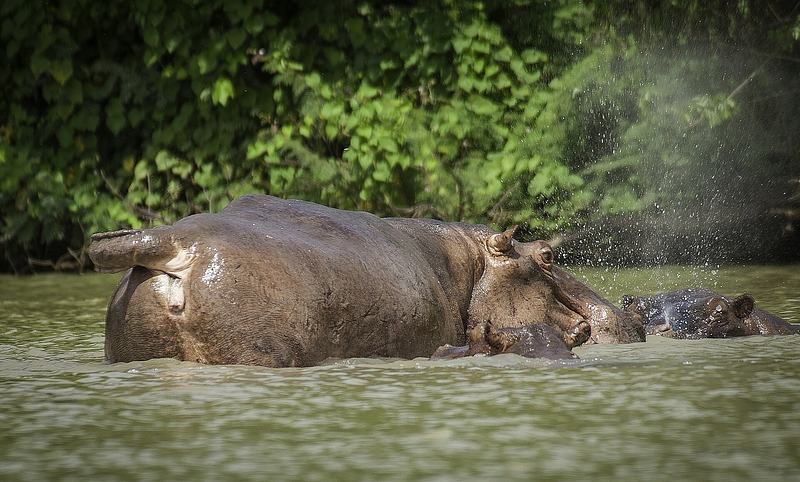
2.Spend a night in a hippo hide above the river
The sanctuary keeps two hides on the Black Volta, set beside established hippo feeding grounds. Hippos leave the water at sunset and graze through the night, so a hide gives you the best chance of watching them feed — sometimes by moonlight, sometimes by the sound of them before you see anything at all. It is basic, exposed and unforgettable, and it is the closest most travellers will ever come to sharing a river with wild hippos.
Tip: Sightings are never guaranteed, so treat a night in the hide as the experience itself rather than a means to a photograph.
-
3.Walk into a Lobi compound at Talawona
Talawona, about a kilometre from the Black Volta, is where the sanctuary's lodge sits, and it is the heart of the Lobi communities that host visitors. A guided village walk takes you into a working compound to see the architecture, hear how households and marriage systems are organised, and understand the funeral rites that mark Lobi life. This is a relatively undisturbed Lobi area, and the welcome is genuine rather than staged.
Tip: Ask before photographing people or compounds, and accept that some ceremonies and spaces are not open to visitors.
-
4.Birdwatch the riverine forest and floodplain
Wechiau is one of the most rewarding birding stops in northern Ghana. The sanctuary's own count runs to more than 250 species across woodland savannah, riverine and forest-shore habitats, and the Equator Initiative records 237 bird species alongside 50 mammals and 32 reptiles. Guides know the calls and the perches, and the dawn chorus from the tree deck or a hide is the kind of thing people plan return trips around. New species are still being added to the list most years.
Tip: Bring binoculars — the sanctuary can supply local knowledge but not optics — and start before sunrise for the best of it.
-
Attraction
5.See the Wechiau Ancient Mosque
In Wechiau town, an earthen mosque built in a mix of Sudano-Sahelian and Djenne styles has stood since long before the sanctuary existed, its single surviving pyramidal tower and flat mud roof recalling the Larabanga Mosque. Abandoned in the 1990s and later in a distressed state, it has been under restoration since early 2024 in a community-led project supported technically by the Ghana Museums and Monuments Board. It is a rare chance to see earth architecture being actively cared for rather than merely admired.
Tip: It is a place of worship first and a monument second — dress modestly, ask before entering, and follow the guidance of the local management committee.
-
6.Share pito and xylophone music in the evening
Evenings at the lodge are when the sanctuary's cultural side comes out. You can drink pito, the local brew, with the headmen and hear stories of the area's past, or listen to xylophone music played by local musicians. Visitors are often drawn into dancing and singing with the community. It is unhurried, uncommercial and one of the clearest illustrations of why this project is described as community-run rather than community-adjacent.
Tip: Pito is brewed locally and shared in calabashes; accept a round if you are offered one, and reciprocate by buying crafts from the makers.
-
7.Sleep on the tree deck under the stars
Across the road from the lodge at Talawona is a large tree deck, big enough for ten people to sit and take in the view by day and for three or four to sleep on at night, first come, first served. With no light pollution to speak of, the sky does most of the work. It is the simplest and cheapest way to spend a night in the sanctuary, and for many visitors it turns out to be the memory that lasts.
Tip: Bring a light sleeping sheet and mosquito protection; nights on the deck are exposed to the weather as well as the view.
-
8.Trek the sanctuary trails for reptiles and small mammals
Away from the water, the sanctuary's walking trails cross savannah woodland and floodplain where the smaller wildlife lives: monitor lizards, chameleons, hedgehogs, bats, pythons and baboons. Guides employed by the sanctuary lead these walks and can point out plants and animals you would walk straight past. It is a good use of the middle of the day, when the river is quiet and the hippos are submerged.
Tip: Wear closed shoes and long trousers, and carry more water than you think you need — this is hot, dry country.
Plan your time
Suggested itinerary
Half a day: the river and the mosque
Arrive in Wechiau and go first to the visitors centre in town, where you collect a guide and arrange your activities. Head out to the river for a dugout canoe safari on the Black Volta — an early morning or late afternoon departure gives the best chance of hippos and the best birding. Afterwards, return to Wechiau town to see the ancient earthen mosque and hear about its restoration. If you have time before dark, walk a sanctuary trail for chameleons, monitor lizards and birds. This works as a long day trip from Wa, but it is tight.
Black Volta River (Wechiau stretch) river safari→Wechiau Ancient Mosque→Wechiau Hippopotamus Sanctuary
One day and a night: safari, village, stars
Start early with a river safari while the water is still cool and the hippos are active. Spend the middle of the day walking the sanctuary trails and visiting a Lobi compound at Talawona, learning how the households are organised and buying crafts directly from the makers. In the late afternoon, take a second river trip on a different stretch — multiple outings markedly improve your chances of a good hippo sighting. Eat a meal cooked locally, share pito with the headmen and listen to xylophone music, then sleep on the tree deck or in a lodge room. Wake before sunrise for the dawn chorus.
Black Volta River (Wechiau stretch) river safari→Wechiau Hippopotamus Sanctuary
Two days: the full sanctuary and the town
Day one: arrive, settle in at Talawona, take an evening river safari and spend the night in one of the hippo hides beside the feeding grounds, listening for animals coming ashore to graze. Day two: a dawn birding walk with a guide, then a morning canoe trip on a sector you have not yet seen. After lunch, walk to a Lobi compound and spend the afternoon on the cultural side of the sanctuary — crafts, music, conversation. On your way out, stop in Wechiau town for the ancient mosque and the visitors centre. Two or three days is what the sanctuary itself recommends if you want the wildlife and the community both.
Wechiau Hippopotamus Sanctuary→Black Volta River (Wechiau stretch) river safari→Wechiau Ancient Mosque
Seasons and festivals
When to go
Wechiau sits in dry savannah country, and the seasons shape what you will see. The dry season, roughly November through June, is the best time to look for hippos: with less water about, the animals concentrate in the river and are easier to find. If birds are your priority, June through August is when many species are in colourful breeding plumage. The sanctuary recommends planning to stay overnight, because morning and evening river cruises give the best views of hippos, birds and other wildlife, while the afternoon is better spent on the trails, in local homes or resting in the tree hide. Bear in mind that the heat is serious in the build-up to the rains, and that a hippo sighting is never guaranteed on any single outing.
Access
Getting there and around
Wechiau is the capital of Wa West District and lies roughly 50 kilometres west of Wa, the Upper West regional capital, close to the border with Burkina Faso. The sanctuary's gateway is the community of Wechiau itself, and there are three routes in from Wa: via Ga (about 57 km, with the Wa–Ga section tarred), via Vieri (about 44 km) or via Dorimon (about 47 km). Public transport from Wa — trotro or the yellow tricycles known locally as camboo — will get you to Wechiau. Once you are in the sanctuary, your first stop is the visitors centre in Wechiau, where you collect a guide and arrange your activities. From there you can travel by bicycle, in your own vehicle, or by having the sanctuary arrange a motorking or camboo to drop you and collect you at a pre-arranged time, which suits groups. Distances within the sanctuary are real, so plan your day around transport rather than assuming you can walk between sites.
Good to know
Before you go
This is remote, hot, dry country, and the sanctuary asks visitors to prepare accordingly. Bring your own food, drinking water and essentials before heading out to the different sections of the reserve; there are only mini shops in Wechiau for basic items. Accommodation at Talawona is deliberately basic — simple rooms with mattresses and mosquito netting, bucket baths, pit toilets, and water carried from a borehole about a kilometre away, which the lodge advises filtering or replacing with bottled water. Electricity is available, but do not expect hotel comforts. Take malaria precautions seriously, carry cash, and remember that this is a working community, not a resort: ask before photographing people or compounds, dress modestly at the mosque, and buy crafts from the people who make them. Finally, be patient with wildlife. Hippos are wild, sightings depend on season and luck, and the guides will not put you or the animals at risk for a photograph.
FAQ
Questions travellers ask about Wechiau
Where exactly is Wechiau?
Wechiau is a small town in the Upper West Region of northern Ghana, the capital of Wa West District, roughly 50 kilometres west of Wa and close to the border with Burkina Faso. The Black Volta, which forms the boundary with Burkina Faso here, runs along the district's western edge.
Will I definitely see hippos?
No — a sighting is never guaranteed on a single outing, because this is wild animal watching rather than a zoo. That said, the sanctuary reports that the significant majority of visitors do see hippos, and your chances improve considerably if you take more than one river trip and go in the dry season.
How many hippos are left in Ghana?
Fewer than 150 hippos remain in the whole country, according to the Wilder Institute, and the Black Volta stretch at Wechiau holds one of Ghana's last two remaining populations. The sanctuary was created precisely because hunting had driven local numbers down.
Can I stay overnight in the sanctuary?
Yes. Lodging is offered at the Mark Donohue Lodge at Talawona, about a kilometre from the Black Volta, with basic rooms, the option of sleeping on the roof or on a tree deck, and camping space. The sanctuary also has two hippo hides beside the river where you can spend the night near the hippos' feeding grounds.
What is the best time of year to visit?
The dry season, roughly November to June, is best for hippos, because lower water levels concentrate the animals in the river. June to August is the best period for birds, when many species are in breeding plumage.
Is the Wechiau mosque open to visitors?
The mosque is an active place of worship and a historic monument. Restoration work began in early 2024 in a community-led project with technical support from the Ghana Museums and Monuments Board, and signage now directs visitors to the site. Ask locally before entering, dress modestly, and follow the guidance of the mosque management committee.
Who runs the sanctuary?
It is community-run. The Wechiau Community Hippo Sanctuary was created in the late 1990s and is managed by a board of traditional leaders and representatives of its member communities, with support from the Wilder Institute, the Centre for Biodiversity Conservation Research and the Wildlife Division of Ghana's Forestry Commission.
Keep exploring
More destination guides
Sources for this guide (13)
- Wechiau Community Hippo Sanctuary — Wikipedia
- Wechiau Community Hippo Sanctuary (WCHS) — Equator Initiative, UNDP
- Wechiau Hippo and Nature Conservation Program — Wilder Institute
- WCHS — Friends of Wechiau Group
- Wechiau Hippo Sanctuary — Touring Ghana
- Explore WCHS — With Our Site Maps (Wechiau Community Hippo Sanctuary)
- Lodging at WCHS — Ghana Hippos
- The WCHS Wildlife Experience — Ghana Hippos
- Wechiau Mosque — Wikipedia
- Ancient Mosques of the Northern Region — Ghana Museums and Monuments Board
- Islamic Heritage in Northern Ghana — The Heritage Management Organization
- Wechiau — Wikipedia
- Wa West District — Wikipedia
Written September 29, 2026 from these sources and reviewed by the VisitGhana.app team. Confirm practical details locally before travelling.